

ITV doctor Amir Khan reveals exactly how much protein women should eat daily
A doctor shared advice on how much protein women should be eating every day(Image: Getty)
A doctor has revealed the precise amount of a particular food that women should consume each day. The expert emphasises that protein intake should be spread “through the day”.
On his No Appointment Necessary podcast, Doctor Amir Khan, familiar to viewers from his ITV appearances, outlined the recommended protein intake for the average 45 year old woman. Proteins are essential macronutrients serving as the foundation for bodily tissues, including muscle, skin, and hair.
These nutrients can be found in a variety of foods, such as meat, fish, eggs, dairy products, beans, lentils, and soya. Yet determining the exact daily protein requirement can be challenging, as it varies based on numerous factors, including age and exercise levels.
During the podcast episode, Dr Khan’s co-host Cherry Healey enquired: “How much protein? I’m 45 years old. Break it down.”

Dr Amir said it is “key” to spread your protein out throughout the day(Image: Getty)
Dr Khan replied: “You are a typical kind of 45-year-old lady who looks after herself and wants to eat the right amount of protein, right?”
The amount required depends on your weight and level of physical activity. Dr Khan explained: “If you’re exercising regularly, particularly resistance training, you probably need to go from 1.2 grams per kilo to about 1.5 grams per kilo.
“So that for you will be about 80g of protein per day, right?” Cherry then enquired about what 80g of protein actually looks like in practical terms. He further explained: “So what it shouldn’t look like is stuffing your face with protein straight after the gym and saying, ‘Right, I’ve had my protein for the day and that’s that.
“It’s about spreading protein out through the day. Rather than kind of going, ‘Oh I need the protein powder, I need my protein bar, and I need my whey, all of that kind of thing.
“It’s about spreading it out through the day. That’s the key thing.”
Experts at the Mayo Clinic in the US support Dr Khan’s advice that your protein intake should be based on your age and level of physical activity. They stated: “The recommended dietary allowance to prevent deficiency for an average sedentary adult is 0.8 grams per kilogram of body weight.
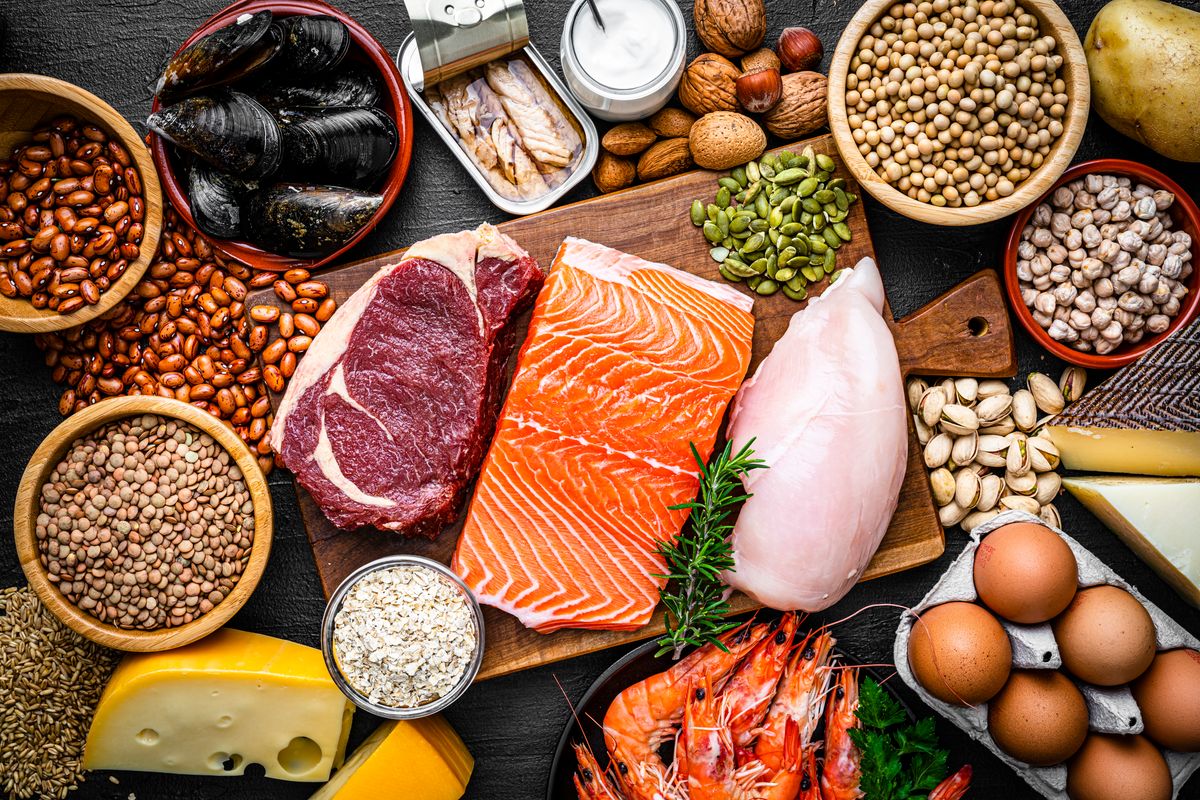
Proteins are vital macronutrients that act as the building blocks for body tissues(Image: Getty)
“For example, a person who weighs 165 pounds, or 75 kilograms, should consume 60 grams of protein per day.” They cautioned that this amount should increase for individuals over the age of 40.
“Once you’re between the ages of 40 and 50, sarcopenia – losing muscle mass as you age – begins to set in,” they said. “To prevent this and to maintain independence and quality of life, your protein needs increase to about 1-1.2 grams per kilogram or 75-90 grams per day for a 165-pound person.”
In addition to this, they recognised that people who exercise regularly also have “higher needs”. They stated:” People who regularly lift weights or are training for a running or cycling event need 1.2-1.7 grams per kilogram.”
They also cautioned that protein consumption can be excessive: “Excessive protein intake would be more than two grams per kilogram of body weight each day.”
Sources of protein
The Harvard Health team identified the following as some of the best protein sources:
Beans, peas, and lentilsNuts and seeds such as walnuts, pumpkin seedsLean meats such as chicken and turkeyFish such as salmon and tunaDairy products such as milk and yoghurtSoy products such as tofu
Typical indicators that you may be lacking in protein include fragile hair and nails, experiencing weakness or hunger, frequent illness, mood fluctuations, and diminished muscle strength.