
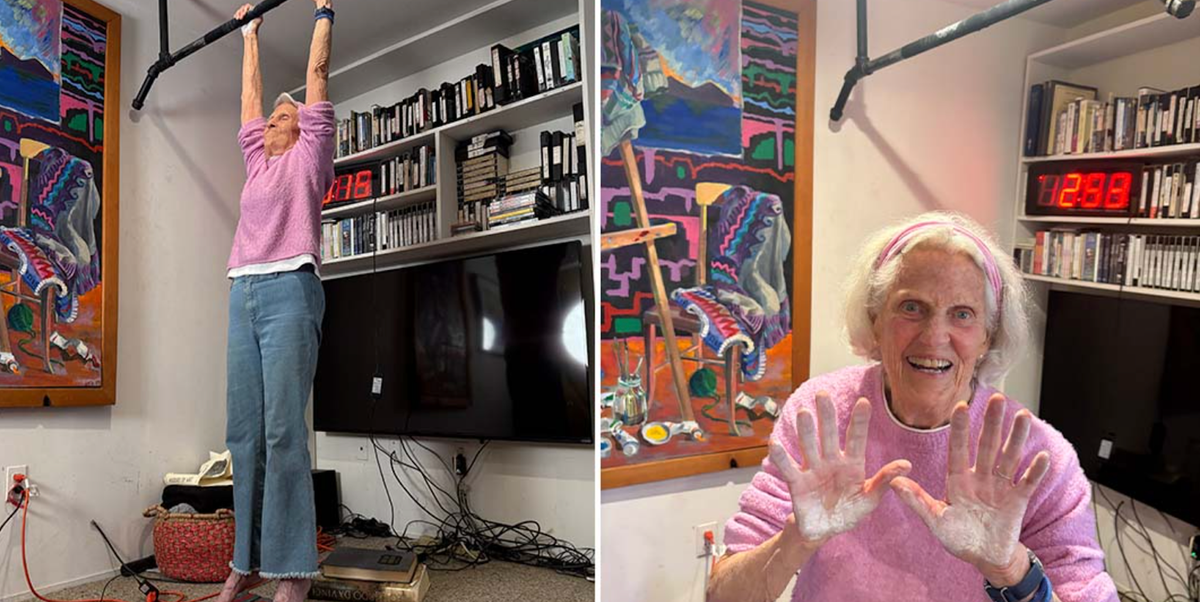
Last month, 90-year-old Ann Crile Esselstyn, from the USA, became the oldest woman to hold a dead hang with an incredibly impressive time of 2:52 – defeating the previous world record held by fellow American Annie Judis, who achieved 2:01 while aged 80.
‘It was new for me to be going for a record and to be celebrated in this way, since I have spent my life cheering for our four children and 10 grandchildren in their varied athletic events and achievements,’ Ann told Guinness World Records.
Ann’s training
While Ann has always been active and participated in multiple sports, she explained that it was only relatively recently that she had discovered dead hangs, and the benefits of doing them regularly. According to GWR, Ann began her fitness journey last year when her daughter-in-law challenged her to try something new for 40 days. Feeling guilty about rarely using her Peloton bike, Ann decided to cycle every morning before breakfast. After 40 days, that daily fitness habit had extended to yoga, running and lifting weights. During this time, Ann told GWR, she also started hanging from a bar to improve her posture.
After her son discovered that Ann could already hang for 1:15, he challenged her to try to beat Annie’s record. ‘Because I was able to hang for 1:15 without much training, it didn’t sound impossible,’ Ann said. To begin with, she broke the two minutes into smaller chunks, building her strength gradually. ‘As the month went on, I could feel my hands starting to get stronger. The blisters that hurt so much at first turned to callouses; my back was feeling a little better,’ Ann told GWR.
Before long, Ann broke the record during training before doing so officially last month. ‘Maybe if I had known I was so close [to three minutes], I might have held on just a little longer. Another day!’ Ann said of the impressive achievement.
Why dead hangs are so effective for longevity
You don’t have to be breaking world records like Ann to benefit from this simple exercise, either. ‘Dead hangs are one of the most overlooked exercises in the gym, yet they deliver huge benefits for strength and long-term health,’ says strength coach Michael Baah. Grip strength – which dead hangs help build – is a key marker of longevity, and ‘has become one of the most-studied indicators of overall health’.
‘Research from the Prospective Urban Rural Epidemiology Study, which analysed more than 140,000 people across multiple countries, found that weaker grip strength was strongly associated with a higher risk of premature death,’ says Baah. ‘In simple terms, grip strength reflects overall muscle health and functional capacity – and dead hangs are one of the simplest ways to improve it.’
They are particularly effective for people who sit in front of screens for long periods. ‘By hanging from a bar, you challenge the muscles of the hands, forearms, shoulders and upper back all at once,’ says Baah, who regularly recommends the exercise to clients. ‘At the same time, gravity creates gentle traction through the spine, which can help relieve the compression that builds up from long hours sitting at desks or looking down at phones.’
They’re also great for shoulder health: ‘A controlled, active hang engages the stabilising muscles around the shoulder blades and upper back, helping improve posture and resilience in the joint.’
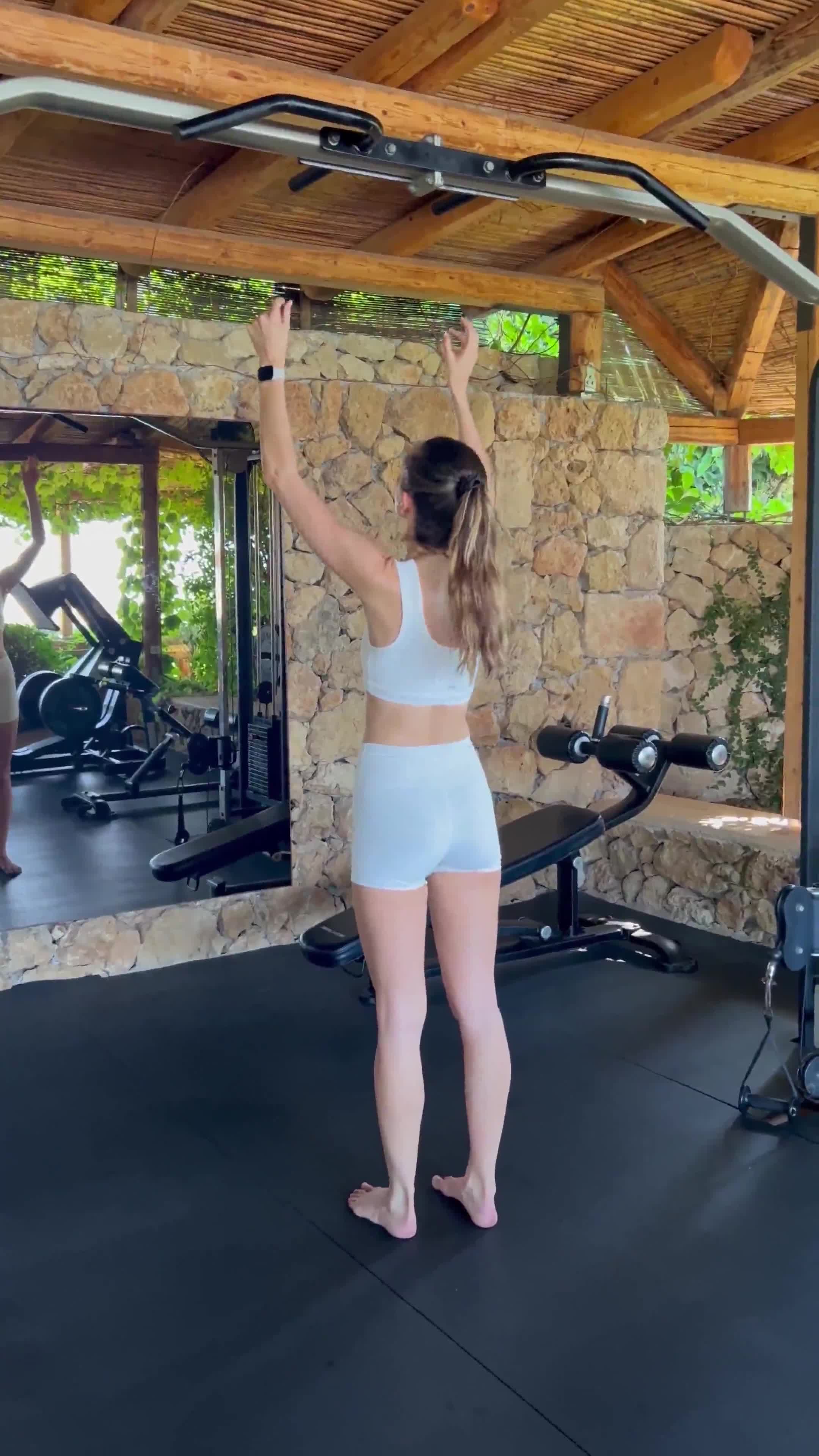
WH Fitness Director Bridie demonstrates a dead hang with a neutral grip. The movement in her shoulders shows the difference between an active and passive dead hang – shoulders are relaxed for passive, while your ears lift away from your shoulders for active
For beginners, Baah usually recommends:
Hanging for 15-30 secondsPerforming 3-5 setsGradually building towards 60 seconds+
‘If a full hang feels difficult at first, lightly resting your feet on a box or using resistance bands can help build strength safely,’ he adds.
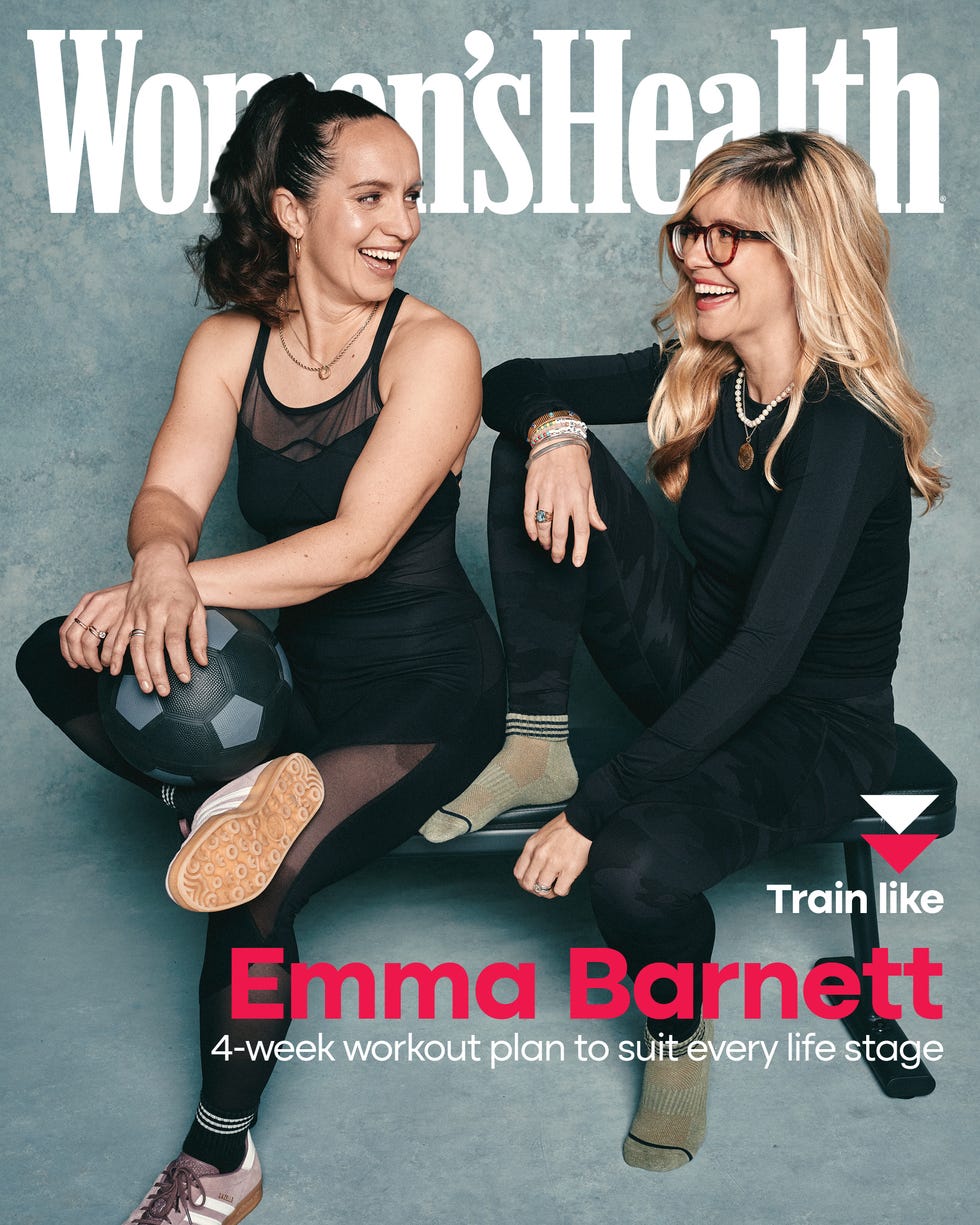
After years living with endometriosis and undergoing seven rounds of IVF, Radio 4 presenter Emma Barnett turned to training with PT Frankie Holah to rebuild strength and a more positive relationship with her body. Download the Women’s Health UK app to access Frankie’s full training plan.
 Related Stories
Hannah Bradfield is a Senior Health and Fitness Writer for Women’s Health UK. An NCTJ-accredited journalist, Hannah graduated from Loughborough University with a BA in English and Sport Science and an MA in Media and Cultural Analysis. She has been covering sports, health and fitness for the last five years and has created content for outlets including BBC Sport, BBC Sounds, Runner’s World and Stylist. She especially enjoys interviewing those working within the community to improve access to sport, exercise and wellness. Hannah is a 2024 John Schofield Trust Fellow and was also named a 2022 Rising Star in Journalism by The Printing Charity. A keen runner, Hannah was firmly a sprinter growing up (also dabbling in long jump) but has since transitioned to longer-distance running. While 10K is her favoured race distance, she loves running or volunteering at parkrun every Saturday, followed, of course, by pastries. She’s always looking for fun new runs and races to do and brunch spots to try.