
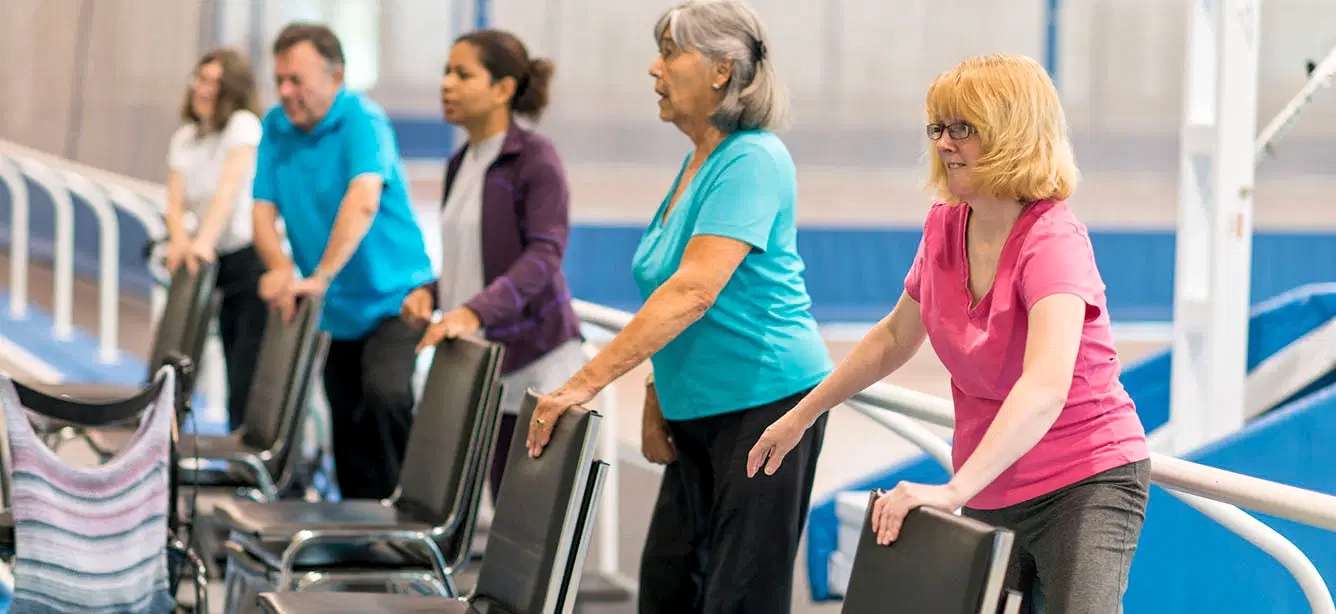
 Otago exercises focus on strength and balance and have proven to reduce the risk of falls, according to Oxford University. Photo via U.S. National Council on Aging.
Falls account for roughly four out of five injury-related hospitalizations among older adults in Canada — a risk local health providers say they are working to reduce through a program expanding across Lennox & Addington and Frontenac counties.
The Rural Frontenac, Lennox & Addington Allied Health Team has announced a new, expanded round of its Otago Exercise Program, a 13-week initiative focused on improving strength, balance, and mobility among older adults at risk of falling.
Falls also account for more than half of injury-related emergency room visits among older adults, with many incidents occurring at home or in long-term care settings. Estimates suggest roughly one in three seniors will experience a fall each year, highlighting the scale of the issue.
The program will now be offered in more communities across the region, including Napanee, Deseronto, Newburgh, Tamworth, Verona, Arden, and Sydenham.
The Otago Exercise Program is an evidence-based fall-prevention program that uses targeted strength and balance exercises — an approach shown in clinical research to reduce falls among older adults by roughly 30 per cent.
Designed for older adults who may have experienced a fall in the past year or are living with mobility challenges, the program includes weekly two-hour sessions that combine guided exercise with a built-in social component. It is also suitable for participants who use walkers or other mobility aids.
“It was great to have the opportunity to improve my health without having to leave my community,” one participant said in a statement released by the health team. “I had never participated in a group program like this before, but I’m so glad I did and look forward to continuing.”
In addition to exercise, each session includes an educational component led by guest speakers such as dietitians, diabetes educators, and mental health workers. Activities are designed to be interactive, ranging from games and cooking demonstrations to hands-on learning sessions.
Research suggests the program’s effectiveness comes from improving lower-body strength and balance — key factors that help older adults stay steady on their feet. Targeted exercises like these are widely recommended as a primary way to reduce fall risk, according to the Canadian Frailty Network, while other studies have found fall-prevention programs can also reduce fear of falling, which can limit mobility and contribute to social isolation.
The consequences can be significant. For some older adults, a serious fall can lead to a loss of independence. “Falls continue to be the scourge of growing older,” according to Geoff Fernie, a senior scientist and falls prevention expert at the Toronto Rehabilitation Institute. “For seniors, a broken hip can often mean the end of walking independently.”
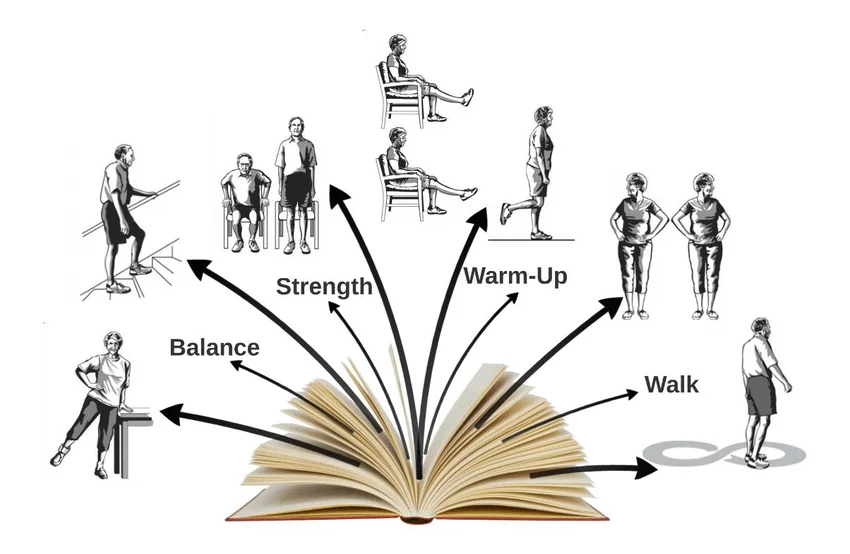 Graphic via Vicent Benavent-Caballer on ResearchGate.net.
Carly Corrigan, an Active Living Facilitator with the team in Napanee, said the program’s impact extends beyond physical health.
“Each week, participants show up ready to exercise and learn, but they’re also building friendships and supporting one another,” Corrigan said. “You can see their confidence and progress grow week by week.”
Organizers say the program also aims to address social isolation — an issue that can be particularly acute in rural communities — by encouraging participants to stay connected even after the 13-week sessions end, through peer-led groups and monthly meetups.
The initiative is also part of a broader research collaboration involving the Canadian Frailty Network and Queen’s University, which will examine how community-based programs like Otago can reduce fall risk, improve mobility, and combat loneliness among older adults.
Registration for the upcoming sessions is now open.
Residents interested in participating can contact Corrigan at [email protected] or 613-539-9927 for more information.