
When people say they want to “get toned”, what they actually mean is that they want to achieve body recomposition: to lose fat and build muscle simultaneously. The term “toned” is just marketing jargon, but it’s one of the most common fitness goals. It’s also one of the hardest to achieve since it requires tracking changes in both fat and muscle. The gold standard for measuring this type of progress would be advanced medical scans like DEXAs or BIAs, but fitness coach Emily Adis says there are more practical methods that could help. Below, she shares the signs to look for from months one to six of sticking to a consistent and progressive strength and nutrition routine.
Month 1 The number on the scales might go up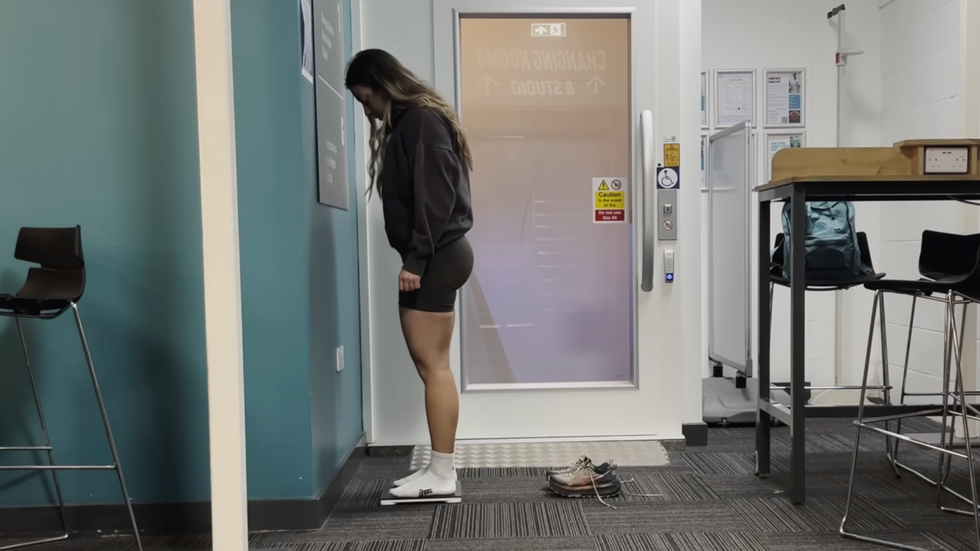
@emilyadis//YouTube
‘It’s normal to notice your scale weight fluctuate on a daily and weekly basis, but you might see your scale weight go up a little bit more. You might feel a little bit more bloated or even heavier in your body. And this is because your muscles aren’t used to being inflamed.
‘In order to build muscle, we go through the process where you break down your muscle using weights or body weight exercises to resist your muscle fibers. So, they break down and then when we give them enough protein and rest and recovery, they rebuild bigger, which is how you actually grow muscle.
‘But month one, your muscles aren’t used to being so inflamed. It’s not a bad thing that they’re inflamed, but it’s likely that they’re going to retain a bit more water, which might make you feel a little bit bigger. The weight on the scale might go up a little bit more.’
You may have more energy and better focus
‘By checking in with your body and your energy throughout the day and also weeks, you might notice that your mood is just a little bit better. You might be a little bit more focused during the day. You might just have a little bit more energy. I noticed all of these three things within the first three weeks of lifting consistently.’
Months 1-3You can lift heavier/do more reps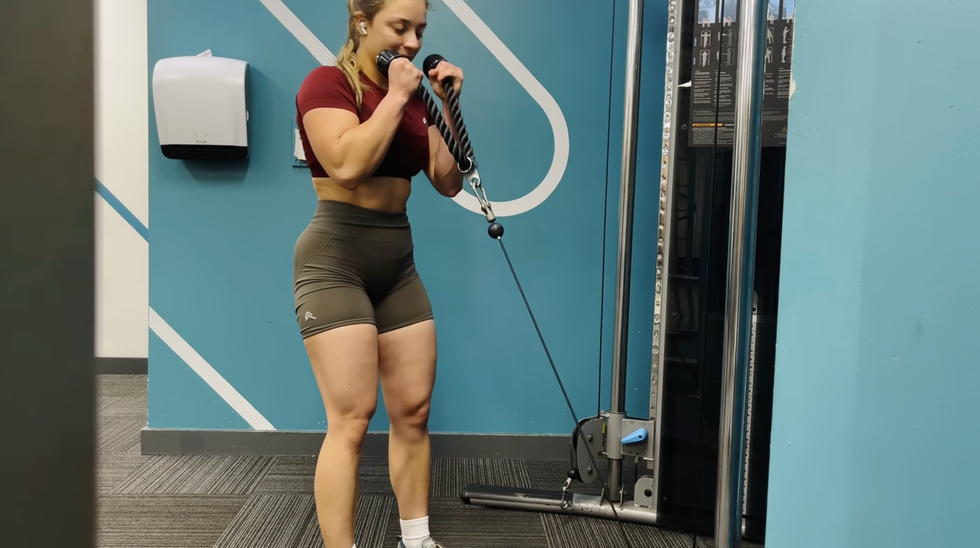
@emilyadis//YouTube
‘You’re going to see that you might be able to actually increase the weight and the challenge that you have for your resistance training. So maybe you can do 30 kilos instead of 20 before on your RDLs. Or if your focus is more on body weight training, calisthenics, that type of thing, you might see that your sets and reps are increasing. Or you can do a slightly harder variation. Maybe before you could only do incline push-ups and now you’re all the way at floor push-ups.
‘Hopefully your trainer or workout program has already added in progressive overload. So, your reps and sets will be getting more challenging with time anyway, but feeling stronger and an increase in the weights that you can lift are great signs that you are making more progress.’
You may start to see changes in your body
‘Your muscle might become a little bit more defined from a combination of potentially losing fat or even gaining a little bit of muscle. And this is going to be really dependent on your nutrition, if you’re in a calorie deficit or not, and your training plan. But remember, faster isn’t necessarily better. So, you might start to notice these things, especially towards the end of month three but try not to fixate on these physical changes in months one to three as these will come later.’
Months 3-6 You will see noticeable changes in body composition and strength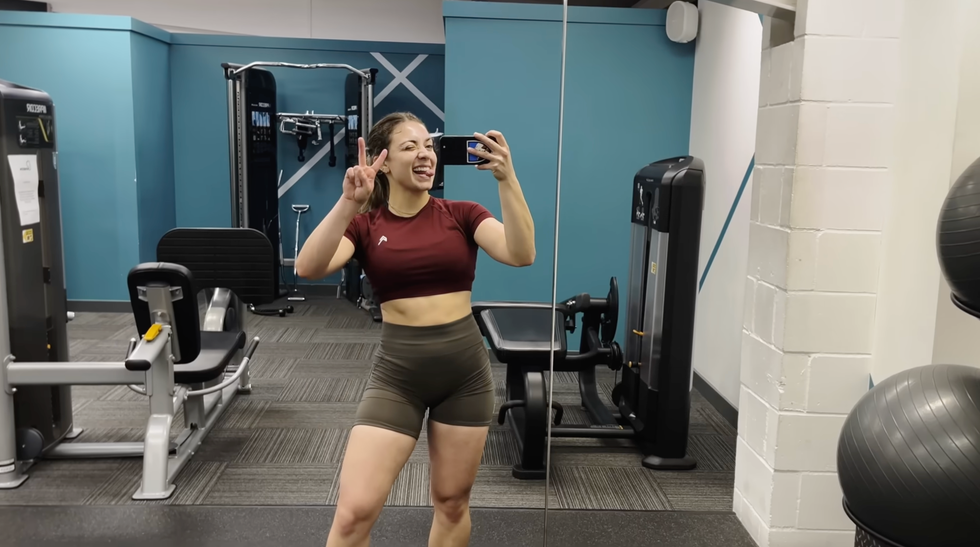
@emilyadis//YouTube
‘You’re going to see both your weights increase in the gym if you’re pushing weights, or you might be able to do more challenging bodyweight exercises. And you’re likely going to be seeing some body composition changes. A.k.a, you’re going to potentially have a bit more muscle and or look a bit leaner depending on your nutrition and your specific goals.’
Body recomposition workout mythsThe sweatier you are, the more effective your workout
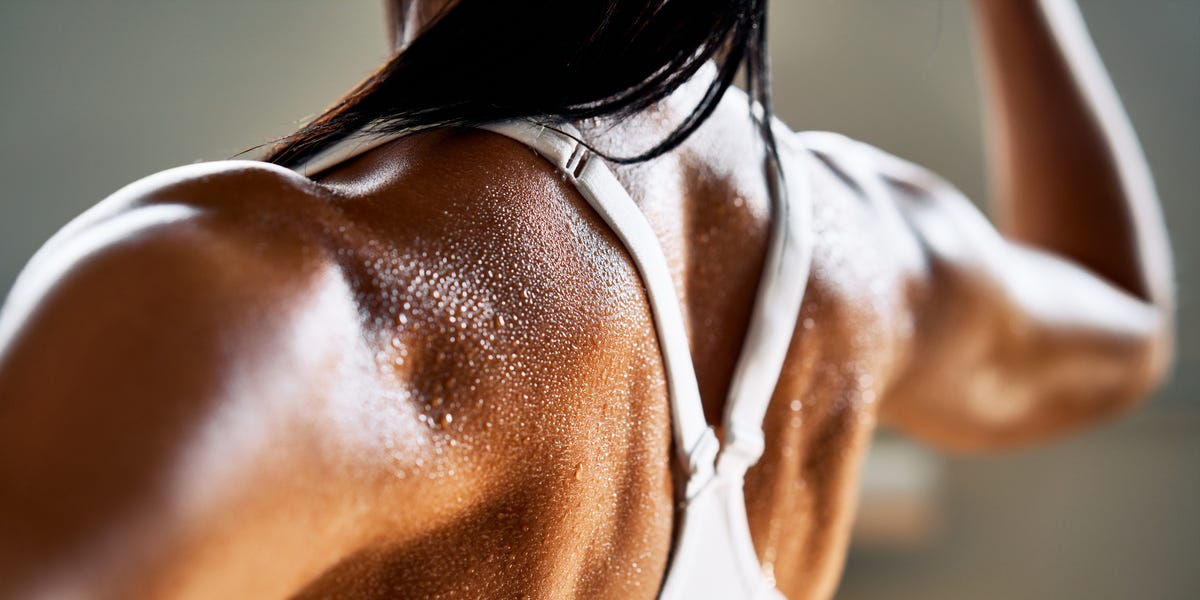
‘How much you sweat is not a sign that you’ve actually had a good workout. And what I mean by that is how much you sweat does not necessarily mean that you’ve challenged and broken down your muscle in a way that will allow you to rebuild it. Sweating can vary so much depending on your climate and the humidity level outside as well as how hydrated you are.
‘Genetics also play a huge role. Like guys, I’m a sweaty girl. I’m sweatier than most people. Put me on the treadmill for about three minutes and I will be dripping. But that doesn’t necessarily mean that I burnt more calories or broke down my muscles more in a way that will rebuild them up to build muscle. It just means that more water came out of my body and I have more sweat stains.’
The sorer you are, the more effective your workout
‘If your goal is to build muscle, see increase in the size of your muscle and also the strength of your muscle, you need to challenge your muscle in a way that breaks it down. And when you get sore, it means that your body has moved in a way that it hasn’t in a while. It’s not familiar with it. So, you could do any new exercise and get potentially sore from it if your body hasn’t done in a while. But that doesn’t necessarily mean that you’ve broken down and built the muscles that you’re looking to.
‘In fact, you might have had an amazing workout, really challenged yourself, broken down your muscle, worked one to three reps of failure, and felt that muscular fatigue in the workout. You were really pushing yourself hard. But the next day, you might not be sore very much or even the day after. But that doesn’t necessarily mean that you’re not making progress in growing muscle.’

As Women’s Health UK’s fitness director and a qualified Pilates and yoga instructor, Bridie Wilkins has been passionately reporting on exercise, health and nutrition since the start of her decade-long career in journalism.
After earning a first-class degree in journalism and NCTJ accreditation, she secured her first role at Look Magazine, where she launched the magazine’s health and fitness column, Look Fit, before going on to become Health and Fitness writer at HELLO!
Since, she has written for Stylist, Glamour, Cosmopolitan, Marie Claire, Elle, The Metro, Runner’s World and Red. Today, she oversees all fitness content across Women’s Health online and in print, spearheading leading cross-platform franchises, such as ‘Fit At Any Age’, which showcases the women proving that age is no barrier to exercise.
She has also represented the brand on BBC Radio London, plus various podcasts and Substacks – all with the aim to encourage more women to exercise and show them how. Outside of work, find her trying the latest Pilates studio, testing her VO2 max for fun (TY, Oura), or posting workouts on Instagram.