
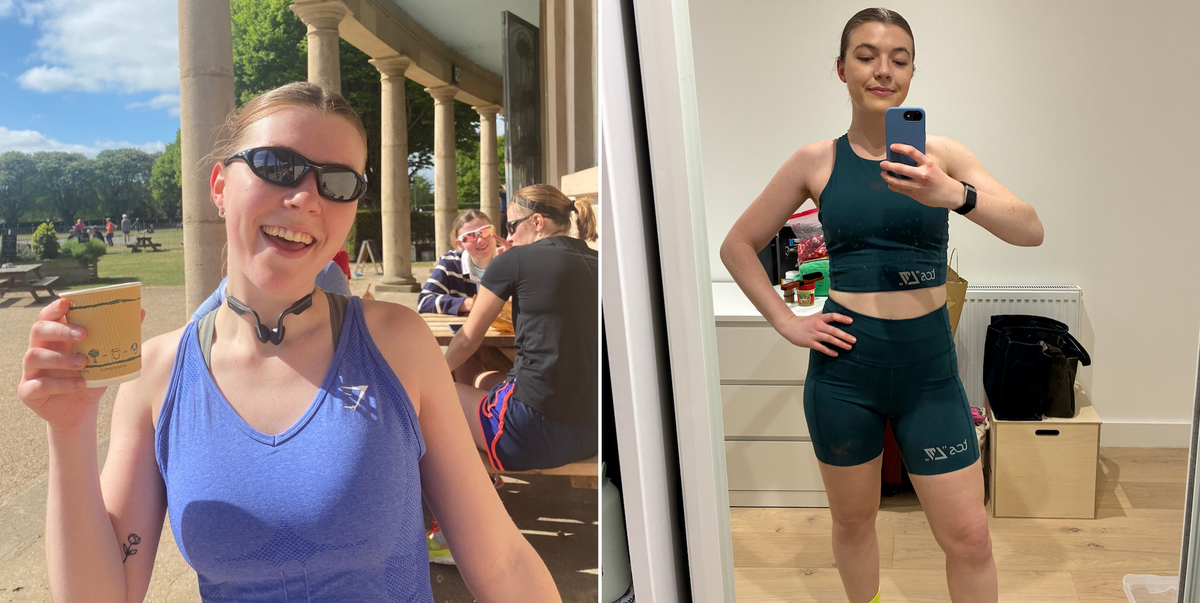
Considered a key indicator of longevity, VO2 max has made its way from the vernacular of performance athletes to the wellness lingo of us mere mortals in recent years. While I’m not a data-obsessive (I detest sleep tracking), I’ve enjoyed that my WHOOP stores all my data in one place should I want to peruse it. One metric I’m somewhat smug about? You guessed it: VO2 max.
According to WHOOP’s estimations, my VO2 max has fluctuated between 46-48 in the last six months, with Apple Health estimating that it’s been as high as 51.1. Both scores put me in the ‘excellent’ range for my age (26) and gender – placing me around the 85th percentile. Below, an expert unpicks the weekly routine behind my VO2 max rating and explains how to improve yours.
What is VO2 max?
‘VO2 max is the objective measurement of cardiorespiratory fitness. Or, in layman’s terms, it puts a number against how aerobically fit an individual is,’ explains physiologist, wellbeing expert and host of The Energy Equation Podcast, Oliver Patrick. ‘The metric reflects how many millilitres of oxygen an individual’s body can consume per kilogram of body weight, per minute, during maximal exercise.’
‘Values typically range from the 20s upwards – expressed in ml/kg/min – with the highest recorded values exceeding 90 ml/kg/min in elite endurance athletes,’ he adds.
Why is VO2 max important?
While aiming for elite athlete-level scores isn’t necessary, striving for a decent score is important.
‘VO2 max has moved far more into the mainstream as science increasingly demonstrates its predictive value for life expectancy and strong association with overall health. Large cohort studies have shown VO2 max to be one of the most powerful single predictors of all-cause mortality,’ says Patrick.
While an upper-end value might give an Olympic triathlete the gold medal edge, at the lower end of the spectrum, says Patrick, ‘it may help determine whether an individual can tolerate the physiological stress of major surgery’. In other words, he adds: ‘It’s not just a fitness number, but arguably a “life capacity” marker.’
The good news? You don’t need to do a bunch of intense workouts to improve your VO2 max. Balance and enjoyment are key.
My typical weekly fitness routineTwo simple 30-minute strength sessions (sometimes one of these is hot Pilates) Two runs: one speed session and one easier, long runOne 40-minute netball match Daily walking
I’ve been training for my first marathon over the last few months but the only thing that’s really changed is that my easier, long run has gotten, well, longer. That might help explain why my VO2 max has remained fairly stable.
‘Your exercise programme looks well structured, with strong strength and movement foundations – the long run is likely supporting aerobic development, while speed work and netball provide exposure to higher intensity zones 4-5,’ says Patrick. While ‘the science of how to improve VO2 max remains an active area of research and too complex to reduce to a single method,’ notes Patrick, ‘it’s broadly accepted that effective training includes a blend of lower-intensity aerobic work – often referred to as zones 1 and 2.’
Related Story
Indeed, my typical weekly routine follows the so-called 80/20 principle – ‘the popularised, polarised training model that suggests roughly 80% of aerobic training volume occurs at low intensity – where conversation is possible – and around 20% at high intensity, where conversation is not possible and effort is close to maximal.’
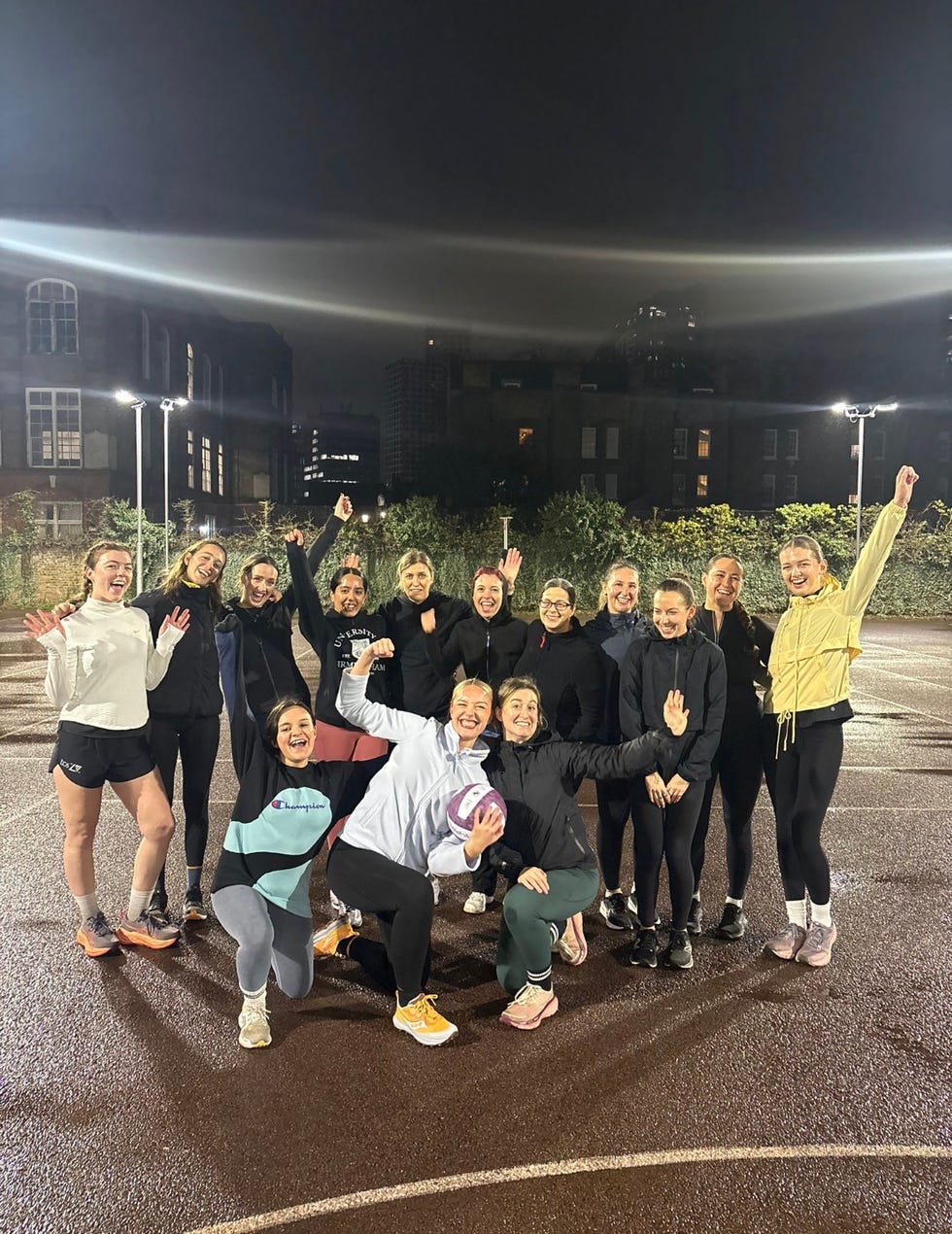
‘This higher intensity work is typically performed in intervals of around 2-5 minutes with recovery periods in between,’ adds Patrick. That’s usually the format my speed run will take and I’m also performing short bursts of high intensity running during a netball game.
 Hearst UK
A team sport like netball is an enjoyable way of incorporating higher intensity exercise into your routine
Another popular workout many people swear by – including a fair few elite athletes and celebs including Jessica Biel – is the Norwegian 4×4 workout, which comprises 4 4-minute high-intensity cardio intervals with 4 recovery periods.
Strength training and VO2 max
Can strength training improve VO2 max? Yes, but the effect is typically smaller than traditional aerobic training, says Patrick. ‘It can elevate heart rate into higher intensity zones, particularly when performed in circuits or with minimal rest.’
More importantly, he adds, ‘strength training contributes to peripheral adaptations – changes within the muscles themselves – such as increased mitochondrial density [the concentration of mitochondria – the powerhouses of cells] and improved capillarisation [an increased capillary network surrounding the muscles, improving blood flow]. These adaptations enhance the muscles’ ability to utilise oxygen.’
Strength training helps support aerobic fitness indirectly, too. ‘It’s critical for injury prevention, meaning individuals are more likely to tolerate the volume and intensity of aerobic training required to improve VO2 max,’ highlights Patrick.
Caveats
It’s not all up to the effort you’re putting in, though, he flags. ‘A significant portion of an individual’s VO2 max is heritable – potentially up to 50% or more. This also helps explain why some individuals respond very strongly to training – so-called “high responders” – while others see more modest improvements,’ says Patrick. ‘That said, most people can still make meaningful improvements with consistent, structured training.’
 Hannah Bradfield
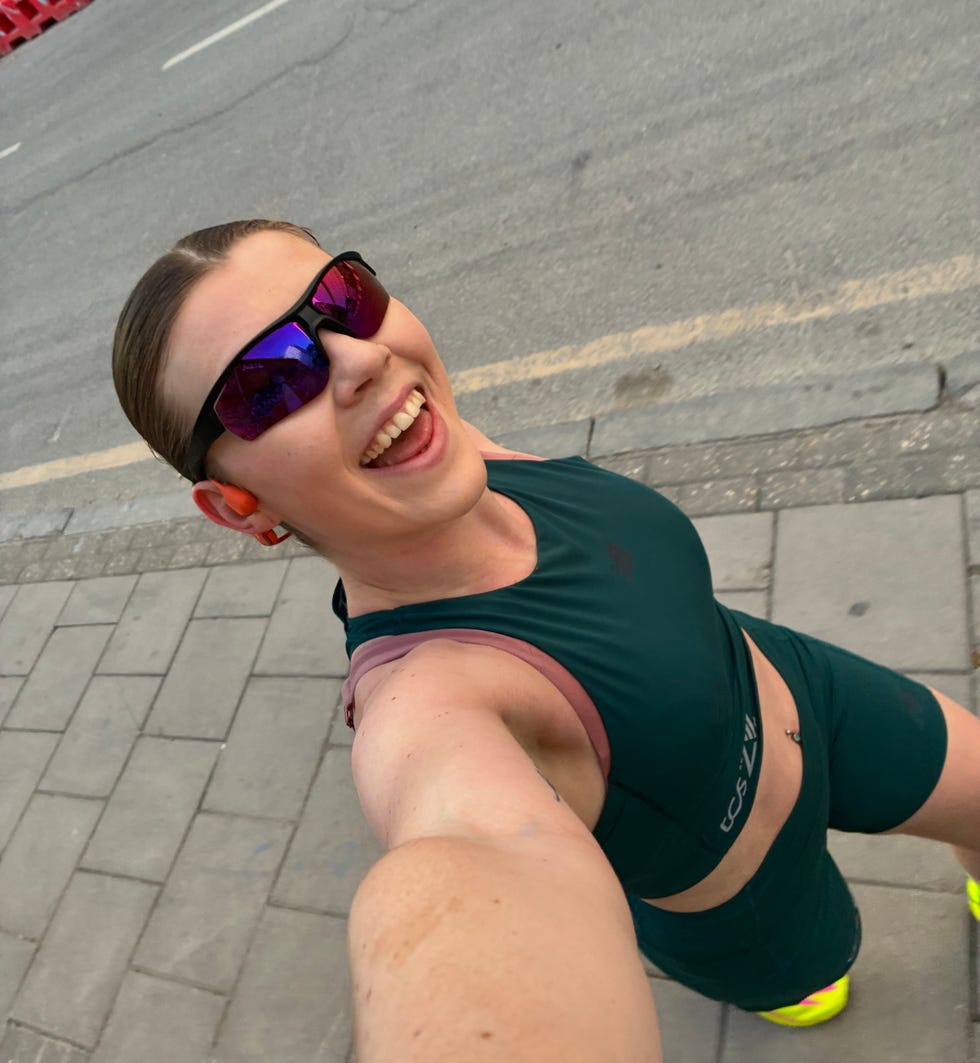
Keeping consistent with running helped Hannah achieve the excellent VO2 max score she keeps banging on about
Such training can prompt improvements of around 10-25% in VO2 max, with ‘larger improvements sometimes observed in beginners, especially when combined with weight loss, which improves the relative (per kg) measure.’ This might help explain why mine has stayed somewhat stable over the past year – I was already active and my routine hasn’t changed drastically.
The bottom line
‘Viewing VO2 max as a marker of progress rather than a fixed endpoint is an important mindset for using it effectively,’ notes Patrick. ‘I believe we will increasingly see it enter the medical, longevity and corporate sectors.
‘The “Life capacity” marker is on the rise – and for good reason. It might be the biggest feature keeping you on the planet.’
Having a strong core is about far more than sporting a six-pack. Build functional mid-section strength – while also improving your power, posture, coordination and balance – with WH COLLECTIVE coach Izy George’s 4-week core challenge. Download the Women’s Health UK app to access the full training plan today.
 Related Stories
Hannah Bradfield is a Senior Health and Fitness Writer for Women’s Health UK. An NCTJ-accredited journalist, Hannah graduated from Loughborough University with a BA in English and Sport Science and an MA in Media and Cultural Analysis. She has been covering sports, health and fitness for the last five years and has created content for outlets including BBC Sport, BBC Sounds, Runner’s World and Stylist. She especially enjoys interviewing those working within the community to improve access to sport, exercise and wellness. Hannah is a 2024 John Schofield Trust Fellow and was also named a 2022 Rising Star in Journalism by The Printing Charity. A keen runner, Hannah was firmly a sprinter growing up (also dabbling in long jump) but has since transitioned to longer-distance running. While 10K is her favoured race distance, she loves running or volunteering at parkrun every Saturday, followed, of course, by pastries. She’s always looking for fun new runs and races to do and brunch spots to try.