
If you haven’t heard us prattling on about VO2 max by now, we’re here once again to tell you just how important this metric is.
Once the preserve of elite performance athletes, VO2 max is increasingly being recognised as a key indicator of longevity. But thanks to busy schedules and life, well, life-ing, we don’t all have time to perform long, fancy workouts for want of a better score.
Luckily, orthopaedic surgeon and sports medicine specialist Jocelyn Ross Wittstein, MD has shared on Instagram five simple ways to help improve your VO2 max at home.
What is VO2 max and why is it important?
First things first, a quick check-in on what VO2 max actually means and why it’s so important.
‘VO2 max is the objective measurement of cardiorespiratory fitness. Or, in layman’s terms, it puts a number against how aerobically fit an individual is,’ physiologist and wellbeing expert Oliver Patrick previously told Women’s Health. ‘The metric reflects how many millilitres of oxygen an individual’s body can consume per kilogram of body weight, per minute, during maximal exercise.
‘VO2 max has moved far more into the mainstream as science increasingly demonstrates its predictive value for life expectancy and strong association with overall health. Large cohort studies have shown VO2 max to be one of the most powerful single predictors of all-cause mortality,’ noted Patrick, adding that it can even ‘help determine whether an individual can tolerate the physiological stress of major surgery’.
5 simple ways to improve your VO2 max at home
So, now for the all-important question of how you can improve it.
As Dr Wittstein highlighted on Instagram, we can use something called sprint interval training.
‘Sprint interval training is a type of exercise that involves short bursts of near-maximal effort with longer periods of rest in between, for example, 30 seconds of max effort with a 2-minute recovery, repeated 8 times,’ she explained.
‘You can achieve short bursts of elevation in heart rate through various forms of movement, many of which you can do at home without equipment, near your home if you have access to a hill, or with certain types of exercise equipment.’
And as well as improving VO2 max, Dr Wittstein noted, SIT ‘transiently elevates testosterone and growth hormone, contributing to muscle growth and repair’ and ‘also increases circulating levels of BDNF [a protein that supports the growth, repair and communication of brain cells], which is neuro-protective’.
Below are her recommendations for five simple activities you can do at home to help improve your VO2 max.
Perform your chosen exercise for 30 secs followed by 2 mins recovery, repeated 8 times.
1. Fast feet with squat jumps
Combining a classic running agility drill – fast feet – with squat jumps, this exercise is a great way to get your heart rate up.
You’ll need to stand with your feet hip-width apart and knees slightly bent. Then, staying light on the balls of your feet, sprint on the spot using quick, short steps. Every few seconds, perform a squat jump. Keep your core engaged and chest lifted throughout.
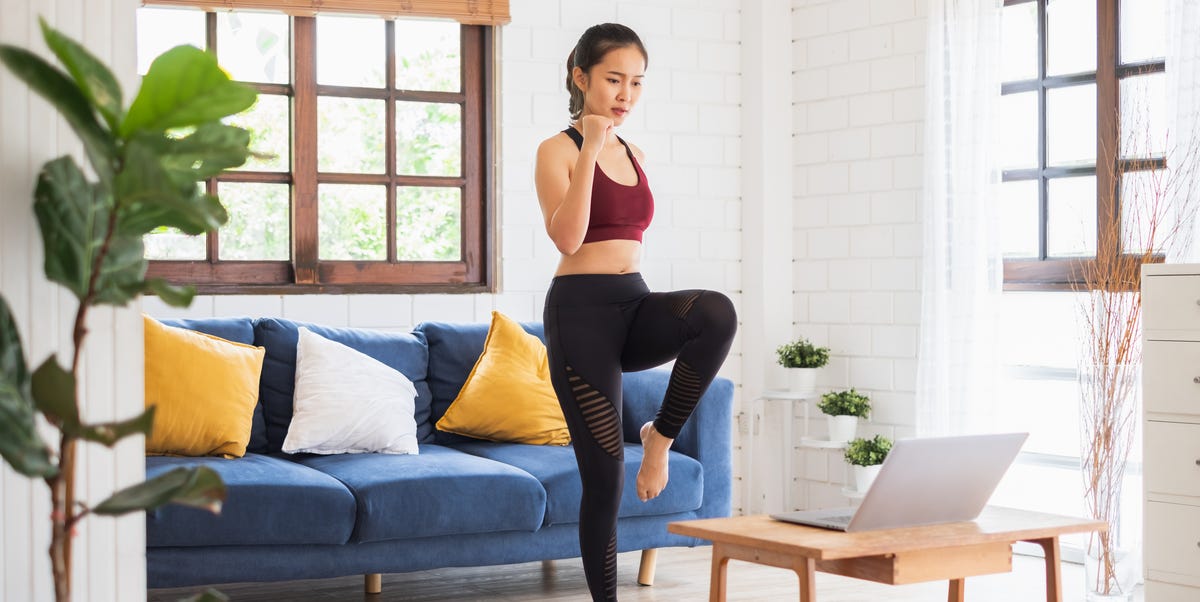
2. High knees
Keeping your core tight and chest tall, swing your right knee and left hand forward while extending your right arm behind you. Quickly switch arms and legs, and continue alternating.
3. High-speed skipping 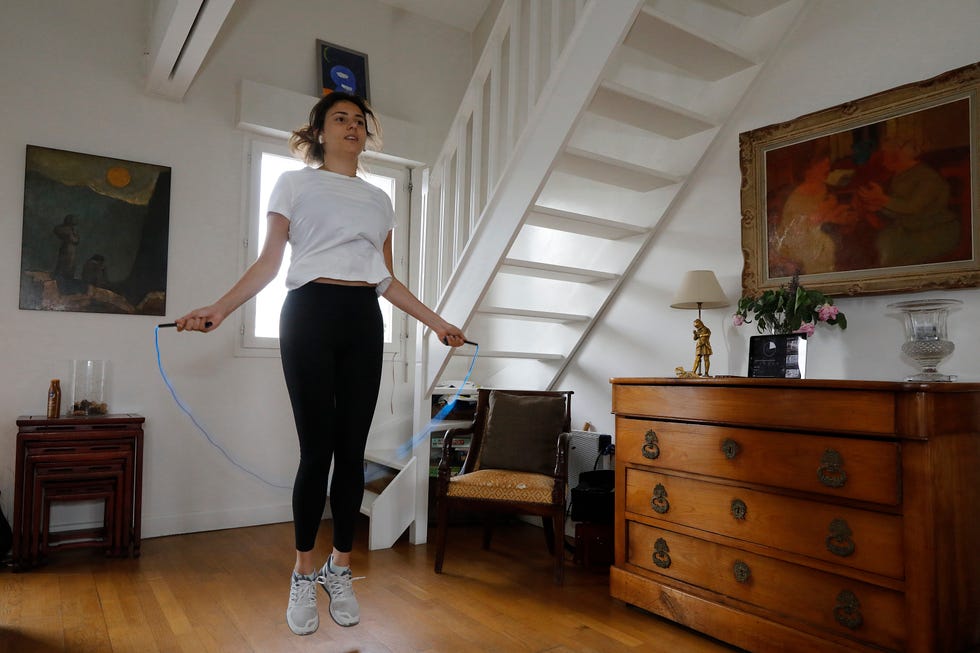 Godong//Getty Images
Skipping is a great way to boost your VO2 max at home
Keep your shoulders relaxed and your feet close together as you jump up and down. Look forward, not down, and maintain soft knees and a neutral spine. Jump high and land softly
4. Incline running
If you have a hill nearby, Dr Wittstein also recommends using it to run up and jog down.
5. Non-running cardio
And if you’re lucky enough to have a cardio machine at home, she also highlights that sprinting isn’t limited to running – other forms of cardio like rowing and cycling can be just as valuable.
Don’t forget the value of lower-intensity work, too, though. Whether it’s your daily walks or easy, steady-state runs or bike rides, building a solid aerobic base is also important for improving your VO2 max.
While ‘the science of how to improve VO2 max remains an active area of research and too complex to reduce to a single method’, Patrick told us, ‘it’s broadly accepted that effective training includes a blend of lower-intensity aerobic work – often referred to as zones 1 and 2’ alongside higher-intensity activities like those listed above.
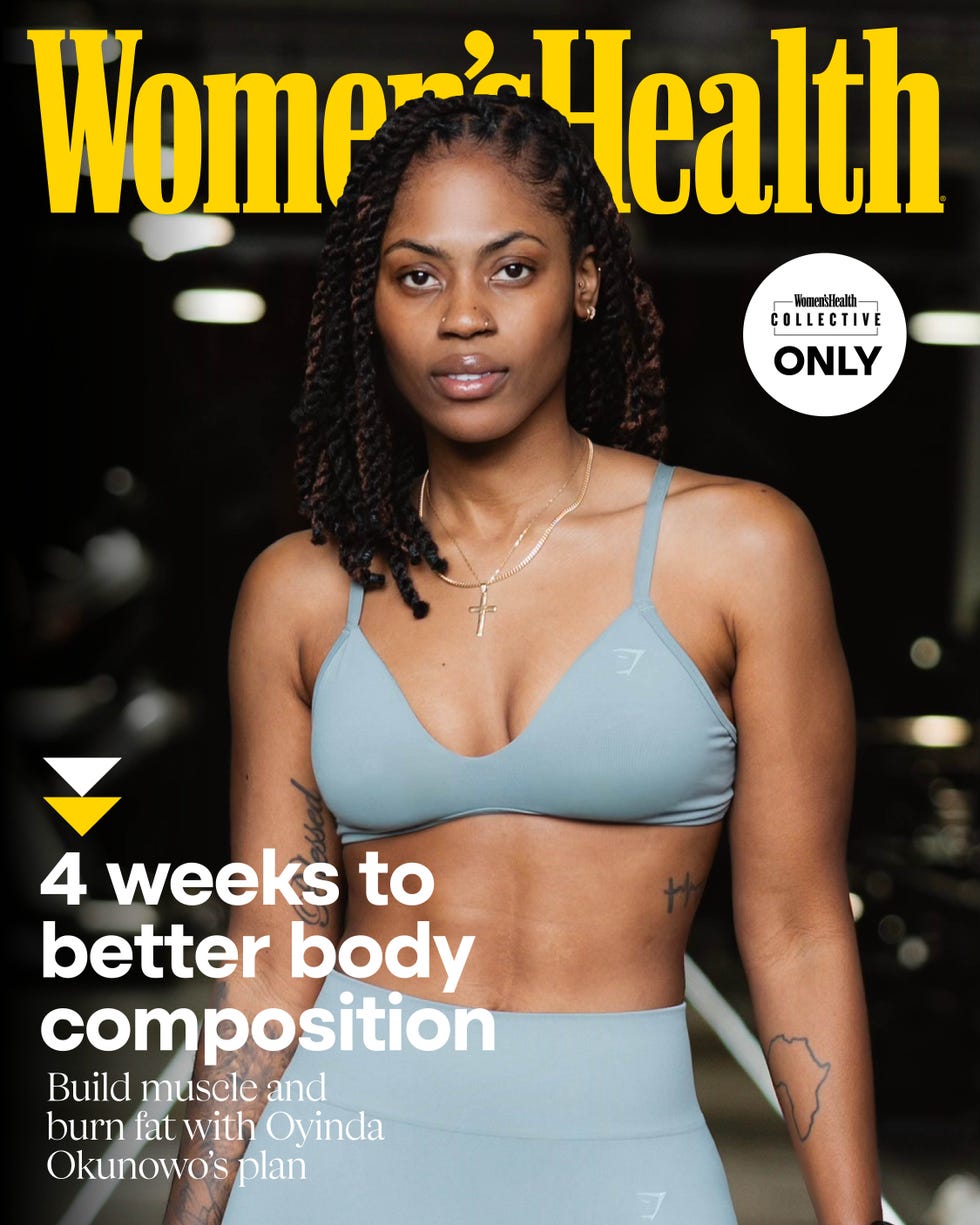
One of our most frequently asked questions here at Women’s Health? How to build muscle and burn fat at the same time. So, we asked superstar trainer Oyinda Okunowo exactly how to do it. In this 4-week plan – created exclusively for Women’s Health COLLECTIVE members – you’ll get the workouts and nutrition guidance needed to help you on your way to better body composition. Tap the link below to unlock 14 days of free access to Oyinda’s plan and start training today.
Hannah Bradfield is a Senior Health and Fitness Writer for Women’s Health UK. An NCTJ-accredited journalist, Hannah graduated from Loughborough University with a BA in English and Sport Science and an MA in Media and Cultural Analysis. She has been covering sports, health and fitness for the last five years and has created content for outlets including BBC Sport, BBC Sounds, Runner’s World and Stylist. She especially enjoys interviewing those working within the community to improve access to sport, exercise and wellness. Hannah is a 2024 John Schofield Trust Fellow and was also named a 2022 Rising Star in Journalism by The Printing Charity. A keen runner, Hannah was firmly a sprinter growing up (also dabbling in long jump) but has since transitioned to longer-distance running. While 10K is her favoured race distance, she loves running or volunteering at parkrun every Saturday, followed, of course, by pastries. She’s always looking for fun new runs and races to do and brunch spots to try.