
Most people fail to reach recommended levels of either sleep or exercise, a new study shows, raising questions about health advice and how humans should prioritise fitness and wellbeing goals. So, if it comes down to a choice between, say, going for a run and getting more shut-eye, which should we choose?
Researchers from Flinders University in Australia collected information from over 70,000 people around the world using two consumer health devices: an under-mattress sleep sensor and a wrist-worn health tracker between January 2020 and September 2023, adding up to more than 28 million days of real-world health data to analyse.
They found that only 12.9% of people achieved the recommended sleep duration of between seven and nine hours per night and the recommended movement of 8,000 steps per day. Worse, 16.5% of people were deemed to have “short” sleep periods of less than seven hours a night and “sedentary lives” in which they took fewer than 5,000 steps daily, lifestyle factors that have been linked to the onset of chronic disease.
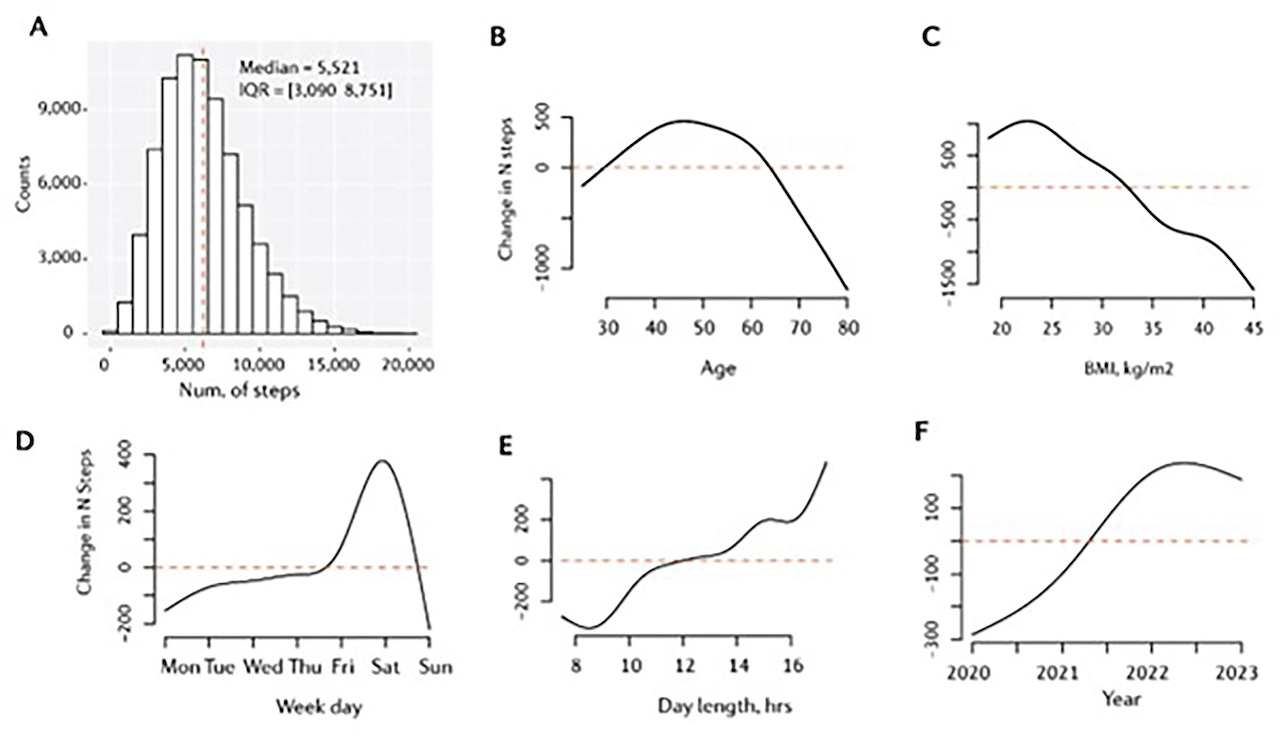 © Fitton et al.
Many people might assume that common sense suggests a busy, active day would promote better, longer sleep, but the scientists did not rely on conventional wisdom, going a step further to examine whether step count really was affected by sleep the previous night, or vice versa.
They discovered that sleep levels were “largely unaffected by previous-day step count,” meaning the study’s subjects did not sleep for longer after a particularly active day. On the other hand, sleep quantity and quality did affect the amount of exercise people then got—but perhaps not in the way we might expect.
In fact, a night’s sleep of six hours (falling into the short category and representing the 25th percentile) “equates to the greatest next-day step count,” adding 339 more steps than a sleep of eight hours’ duration. However, sleep “efficiency” (the proportion of time spent in bed actually asleep) is important as it also “positively predicts next-day step count in a dose-dependent manner,” the researchers said, with people who are at the 75th percentile for sleep efficiency achieving 282 steps a day more than those at the 25th percentile.”
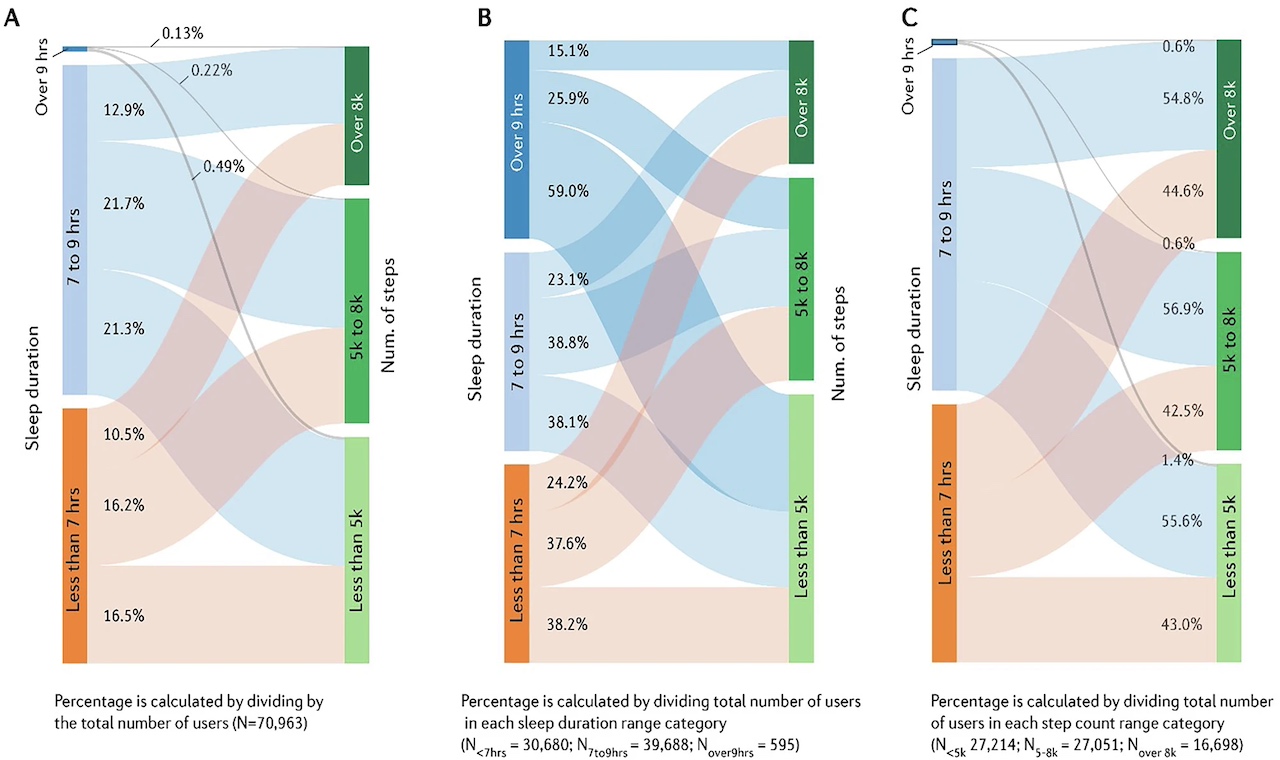 © Fitton et al.
So, for those wondering which is more important, sleep or exercise, the results clearly show that getting around six hours of quality sleep per night appears to be associated with achieving more exercise the following day, and that the effects of sleep on physical activity the following day are larger than the reverse.
The researchers go on to question whether traditional global sleep and physical activity targets can ever be mutually attainable, but they only recommend public health initiatives and interventions that focus on sleep more than exercise in contexts where resources are limited. Otherwise, they say, efforts that aim to enhance both sleep and physical activity are likely to prove more effective than those that target either behaviour in isolation.