
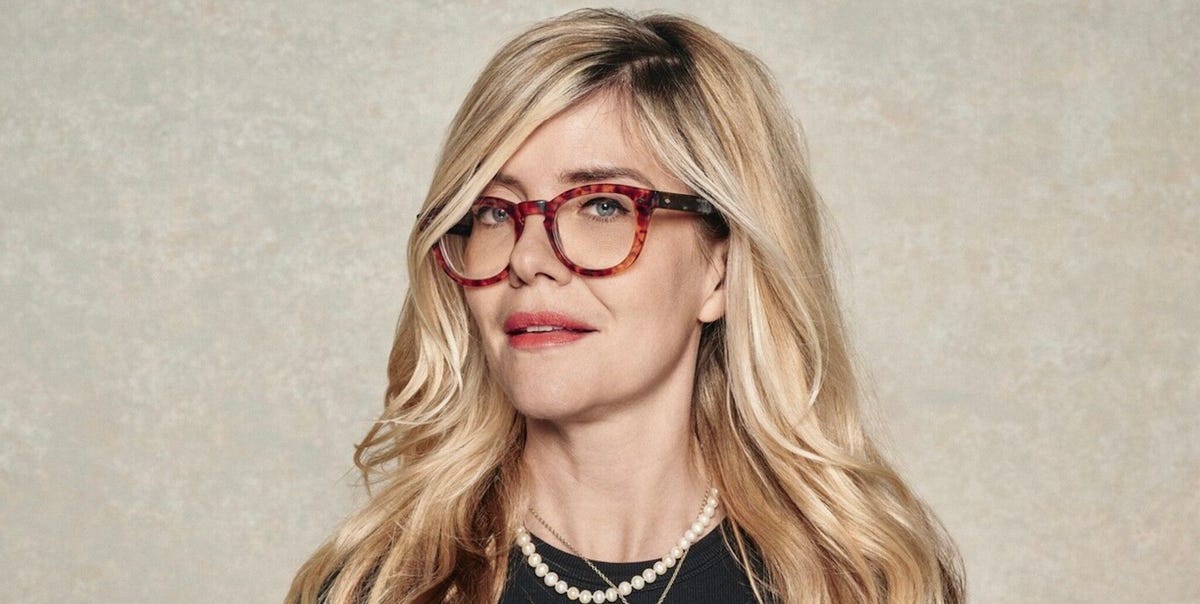
A friend. A pal. A proper mate. That was what I decided to become to my body the day I met my personal trainer. Having endured nearly three decades of endometriosis – as well as seven rounds of IVF in order to have my two children; one round for my son, six for my daughter – my body had come to feel like the enemy. But I was determined to reconnect with it. And in Frankie Holah – a woman I now call my ‘fitness fairy’ – I’d found my person.
I’ve been suffering from the condition – in which tissue similar to the womb lining, that’s meant to leave your body, grows and builds outside the uterus – since my periods started at the age of 10. But it would be more than 20 years until I’d be diagnosed at 31, after two years of trying to get pregnant naturally – which meant more than 20 years of enduring excruciating, bone-grinding pain without ever having a label for it.
Another decade later, grinding pain remains the hallmark of the condition for me, as it does for many of the estimated one in 10 women who suffer from it. (The same number – including me – suffer with adenomyosis: where the womb lining grows into the muscular wall, of which even less is understood.) My pain manifests as a drilling sensation from my pelvis that travels down my legs – making them feel as though I can’t lift them to go up the stairs. Sometimes, the hurt spreads to my arms or chest, and comes with crippling nausea and loss of appetite. I also run cold; freezing even. It’s like someone turned the heating off in my body. But honestly? It’s difficult to find the language for the pain; I talk into a microphone for a living, and even I find it almost impossible to articulate how this differs from the ‘normal’ discomfort of your menstrual cycle.
It’s this difficultly, I believe, that’s behind the lack of airtime the condition suffers – most importantly in rooms where funding decisions are made. That there’s been no groundbreaking research that’s led to any gold-standard treatments for a condition that afflicts as many women as type 2 diabetes – let alone a cure – borders on criminal. It also makes sex painful, and while I’m grateful I don’t count myself as having that symptom, can you imagine if there was a disease that made intercourse painful for men? There would definitely be a cure. Almost instantly. And as much as I’d love the scoop, having seen numerous doctors, I can say with some certainty that the best sufferers can hope for is settling on the most adequate ‘fix’ for them. Perhaps that’s the coil, bio-identical hormones, tweaking your diet or even a hysterectomy – although that, I can’t stress enough, is not a cure. And so it falls to each of us – the women in pain – to find our own ‘fixes’.
Before movement, there was work. I love that my brain still functions when my body is against me. It’s been this way on BBC Radio 4’s Today programme, on Woman’s Hour before that – and every job I’ve had since I started my career at 21. And while I can’t say discussing Britain’s water policy soothes me the same way as clutching my trusted microwaveable heat pack, I do find focusing on something hard when I’m in pain to be strangely helpful.
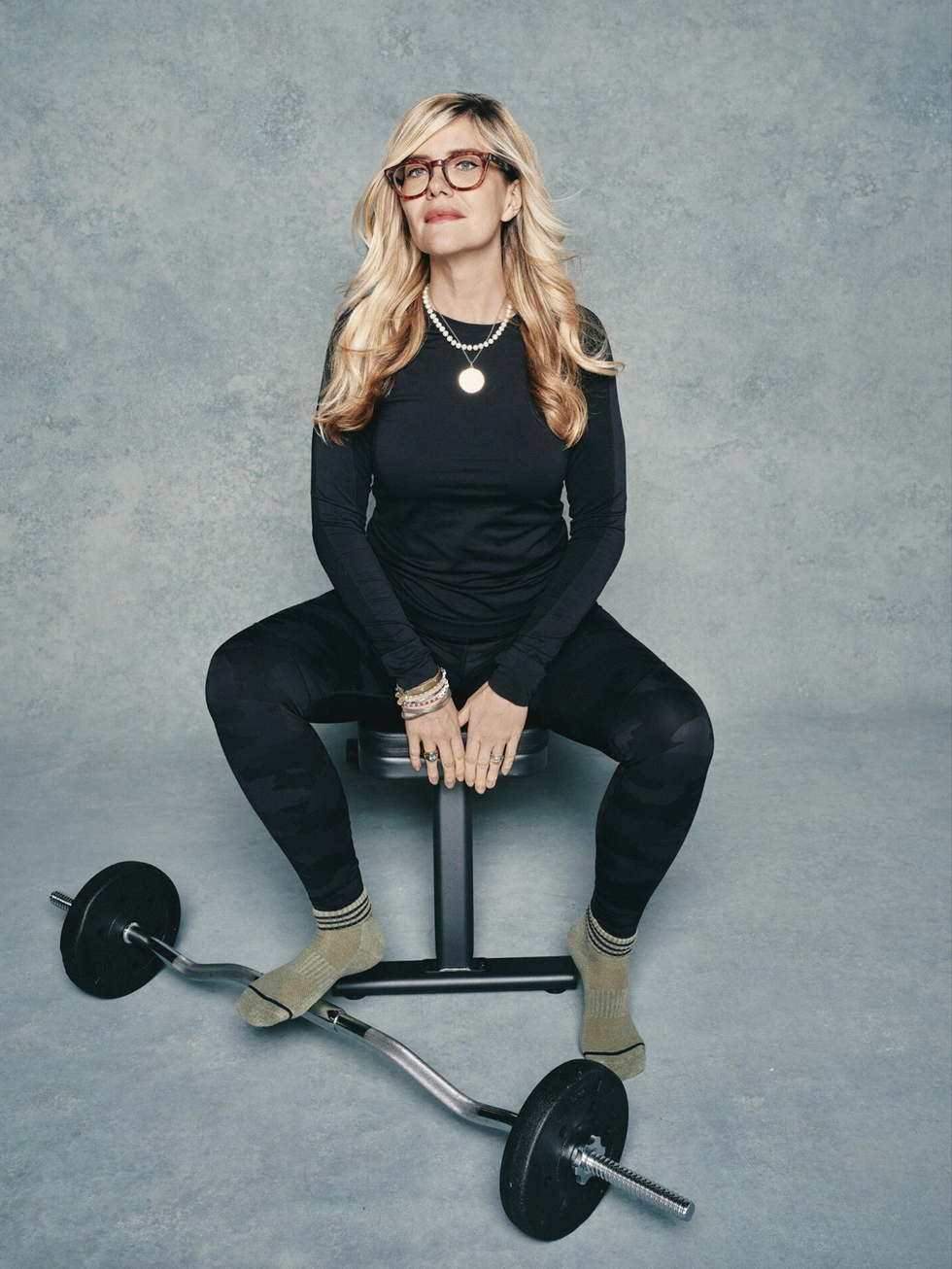
Yet, the ultimate challenge remains: accepting I have a disease that destroys women from the inside out. On the occasions it’s sunk its claws into my experience of motherhood, my husband, Jeremy, takes the lead; we’re a team. But endometriosis became entangled into our fertility journey, too; a relationship that science is still unclear on, given I was simply told I had ‘unexplained infertility’ for years. Despite years of applying my problem-solving, information-obsessed brain to this problem, it’s only recently that I came to understand the degree to which endometriosis is a hormonally driven and system-wide inflammatory condition.
Indeed, my doctors and I now believe that I didn’t have enough oestrogen – something IVF was able to swiftly provide, meaning it worked in just one round in order for me to have our son in 2018. I didn’t realise just how fortunate we were until the terrible sequel; it took us six rounds to have our daughter. The pandemic hitting just as we started that process meant I had to attend hospital appointments alone with my masked-up NHS consultant. But worse still was that every time I came out of a failed cycle, the endometriosis was aggravated and my cycles were horrific. It felt like my body had become a pin cushion – a tool to achieve what so many other women could do with ease – as I injected drugs into any spare spot I could find.
‘I wanted to level up physically in a way that endometriosis hadn’t allowed me to’
I almost gave up. On my penultimate round, I had a miscarriage; how could I have finally got pregnant, I thought, only to lose the baby nine weeks in? It was like being in a casino where you never beat the dealer. It was a doctor friend who lived nearby, going through a similar experience, who encouraged me – on a brisk walk around our postcode – to ‘seize the evidence’. A pregnancy loss is heartbreaking, she acknowledged, but it also indicated that something was finally working. I arrived home to tell my husband ‘one more time’. Our daughter was born three days before that same doctor friend welcomed a son after her own eight rounds. We remain forever bound.
I’m not ‘woo woo’ when it comes to health. I tried reflexology, acupuncture and sipping brown herby water, but nothing worked with fertility until we tried IVF. That’s why, when people ask me how I got pregnant, ‘hard medicine’ is my response. There’s a lot of blaming and cocooning of women when it comes to fertility treatment, but my last injection to have my son was on a stressful day in Downing Street when I was interviewing then-Prime Minister Theresa May. During the cycle before my miscarriage I did nothing – the embryo simply wasn’t viable.
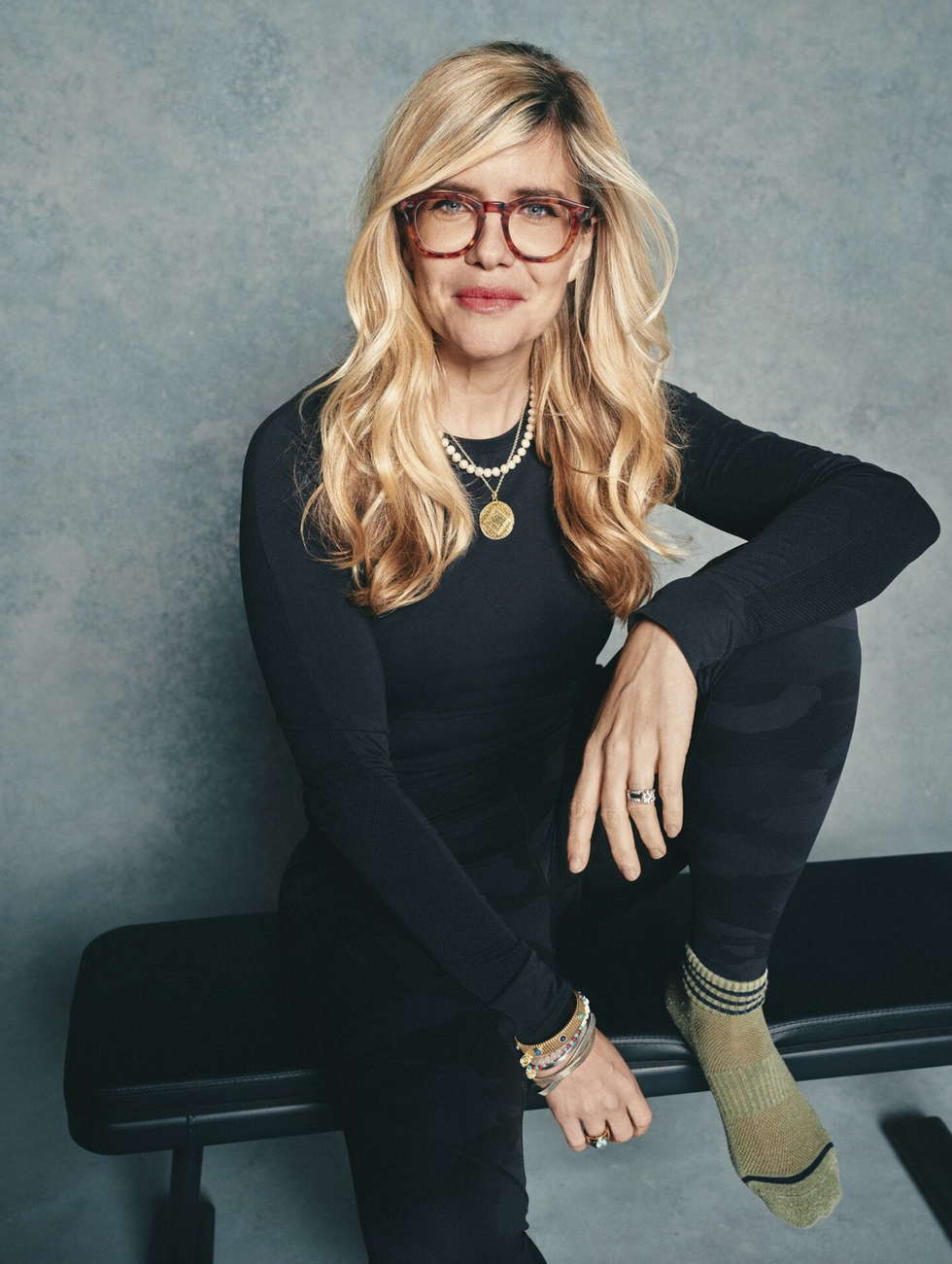
Still, while my endometriosis symptoms eased during pregnancy and breastfeeding in the months after giving birth – due to your menstrual cycle pausing – it started up like a gremlin almost immediately afterwards on both occasions. And it was while searching for the next phase of my ‘fix’ that I found Frankie – in the pages of my local newspaper. She used to have a column in the Brixton Bugle, and the authority and empathy contained within her words told me I’d found someone who could help me. ‘I will always turn up,’ I told her, when I booked my first batch of sessions. ‘I don’t know how I will be on the mat, but I will always be there.’
It helped that Frankie had walked in my postpartum shoes; that she had first-hand experience of the changes that accompany those weeks and months after having a child only underscored my gratitude that I found her when I did. Because while I wanted to level up physically in a way endometriosis hadn’t allowed me to, I was also thinking about diastasis recti (the separation of the stomach muscles during pregnancy) and how I was growing back together after two C-sections.
‘For anyone with diagnosed or suspected endometriosis, I can’t recommend movement enough’
But, when it came to my body, Frankie listened. She understood that while my discomfort was nearly constant, there would also be days when the pain was so severe that I could barely leave my bed; on other days, my loose stomach – a symptom exacerbated by the fact that my endometriosis is on my bowel, confirmed by a laparoscopy – would also leave me limited. And within her compassionate approach, I came to see just how valuable working out for 60 minutes, twice a week, could be for me.
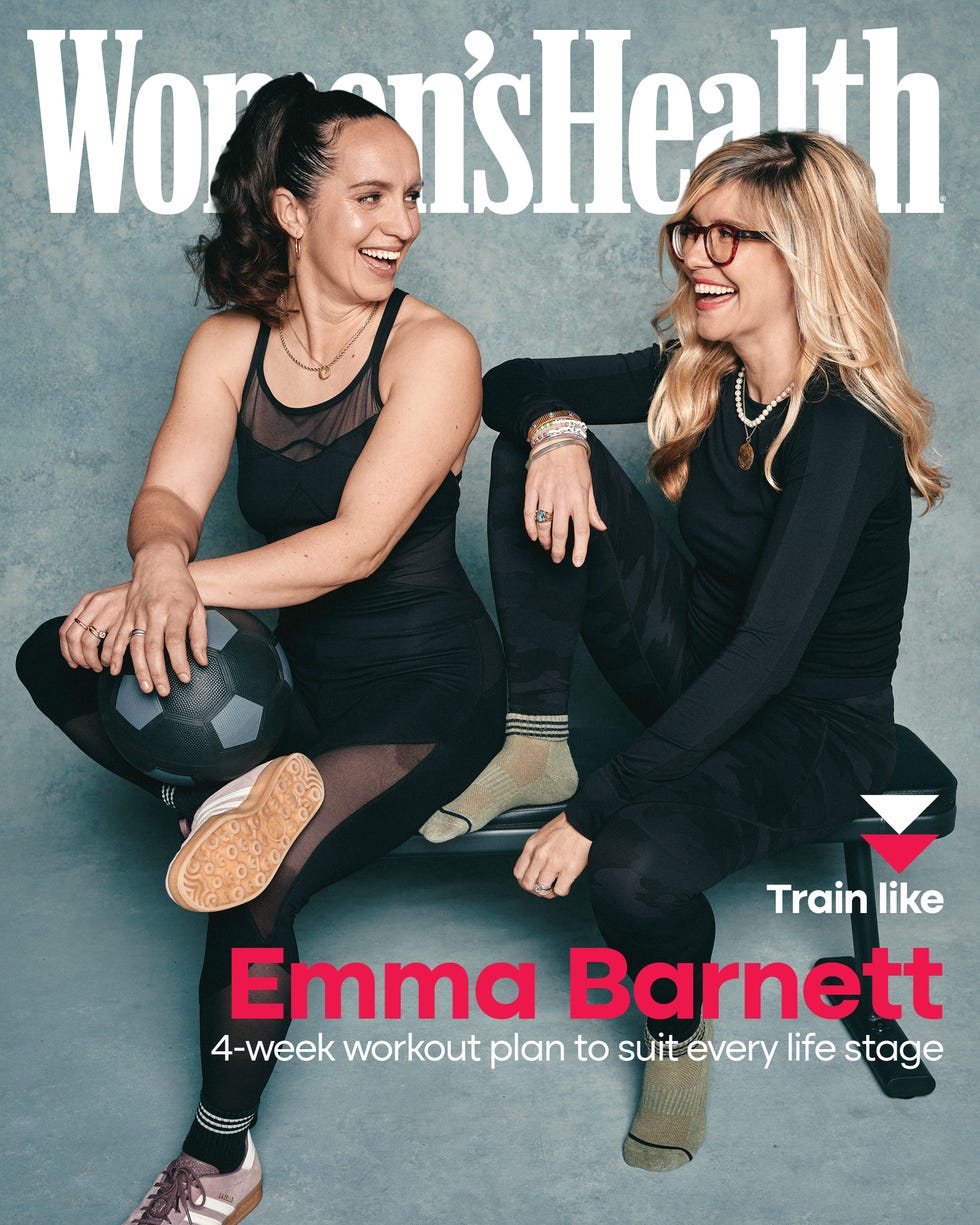
After years living with endometriosis and undergoing seven rounds of IVF, Radio 4 presenter Emma Barnett turned to training with PT Frankie Holah to rebuild strength and a more positive relationship with her body. Download the Women’s Health UK app to access Frankie’s full training plan.
The more we worked together, the more adept Frankie became at reading me – and exploiting my energy levels. Some days, I’d walk through the door feeling like a four out of 10 and she’d adapt the moves based on what I could do. On others, I’d arrive with a spring in my step – and she’d gauge how she could push me to perform at my best.
If I was physically ground down when we first met, more than two years on from that first phone call, I’ve started to rewrite the script on my relationship with my body. Left to my own devices, I’ve got barely a shred of discipline when it comes to training – and I’m woefully uneducated about how to move by myself. But armed with her notebook of workout plans, Frankie makes me feel held to account (something I love doing to others in my job); more important still, she’s helped me understand how best to work with my own body.
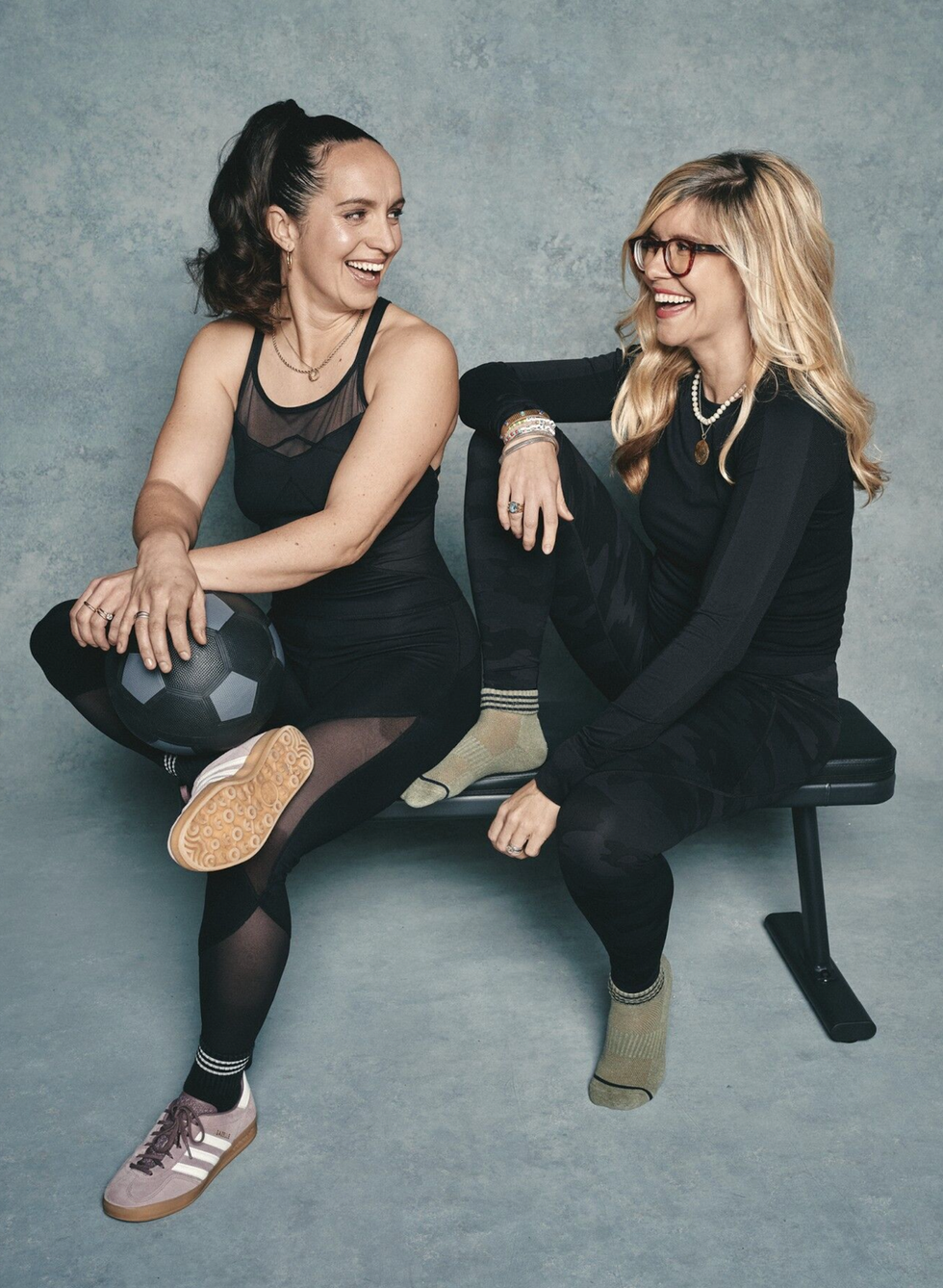
Emma with her personal trainer, Frankie Holah – the woman she calls her ‘fitness fairy’
That I’m in the privileged position of being able to afford a personal trainer isn’t lost on me. I also know this financial investment in my physical health will stand me in a good stead through my forties and beyond; strength training is vital for women navigating the hormonal fluctuations of the perimenopause, which is where I’m also at right now (ah, the joys of womanhood). And yet, my physical health is only one part of the equation. Having a fixed, twice-weekly appointment in my diary to go somewhere and move my aching corpus has been invaluable on those tougher pain days that can change on a whim like the weather.
For anyone managing endometriosis – be it diagnosed or suspected – I can’t recommend movement enough, even if you’re not able to access or afford a trainer. Instead, make a plan with a local friend to go for a regular walk. I personally love a ‘kitchen disco’; I’ll regularly put on music, dance around with my kids and just shake myself out. I’ve got a playlist for all moods, and it invigorates me. Although, I’ll admit, that’s not every day.
Because, more than anything, Frankie has taught me how important it is to meet yourself where you’re at that day or moment with exercise. To honour where you are on your fitness journey, whether you have a condition such as endometriosis or you’re postpartum. If you’re experiencing a lot of pain, it’s important to move within the capacity you have – whether that’s during a one-to-one PT session or a class – and, whatever you do, you should get to your cool-down feeling a little bit better able to cope. As she regularly reminds me, while your body might feel alien, it has done – and continues to do – incredible things. It shouldn’t be about getting your previous figure ‘back’ but moving ‘onwards’. There’s so much strength in that.
Listen to Emma’s new BBC podcast Ready To Talk With Emma Barnett, in which she interviews incredible people about the experiences that have unexpectedly reshaped their lives. Follow her on Instagam @emmabarnett
Training with endometriosis
PT and pre- and post-natal specialist Frankie Holah (@FrankieHolah) shares some tools on how to move your body in a way that works for you, rather than against.
Ease off
‘If Emma comes in on a bad day, we will keep it simpler,’ she explains. ‘That might be focusing on things she’s really familiar with that we’ve done a lot, as well as lightening the load or reducing the reps.’
Build upwards
‘In terms of structure, we’ll often start low to the ground – lying on the mat doing some mobility,’ shares Frankie. ‘This allows her nervous system to feel safe and calm, which will hopefully help get her to a place where she feels able to start lifting.’
Prioritise strength
‘I encourage Emma to focus on big compound movements that are very functional and will help her get through her day – enabling her to pick up her children with ease,’ she notes. ‘That’s deadlifts, overhead presses and rows.’
Be flexible
‘It’s about serving the person who walks through the door and not just trying to push through the plan,’ she explains. ‘Gauging whether the pain Emma is experiencing is something we can work with, or if we need to tone it back a little.’
Get checked
‘A women’s health physiotherapist will go further than standard NHS visits in teaching mums where their bodies are at pre- and postnatally,’ she explains. ‘If you can afford to go, it’ll benefit recovery and help trainers like me support you during workouts.’
Related Stories