

We all know exercise is good for us.
Moving our bodies has benefits for our mental and physical health, with even a small increase in physical activity leading to big benefits.
New Australian research, published today in PLOS Medicine, has highlighted the importance for women in their 40s, 50s, 60s and 70s to stay physically active.
Researchers found that middle-aged women who exercised regularly halved their risk of premature death.
But lead researcher Binh Nguyen from the University of Sydney said nearly half of Australian women aged between 45 and 64 were simply not doing enough exercise.
“It’s so important to remain physically active during this life stage because it can provide long-term health benefits,” she said.
“It cuts the risk of dying [early] by half, especially if they are regularly active over many years.”
So what does the study tell us?
And what’s the takeaway for women — and Australians more broadly — as we approach middle age?
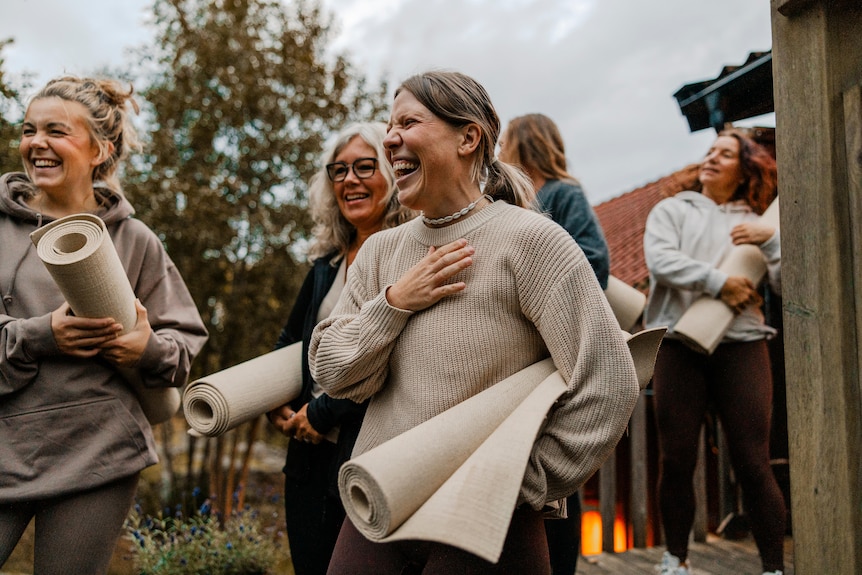
Most Australians are not meeting physical activity guidelines. (Getty images: Johner RF)
What are the study findings and limitations?
Researchers used data from 11,169 women born between 1946 and 1951 enrolled in the Australian Longitudinal Study on Women’s Health (ALSWH).
Globally, the ALSWH — which began in 1996 — is one of the biggest studies of its kind, following the health and wellbeing of more than 58,000 Australian women.
Most studies about physical activity use data from a single point in time but Dr Nguyen’s team looked at data that tracked women aged between about 45 and 70 for 15 years.
This enabled them to compare the health of women who did and didn’t report exercising regularly in a similar way to a randomised controlled trial (RCT), but for a longer period of time.
They found the incidence of death was 5.3 per cent in women who consistently met exercise guidelines compared to 10.4 per cent in those who consistently did not.
Small boosts to sleep, exercise and veggie intake may help you live longer
Joanne McVeigh, a movement behaviour scientist at Perth’s Curtin University who did not contribute to the study, said true randomised control trials provided a high level of evidence but they were often “short, costly, and prone to participant retention issues”.
She said the methodology Dr Nguyen’s team used “would be almost impossible to do as a real RCT”.
“I think this is one of the first times this method has been applied to a longitudinal physical activity data set,” Dr McVeigh said.
Although the study provided “reliable evidence”, Dr McVeigh said moving forward, its methodology should complement — not replace — randomised control trials.
The study also had a number of limitations, including that it relied on participant’s self-reporting and included mostly healthy women.
And researchers remained uncertain about the exact benefits for women who started to meet physical activity guidelines part-way through midlife.
What are the physical activity guidelines?
Dr Nguyen’s study measured against guidelines from the World Health Organization, which recommends people 18 and older do at least 150 minutes of moderate intensity exercise a week.
These recommendations vary slightly to Australia’s newly released 24-hour movement guidelines, which suggest people do moderate- to vigorous-intensity exercise for 30 minutes or more most days and limit sedentary time.
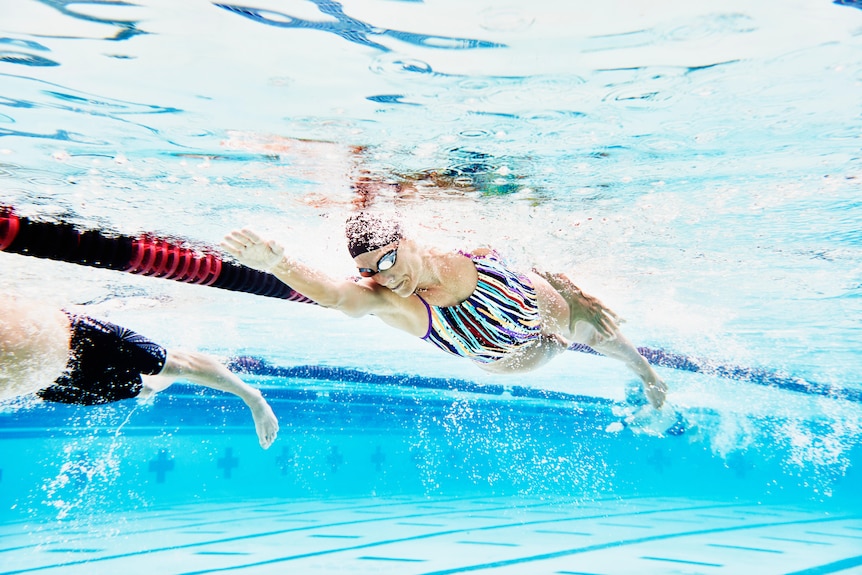
People in all ages and stages benefit from exercise. (Getty images: Thomas Barwick)
But no matter what you measure against, Australians are simply not moving enough, according to Stuart Biddle a professor of physical activity and health at the University of Southern Queensland.
“Our environments are pushing us away from being physically active,” Professor Biddle said.
“We have too many cars, too much automation, too much sitting, so although the opportunities are there to choose to be physically active, a lot of people aren’t doing it.”
Just 7,000 steps a day linked to big health gains, research finds
According to the Australian Institute of Health and Welfare, 37 per cent of people 18–64 and 57 per cent of people 65 and older are not meeting the physical activity guidelines.
Professor Biddle said typically younger people were more physically active than older Australians.
“Physical activity is extremely important for the body and the mind and we shouldn’t underestimate how important it is,” he said.
“You can’t say: ‘I was physically active 10 years ago, I’m not physically active now, but it doesn’t matter’.
“You are either physically active now and getting the benefits or you’re not.”
Start an exercise routine at any age
All three experts said there were substantial benefits to starting exercise at any age, and continuing physical activity throughout their lifetimes.
Looking at the findings in her own study, Dr Nguyen said specifically for middle-aged women, being active could help protect against early death.
But she conceded it wasn’t always easy for this cohort to schedule in a new exercise routine.
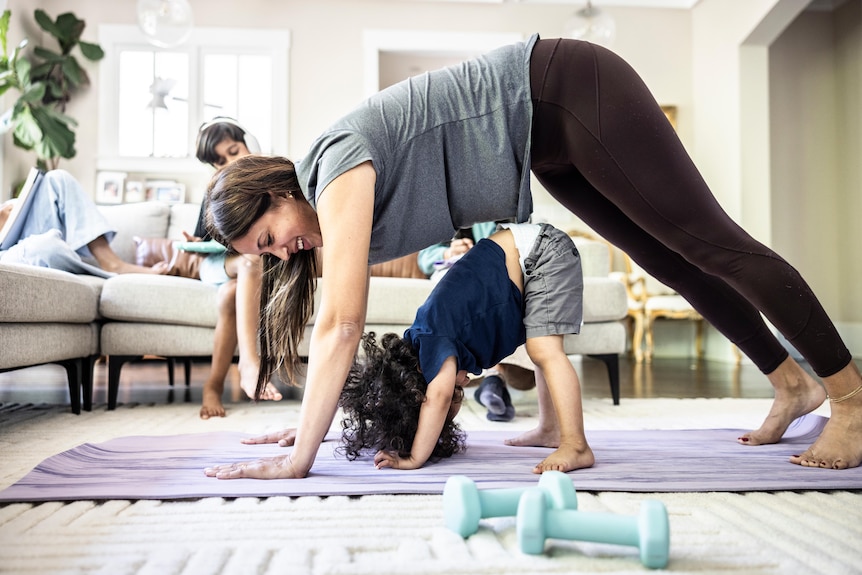
It’s never to late to introduce a new exercise routine, according to experts. (Getty images: MoMo Productions)
“There’s lots going on, they might be caring for kids, they might be caring for parents, they’re also working, they’re juggling a lot, physical activity could be neglected,” she said.
Professor Biddle added that exercising regularly helped people achieve a “better quality of life, not just quantity of life”.
“Physical activity is extremely important for the body and the mind and we shouldn’t underestimate how important it is,” he said.
ABC Health in your Instagram feed
Dr McVeigh said the best type of exercise was one people would actually do.
“Find something you enjoy, fit it into your day, and build from there,” she said.
“Aim for 30 minutes of brisk walking five days a week, lift weights or do body weight exercises twice a week, and include some balance or yoga.”
And it’s never to late to start exercise, even if you’re already in your 40s or 50s, Dr McVeigh added.
“The kids may be older, you know yourself better,” she said.
“The investments you make in your body now will directly shape how vital, independent, and healthy you feel for the next 30 – 40 years.”