
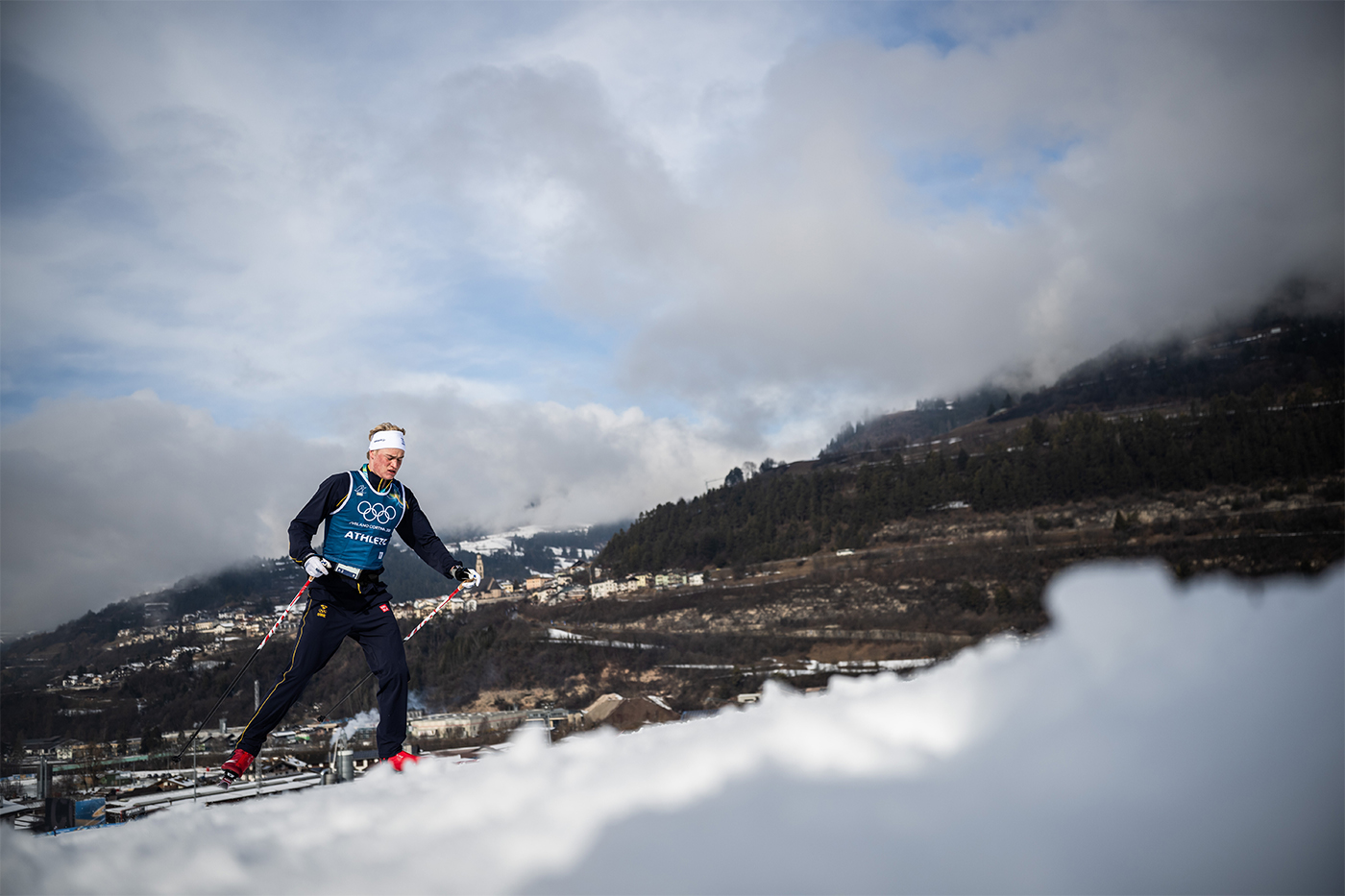
Some athletes go to the gym. Some run long distances across vast terrains. Some even build their fitness using brine and seafoam.
But many Olympic hopefuls, such as those competing in this year’s Games, sometimes schlep to more than 10,000 feet, where just breathing can, to the underconditioned, feel like a workout.
At the Milano Cortina 2026 Olympics, venues clustered around Cortina d’Ampezzo span a dramatic vertical range, from the Tesero cross-country stadium at about 830 meters (2,723 feet) to the Vertigine downhill start at 2,380 meters (7,808 feet), with lifts rising as high as 3,244 meters (10,643 feet) atop Tofana, the highest peak in the Tofane massif of the Dolomites. Other competition sites sit squarely in the high-altitude zone, including Livigno’s snow park at 1,816 meters (5,958 feet) and the Antholz-Anterselva biathlon arena at roughly 1,600 meters (5,249 feet).
At these heights, sports medicine is less about strength, speed and endurance and more about the particulars of blood oxygen levels and cardiovascular function, according to Northeastern University extreme medicine experts.
“At altitude, there is less oxygen with each breath due to lower atmospheric pressure, meaning fewer oxygen molecules make it into your lungs,” said Joshua Merson, an associate clinical professor and extreme medicine program director at Northeastern University. “Your body compensates by breathing faster or deeper to pull in more, and your heart rate climbs to pump more blood with oxygen.”
But for the lay climber and athlete alike, scaling the altitudes can be incredibly dangerous. If you climb too fast, and your body can’t compensate in turn, “systems start breaking down,” Merson said.
When the body is deprived of oxygen — a condition called hypoxia — it triggers an inflammatory response that can disrupt the regulation of blood pressure, which in turn can cause fluid to start leaking in places it shouldn’t, Merson said.
Hypoxia can very quickly develop into a condition called altitude sickness. Classic symptoms of altitude sickness may include headache, nausea and fatigue, all very similar to the symptoms of a hangover, Merson said.
“But they may also be more subtle or have earlier warning signs that, if ignored, may progress to more dangerous illness,” he added.
Hypoxia can also occur at ground level, or in oxygen-controlled conditions. Long flights, heat stress, illness and hard training blocks can all temporarily reduce oxygen delivery at the tissue level, said Sarah Spelsberg, director of U.S. Operations at World Extreme Medicine, who is helping design courses on extreme medicine at Northeastern.
The body responds to hypoxic stress by increasing heart rate, shifting metabolism and prioritizing oxygen to vital organs, Spelsberg said. The problem begins, she said, when demand for oxygen outstrips supply.
Understanding the ins and outs of hypoxia helps athletes train smarter, Spelsberg said. The effects of altitude encourage athletes to pace themselves on tougher days, recognize early signs of overreaching or illness and deploy more intentional recovery strategies, such as optimizing sleep, hydration and backing off intensity when performance drops, she said.
In other words, “hypoxia awareness helps athletes distinguish productive stress from warning signs, reducing injury and burnout while supporting long-term performance,” Spelsberg said.
How do clinicians at these venues know when hypoxia is starting to cause athletes problems?
“In the field, I’m looking for subtle cues that something is going on,” Merson said. “The extrovert who is usually talking the entire trip becomes quiet. The field packing expert is struggling with their gear. The trained athlete suddenly breathes heavily on flat terrain. Cues can also be more obvious, such as stumbling or having poor coordination, well before headache, nausea or other classic signs of altitude sickness are noticeable.”
There are two notable examples of athletes succumbing to the effects of altitude at the 1968 Mexico City Olympics, which took place at 2,250 meters (7,382 feet). Australian distance star Ron Clarke collapsed unconscious after the 10,000 meters, and U.S. swimmer Suzy Jones, who trained in Colorado Springs to prepare, became sick during high altitude training, later noting that the altitude affected her performance there.
“Fitness doesn’t necessarily help you or protect you from developing altitude sickness,” Merson said, adding that “genetics may also play a role.”
Experts also note that not all mountain regions are created equal. In New England, for example, even the highest peaks, such as New Hampshire’s Mount Washington at about 6,300 feet, sit well below the elevations where altitude stress becomes severe. In Colorado, training venues often exceed 10,000 feet, with peaks rising above 14,000 feet, placing athletes much closer to the range where thinner air can affect performance and recovery.
Tanner Stening is an assistant news editor at Northeastern Global News. Email him at t.stening@northeastern.edu. Follow him on X/Twitter @tstening90.