
Introduction
What is stem cell exhaustion?
The connection between stem cell exhaustion and other hallmarks of aging
How do inflammation and the stem cell environment influence aging?
Can stem cell aging be reversed or slowed?
Lifestyle factors that may influence stem cell aging.
Future directions
References
Further reading
From damaged DNA to changing cellular neighborhoods, researchers are investigating what happens to the body’s repair cells as we age and whether their decline can be slowed.
 Image Credit: Anusorn Nakdee / Shutterstock.com
Introduction
Stem cells maintain tissue homeostasis by self-renewing and differentiating into mature cells needed for tissue growth, renewal, and repair in the skin, blood, muscles, intestines, and certain regions of the brain. Neural stem cell activity is more restricted than the continual cell replacement seen in blood and intestinal tissue.
Aging can weaken stem cell regenerative abilities, a phenomenon known as stem cell exhaustion, contributing to impaired wound healing, muscle loss, weakened immune function, and progressive decline in organ performance.2,3,4 Understanding this decline requires examining damage within stem cells, changes in their surrounding tissues, and the experimental approaches being studied to preserve regenerative function.
What is stem cell exhaustion?
Stem cell exhaustion refers to the progressive decline in stem cells’ capacity to self-renew, maintain tissue homeostasis, and generate specialized cells over time. As stem cells grow older, they can become less responsive to external stimuli and accumulate molecular damage.
The balance between quiescence, a reversible resting state, and activation can also become disturbed. Quiescence normally helps preserve stem cells; excessive activation can deplete some populations, while deeper quiescence can make others harder to activate for repair. This phenomenon affects numerous tissue-specific stem cell types, such as muscle satellite cells responsible for muscle regeneration, hematopoietic stem cells involved in blood and immune system functions, and neural stem cells that generate new neural cells in restricted brain regions.2,3,5
Stem cell exhaustion reduces the body’s capacity to maintain tissues in the blood, skin, and gastrointestinal tract. This affects healing and tissue integrity, making recovery from injury less efficient as people age. Changes vary by tissue: functional impairment can occur, even when stem cell numbers remain stable or increase.2,3
Age-related impairments in muscle satellite cells, the body’s muscle-residing stem cells responsible for repairing muscle injuries, reduce muscle regeneration and can contribute to declining muscle function. Blood stem cells can exhibit reduced self-renewal and altered differentiation, shifting toward myeloid cell production, including granulocytes and monocytes, at the expense of lymphoid cells, including B- and T-cells.
Their measured numbers often increase with age, particularly in mice, even as their function per cell declines. These changes contribute to immune aging, including reduced production of cells needed for adaptive immune responses.2,3
Bone regeneration is also affected. Aging mesenchymal stem and progenitor cells in bone marrow show reduced proliferation and a shift toward fat cell formation at the expense of bone-forming osteoblasts. These changes contribute to reduced bone formation and osteoporosis, along with increased bone resorption and other age-related factors.4
The connection between stem cell exhaustion and other hallmarks of aging
Because many stem cells persist throughout an individual’s lifetime, they can accumulate molecular damage. Persistent deoxyribonucleic acid (DNA) damage, oxidative stress from excess reactive oxygen species (ROS) production, mitochondrial dysfunction, and epigenetic changes progressively impair tissue maintenance and repair.2,3
Telomeres, the protective structures at chromosome ends, can shorten during repeated cell division and sustain oxidative damage. Stem cells can express telomerase, which helps maintain telomeres; however, this does not fully prevent age-related shortening in several stem cell populations. Critically short or uncapped telomeres can activate DNA damage responses that trigger senescence or cell death.
Epigenetic changes such as DNA methylation, histone modifications, and alterations in chromatin structure also disrupt gene expression programs that regulate stem cell identity, self-renewal, and differentiation. These changes affect gene expression without altering the underlying DNA sequence.2,3
Cellular senescence links accumulated damage to declining regeneration. Senescence is a stable state of cell cycle arrest that differs from reversible quiescence. Senescent cells can impair regeneration through both loss of proliferative capacity and their effects on neighboring cells.3
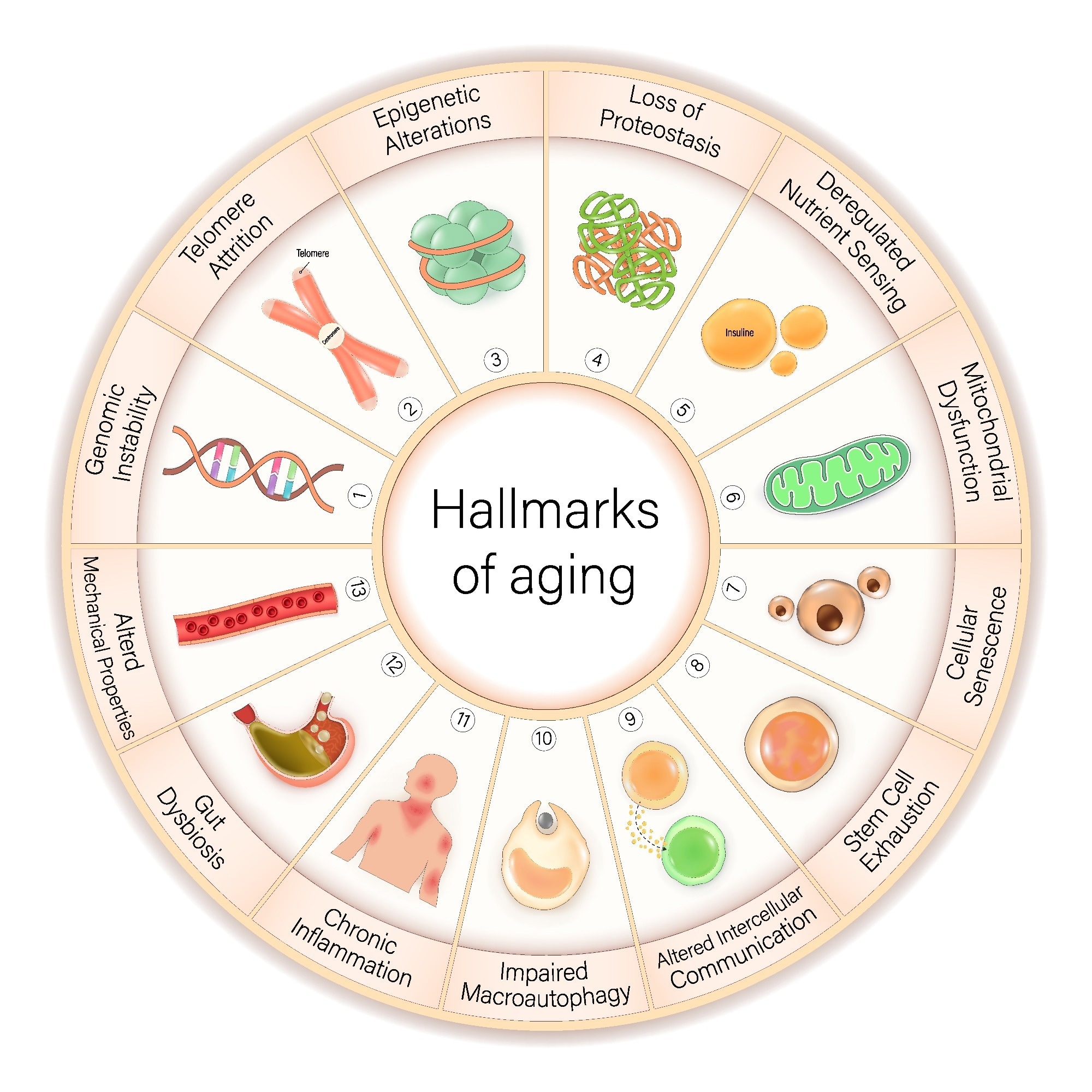 Image Credit: Dee-sign / Shutterstock.com
How do inflammation and the stem cell environment influence aging?
Inflammaging, a term describing age-associated chronic low-grade inflammation, can impair stem cell function and tissue repair. Senescent and injured cells subsequently release inflammatory molecules that alter the stem cell niche, the local environment that provides structural support and molecular signals to maintain stem cell quiescence, survival, and activation. As this supportive environment deteriorates with age, stem cells become less able to respond effectively to tissue injury and maintain normal regeneration.2,3,4
Altered immune signaling with aging, inflammatory cytokines, changes in neighboring cells, and alterations in the extracellular matrix, the network of proteins and other molecules surrounding cells, can promote stem cell dysfunction by interfering with the balance between self-renewal and differentiation. These effects vary with the duration of the inflammatory response, as coordinated inflammatory responses help initiate repair, while persistent or poorly resolved inflammation can impair it.2,3,4
Can stem cell aging be reversed or slowed?
Current experimental strategies aim to reduce chronic inflammation and improve the cellular environment to maintain stem cell function and promote healthier aging.3,4 Researchers are also investigating approaches that target epigenetic regulation, metabolism, and protein quality control within stem cells. Other strategies include removing senescent cells, modifying signals from the stem cell niche, and supplying replacement or engineered cells.2,3
Animal and laboratory studies indicate that some interventions can partially restore stem cell function or tissue regeneration, though most remain experimental. For example, improving autophagy, the process through which cells recycle damaged components, has restored aspects of aged muscle stem cell function in experimental models. Such findings establish biological possibilities, but do not demonstrate that the same benefits will occur safely in people.2,3,4
Aging and Stem Cells | Theodore Ho | TEDxMiddleburyPlay
Lifestyle factors that may influence stem cell aging.
Experimental studies suggest that physical activity and dietary interventions may influence stem cell function by changing metabolism and tissue signaling. Endurance exercise, for example, has been shown to improve muscle satellite cell self-renewal in mice. Calorie restriction has also improved selected stem cell functions in animal studies, but its effects vary by tissue and experimental conditions.2,3
Circadian rhythms regulate stem cell activity, providing another connection between daily physiology and tissue maintenance. Direct evidence that improving sleep or managing psychological stress preserves human stem cell function remains limited. Evidence for reversing human stem cell exhaustion through lifestyle changes is also insufficient, and experimental dietary findings do not justify prescribing calorie restriction for this purpose.2,3
Future directions
Translating experimental findings into treatments requires distinguishing improvements in individual cells from sustained recovery of tissue function. Stem cell populations differ across tissues, thus emphasizing the importance of organ-specific targeting.2,3,4
Researchers must also determine whether increasing stem cell activity produces lasting tissue repair without exhausting the remaining stem cell pool or increasing the risk of cell overgrowth or cancer development. Progress will require tissue-specific measures of stem cell function and human studies that assess sustained benefits and safety.2,3
References
Oh, J., Lee, Y. D., & Wagers, A. J. (2014). Stem cell aging: Mechanisms, regulators and therapeutic opportunities. Nature Medicine 20(8), 870- 880. DOI: 10.1038/nm.3651. https://www.nature.com/articles/nm.3651
Schultz, M. B. & Sinclair, D. A. (2016). When stem cells grow old: Phenotypes and mechanisms of stem cell aging. Development 143(1), 3–14. DOI: 10.1242/dev.130633. https://journals.biologists.com/dev/article/143/1/3/47328/When-stem-cells-grow-old-phenotypes-and-mechanisms
Liu, B., Qu, J., Zhang, W., et al. (2022). A stem cell aging framework, from mechanisms to interventions. Cell Reports 41(3). DOI: 10.1016/j.celrep.2022.111451. https://www.cell.com/cell-reports/fulltext/S2211-1247(22)01292-X
Lawton, A., Tripodi, N., & Feehan, J. (2024). Running on empty: Exploring stem cell exhaustion in geriatric musculoskeletal disease. Maturitas 188. DOI: 10.1016/j.maturitas.2024.108066. https://www.sciencedirect.com/science/article/pii/S0378512224001610
Rezazadeh, S. & Ellison-Hughes, G. M. (2024). Editorial: Stem cell exhaustion in aging. Frontiers in Aging, 5. DOI: 10.3389/fragi.2024.1433702. https://www.frontiersin.org/journals/aging/articles/10.3389/fragi.2024.1433702/full
Further Reading
Last Updated: Oct 26, 2026