
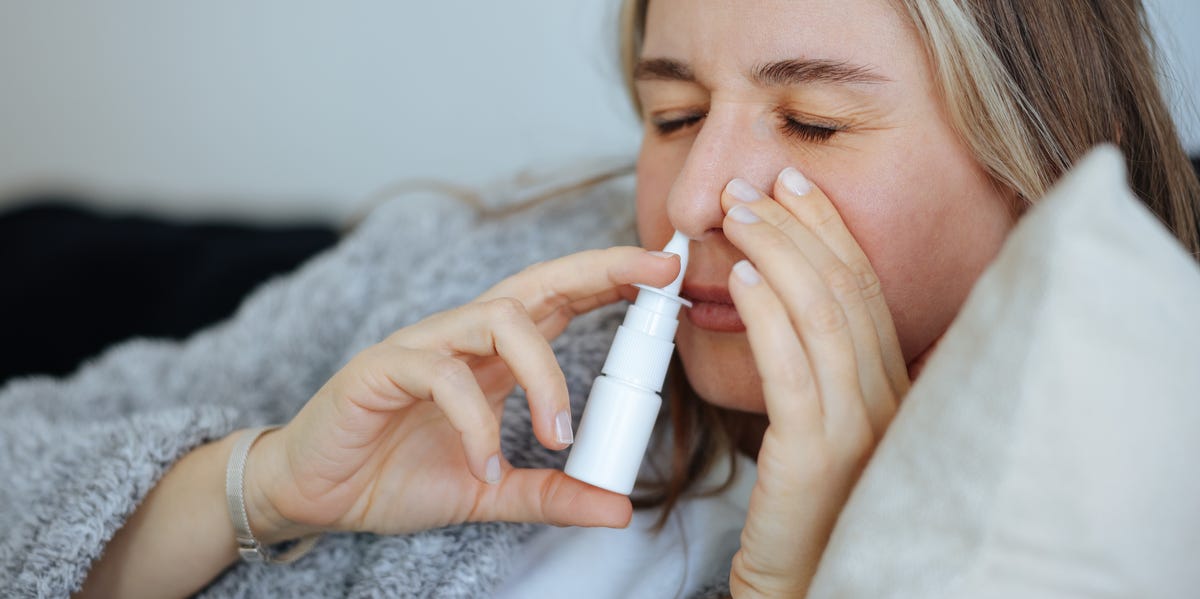
Medical experts are warning that over half of us are using nasal decongestion sprays incorrectly (yikes!) – something you ought to take note of, especially given the high levels of flu, colds and the adenovirus that are doing the rounds right now. According to data from a Royal Pharmaceutical Society (RPS) survey, 59% of pharmacists feel patients are unaware of the associated risks of using nasal sprays and that there’s a time limit on them.
The research, which was carried out on over 300 community pharmacists also found that 63% have personally intervened when they’ve suspected a patient is overusing a spray, even going so far as to refuse to sell them any more.
Almost three quarters of the pharmacists surveyed said they felt warning labels ought to be displayed more clearly on packaging too, making users more aware of the health risks linked to nasal decongestion sprays.
So, what are those health risks? And how often can you use a nasal spray before it starts to become unsafe? We dive into it with two experts and ask about alternatives you can use, too…
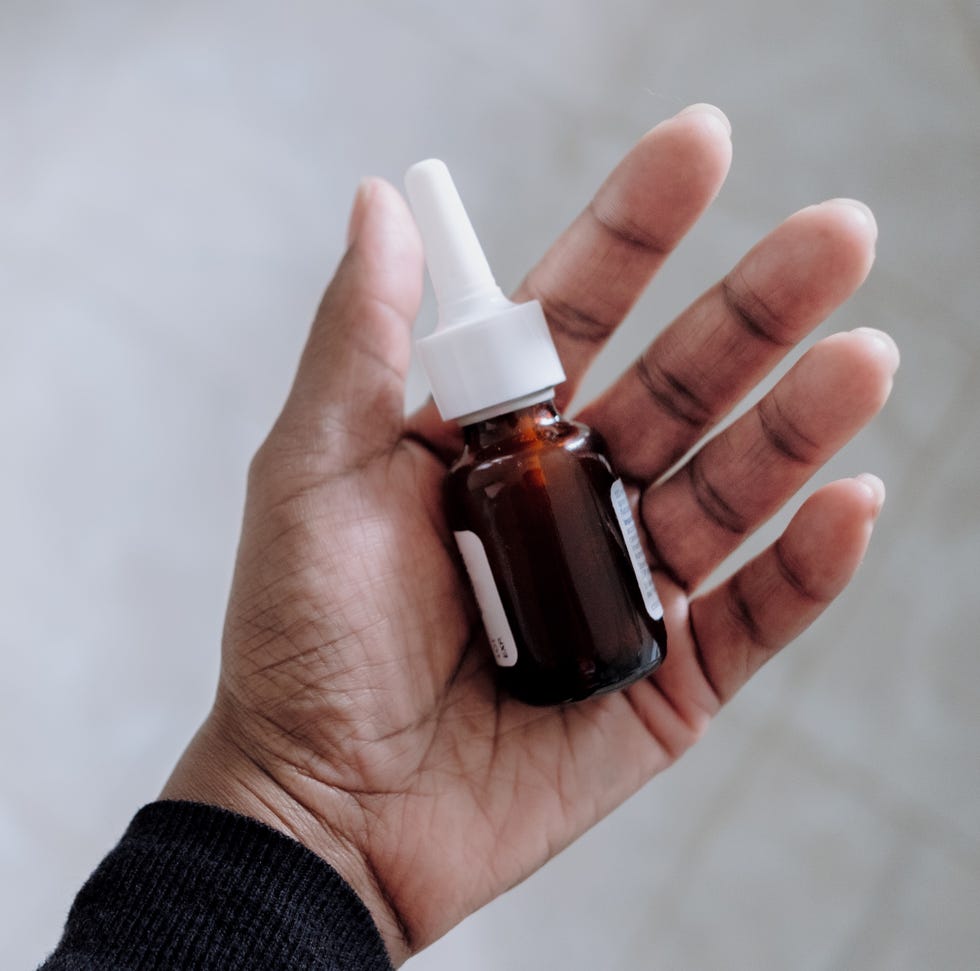

Grace Cary//Getty Images
How long should you use a nasal spray for?
According to Ian Budd, Lead Prescribing Pharmacist at Chemist4U, the answer is just for the short-term. “Most decongestant nasal sprays should only be used for up to five to seven days.”
Budd adds that, “Nasal sprays can be incredibly effective when used correctly, but many people don’t realise that many decongestant nasal sprays are for very short-term use only.
“The biggest risk is something called rebound congestion, where overuse actually causes your nasal passages to swell more once the spray wears off. This can lead to a cycle where people feel they need to keep using the spray just to breathe normally.”
Phil Day, Superintendent Pharmacist at Pharmacy2U, agrees adding, that the phrase ‘short-term’ is key: “decongestant nasal sprays – those containing ingredients like oxymetazoline or xylometazoline – should generally not be used for more than seven days in a row, because of the risk of rebound congestion [which is] a return, and potential worsening, of the original symptoms.”
He points out that if “patients find themselves reaching for the spray every day just to breathe, it’s a sign that the problem may be a rebound effect rather than a new infection or allergy flare and it’s time to talk to a healthcare provider about safer alternatives.”
Duly noted!
Related StoryWhat are the health risks of nasal sprays?
Budd explains that using a nasal decongestion spray for longer than a week can irritate the lining of your nose, damage your blood vessels inside it, and make congestion last much longer than it otherwise would. “In some cases, people can end up with ongoing nasal blockage that takes weeks to settle after stopping the spray,” he shares.
“From a pharmacists’ point of view, it’s very common to step in when someone is buying sprays repeatedly.”
As an alternative, Budd recommends saline sprays, steam inhalation, or if allergies are involved, steroid nasal sprays, which are designed for longer-term use and don’t carry the same rebound risk.
“Many people assume that because nasal sprays are available over the counter, they’re completely risk-free, which isn’t the case,” the expert concludes. “Better labelling around the seven-day limit could prevent a lot of unnecessary discomfort and prolonged symptoms.
“Used correctly, nasal sprays are very safe and helpful, but more is definitely not better when it comes to these products.”
Day feels similarly, saying, “Steroid nasal sprays – used mainly for hay fever and other allergies – and simple saline sprays do not carry the same risk and are considered safer for regular use, and these should also be used according to medical advice and the leaflet provided.”
This article is not intended to be a substitute for professional medical advice or diagnosis. Always seek the advice of your physician or other qualified health provider with any questions you may have regarding a medical condition.
Related Stories
Jennifer Savin is Cosmopolitan UK’s multiple award-winning Features Editor, who was crowned Digital Journalist of the Year for her work tackling the issues most important to young women. She regularly covers breaking news, cultural trends, health, the royals and more, using her esteemed connections to access the best experts along the way. She’s grilled everyone from high-profile politicians to A-list celebrities, and has sensitively interviewed hundreds of people about their real life stories. In addition to this, Jennifer is widely known for her own undercover investigations and campaign work, which includes successfully petitioning the government for change around topics like abortion rights and image-based sexual abuse. Jennifer is also a published author, documentary consultant (helping to create BBC’s Deepfake Porn: Could You Be Next?) and a patron for Y.E.S. (a youth services charity). Alongside Cosmopolitan, Jennifer has written for The Times, Women’s Health, ELLE and numerous other publications, appeared on podcasts, and spoken on (and hosted) panels for the Women of the World Festival, the University of Manchester and more. In her spare time, Jennifer is a big fan of lipstick, leopard print and over-ordering at dinner. Follow Jennifer on Instagram, X or LinkedIn.