
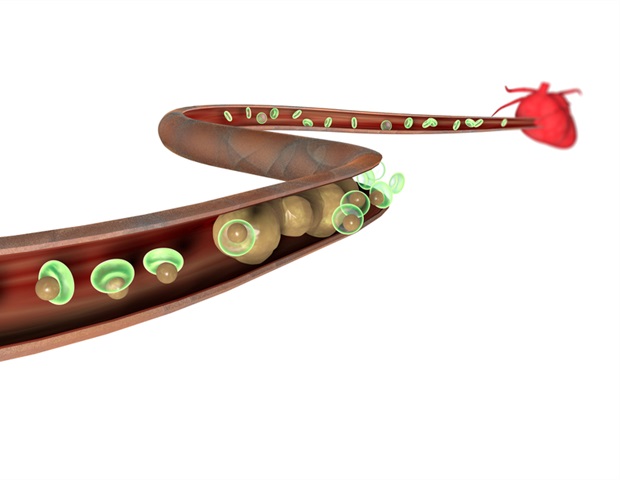
New data analyzing more than 20,000 patients from three major NIH studies show that elevated Lipoprotein(a) [Lp(a)] is associated with residual cardiovascular risk and warrants aggressive risk reduction. Researchers presented the late-breaking data today at the Society for Cardiovascular Angiography & Interventions (SCAI) 2026 Scientific Sessions and Canadian Association of Interventional Cardiology/Association Canadienne de cardiologie d’intervention (CAIC-ACCI) Summit in Montreal.
Lp(a) is a type of particle in the blood that carries cholesterol. It is similar to LDL, known as “bad” cholesterol, but has an additional protein attached that may increase its contribution to heart disease. Elevated Lp(a) levels are predominantly inherited and can raise cardiovascular risk even when traditional cholesterol levels are normal. Approximately one in five people has high Lp(a), and most are unaware because it usually does not cause symptoms. Although the link between high Lp(a) and cardiovascular disease is recognized, its role in predicting risk among people with and without existing heart disease is not yet fully understood.
Researchers analyzed previously collected plasma samples of 20,070 participants aged 40 years and older from the ACCORD, PEACE, and SPRINT NIH randomized trials. All samples were evaluated in a dedicated translational laboratory using a standardized assay and reported in the current standard of nmo/L. Patients were then grouped by Lp(a) level (<75, 75-125, 125-175, or ≥ 175 nmo/L) and whether or not they had existing heart disease. Cox models adjusted for demographics, comorbidities, lipids, and therapies.
The mean age of participants was 65.2±8.5 years, and 64.9% of patients were male. The primary outcome was major adverse cardiovascular events (MACE) consisting of myocardial infarction, stroke, coronary revascularization, or cardiac death. Over a median follow-up of 3.98 years, 1,461 (7.3%) MACE events occurred. Lp(a) greater than or equal to 175 nmo/L was independently associated with a higher risk of MACE (HR 1.31, 95% CI: 1.10-1.55), cardiovascular death (HR 1.49, 95% CI: 1.07-2.06), and stroke (HR 1.64, 95% CI: 1.14-2.37). However, this level of Lp(a) was not associated with a greater risk of heart attack. In addition, these effects were more pronounced in patients with existing heart disease (HR 1.30, 95%CI: 1.07-1.57) compared to those without (HR 1.18, 95% CI: 0.91-1.54).
For the first time, we can quantify the specific level of Lp(a) that puts patients at a significantly higher risk of major cardiovascular events, especially stroke and death. Regardless of age, patients can take a simple, low-cost blood test to determine whether they have this genetic condition. If elevated Lp(a) levels are detected, they should work closely with their healthcare provider to aggressively lower LDL cholesterol and manage other cardiovascular risk factors as much as possible. This knowledge is especially valuable as new targeted treatment options are on the horizon.”
Subhash Banerjee, MD, FSCAI, interventional cardiologist, Baylor Scott & White in Dallas, Texas
Researchers noted that the use of biospecimens can provide deeper insights into completed trials and plan to explore additional subgroups, such as chronic kidney disease and peripheral artery disease.
Source: