
 7 min read
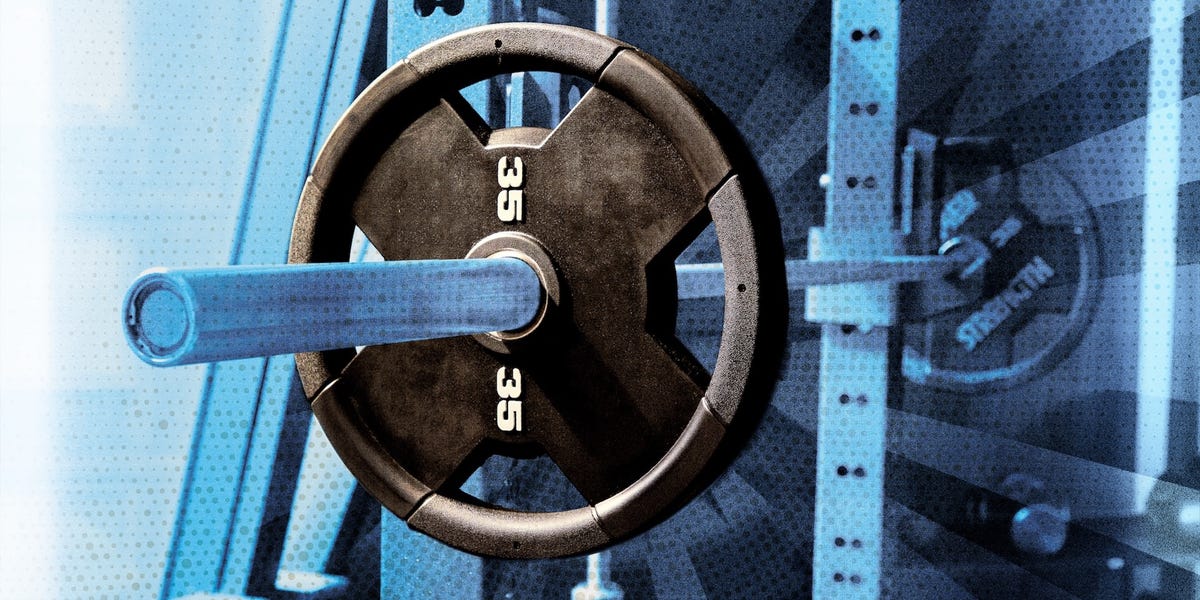
NO MATTER WHY or how you lift, the universal system of arithmetic for gym bros is plate math. Train for even a little while, and you quickly learn to identify the weight on the bar from the plates loaded on either end. It creates a shorthand among lifting partners as they load and unload weights. For example, “Throw on 275”, your buddy says, and you instinctively know to add two 45s and a 25. But lurking on your local plate tree is a denominator that doesn’t quite fit: the 35-pound weight plate.
Add a 35 onto the bar, and your brain seems to short-circuit as you scramble to add up this lesser-used member of the weight plate ecosystem. They’re disruptive to the plate math algorithm; they take up more space on plate trees and power racks, and, above all else, they don’t solve a loading problem that can’t be accomplished with other plates. Short of saving space on barbell sleeves during max efforts, it’s not clear why 35s even exist.
“I don’t have them in my gym,” says Alex Rothstein, an exercise physiologist and program coordinator of exercise science at the New York Institute of Technology. “However, if I were to have a commercial gym, I’d include them, because the layperson wouldn’t necessarily understand plate math.”
The ire that 35s draw is mostly among established lifters too set in their ways to budge. Rothstein is admittedly in that category. But the 35-pound plate actually has a place in strength training history and does solve some legitimate weight-loading problems. There are legitimate reasons to keep the plates around—despite the meathead instinct to scoff at anyone seen sliding them onto a barbell.
How We Ended Up With 35-Pound Plates
They may be the gym’s most questioned pieces of iron today, but 35-pound plates have long been a part of the standard plate hierarchy. Their origin story traces back to European equipment manufacturers, who use kilogram increments. Companies like Berg, for example, produced 5-, 10-, 15-, 20-, and 25-kilogram plates sometime in the early 1900s.
“What we can say with confidence is that by 1928, when Olympic weightlifting standardized around the three lifts [the snatch, clean and jerk, and the clean and press, which was cut as a lift after 1972], kilo-based equipment was effectively locked in for international competition, and Berg was central to that shift,” says fitness historian Dr. Conor Heffernan of Ulster University, who notes that those manufacturers also stamped some plates with both kilos and pounds, like 15 kg / 33 lbs.
“Instead of keeping 15 kilograms (33 pounds), American manufacturers dropped it and introduced 35 pounds as a more practical loading increment within an imperial system,” says Heffernan, adding that York produced a 35-pound plate as early as the 1930s. The same logic applies to other plates; 10 and 20 kilograms, for example, convert to roughly 22 and 44 pounds, respectively, which became 25 and 45. So even though the 35-pound plate isn’t some random, fly-by-night addition to the plate line-up, why do they feel like it?
Because even though every other plate on your local plate tree traces back to a similar kilo conversion, they still solve a clear loading problem. Forty-fives anchor heavy lifts, creating those numerical milestones every gym rat chases: 135, 225, 315, 405, and so on. And then 25s, 10s, 5s, and 2.5s are all the plates you need to make five-pound jumps. Thirty-fives, on the other hand, don’t add much that lifters can’t already accomplish with plates they’re more likely to reach for.
Say you’re working up to a 205-pound bench press. Your plate math might look like this:
45 pounds (just the bar)95 pounds (bar + 25s)135 pounds (bar + 45s)155 pounds (bar + 45s and 10s)185 pounds (bar + 45s and 25s)205 pounds (bar + 45s, 25s, and 10s)
Sure, you could use 35s somewhere in that progression, but most people wouldn’t. If you’ve got 185 on the bar and want to go up, you could strip off the 25s and replace them with 35s, or you could just do what almost everyone—probably including you, dear reader—does and slap a 10 on each side, saving the hassle of running back and forth and sacrificing just a bit of space on the bar sleeve.
And if your gym has power racks, you’ll notice that each side only has four to five plate pegs, which means you’re forced to ditch at least one plate in the full lineup. The gym I work at loads its racks with 5s, 10s, 25s, 35s, and 45s, forcing me to scour the floor for a pair of 2.5s since they’re my only hope for making five-pound jumps.
“My personal opinion is that 35-pound plates really are pointless in a sense,” says Joseph Koenecke, National Retail Manager for Colorado-based equipment manufacturer, REP Fitness, and a competitive powerlifter. “I think you’re better off just getting an extra pair of 25s and 10s. They open up more possibilities for weight loading than a straight-up 35-pound plate does.”
From a sales perspective, Koenecke describes 35s as “along for the ride.” They’re the lowest-selling plates across both REP’s bumper and metal lines, accounting for just eight percent of total plate sales, compared to 35 percent for 25s and 55 percent for 45s.
Most 35s aren’t purchased individually, though. They’re bundled into full plate sets more commonly bought by commercial facilities like firehouses, universities, and large gyms. These groups purchase about 10 percent more 35s than home gym owners, who are likely buying lighter packages or individual plate sets to round out their collections.
“Usually you’re not talking directly to an athletic director or a strength coach or someone actually using the weights,” says Koenecke. “We’re putting our recommendations in, and it’s easier for a [procurement agent] to visualize a full set of plates than us piecing together individual [suggestions].”
The Benefits of 35s
There’s always going to be a gym bro who looks at anyone loading 35s onto a barbell as a noob, but there are a few legitimate use cases for them, even if they don’t add anything to the plate math system.
For starters, beginners or less strength-focused lifters working up to relatively lighter loads may find them a useful tool for warm-up sets. With a top-end front squat of 185 pounds for four reps, I’ve learned to value 35s in my ramp-up sets. I’ll squat the bar, then a 25 on either side, then a 35, then 45, before adding on the smaller plates.
Some lifts don’t warrant a 45-pound plate on either end of the bar, and certain lifters prefer the perceived stability of training with fewer plates. “I military press 115 pounds for sets of 10 reps,” a gym buddy told me when I explained the concept of this article. “I hate using a 25 and 10 on each end because the plates rattle. My gym has like four 35-pound plates, and I wish they had more.”
Another purpose to 35-pound plates for some lifters: Drop sets on barbell lifts, says MH fitness director Ebenezer Samuel, C.S.C.S. “I’ve had situations where I’m doing a few heavy reps at, say, 255, then I want to drop to 205 pounds to rep out on presses or squats or anything. And it’s much easier to have a 35 and a 45 on the sleeve already, instead of a 45, a 35, and a 10 on each side. Occasionally, having 35s keeps the muscle math simpler.”
That preference becomes more of a necessity for explosive lifts like the snatch and clean and jerk, two exercises commonly performed in CrossFit and Olympic weightlifting that require greater stability and control during a multifaceted, demanding movement pattern. For anyone with some experience training those movements, loading up 25s can be too light for productive warm-ups, while jumping straight to 45s is often too aggressive a starting point. Thirty-fives—or their metric equivalent, 15-kilogram plates—offer a middle ground while keeping the bar less crowded. Also, fewer plates aren’t just more convenient but can fundamentally change how the bar moves through space.
“If you put four 10s and a five on the bar compared to just a 45-pound plate for an exercise like the bench press, where the bar path is linear, the plate [arrangement] doesn’t matter,” says Alex Rothstein, a certified exercise physiologist and program coordinator of exercise science at the New York Institute of Technology. “But for Olympic lifting, where, yes, the bar path is supposed to be linear, but it doesn’t work out that way always, when you distribute the weight wider across the barbell, it changes the angular motion of its path.”
But what if you don’t train much with a barbell?
Calisthenics is a bodyweight style of training that can build ridiculous core strength and muscular endurance. But eventually, doing endless high-rep sets stops being productive, and at some point, you’ll want to add load to keep challenging your muscles without doing so many reps that you start questioning your life choices. For movements like pullups, dips, and weighted pushups, 35-pound plates begin to make more sense.
35-Pound Plates You’ll Actually Use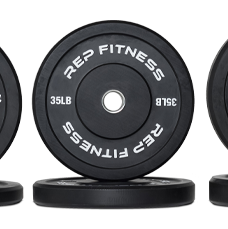 REP Fitness Black Bumper Plates (Pair)
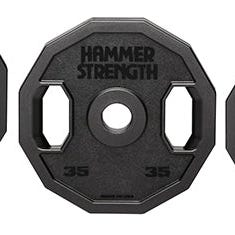 Hammer Strength Urethane 12-Sided Olympic Plates (Pair)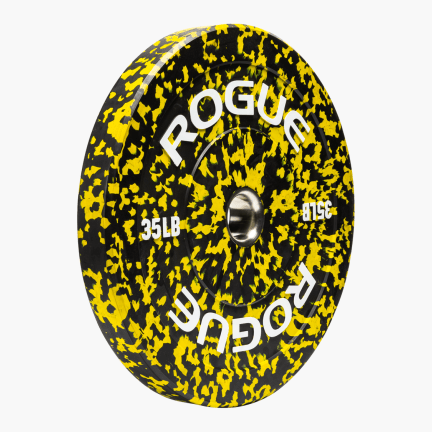
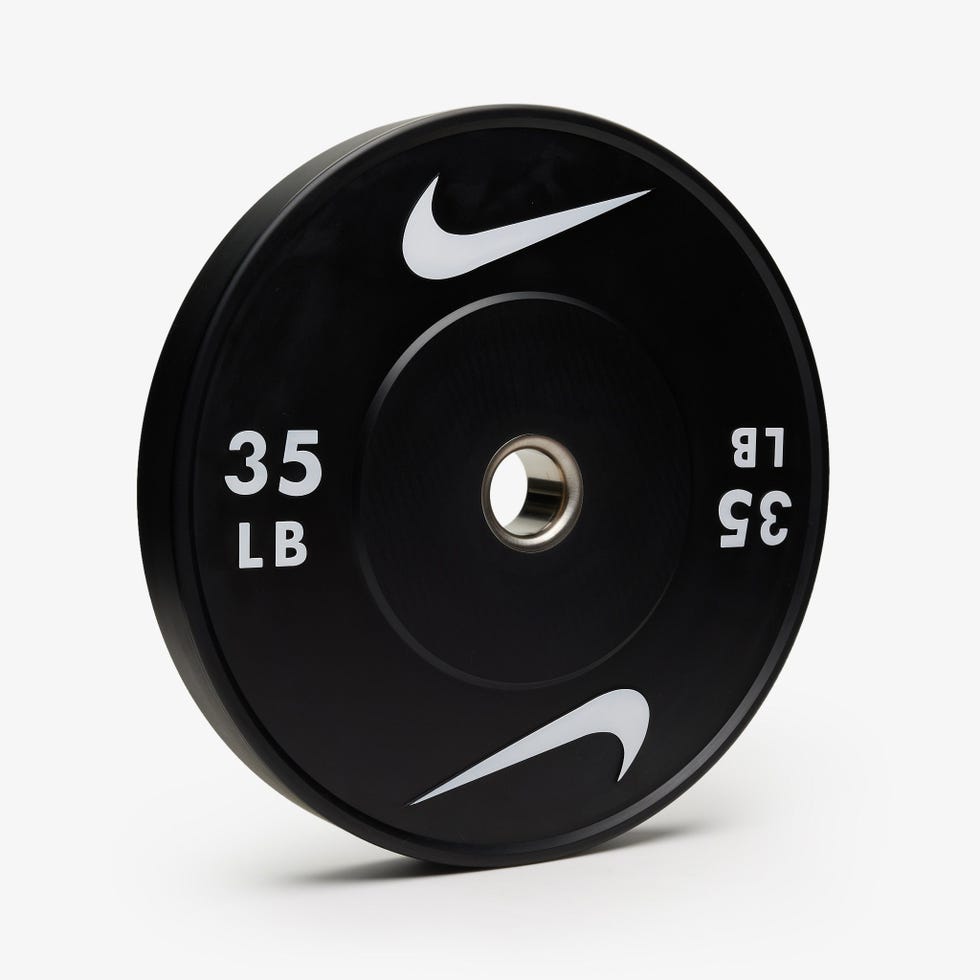 Nike Rubber Bumper Plates
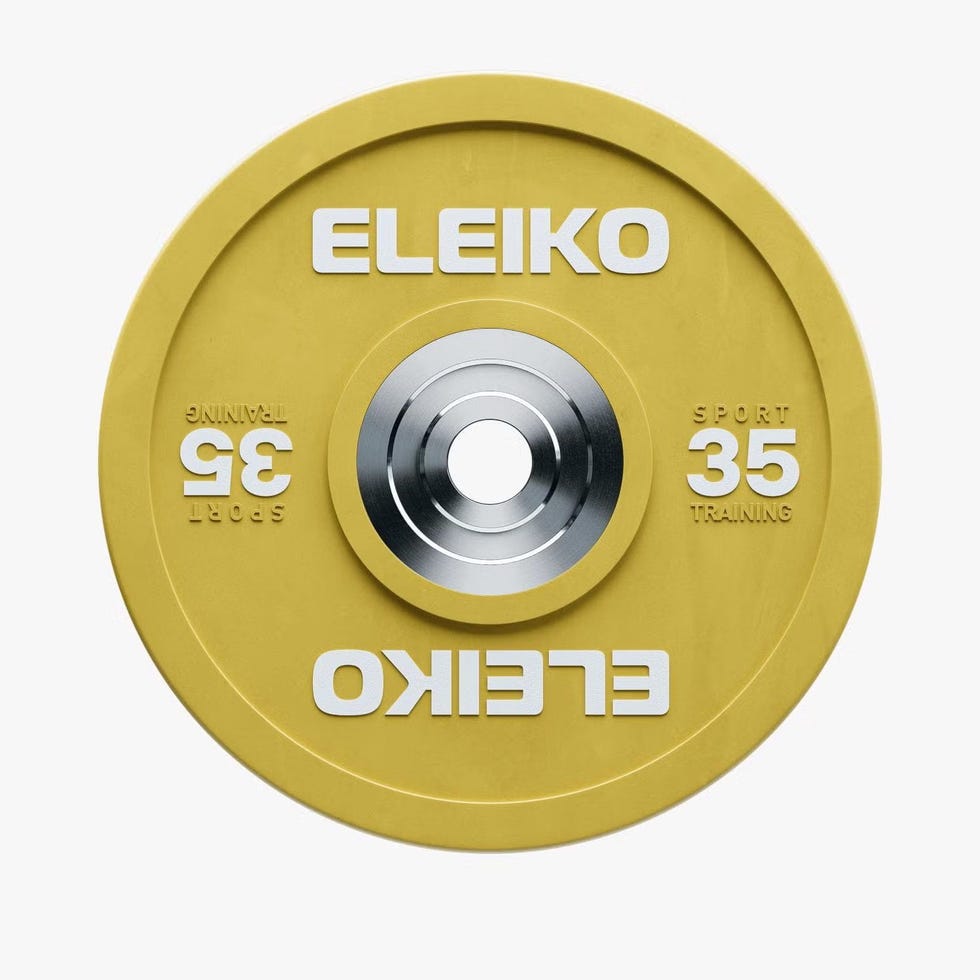 Eleiko Sport Training PlateCredit: Eleiko
Unlike barbell lifts, where you can stack multiple plates without much consequence, weighted calisthenics is limited by how much you can realistically carry. Loading multiple plates onto a dip belt or balancing them on your back can be unstable, uncomfortable, and, in some cases, unsafe. The 35 allows for a clean 10-pound jump in a single plate, keeping the load compact and easier to control.
“Sometimes I’ll also do sled pushes with bumper plates, like on a track,” says Rothstein. “So having the change in weight… having an intermediate 35 is, yeah, I think that’s a really good point, actually.”
As I worked on this story, the 35 started sneaking into my routine. I’ve used them to warm up for squats and deadlifts, and I’ve found myself occasionally sliding one onto my back for pushups. They’re legitimately useful, and I wonder if my aversion to them was more learned than thought out. For plenty of lifters, the 35-pound plates make more sense than our gym culture would care to admit. You may be resistant to including them in your internal plate math calculator, but 35s are still more useful than the meathead cohort gives them credit for.

Andrew Gutman, NASM-CPT is a journalist with a decade of experience covering fitness and nutrition. His work has been published in Men’s Health, Men’s Journal, Muscle & Fitness, and Gear Patrol. Outside of writing, Andrew trains in Brazilian Jiu-Jitsu, helps coach his gym’s kickboxing team, and enjoys reading and cooking.