
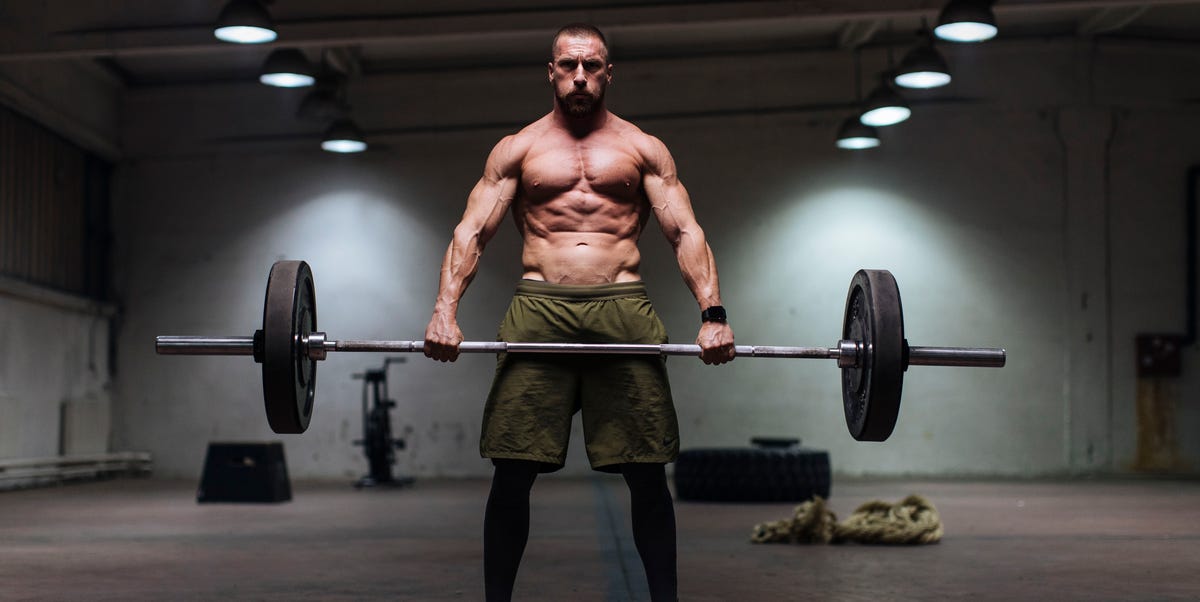
While we may have gotten away with high-volume, high-intensity training and minimal recovery in our twenties, we lose some of that flexibility as time goes on. Gone are the days when we could down a coffee, walk into the gym on no sleep and still smash a mammoth leg session running on fumes. Instead, it’s more sensible to programme your workouts with a more minimalist approach. And according to coach Alain Gonzalez, you don’t have to sacrifice gains with fewer workouts and shorter sessions.
Gonzalez explains in his YouTube video how once we hit forty, it’s important to tailor our programming to include less volume, and fewer workouts. Backed by science, the 2-2-2 method could even deliver better results than we had in our twenties.
What Is the 2-2-2 Method?
Gonzalez explains that the method is a minimalist, research-backed approach that strips away the fluff and focuses on what actually drives muscle growth. ‘As the name suggests, this system revolves around two workouts per week with only two working sets per exercise,’ says Gonzalez.
This may sound too simple to be effective, but when executed correctly, it can deliver results better than most of the advanced training programmes out there, he says. ‘It’s time-efficient, joint friendly, and built on principles that have stood the test of both science and experience.’
In the 2-2-2 method you’ll train the entire body twice per week using compound movements that hit multiple muscle groups at once. Each exercise involves two hard sets that are taken close to failure.
How Many Workouts a Week in the 2-2-2 Method?
‘As the name suggests, this system revolves around two workouts per week,’ says Gonzalez. The workouts are full-body, performed on non-consecutive days to allow for enough rest. You can take 2-3 rest days in between. ‘That spacing is long enough for full muscular and neural recovery, yet frequent enough to gain muscle maximally and consistently,’ says Gonzalez.
‘This is so you can train harder, recover faster, and enjoy your life more as you build your dream physique,’ he explains.
standret//Getty Images
What Exercises Are Used in the 2-2-2 Method?
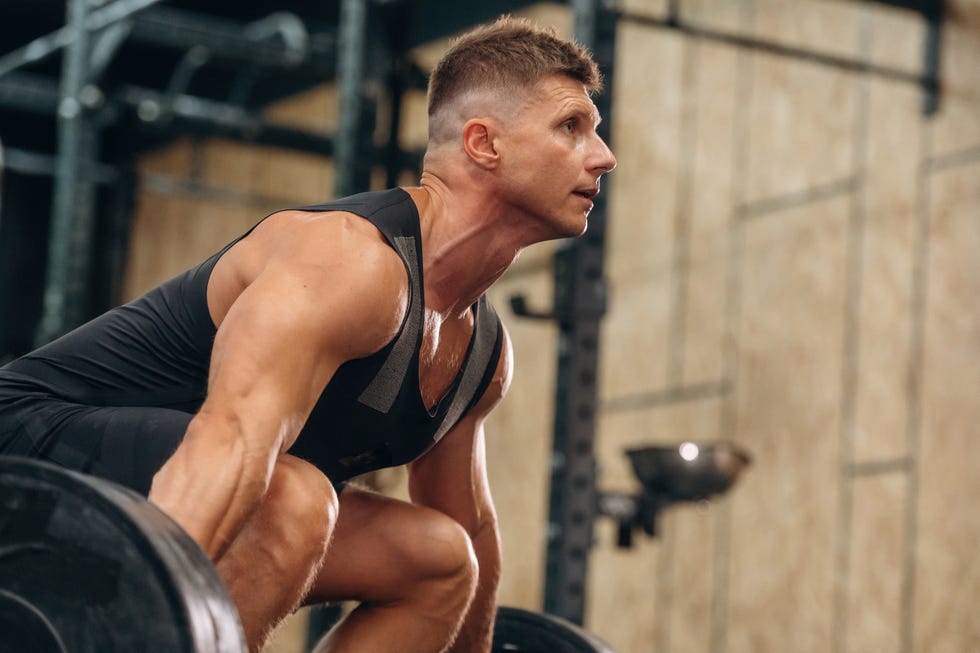
Each workout includes four core movement patterns. This includes a squat pattern for quads and glutes, a hinge pattern for the posterior chain, a push exercise for chest, shoulders, and triceps, and a pull exercise for the back and biceps. ‘With this structure, you cover every major muscle group twice, keeping volume efficient but frequency optimal,’ says Gonzalez.
‘What I like to do is alternate the emphasis within each main movement pattern,’ he says. ‘For example, if my squat pattern in workout A is more knee extension dominant, then workout B will use a more hip dominant variation. For hinges, if workout A uses a stiff-legged deadlift which would be more hamstrings, then workout B switches to an RDL to hit the glutes more.’
How Many Sets Does the 2-2-2 Method Use?
Each exercise requires you to complete two hard sets that will take you close to failure.
Gonzalez explains that this is because you only have two working sets per exercise, so both have to count. ‘Each one delivers significant mechanical tension and thus triggers substantial muscle growth.’
How Many Reps Does the 2-2-2 Method Use?
‘Everything in this method revolves around one goal, producing the max mechanical tension possible per set,’ says Gonzalez. This means that the 6-12 rep range gives you the best balance of load, control, and repeatable effort. ‘Go too much lower and you’ll start recruiting the auxiliary muscles more to move the weight instead of keeping tension where it belongs. Go too light and you’ll just create unnecessary fatigue from metabolic stress that’ll hurt your performance in the next set.’
What Are the Benefits of the 2-2-2 Method?Muscle growth with minimal volume
The 2-2-2 method focuses on effective volume. ‘Muscle growth doesn’t come from endless volume. It comes from effective volume, those high quality, close to failure reps that generate enough mechanical tension to trigger adaptation,’ says Gonzalez.
Proven results with low sets
A recent study published in Medicine & Science in Sports & Exercise compared two groups of trained lifters performing just one set per exercise, twice a week. One group trained to failure, the other stopped short, yet both made measurable progress. Gonzalez says, ‘After eight weeks both groups made significant gains in muscle size, strength, and endurance with only modest differences between the two. When the effort is high enough, even a single set per exercise can produce meaningful muscle growth even in trained lifters.’
Superior recovery and reduced fatigue
The two workout structure allows for full recovery between sessions, meaning every time you train, you’re operating at near peak capacity, getting more bang for your buck.
Joint friendly and longevity focused
Joints recover much more slowly than muscle, says Gonzalez. ‘As we age, it gets worse. While your muscles might be ready to train again in 48 hours, your tendons and ligaments could still be recovering from your last session. It’s why most high volume programs leave your body feeling achy and sore.’
Higher motivation
‘When you only have two sets per exercise, there’s no margin for laziness because every rep matters,’ says Gonzalez. ‘That limited window creates a sharper sense of focus and urgency that longer style workouts often lack. And because you’re only training twice per week, recovery and motivation naturally stay high.’
Related Stories