
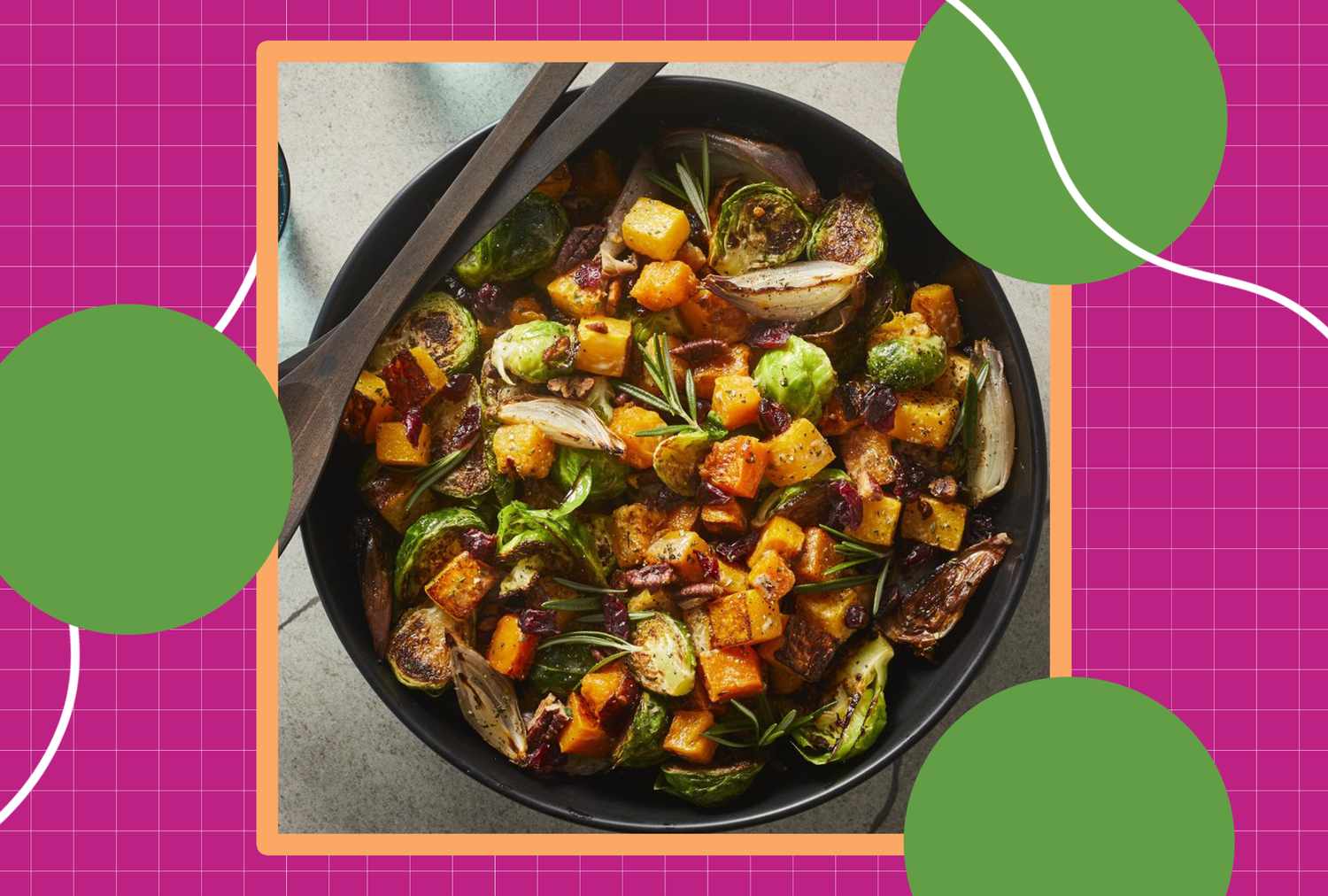
Holiday eats tend to be heavy on the cream, butter and sugar and light on beneficial nutrients.Dietitians love our antioxidant-packed Roasted Brussels Sprout & Butternut Squash Salad. The dish is loaded with good-for-you foods like Brussels sprouts, cranberries, squash and pecans.
If your holiday table tends to lean heavily on creamy casseroles, buttery breads and sugary sides, you’re not alone. Many traditional dishes are nostalgic and delicious, but they’re often not the most nutrient-dense or supportive of overall health. Adding just one or two antioxidant-rich sides can go a long way in balancing your plate and helping you feel your best this season.
And that’s exactly why dietitians think our Roasted Brussels Sprout & Butternut Squash Salad deserves a spot on your menu. It layers Brussels sprouts, sweet butternut squash, tart cranberries and pecans—four ingredients packed with antioxidants and anti-inflammatory compounds.,, “This salad combines antioxidant-rich vegetables and berries that fight inflammation naturally,” says Jessica Clancy-Strawn, M.A., RDN. “Paired with other healthy habits, eating more nutrient-rich dishes like this one can help you feel your best this holiday season,” adds Clancy-Strawn.
The Best Anti-Inflammatory Side Dish
Brussels Sprouts Contain Glucosinolates
Brussels sprouts bring more to the table than fiber and crunch—they’re packed with antioxidants that may help your body turn down the dial on inflammation. “Brussels sprouts are loaded with phytochemicals, which is just a fancy word for plant-based nutrients,” says Heidi McIndoo, M.S., RD, LDN. “Those nutrients include vitamins C and K, plus glucoraphanin, a natural compound that’s converted into sulforaphane as you chew,” McIndoo adds.,
Research shows that sulforaphane helps your cells respond better to everyday stress, giving your body an extra layer of support against inflammation—something most of us could use during the busy holiday season.,
Cranberries Add a Burst of Protective Antioxidants
Not only do cranberries add color and flavor to this festive side dish, but they also help your body fight inflammation. “Cranberries are packed with antioxidants like flavonoids and anthocyanins that help neutralize free radicals, lower oxidative stress and support heart and immune health,” says Clancy-Strawn.
Studies show that the polyphenols in cranberries may help calm inflammation and support overall health. Their phytonutrients have been linked to benefits ranging from improved blood vessel function to better gut and metabolic health.
Butternut Squash Delivers Immune-Supporting Carotenoids
Butternut squash brings a warm heartiness to this recipe, but its real strength lies in its nutrient profile. “Butternut squash is loaded with beta-carotene, polyphenols and soluble fiber, all of which work together to scavenge free radicals and dampen inflammatory cytokines,” says Jessica Brantley-Lopez, M.B.A., RDN.
Beta-carotene (a precursor to vitamin A) helps support immune function, while butternut squash’s natural polyphenols provide antioxidant protection during a season when stress often runs high. Its soluble fiber also supports steady digestion and a healthier gut microbiome—another tool in your arsenal for keeping inflammation in check.
Pecans Provide Polyphenols
While the pecans in this recipe are optional, dietitians strongly recommend including them (unless, of course, you’re allergic). Not only do they add a toasty crunch, but their polyphenols and healthy fats add another layer of anti-inflammatory support., “Pecans contain magnesium, vitamin E and flavonoids, all of which work together to reduce inflammation in our body, in part by protecting cells from damage that causes inflammation,” says McIndoo.
Although magnesium isn’t an antioxidant on its own, it helps your body’s antioxidant enzymes function properly and supports healthy cellular function. When you don’t get enough magnesium, your cells are more vulnerable to oxidative stress.
Other Variations to Try
Other Holiday-Season Strategies to Fight Inflammation
Stay active: Research shows that physical activity helps reduce inflammation and fight chronic disease. “You might not have time for a full workout or a trip to the gym, but a walk through the neighborhood, sledding with the kids or throwing snowballs for the dog to chase can be fun ways to be active and enjoy the season,” McIndoo encourages.
Limit alcohol intake: Holiday parties and family gatherings often include alcohol, but too much can disrupt sleep and increase inflammation., “If you’re celebrating, alternate cocktails with sparkling water or opt for a festive mocktail,” suggests Clancy-Strawn.
Stay hydrated: Even mild dehydration can heighten your body’s stress response, potentially increasing inflammation. During the holidays—when schedules get busier and stress ramps up—keeping a water bottle nearby is an easy way to help your body stay balanced.
Protect your rest: With late-night gatherings, travel and packed calendars, sleep during this time of year can take a real hit. And when you don’t get enough sleep, inflammation rises. Prioritizing a wind-down routine, or giving yourself permission to skip an event, gives your body the rest it needs to stay healthier through the season.
7-Day Anti-Inflammatory Meal Plan for Beginners, Created by a Dietitian
Our Expert Take
While many holiday favorites are light on beneficial nutrients, this dietitian-approved side brings together Brussels sprouts, cranberries, butternut squash and pecans—ingredients rich in antioxidants, polyphenols and fiber that help your body handle inflammation. When you pair dishes like this with simple habits such as staying active, hydrated and well-rested, you can support your health and still enjoy the celebrations.