
With recent stats finding that people in the UK get over half of their daily calories from ultra-processed foods, many of us are resolving to strike a better balance in our diets.
But thanks to clever marketing slogans, navigating the supermarket aisles is harder than it looks, and many of today’s so-called ‘healthy’ alternatives contain high levels of added sugar and saturated fat, as well as emulsifiers, thickeners and bulking agents, which have been linked to negative health consequences.
Food brands can be notorious for using buzzwords and images on their product labels to appeal to health-conscious shoppers looking to make smarter choices, making it difficult to discern what actually deserves a place in your trolley.
To help you make more informed decisions during your next food shop, we asked a nutritionist to break down the biggest offenders when it comes to healthy spin, plus the red flags to look out for on labels.
1. Certain breakfast cereals
A bowl of fibre-filled cereal has long been touted as a healthy start to the day, but many packaged versions are loaded with more than just grains like corn, wheat, oats and rice
“Breakfast cereals are often marketed with health halos, with words like ‘wholegrain’, ‘energy’ or ‘fortified’ which give the impression of a nutrient-rich meal,” explains nutritionist Rob Hobson, author of Unprocess Your Life.
“However, many popular cereals still contain high amounts of added sugar and very little fibre, which means they won’t keep you satisfied for long.”
For example, popular children’s cereals Kellogg’s Frosties and Crunchy Nut contain 11 grams of sugar per 30-gram serving.
“This is a time of day when you should aim to get a good portion of your nutritional intake with wholegrains, dairy and fruits,” Hobson advises. “If you enjoy eating cereals, flip the pack and look for one with a high fibre content and low sugar levels that support stable energy across the morning.”
2. Flavoured yoghurts
Swapping cake and biscuits for a fruit yoghurt seems like a health upgrade, but the packaging of these dessert options can be seriously misleading.
“Low-fat or virtually fat-free yoghurts can look like a lighter choice, but many rely on added sugars or sweetened fruit purées to make up for the flavour lost when you remove the fat,” warns Hobson.
“While they still offer a source of beneficial calcium, this health benefit is often offset by the additives and sugar content,” he says.
You don’t have to cut out yoghurt entirely, though, as there are healthy do-it-yourself alternatives. Hobson recommends choosing a natural Greek yoghurt and adding your own chopped fruit, nuts and honey for a sweet but nutritious kick.
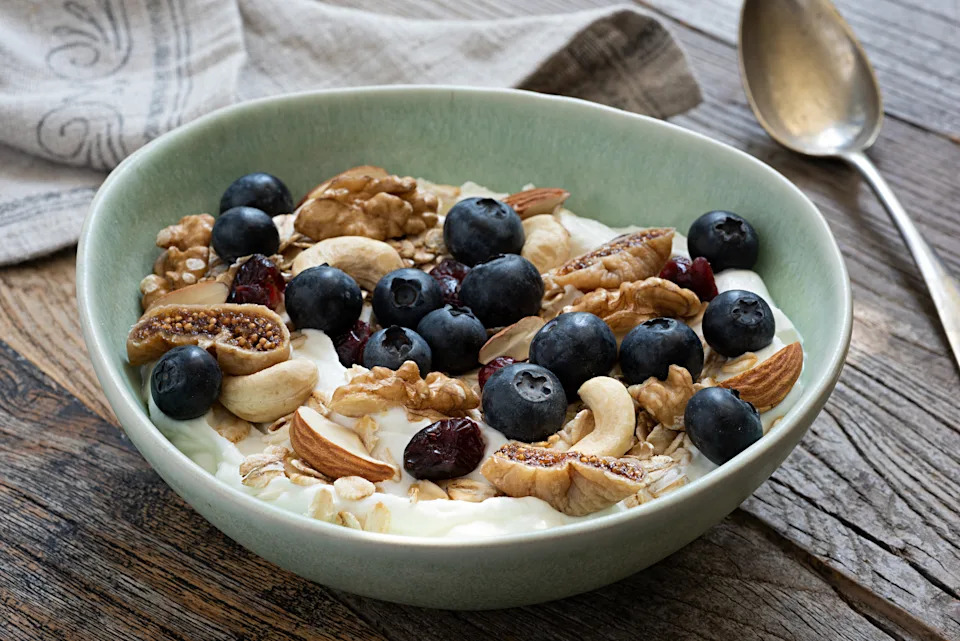
While natural Greek yoghurt is good for you, flavoured low-fat versions can be high in sugar and additives. (Getty Images)
3. Plant-based meat alternatives
Concerns about the negative health effects linked to eating red meat, along with its impact on both the environment and animal welfare, have encouraged many of us to switch to buying plant-based riffs on our favourite meat items.
While studies have found that eating a diverse range of plant foods can be excellent for gut health, plant-based alternatives may not be as good for us – especially when it comes to some of the highly engineered meat alternatives that have exploded in popularity in recent years.
As Hobson explains: “Many meat-free burgers and sausages are high in salt, lower in protein and contain more additives than people realise. They can absolutely be useful for convenience or reducing your meat intake, but the key is variety.”
He continues: “Relying on them on a daily basis may mean you’re missing out on whole-food proteins like beans, lentils or tofu, which are a much more nutritious way to get your protein on a plant-based diet.”
4. Protein bars
With so many of us looking to build a lean, muscular physique at the gym, the term ‘protein’ has fast become one of the most persuasive buzzwords in the supermarket.
“A lot of the colourful protein bars you find near the tills are actually closer to confectionery, though,” warns Hobson. “The protein they contain is often partnered with sugar syrups, flavourings or sweeteners, and some ‘natural’ bars have glucose syrup and chocolate listed as the main ingredients.”
While they’re fine as an occasional snack or for post-gym convenience, Hobson says you should think of them as treat foods, rather than healthy staples that can be eaten regularly.
“As a good rule of thumb, you should look for a bar that has at least 15 grams of protein and minimal added sugars,” he suggests.

Protein bars are easy to grab and snack on when you’re famished between meetings or on the go, but they’re often packed with sugar. (Getty Images)
5. Fruit smoothies
“Smoothies sound healthy because they come from fruit and, to be fair, many of them are – but some are made using concentrated fruit purees, which are very sweet,” Hobson explains.
“These are often sold in 500ml bottles, which can mean a lot of free sugars, that is not great for your teeth or weight if you’re drinking them in large quantities, in place of water and other sugar-free options,” he adds.
If you’re going to pair your scrambled eggs with a glass of fruit smoothie, he says you should plump for a bottle made with real fruit, and keep the serving size to 150ml to avoid a glucose spike and energy crash.
6. Deli counter meats and pre-packed ‘lean’ lunch meats
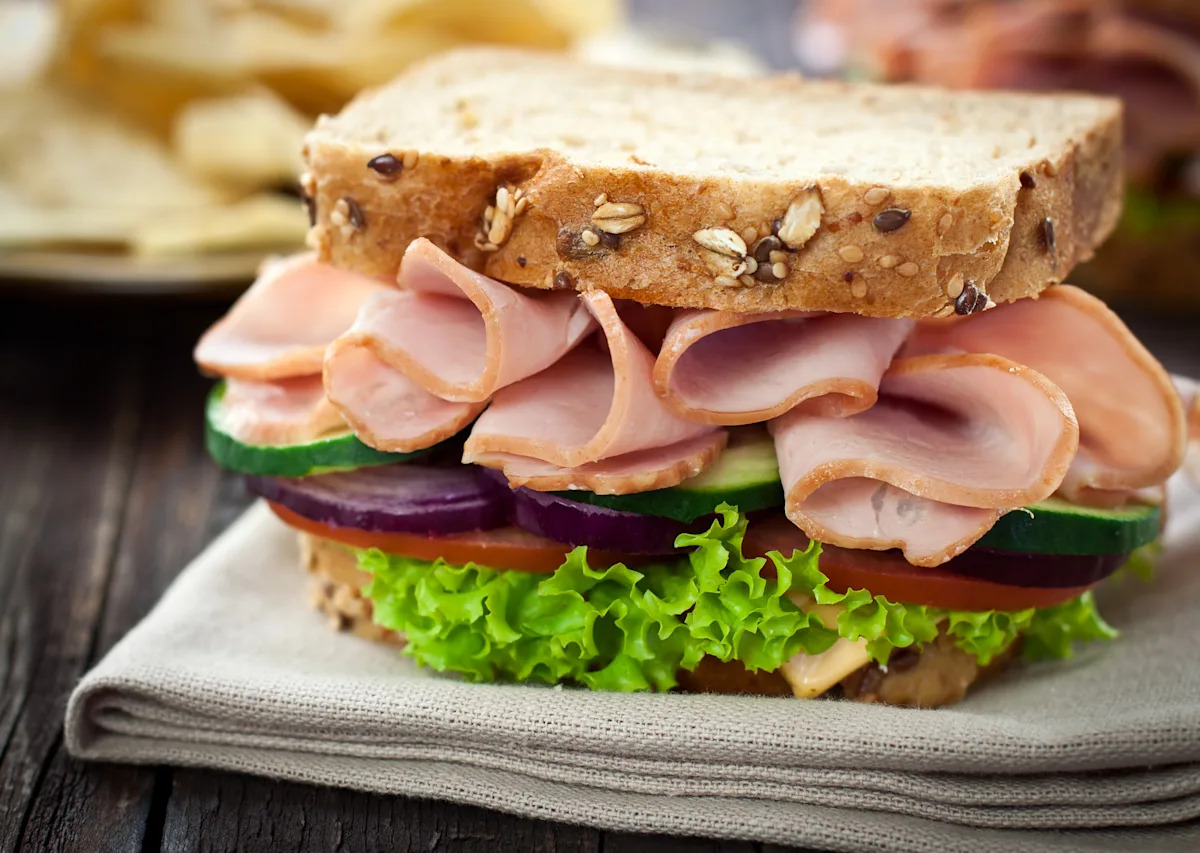
A ham sandwich has long been a lunchbox staple, but processed meat is quietly one of the worst hidden ultra-processed foods (UPFs) in the supermarket.
“Lean sliced meats look like a decent high-protein lunch option, but many versions are heavily salted and contain preservatives called nitrates, which the World Health Organization (WHO) has linked to poorer long-term health outcomes when eaten frequently,” says Hobson.
Currently, the WHO classifies processed meat as a Group 1 carcinogen, meaning there’s convincing evidence it causes cancer, particularly colorectal cancer, with a 50g daily portion raising your risk by 18%.
While the occasional grab-and-go sandwich or salad with high-quality sliced ham is not a major concern, Hobson advises against making it a daily habit: “Mixing in other protein sources such as eggs, tinned fish, beans or leftover roast chicken can help to balance things out.”
Common red flags on food labels
Keep an eye out for these label details, which can be a strong indication that a food is ultra-processed:
Sugar listed in the first three ingredients
Multiple names for sugar, such as glucose syrup, maltodextrin and fructose
‘Low-fat’ claims (as fat is often replaced with sugar or starch)
High sodium (look out for foods that offer over 1.5 grams of salt per 100g)
Artificial sweeteners or flavour enhancers
Vegetable oils like palm, hydrogenated or refined seed oils
Very small recommended serving sizes that hide high calories or sugar
Health buzzwords like ‘natural’, ‘fit’ or ‘clean’ with no nutritional backing
Read more about nutrition: