
When shopping at the grocery store, it’s impossible to escape the word “protein.” It feels like every food company has created a version of its products that contains extra protein and advertises it at length. No longer is it just protein shakes, powders and bars — now it’s in store-bought bagels, chips, coffee, cereal and even mashed potatoes. Protein is omnipresent.
While advertisements may have you believe you’re not consuming enough protein, experts say that as long as you have a balanced diet without restrictions, you’re probably already eating the recommended amount of protein for your body and activity level. However, it can still be difficult to understand how much protein is in your food just by looking at it. To help, we created a visual guide showing what 100 grams of protein looks like on a plate for omnivores, carnivores, vegetarians and vegans.
Don’t miss any of our unbiased tech content and lab-based reviews. Add CNET as a preferred Google source on Chrome.
Why is protein important?
Protein is made up of amino acids, and it’s a vital part of your diet for maintaining and building muscle, regulating weight, energy, hormones and more. But you should know that if you consume too much protein, then, like any other nutrient, it can be harmful to your health.
Numerous Reddit threads are filled with discussions about the recommended amount of protein people need. Everyone has their own opinion on the right amount, but the truth is that it largely depends on your own body and health.
The current guidelines recommend that adults aim for 0.36 grams of protein per pound — or 0.8 grams per kilogram — of body weight. To put that into perspective, according to the USDA’s dietary intake calculator, a person weighing 200 pounds would need about 73 grams of protein daily, while someone like me, who weighs 115 pounds, needs around 43 grams. Keep in mind that this calculator also takes into account your activity levels and BMI to provide a more personalized recommendation.
That said, 43 or 73 grams of protein outside of powder supplements might be hard to imagine. We’re here to help you understand and plan by showing you the best way to achieve your daily goal with these simple protein-packed meals.
Whether you’re an omnivore, herbivore or carnivore, we’ve gathered a wide selection of foods to help you portion your meals as efficiently as possible. However, please note that the protein amounts provided below are based on specific products and their nutrition labels, so your figures may vary depending on the brand or preparation method used.
Note: Each picture contains 100 grams of protein combined, not 100 grams per item.
100 grams of protein for omnivores
100 grams of protein on a plate for omnivores.
Amanda Capritto/CNET
Eating 100 grams of protein per day should be pretty easy if you don’t have any dietary restrictions. Here’s what that would look like:
Two eggs (12 grams)Snack cheese (5 grams)Greek yogurt (15 grams)Beef sausage (14 grams)One can of tuna (27 grams)½ cup of rolled oats (5 grams)2 ounces of deli ham (10 grams)1 ounce of mixed nuts (5 grams)Two slices of rye bread (10 grams)
Everything pictured above comes to 103 grams, which puts you slightly over your daily target.
100 grams of protein for carnivores
100 grams of protein on a plate for carnivores.
Amanda Capritto/CNET
As you can see, getting 100 grams of protein from animal products doesn’t take much:
Four eggs (24 grams)One can of tuna (27 grams)Three beef meatballs (15 grams)2 ounces of turkey bacon (10 grams)3 ounces of turkey breast (24 grams)
This amounts to a perfect 100 grams of protein. If you ate all of this in a day, plus bread and other non-animal products, you would surpass 100 grams of protein in a day.
100 grams of protein for vegetarians
100 grams of protein on a plate for vegetarians.
Amanda Capritto/CNET
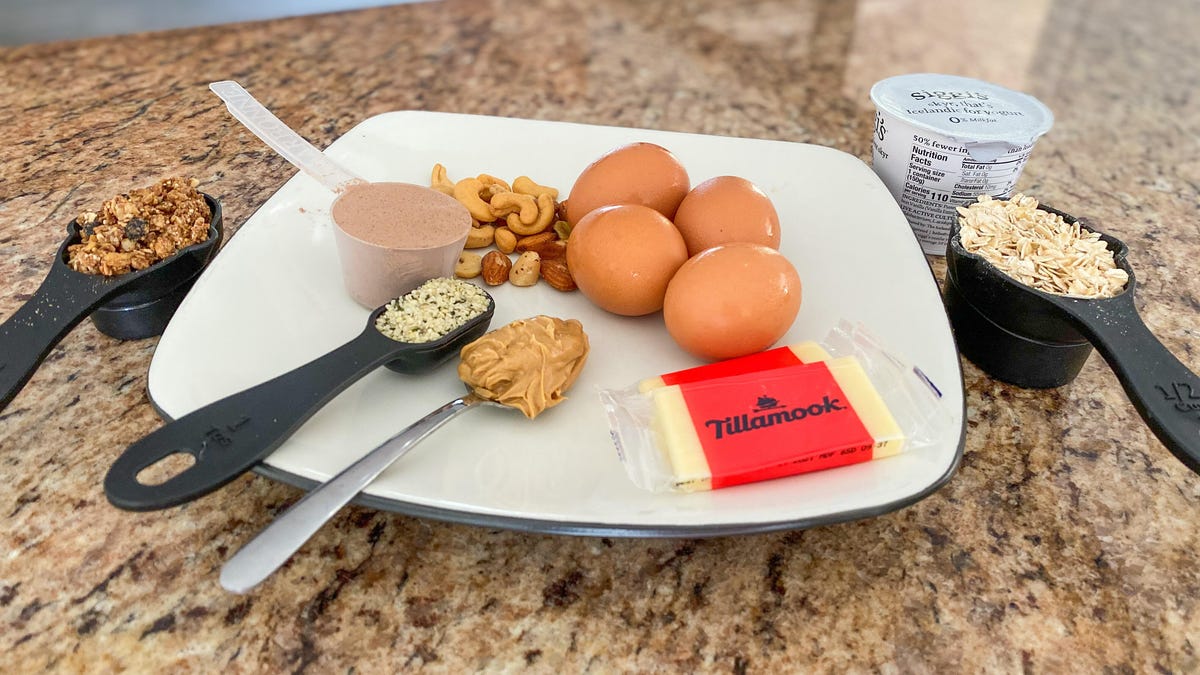
For vegetarians, 100 grams of protein might look like this:
Four eggs (24 grams)½ cup of rolled oats (5 grams)Two snack cheeses (10 grams)¼ cup of protein granola (10 grams)A single-serve Greek yogurt (15 grams)One tablespoon of hemp seeds (4 grams)Two tablespoons of peanut butter (7 grams)One scoop of plant-based protein powder (20 grams)
This comes out to 99 grams of protein, which is pretty close.
100 grams of protein for vegans
100 grams of protein on a plate for vegans.
Amanda Capritto/CNET
Reaching your protein targets levels up in difficulty when you swear off some of its best sources, but these days there are plenty of ways to meet your goals. This nut- and grain-rich array adds up to 79 grams of protein, the RDA for a 210-pound human.
1 ounce of nuts (5 grams)½ cup of rolled oats (5 grams)A protein granola bar (8 grams)Two slices of rye bread (10 grams)¼ cup of protein granola (10 grams)One tablespoon of hemp seeds (4 grams)Two tablespoons of chia seeds (10 grams)Two tablespoons of peanut butter (7 grams)One scoop of plant-based protein powder (20 grams)
If we double up on the mixed nuts, chia seeds and hemp seeds, this brings us to 93 grams of protein. You could add an extra tablespoon of peanut butter or eat a full cup of oats, instead of half a cup, to come closer to 100 grams.
This plate also excludes high-protein vegan meat substitutes, such as tofu, tempeh or plant-based meats like the Impossible Burger. Those food sources can make it easier to get 100 grams of protein on a vegan diet.
The symptoms of protein deficiency — which is normally part of a broader eating disorder or nutrition deficiency — can vary, but the first one is usually brittle hair and nails, as the body is rationing the protein it does have to more important organs and systems. Other symptoms can include:
Anemia: continual fatigue, feeling of weakness, shortness of breathWeakened immune system, leading to more frequent infectionsDifficulty maintaining focusMood swingsMuscle loss or weaknessSwellingWeight fluctuations
Show more
The best way to incorporate a large amount of protein into your everyday diet is to invest in researching which protein-rich foods like lean meats, eggs, dairy, lentils and chickpeas will be suitable for your lifestyle. You can also add in supplements, such as protein powder.
Show more
The best source of protein will depend on your diet, but lean meats, fish, eggs, poultry, nuts and seeds, Greek yogurt and cottage cheese are just a few examples of protein sources.
A busy schedule can make it tough to meal prep and ensure you’re hitting your protein goal every day. In such cases, eating high-protein snacks is a good option. However, try to make sure you’re eating nutritionally dense snacks, like nuts, boiled eggs and cheese. You can also use protein bars and shakes, but don’t look at them as main sources.