

According to a new long-term study in women, following a Mediterranean diet seems to be significantly connected to a lower risk of stroke. While more research is needed to establish the exact way in which the two are linked, the results are promising for the future combat against a condition that touches some 15 million people every year.
Researchers from the U.S. and Greece published their findings regarding the impact of a Mediterranean diet on stroke risk in women in Neurology Open Access, a journal of the American Academy of Neurology. The study looked at health data from 105,614 women living in California, with an average age of 53 at the start of the study and an average follow-up time of 20.5 years.
The participants in the study were asked to report on their diet data. Depending on their answers and how closely they followed the Mediterranean diet, they were given a score of zero to nine. When consuming more wholegrain cereals, fruits, vegetables, legumes, olive oil, and fish, their score improved. Eating a below-average amount of red meat and dairy products also heightened their score. Overall, some 30% of the women showed a score of six to nine, while 13% only reached a score of zero to two.
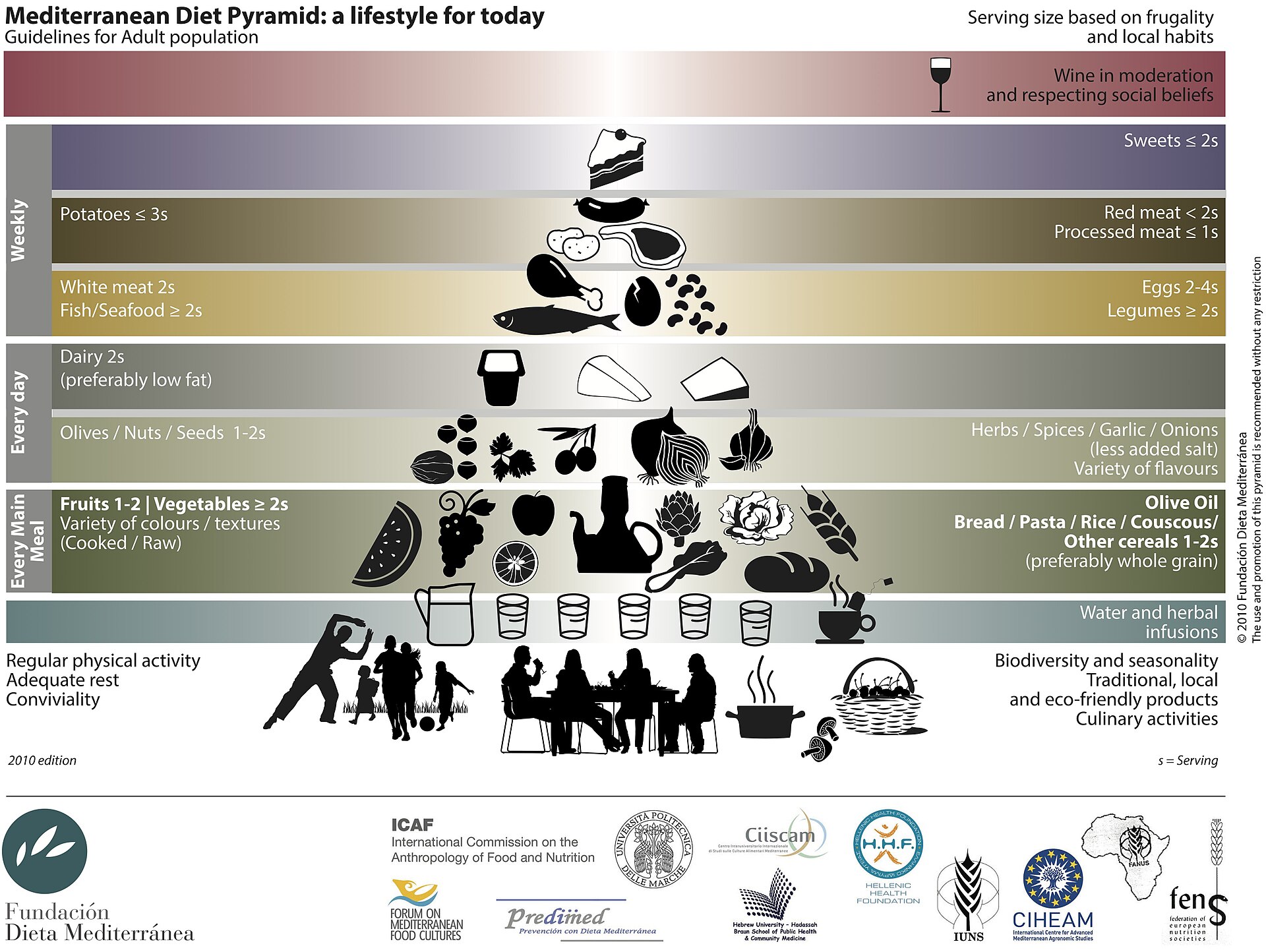 © Fundación Dieta Mediterránea | Public Domain
Moreover, the scientists adjusted the data by taking into account factors linked to diminishing or heightening the risk of strokes, such as smoking, physical activity, and high blood pressure.
A worldwide health issue
Over the average follow-up time of 20.5 years, 4,083 stroke events were recorded. 3,358 of those were ischemic, meaning the blood flow to part of the brain gets blocked. 725 of those were hemorrhagic, defined by bleeding in the brain.
When those stroke events were put against the diet data, the scientist found that the women in the highest group (thus sticking most to the Mediterranean diet) were 18% less likely to have a stroke than those in the lowest group. The risk of having an ischemic stroke was diminished by 16%, while they were 25% less likely to have a hemorrhagic stroke.
“Our findings support the mounting evidence that a healthy diet is critical to stroke prevention. We were especially interested to see that this finding applies to hemorrhagic stroke, as few large studies have looked at this type of stroke”, said one of the study authors, Sophia Wang of City of Hope Comprehensive Cancer Centre, in a press release.
As 15 million people worldwide experience a stroke every year, some 5 million of whom die and another 5 million are left disabled, the study is an important step forward to better understand the condition. While the scientists were able to prove a link between diet and strokes, further research is needed to determine the process behind this connection and to include data referring to male participants.