
Proposal mulled by Excise Department
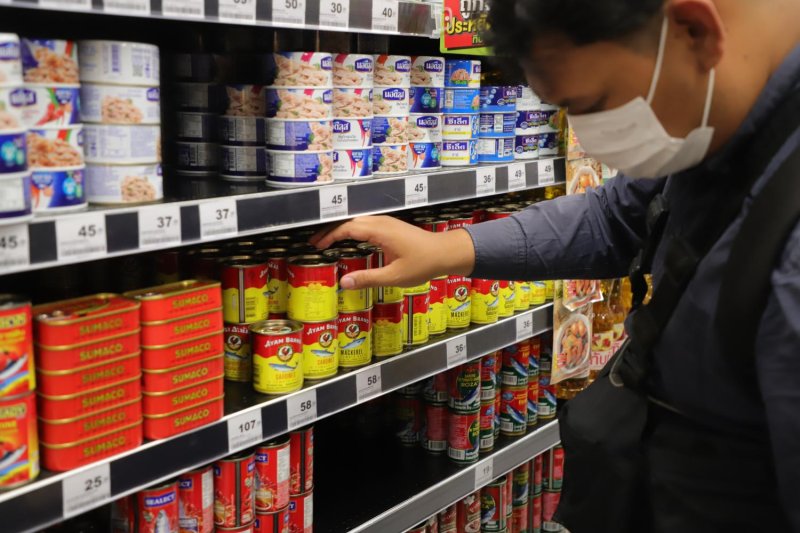
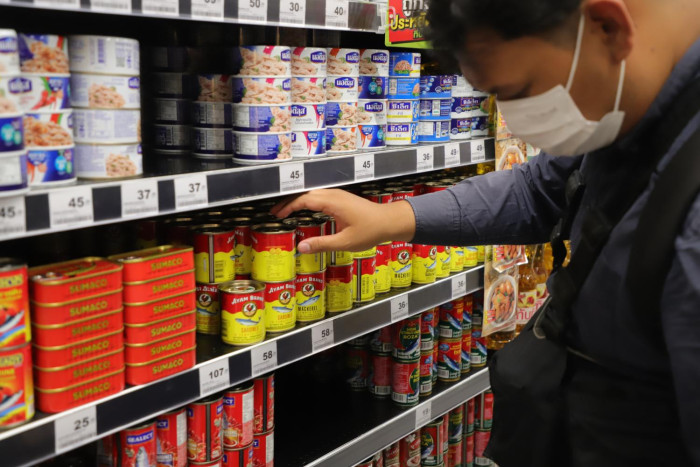
A shopper browses items at a supermarket. A grace period of one year is expected for a potential sodium tax to allow manufacturers sufficient time to adjust product formulations. Pornprom Satrabhaya
Food manufacturers will be given a one-year adjustment period to reformulate their products to reduce salt content if a sodium tax is introduced, according to the head of the Excise Department.
Pornchai Thiraveja, director-general of the department, said the proposal for a sodium tax is being considered by the agency.
Relevant stakeholders were invited to jointly design the tax measure to ensure the policy is carefully developed, he said.
A sodium tax is meant to regulate salt levels in snack foods that are popular with Thais, but contain sodium levels above the prescribed standards.
The measure would address unhealthy consumption among Thais, who consume an average of 3.6 grammes of sodium per day — more than twice the level recommended by the World Health Organization (WHO).
Excessive sodium intake has contributed to a rise in non-communicable diseases, particularly kidney disease and high blood pressure, said Mr Pornchai.
The Excise Department held consultations with WHO Thailand, the Less Salt Network, the Public Health Ministry and other organisations to analyse and design an appropriate sodium tax framework.
The department and the Thai Health Promotion Foundation organised “design-based” seminars to gather opinions from the public and private sector stakeholders on the proposed scheme.
The proposal calls for the tax to be introduced gradually, with appropriate sodium thresholds set for each product category in line with international standards.
A grace period of around one year would be provided to allow manufacturers sufficient time to adjust and to conduct R&D on healthier product formulations, he said.
The tax is an important tool to encourage the food industry to modify its production processes and promote lower-salt alternatives at reasonable prices, said Mr Pornchai.
With the country in a period of political transition, the draft legislation cannot be submitted to the cabinet for approval.
The Excise Department introduced a sugar tax on beverages in 2017, implementing it in phases to allow producers to gradually reduce sugar content. On April 1, 2025, the sugar tax entered its fourth phase.
Beverages containing 0-6 g of sugar are exempt from the tax, while those containing 6-8 grammes are taxed 1 baht per litre, with the maximum rate of 5 baht per litre applying to beverages containing 14 grammes of sugar or more.