
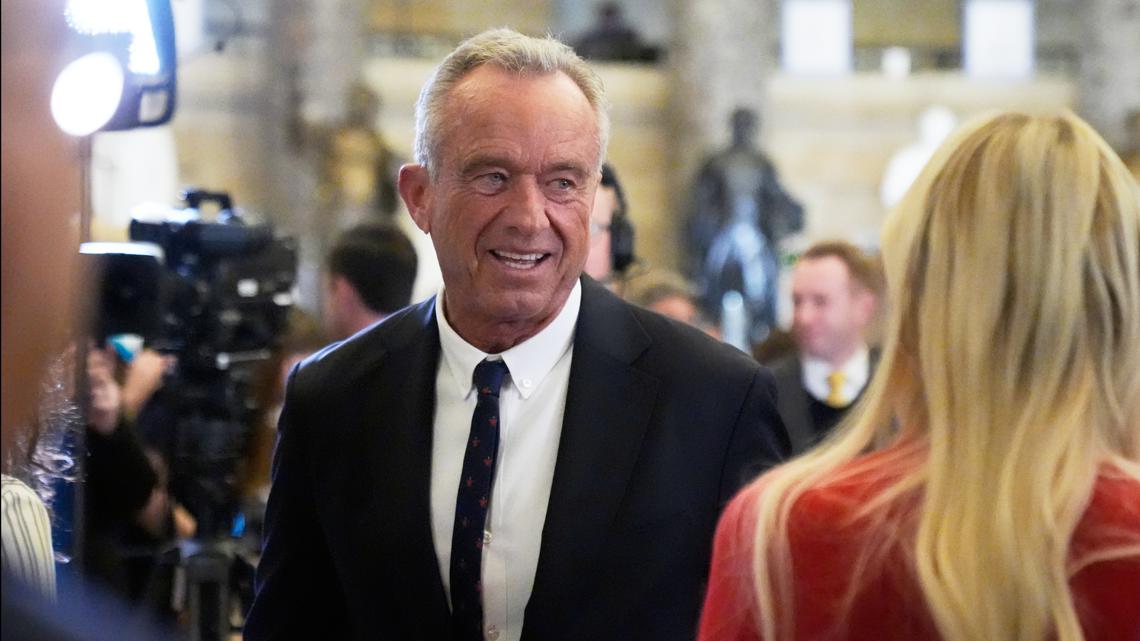
Kennedy’s criticism on the coffee chain’s comes months after his department unveiled a new U.S. dietary guideline, focusing on more protein and less sugar in meals.
WASHINGTON — Health and Human Services Secretary Robert F. Kennedy responded to criticism over his recent comments about drinks sold at Dunkin’ and Starbucks.
During a rally in Austin on Feb. 26, Kennedy said he was going to ask the two popular coffee chains to provide safety data for high-sugar beverages.
“We’re going to ask Dunkin’ Donuts and Starbucks to show us the safety data that show it’s OK for a teenage girl to drink an iced coffee with 115 grams of sugar in it,” he said.
“I don’t think they’re gonna be able to do it,” he said.
His comments quickly spread online and caught the attention of Massachusetts Gov. Maura Healey, whose state is home to Dunkin’s headquarters. Healey shared a picture of a flag with a Dunkin’ coffee and the words “Come and take it,” earlier this week.
On Thursday, Kennedy responded to Healey’s post.
“No one is taking away your Dunkin’. But isn’t it reasonable to ask whether a drink loaded with 180 grams of sugar is safe?” Kennedy said in an X post.
Does Dunkin have drinks with 180 grams of sugar?
According to the nutritional facts for the Dunkin’ menu, most coffees and beverages contain less than 100 grams of sugar. Only a few frozen drinks have more than 100 grams of sugar.
A large Triple Mocha Frozen Coffee contains the highest amount, with 165 grams of total sugar.
Kennedy’s criticism on the coffee chain’s comes months after his department unveiled a new U.S. dietary guideline in January, realigning focus on more protein, less sugar and fewer ultra-processed meals. Kennedy has for months stressed overhauling the U.S. food supply as part of his Make America Healthy Again agenda.
The guidelines emphasize consumption of fresh vegetables, whole grains and dairy products, long advised as part of a healthy eating plan. But they also take a new stance on “highly processed” foods, and refined carbohydrates, urging consumers to avoid “packaged, prepared, ready-to-eat or other foods that are salty or sweet, such as chips, cookies and candy.”
The guidelines advise avoiding or sharply limiting added sugars or non-nutritive sweeteners, saying “no amount” is considered part of a healthy diet.
No one meal should contain more than 10 grams of added sugars, or about 2 teaspoons, the new guidelines say.