
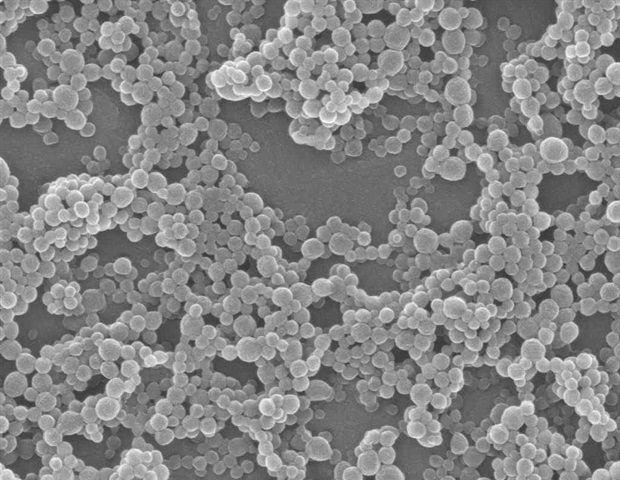
Johns Hopkins Medicine scientists say they have developed a simplified version of biodegradable nanoparticles that can “educate” the immune system to find and destroy disease-causing cells throughout the body. The study, they say, advances the field of engineering immune cells within a patient’s own body to combat cancers and autoimmune diseases including lupus, among other conditions.
Engineered immune cells have been successfully used to treat an array of blood cancers, using CAR-T cells, or chimeric antigen receptor T cells. The treatment works by drawing immune T cells from a patient’s own blood, and engineering the cells in the laboratory to wear a coat of receptors on their surface that recognizes and kills cancer cells. However, the process to remove patients’ blood cells and individually engineer them outside of the body is costly and inefficient, say the researchers.
In the report on the new studies, funded by the National Institutes of Health and published March 11 in Science Advances, the researchers say their nanoparticles were engineered to travel to and stimulate disease-fighting immune T cells, which, in turn, seek out and destroy other immune system cells called B-cells, the source of diseases such as lupus and cancers of the blood, including leukemia and lymphoma.
The researchers describe their nanoparticle as composed of polymers, which are strings of molecules called ester units that biodegrade in water. The nanoparticle surface is decorated with two major components: antiCD3 and antiCD28 antibody molecules that help the nanoparticles find and stimulate T cells. Other researchers have recently developed lipid-based nanoparticles with five components. The Johns Hopkins nanoparticles have a more simple design that requires only three components. The nanoparticles contain a cargo of genetic material called mRNA, molecular codes that instruct T-cells to express receptors on their surface that detect cancer and lupus-causing B-cells.
The current JHM study shows that 24 hours after injecting the nanoparticles into healthy mice, 95% of the target B cells were depleted in circulating blood, and about 50% of B cells were destroyed in the spleen in all the mice.
After a week, B cells in the blood returned to about 50% their original quantity.
These experiments were successful using just one dose of the nanoparticles, and an advantage of using an off-the-shelf therapy is the potential for scalable manufacture and broad accessibility, whereas current forms of CAR-T therapies are very expensive and time-consuming.”
Jordan Green, Ph.D., the Herschel L. Seder Professor of Biomedical Engineering, Johns Hopkins University School of Medicine
It has taken five years to get to this point of success, says Green, a biomedical engineer who worked with immunology expert Jonathan Schneck, M.D., Ph.D., to develop the nanoparticles used for the current study. They blended Schneck’s work on developing artificial immune cells that stimulate other immune cells and Green’s research on polymer-based nanoparticles.
Designing nanoparticles that can reach T cells throughout the blood and organs is more difficult than delivering them directly to a localized site, such as the eye, says Green. When nanoparticles reach T cells, they tend to resist taking up the particles, but, even if they do get internalized, the cells often chew them up and spit them out, says Green. “This makes sense, because if T cells easily internalize things like viruses, viral programming would take over the immune system, like what happens in HIV,” says Green.
Green says the nanoparticles work in a stepwise way, much like rockets traveling to outer space work in stages to lift off, engage boosters, detach them and finally deliver cargo. In the case of the nanoparticles, the scientists designed ships for inner space to seek out T-cells, stimulate them to activate and multiply, pass through the cell wall into the T cells, and then degrade to deliver an mRNA cargo.
The scientists created a combination blend of two molecules (antiCD3 and antiCD28) that help the nanoparticles find and latch onto T cells. They found that the degradable nanoparticles worked just as well as commercially made magnetic beads designed to latch on to T cells for laboratory research purposes, but then were also able to enter the T cells to reengineer them from the inside out.
In a previous study, Green and his colleagues found that about 10% of the Johns Hopkins-developed nanoparticles successfully escape the cell’s degradation compartments to deliver their sensitive genetic cargo, compared with 1%–2% of other nanoparticles that immediately get degraded and ejected from the cell.
In the current study, the scientists saw that the nanoparticles degrade and release their mRNA contents within about a few hours in the mice.
Green, Schneck and colleagues at Johns Hopkins have recently been named as collaborators by biotechnology company ImmunoVec on a more than $40 million grant from a federal agency, Advanced Research Projects Agency for Health, to develop these cell engineering tools.
The researchers say the Johns Hopkins research team aims to continue refining the nanoparticles, tailoring them better to diseased B cells and able to dial up or down the amount of T-cell stimulation.
This research was supported by the Johns Hopkins Translational ImmunoEngineering Center, a National Center for Biomedical Imaging and Bioengineering that is innovating biotechnologies to modulate the immune system.
Other Johns Hopkins scientists who conducted the research are Manav Jain, Savannah Est-Witte, Sydney Shannon, Sarah Neshat, Xinjie Yu, Sydney Dunham, Tina Tian, Leonardo Cheng, Jawaun Harris, Max Konig and Stephany Tzeng.
Funding for research was provided by the National Institutes of Health (P41EB028239, R01CA281143, R37CA246699, R56DK137420, R21AI176764, F31CA284859) and the National Science Foundation.
Source:
Journal reference:
Jain, M., et al. (2026) Biodegradable targeted polymeric mRNA nanoparticles enable in vivo CD19 CAR T cell generation and lead to B cell depletion. Science Advances. DOI: 10.1126/sciadv.adz1722. https://www.science.org/doi/10.1126/sciadv.adz1722