
 We’ve been underestimating
When we think of cardiovascular health, we usually think about running or moving fast. For years, we’ve been told that we have to move to save our arteries. But a growing body of research suggests that the most powerful weapon against hypertension might involve no movement at all.
Isometric exercises (holding static positions), like wall squats or planks might be the kings of blood pressure management.
The Underdog of the Exercise World
Running is great. So is walking. In fact, even a few minutes of cardio exercises (also called aerobic exercises) per day can add years to in your life. But while traditional cardio remains the gold standard in most clinical guidelines, it might not actually be the best tool for the job.
A massive meta-analysis (a study of studies) crunched data from 270 randomized controlled trials involving 15,827 participants. They compared everything: aerobic training, weightlifting, high-intensity interval training (HIIT), and combined regimens.
They found that every form of exercise helped lower resting blood pressure. But some were better than others.
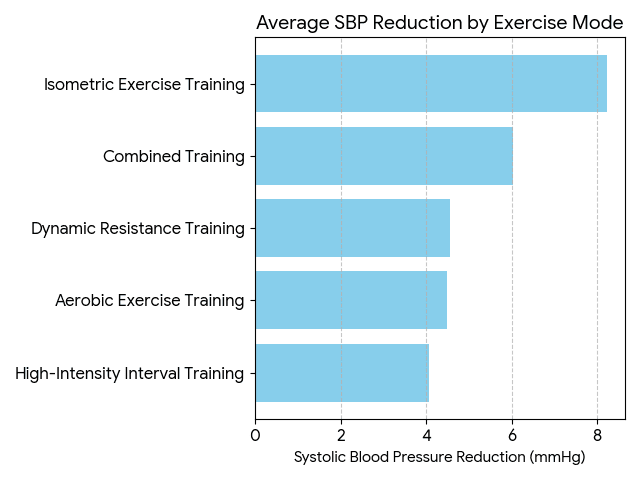
In particular, isometrics seemed to be the best. When the researchers looked at a metric called SUCRA (surface under the cumulative ranking curve), essentially a batting average for how effective a treatment is, isometric exercise scored a staggering 98.3% for reducing systolic blood pressure. For comparison, aerobic exercise training sat at a modest 40.5%, and HIIT, the darling of the modern fitness world, trailed at 39.4%.
“Isometric exercise training is the most effective mode in reducing both systolic and diastolic blood pressure,” the researchers concluded, noting it outperformed aerobic training, weights, and high-intensity intervals.
The Best Isometric Exercises
Let’s look at the numbers in the study. Aerobic exercise typically drops your systolic blood pressure by about 4.49 mm Hg (healthy blood pressure is considered to be around 120/80 mmHg). Isometric training doubles that, slashing it by an average of 8.24 mm Hg. To put that in perspective, standard blood pressure medications often aim for a reduction of around 9.4 mm Hg. We are talking about a routine that takes a few minutes and rivals pharmaceutical intervention.
×
Thank you! One more thing…
Please check your inbox and confirm your subscription.
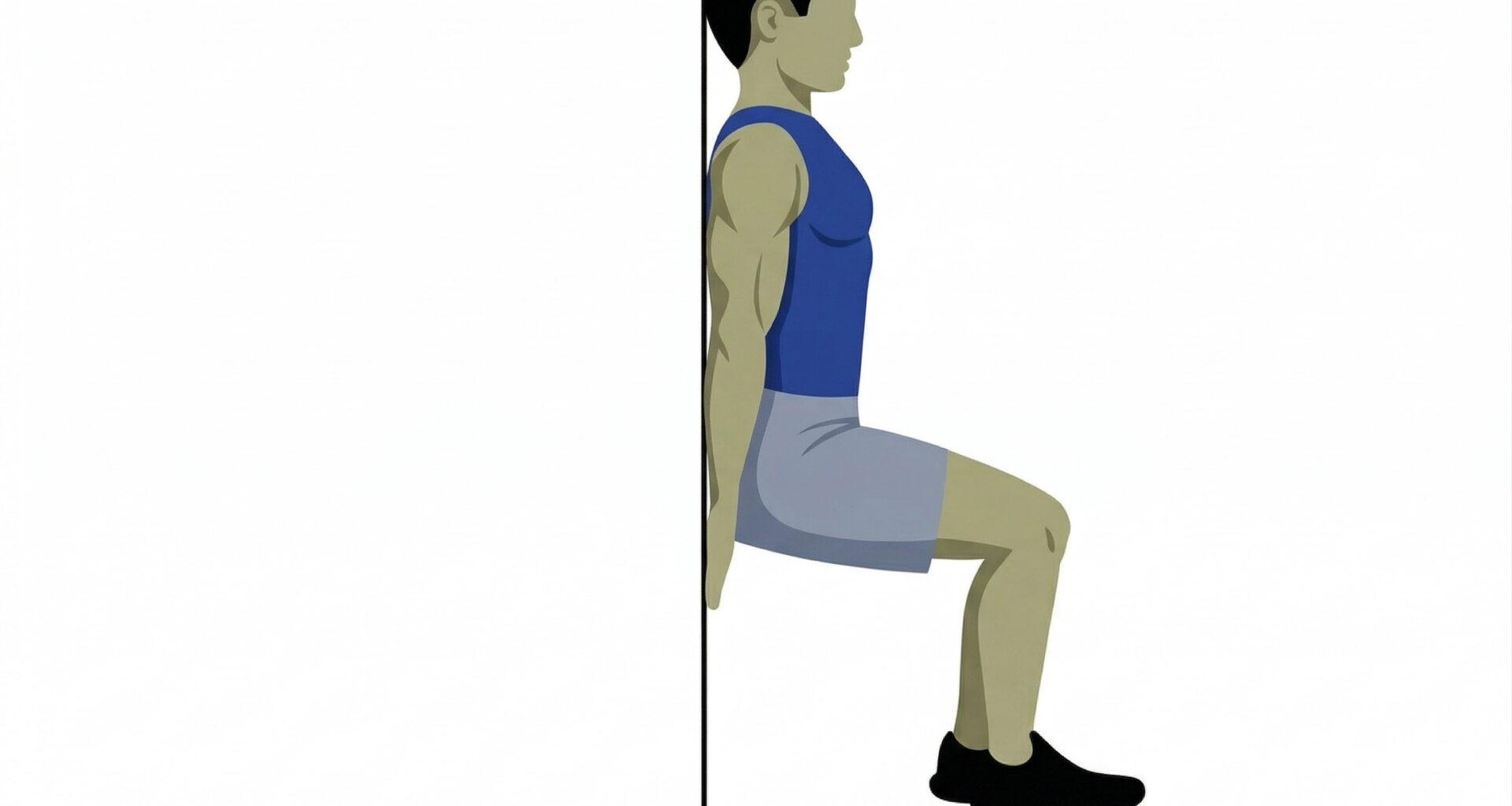
Among the isometric exercises, the wall squat seems to be the most effective. By simply leaning against a wall in a seated position and holding firm, participants saw an average systolic reduction of 10.47 mmHg. That’s even better than what many drugs can achieve.
The most effective exercise regimen identified in the meta-analysis was the isometric wall squat. The protocol used in most of these studies is elegantly simple:
Hold: Perform a 2-minute wall squat.
Rest: Take a 1 to 2-minute break.
Repeat: Do this four times total.
That’s it. You can do it while watching the evening news or waiting for your coffee to brew. If a wall squat is too intense, the research shows that isometric handgrip (squeezing a spring-loaded device) or isometric leg extensions also produce comparable benefits. Even the humble plank is getting in on the action. A 2025 study found that just one session of four 2-minute planks could lower blood pressure for a full 24 hours afterward.
Why Do Isometric Exercises Work So Well?
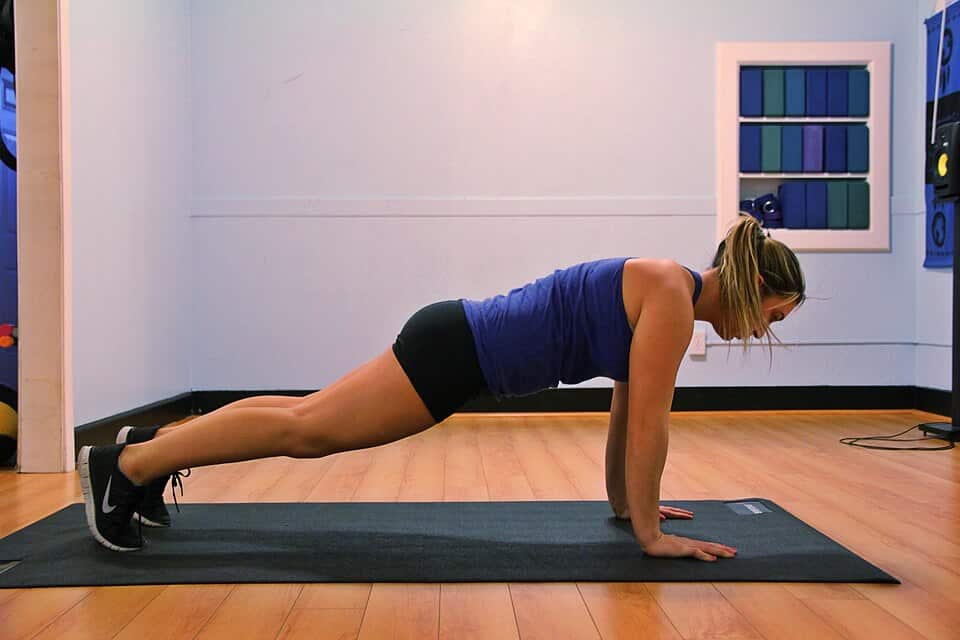 Planks are another isometric exercise that is very effective.
Most exercise works by making the heart pump faster and harder, pushing blood through the system. Isometric exercise takes a different approach.
When you hold a muscle in a static contraction (like when you’re glued to a wall in a squat) you are essentially squeezing your blood vessels shut. This creates a temporary state of “local hypoxia,” where the muscle is starved of oxygen and waste products start to pile up. Your brain senses this resistance and signals the heart to keep the pressure up.
The magic happens the moment you release the hold. When the muscle relaxes, the blood vessels expand rapidly. A massive flush of blood rushes back into the area, a phenomenon known as reactive hyperemia. This surge stimulates the release of nitric oxide and other favorable vascular adaptations that help the arteries become more flexible and less stiff.
Several studies note additional heart benefits, further to blood pressure, a 2023 study found that just four weeks of wall squat training significantly reduced arterial stiffness and improved heart function. Another recent study showed that isometric training even improves “myocardial work efficiency” — essentially teaching your heart how to do more work with less wasted effort. It’s not just about the numbers on the cuff; it’s about a fundamental structural upgrade to your cardiovascular system.
The Future of Prescriptions
The first takeaway is that every physical exercise is helpful. The second one is that despite the overwhelming evidence, current guidelines are probably outdated. The authors of this massive analysis are calling for a framework update to include more novel modes isometric exercises.
But this is good news.
The beauty of the “static revolution” isn’t just in how efficient it is; it’s in the logistics as well. In a world where 31% of the population is physically inactive, the barriers to entry for 15 minutes of wall-sitting are significantly lower than a gym membership.
You don’t need any equipment to do it, it’s much safer for those with mobility issues than running or heavy lifting, and it’s really easy to do. Most successful protocols involve just four 2-minute bouts, three times a week. You can do it while watching the news or an episode from your favorite series.
Don’t throw away your running shoes and don’t cancel the gym membership. But the next time you find yourself with a few minutes to spare, don’t just sit there — squat there. Your heart will thank you.