
In the early 2020s, interest in GLP-1 weight loss drugs exploded. Now, as we move deeper into the decade, a new buzzword is taking over: peptides.
And the demand for peptides continues to surge.
“The GLP-1s put it on the map, and then people were like, ‘Well, what’s next?’” said Evan Miller, founder and CEO of Gameday Men’s Health, a concierge men’s health network that provides peptides and other care.
You’ve probably seen wellness TikTokers or elite athletes refer to peptides as a way to speed muscle recovery, slow aging or simply optimize overall health. At the same time, federal health officials are starting to take notice.
The US Food and Drug Administration has approved a number of peptides as medications, but many other peptides promoted online are not approved. Under current FDA rules, many of these also are not eligible to be dispensed by compounding pharmacies, and experts warn that rising demand is fueling an online black market that could be risky.
US Health and Human Services Secretary Robert F. Kennedy Jr. has said he’s “a big fan of peptides” and has used them himself. He’s also said he hopes to relax restrictions around them but has been faced with some resistance within the FDA, which previously determined that some peptides lack sufficient safety data.
Here’s what to know about how peptides work and what to do if you’re interested in them.
All of us have peptides in our bodies. They’re short chains of amino acids that play key roles in regulating important functions such as building muscle, controlling blood pressure, producing hormones or managing weight.
“Companies now manufacture peptides with the intent of mimicking natural processes in the body,” Dr. Jessica Alvarez, a professor in the Division of Endocrinology, Metabolism and Lipids at the Emory University School of Medicine, said in an email. “We’re hearing about peptides more often because technology advances have made them easier and cheaper to synthesize.”
So when someone is taking peptides, either through injections or by mouth, they’re getting a synthetic form of what’s naturally found in the body.
“What we’re really doing is working with compounds that naturally exist in the body and increasing them to achieve targeted clinical effects,” said Dr. Lisa Cassileth, founder and CEO of The Practice Healthcare in Beverly Hills, who specializes in peptides, breast reconstruction for cancer patients and cosmetic procedures.
When people choose to use certain peptides, they’re often aiming to influence or improve specific functions in the body.
“Peptides are messengers, and they’re messengers that are going to tell your body to do something,” Miller said. “These messengers can be telling your body to reduce inflammation; that’s a peptide called BPC-157. Or another messenger might tell it to regenerate cellular levels of the skin, like a copper peptide.”
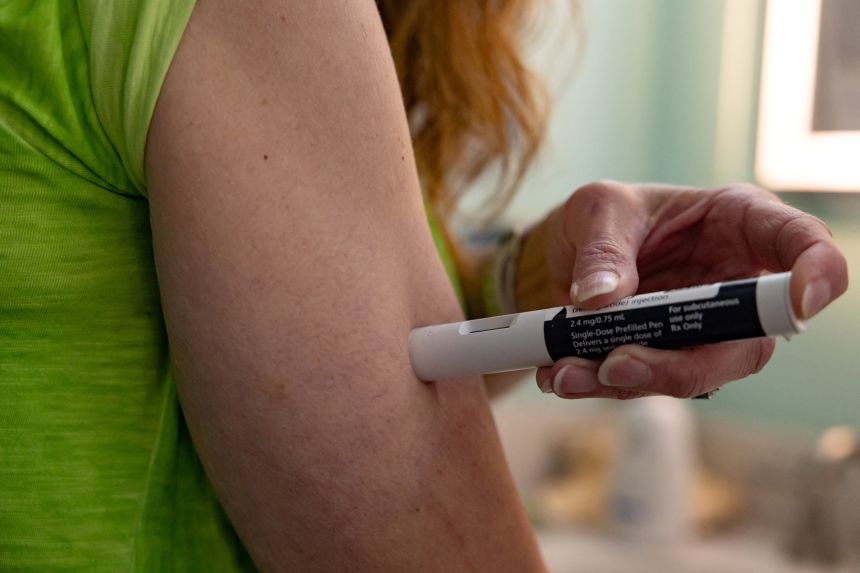
Popular diabetes and weight-loss medications called GLP-1s, such as Ozempic, Wegovy, Zepbound and Mounjaro, are peptides. Insulin, the hormone that helps regulate blood sugar, is probably the best-known peptide.
And similar to how scientists have turned insulin into a diabetes medication, other peptides have been synthesized and turned into medications that require prescriptions, over-the-counter supplements or cosmetic products.
People may seek out peptide therapies for medical, cosmetic or performance reasons, such as muscle growth, fat loss, injury recovery, osteoporosis treatment, sleep quality, skin care, body building or anti-aging.
Dr. Hal Mohammed entered the world of peptides in 2023 when he started to use tirzepatide, a GLP-1 that’s sold under the brand names Mounjaro and Zepbound. He wanted to lose unhealthy weight, he said, and he had been diagnosed with prediabetes, a condition in which blood sugar levels are higher than normal but not high enough to be considered type 2 diabetes.
After months of using tirzepatide, “I lost 70 pounds. My blood sugar completely normalized. So being prediabetic disappeared. My hemoglobin A1C is like 4.9. My lipid panel looks spectacular,” said Mohammed, global chief medical officer of Gameday Men’s Health.
He then used a peptide called tesamorelin to lose visceral fat, which he worried was accumulating around his organs despite his use of the GLP-1. Both tirzepatide and tesamorelin have been approved by the FDA – tirzepatide to treat diabetes and weight management, and tesamorelin to help people with HIV lose excess abdominal fat – but his use of the latter was considered “off-label” since it was for another purpose.
“What I did was use it for a few months, and I noticed that I dropped about a pound or two of total fat and visceral fat loss, and that improves your metabolic health,” Mohammed said.
Then, “I had major hand surgery last year. I used recovery peptides that didn’t necessarily have a ton of data behind them, but I saw them work in plenty of patients, and I decided to use it on myself. It’s a little bit anecdotal, but we did see healing there,” he said. “So, for sure, GLP-1s have been a gateway to this.”
GLP-1 medications are currently the “most public use of peptides,” Chelsea Hagopian, an assistant clinical professor at Emory University’s Nell Hodgson Woodruff School of Nursing, said in an email.
However, “there are similar peptides for growth hormone, testosterone, and other molecules, which you’d want to potentially have more of in the body to elicit a change that you’re looking for, such as for muscle regeneration, muscle growth, fat loss, energy, or mood,” said Hagopian, who is also a nurse practitioner at a private plastic surgery practice in Atlanta. “And then there are some investigational peptides that show a lot of promise for things like focus and cognition.”
Cassileth said she has prescribed the peptides BPC-157, GHK-Cu and TB500 to promote healing in patients who’ve had surgery.
“I do breast cancer reconstruction, and one of the problems when you do a mastectomy is, there’s low blood flow to the skin,” Cassileth said.
“When I inject BPC-157, it creates additional new blood flow,” she said, as well as cellular repair.
Those people who are healthy enough to be cleared for surgery are typically also healthy enough for the benefits of peptides to outweigh the risks, when used in the short term, she said. But she added that the peptide is used for only one week after surgery because there is no long-term data on its use in cancer survivors and the potential risks of the peptide stimulating the growth of cells.
“I don’t recommend long term BPC-157 if someone has active cancer,” Cassileth said. “Anything that stimulates cellular repair can also help support cell life. You want the normal body to recover, but you certainly don’t want to stimulate cancer growth. I think short courses are appropriate right after surgery, because the risks of surgery are so great.”
There are three ways to look at peptides, Mohammed said.
First, “there’s the FDA-approved ones, with clear indications, with manufacturing oversight,” he said. The peptide medications that have been approved by the FDA have been tested for safety in clinical trials, which evaluate their benefits and risks.
“Then there’s the off-label use of approved peptides, or peptides that were approved for a specific indication,” Mohammed said. “And then there’s compounded or wellness-marketed peptides, where evidence sometimes is a little bit lacking, standardization is missing, quality assurance seems to be a little bit weaker.”

Some experts have raised concerns about the safety of using emerging peptides that are still considered experimental. Often, they might have labels that say “research use only” or “not for human consumption.”
“If you’re purchasing research chemicals for personal use, you may not be a good candidate for them,” Hagopian said. “These are powerful medications that, in some cases, can have long-term health implications. It’s best to consult with an appropriate health care professional before seeking these peptides. They are not benign, and some have potent effects on the body.”
For instance, in 2023, the FDA described potential safety risks associated with certain peptides, such as BPC-157, and said “the agency lacks sufficient information to know whether the drug would cause harm when administered to humans.”
Finnrick Analytics, a startup in Texas that tests peptides for safety, has commissioned almost 9,900 tests since it began operations in late 2024 – many of them samples submitted by the public.
Of those, 78% came back as “acceptable,” meaning the product was what it claimed to be, its purity was at least 98% and its quantity was within 20% of what the label claimed, CEO Raphaël Mazoyer said.
Among the 22% of products that failed these quality checks, “the reasons vary,” Mazoyer said in an email.
“Quantity is the most common issue: 12% of samples diverge from the labeled dose by more than 20% in either direction,” he said. “Some distributors still argue that giving buyers more than they paid for is a good thing. We strongly disagree: these products need to be accurately dosed, period.”
Even though the first therapeutic peptide – insulin – was synthesized in the 1920s, some more recent peptides that are used for anti-aging or muscle recovery are still considered to be in their “infancy” when it comes to research data, said Dr. Elan Goldwaser, a sports medicine physician and assistant professor of medicine at the Columbia University Vagelos College of Physicians and Surgeons.
“While there are promising early findings, human evidence is currently very limited. Most of the available research stems from laboratory studies and limited animal studies,” Goldwaser said in an email.
“I do see a potential benefit to their use and remain optimistic that peptide therapy will soon gain a place among all the regenerative therapies I currently offer in my practice,” he said. “Overall, I think we need to approach peptide therapies with caution.”
Many experts also worry about the safety risks of ordering peptides online from unfamiliar sources.
“We worry about contamination, the source, and dosing considerations from labs with minimal oversight. How do you know you’re getting an appropriate dose? There have been case reports of people getting very sick from injecting the wrong dose of a peptide or having contaminated peptides. That’s the main safety implication,” Hagopian said.
When Miller sees social media posts promoting websites where people can order peptides online without seeing a doctor, he considers those to be red flags.
“These people are probably sales reps, and they’re directing you to a website,” he said. “They should be directing you to medical practices with licensed clinicians, because clinicians are, by and large, built in for compliance. It’s their license on the line, and so they’re not going to prescribe something willy-nilly.”
There could be unintended harms when peptides are used outside the guidance of a doctor, including interfering with other medications, Mohammed said, or raising the risk of cancer in someone with a history of the disease if it promotes cellular growth or cell renewal.
When a new patient might be interested in peptides, Mohammed said, he takes a “very comprehensive” history that includes questions about those and other concerns.
FDA-approved peptides are regulated in the same way as other approved drugs.
But aside from those that are approved as therapeutic drugs, the manufacturing of many peptides is largely unregulated, Alvarez said.
“This may lead to improper handling, mislabeling, contamination, or other quality-control issues that could have serious consequences,” she said.
And a black market for unapproved peptides has emerged. Many are classified as Category 2 substances, which means the FDA views them as posing potential significant safety risks. Additionally, many unapproved peptides cannot be legally compounded by pharmacies for human use.
WHAT TO DO IF YOU’RE INTERESTED IN PEPTIDES
Talk with your health care provider.
Establish which ones might help you achieve your personal health goals.
Know the risks versus benefits for you.
Make sure the peptide is coming from a safe and credible source.
Tell your doctor about any other medications or supplements you take.
Kennedy said on “The Joe Rogan Experience” podcast in February that he hopes to change that Category 2 classification and move peptides “to a place where people have access from ethical suppliers,” including compounding pharmacies, which customize medications to fit an individual’s needs or when an approved version is in shortage.
But Tuesday on “The Clay Travis & Buck Sexton Show” podcast, Kennedy said there has been some “resistance” from within the FDA.
“We’ve made the argument that we should move them back into a category where they can be studied, where we know what the source is, they’re coming from legitimate formulators who are getting them from FDA-inspected labs,” he said.
Essentially, this potential federal action could pave the way for compounding pharmacies to make certain peptides, and patients could access them with a doctor’s prescription.
But federal law requires that in order for an active ingredient to be used in a compounded drug, it has to be pharmaceutical-grade — and for many unapproved peptides, “it is my understanding that there is no pharmaceutical-grade active ingredient available,” said Scott Brunner, chief executive officer of the Alliance for Pharmacy Compounding.
That’s because they may contain only research-grade active ingredients, he said.
“We would like to see FDA give the market a reason for going to the next step and manufacturing pharmaceutical-grade active ingredient for these peptides. Right now, manufacturers don’t have any incentive to do it; they’re illegal,” Brunner said. “So, if FDA would state, ‘As of X date, these will be allowed for use in compounded drugs,’ then the manufacturers would have an economic motive for going the extra mile to manufacture pharmaceutical-grade product.”
If this happens, some experts might argue that using compounding pharmacies can come with a separate set of potential risks, such as contamination, inconsistent dosing or preparation errors.
But in response, Brunner asked whether critics would rather have a peptide product from the black market or from a compounding pharmacy.
“Compounded drugs are specifically authorized in the Food, Drug and Cosmetic Act and the state pharmacy laws of every state in the country, and they’re authorized for a reason. Compounded drugs fill gaps in our health care system, in our drug supply, that the makers of FDA-approved drugs can’t or won’t fill,” Brunner said, adding that the growing black market for peptides could lead to a “public health crisis.”
Accredited compounding pharmacies are primarily regulated by state boards and required to comply with certain standards and guidelines, Cassileth said.
“Really, the doctor’s job is to vet the pharmacy,” she said. “The doctor has to be involved right now, because it’s so hard to get access to normal, safe prescriptions.”
Mohammed, of Gameday, said he hopes this potential step by Kennedy means peptides will be used in partnership between a patient and their doctor, eliminating the risks associated with ordering peptides directly online from unknown sources, without ever seeing a doctor.
“From the FDA standpoint, I’m thrilled to see that they’re bringing peptides back between the patient and the physician,” he said. “It became a little bit like the Wild West, and we need to get a little bit better control. So I’m not against access. It just needs to be tethered to evidence-based and manufacturing discipline.”

Goldwaser described the plan to lift restrictions as a “complex” issue.
“On one hand, moving these substances into regulated compounding pharmacies could provide better oversight, ensuring that if a patient chooses to use them, they are at least receiving a pharmaceutical-grade product rather than a ‘back-alley’ version,” he said. “On the other hand, many in the medical community worry that lifting restrictions prematurely (before rigorous human data is available) may normalize the use of unproven therapies and potentially put public health at risk.”
Overall, the HHS action comes down to potentially loosening restrictions to lead to a “bit more access” to certain peptides, said Dr. Panagis Galiatsatos, a pulmonary and critical care medicine physician at Johns Hopkins and author of the new book, “Medicine for the Greater Good,” who has been following the popularity of peptides.
“Peptides are great when you can unlock their potential, but they still need to be properly supervised and monitored,” he said. “I view peptides like a tool, and so you should be mindful of: When am I done with my tool? What’s my end goal? And how do I minimize adverse effects from the tool?”