
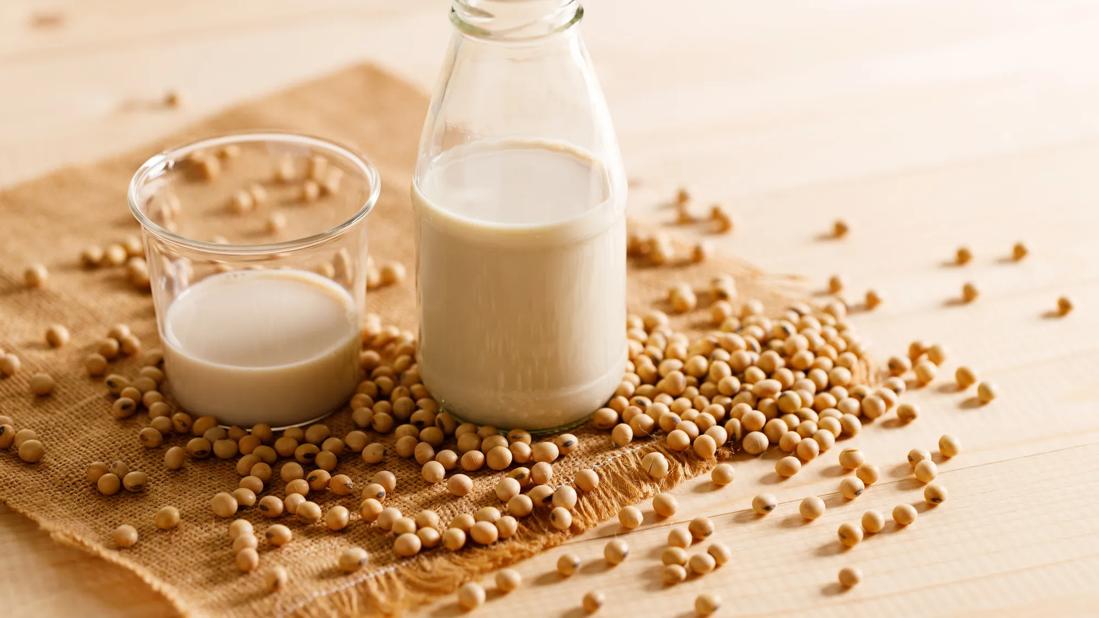
Whether you splash it into coffee, pour it over cereal or blend it into smoothies, soy milk has long been a staple in the dairy-free aisle. But compared to trendier options, like oat milk and almond milk, soy milk sometimes gets overlooked — or misunderstood.
Advertisement
Cleveland Clinic is a non-profit academic medical center. Advertising on our site helps support our mission. We do not endorse non-Cleveland Clinic products or services. Policy
For years, soy has been tangled up in questions about hormones and breast cancer risk. But research continues to show that soy foods can be part of a healthy eating plan for most people. Plus, soy milk offers some nutritional perks that other plant-based milks don’t.
Registered dietitian Julia Zumpano, RD, LD, explains what soy milk is, its biggest benefits and how to choose the healthiest option.
What is soy milk?
Soy milk is a plant-based drink made from soybeans and water. Traditionally, manufacturers soak, grind and boil soybeans before straining the liquid to create a creamy milk alternative.
“It can be used anywhere that cow’s milk can be used,” says Zumpano. “Nutritionally, it’s not exactly apples to apples. But it works very similarly in recipes, smoothies, cereals, coffee drinks and baking.”
Soy milk is naturally dairy- and lactose-free. That makes it a popular option for people with dairy allergies or lactose intolerance. It could also work well for people who follow a plant-based diet. It’s available in many varieties, including unsweetened, sweetened and flavored versions, like vanilla or chocolate.
Compared to other plant-based milks, soy milk tends to have a creamier texture. It also has a more balanced nutritional profile. That’s especially true with types fortified with calcium and vitamin D.
Nutritional highlights of soy milk
One of soy milk’s biggest advantages is its protein content.
“Most milk alternatives lack protein,” says Zumpano. “But soy milk has about the same amount of protein as cow’s milk.”
Protein has a lot of important jobs. It:
Helps build and support muscle massKeeps you feeling fuller longerSupports immune function and tissue repairProvides essential amino acids, B vitamins, iron and zinc
Nutrients vary by brand. But 1 cup (about 240 grams) of unsweetened soy milk generally contains about 8 grams of protein. And soy protein is considered a complete protein. That means it contains all nine essential amino acids your body needs.
“That’s pretty unique among plant-based milks,” Zumpano notes. “You’re getting a more nutritionally balanced option.”
Unsweetened soy milk is lower in sugar than flavored or sweetened varieties. A typical serving has about 1 gram of sugar. That makes it a better everyday choice for most people.
One serving of soy milk contains about 80 to 90 calories. Nutrients it provides include:
Calcium and vitamin D (if fortified)PotassiumPhosphorusVitamin AMagnesiumFolateVitamin ECholineSoy milk health benefits
So, is soy milk good for you? For most people, yes. Research suggests soy foods and soy-based beverages may offer several health benefits. Zumpano walks us through them.
Supports heart health
Soy milk is naturally low in saturated fat, which may help support cardiovascular health.
“There’s been a lot of research on soy and heart health,” says Zumpano. “It may help lower LDL cholesterol. It’s also a good source of potassium, which can help support blood pressure.”
Using soy milk in place of dairy products that are higher in saturated fat may also help improve overall heart-health habits.
May support bone health
Most commercial soy milks are fortified with calcium and vitamin D (which just means it’s added in during manufacturing). Both nutrients help maintain strong bones.
“If you’re using soy milk to replace dairy milk, fortified versions are an ideal substitute from a bone health standpoint,” advises Zumpano.
This can be especially important if you avoid dairy entirely, as a dairy-free diet can make it hard for you to get the calcium you need.
Contains beneficial isoflavones
Soy naturally contains plant compounds called isoflavones, which are sometimes called phytoestrogens because they weakly mimic estrogen in your body. But they don’t act the same way.
One of the biggest myths about soy is that it increases breast cancer risk because of its phytoestrogens. But current evidence doesn’t support that idea for most people. In fact, research suggests soy foods may be good for you.
“I think soy got a bad rap for a while,” says Zumpano. “Now, we’re seeing more research showing these compounds may actually have protective benefits.”
Research shows that isoflavones may:
Help reduce inflammationSupport healthy agingPlay a role in supporting menopausal healthReduce the risk of certain cancers, including breast cancer
“If you’re going through perimenopause or menopause, phytoestrogens may help support hormone balance naturally,” Zumpano adds.
Are there any other risks or downsides to be aware of?
For most people, soy milk is considered safe and nutritious. But there are a few situations where you may want to be cautious.
Soy allergies
Soy is one of the more common food allergens. It can trigger serious allergic reactions in some people.
“If you have a soy allergy, soy milk obviously isn’t a good option,” states Zumpano.
Added sugars and additives
Not all soy milks are created equal. Some flavored and sweetened versions can contain a lot of added sugar.
Others may contain gums, fillers or emulsifiers that can bother sensitive digestive systems.
“Some people are more sensitive to additives than to the soy itself,” says Zumpano.
Medication interactions
Soy may affect how certain medications work. That includes some thyroid medications and blood thinners.
“It’s usually more about timing,” says Zumpano. “For example, if you take thyroid medication, it’s generally recommended to wait several hours before consuming soy.”
Fermented soy products may also interact with certain antidepressants or Parkinson’s medications called MAOIs. Talk to your healthcare provider to understand whether soy is safe for you.
Breast cancer medications
If you’re going through treatment for estrogen-positive breast cancer, it’s important to know that soy can interact with certain anti-estrogen medications used during treatment.
“It’s crucial to talk with your oncologist before increasing your soy intake,” Zumpano emphasizes.
How do you choose the healthiest soy milk?
When you’re shopping for soy milk, Zumpano recommends keeping it simple.
“My biggest tip is to choose unsweetened soy milk,” she says.
She also advises looking for versions that:
Have little or no added sugarAre fortified with calcium and vitamin DHave a short ingredient list with few additivesDon’t include excessive gums and fillersAre refrigerated or shelf-stable
“If you find a simple soy milk made with just soybeans and water, that can still be an excellent choice,” she reassures. “But if it’s not fortified, you’ll just want to make sure you’re getting calcium from other sources.”
The bottom line on soy milk
Soy milk offers something many plant-based milks don’t: A strong nutritional profile. It provides complete protein, healthy fats and beneficial plant compounds.
And despite lingering myths, research continues to support soy foods as a healthy option for most people.
“I think soy is making a comeback,” says Zumpano. “When you choose minimally processed, unsweetened versions, it can be a really nutritious option.”
Whether you’re dairy-free, plant-based or simply looking to switch up your routine, soy milk may be worth adding to your fridge.