
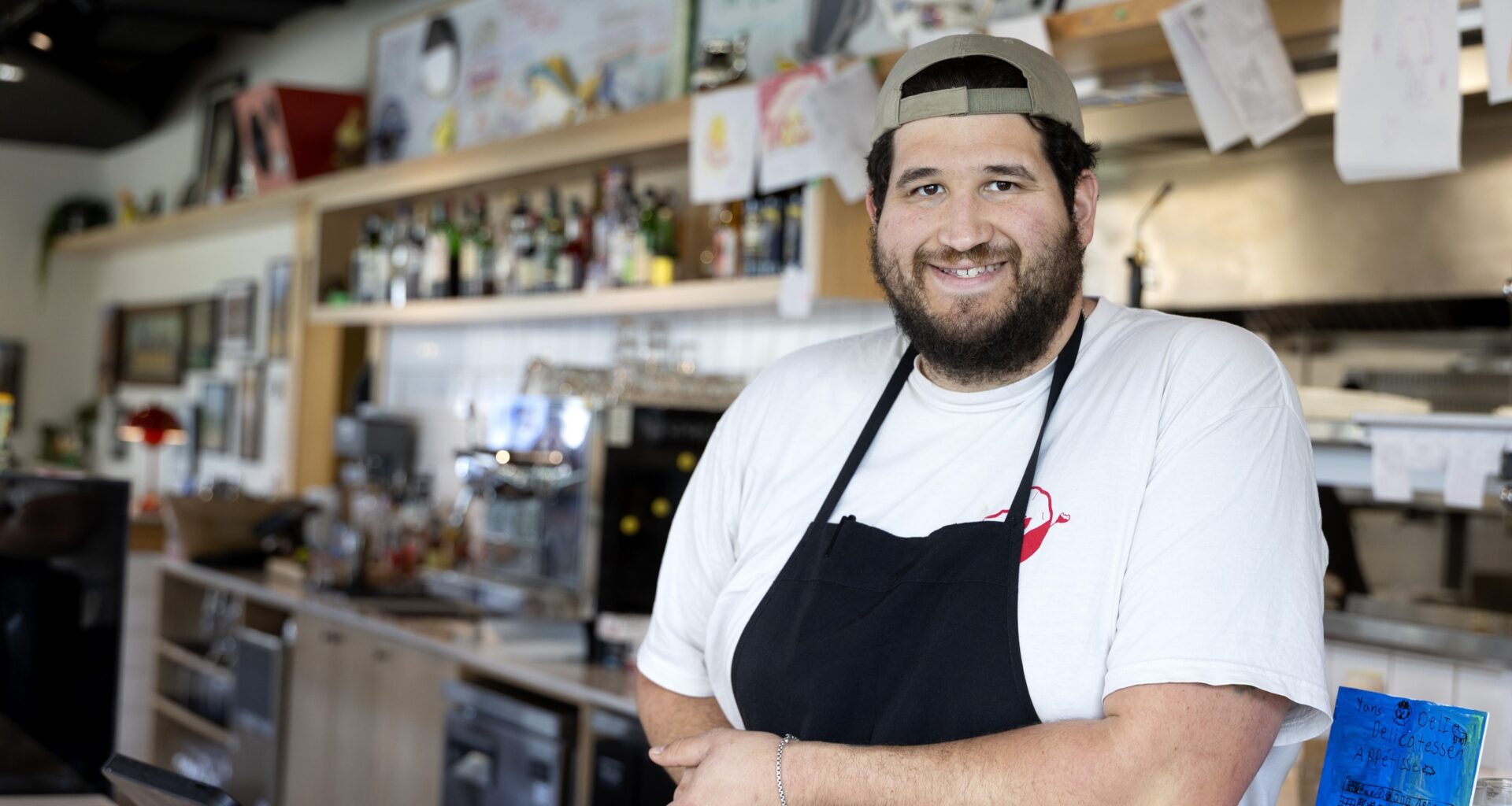
Benji Greenberg spent his childhood eating in Montreal’s Jewish delis. From Snowdon Deli to the Brown Derby to Bens Deli, these historic institutions were a formative part of his upbringing. Now he’s introducing the deli culture he grew up on to a new generation.
Greenberg opened Yans Deli on Ferrier St. in August 2025. The chef worked in fine-dining restaurants including Joe Beef before opening his own spot. He always knew he wanted to run his own eatery, though he didn’t initially imagine it would be a modern version of the delis he knew so well. But as he reflected on what kind of food was meaningful to him, the answer became clear.
“ When you’re opening a restaurant, I think it’s important not to follow the trends but to follow your heart and ask, ‘What’s soul cooking for you?’” he said. “For everyone, that’s different, and for me it was this. I knew I wouldn’t get tired of making these things I grew up eating.”
The deli’s success is reflective of a larger phenomenon: After decades of a stagnant Jewish food scene, with some businesses selling to non-Jewish owners (like Schwartz’s or Moishes Steakhouse) and others shuttering altogether (including The Main, Bens Deli, and J&R Kosher Meat and Deli), a new generation of restaurateurs is celebrating and sharing the rich history of Jewish food in Montreal.
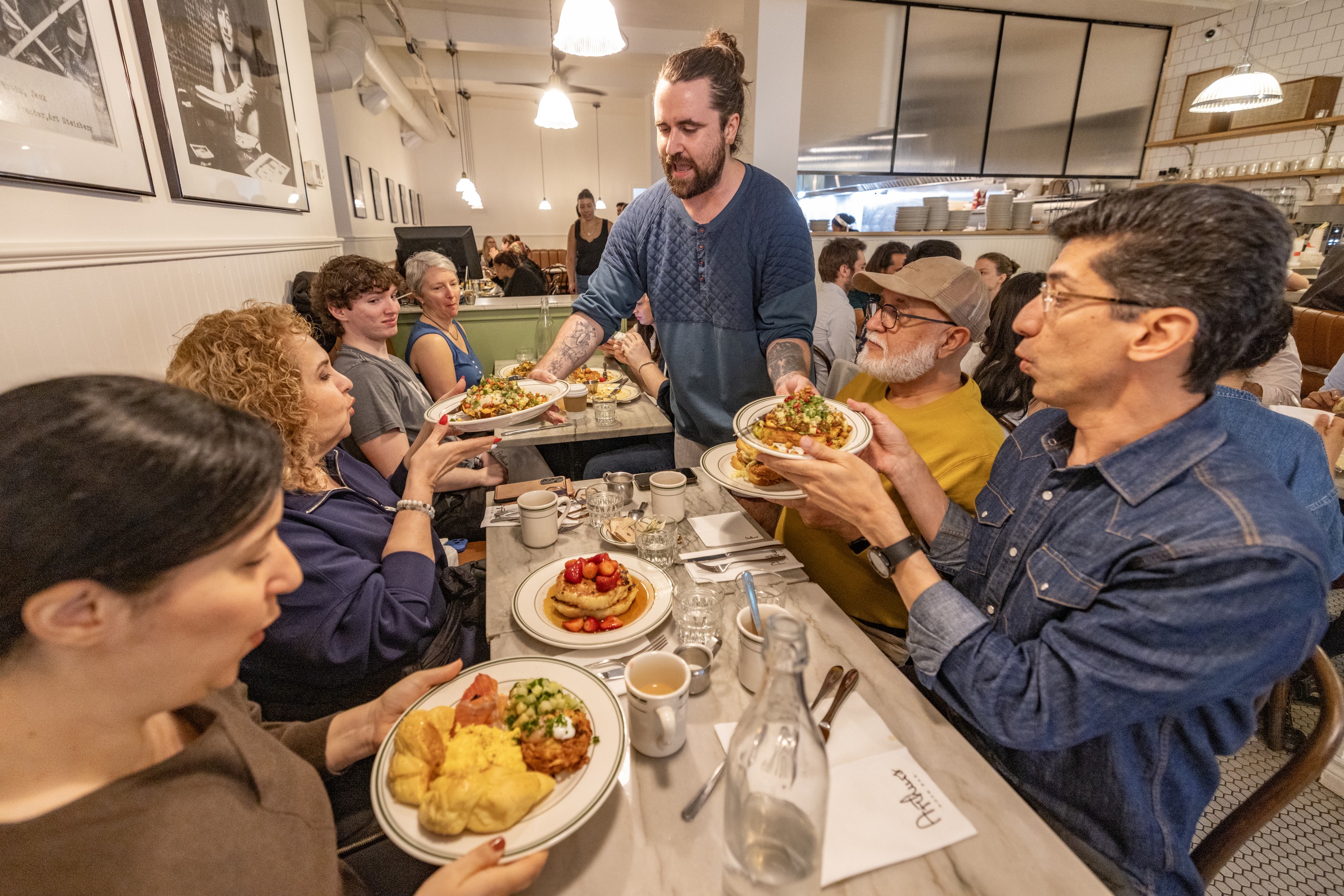 Waiter Arietti B serves customers Ghazal Fakhr, from left, Roya Payami, Ali Farah and Ashkan Kalali at Arthurs Nosh Bar in St-Henri on Saturday, June 6, 2026. John Mahoney / Montreal Gazette
Along with Yans Deli, Jewish restaurants Arthurs Nosh Bar and Chez Greenberg honour tradition while using modern culinary techniques and vibrant social media presences to draw in enthusiastic crowds from all walks of life.
“ These restaurants bring Jewish joy to people,” said Montreal Jewish food historian Kat Romanow. “At a time when it can be very difficult in the world and for the Jewish community, it’s wonderful that we have these places where we can go and be together and enjoy Jewish food and celebrate our culture.”
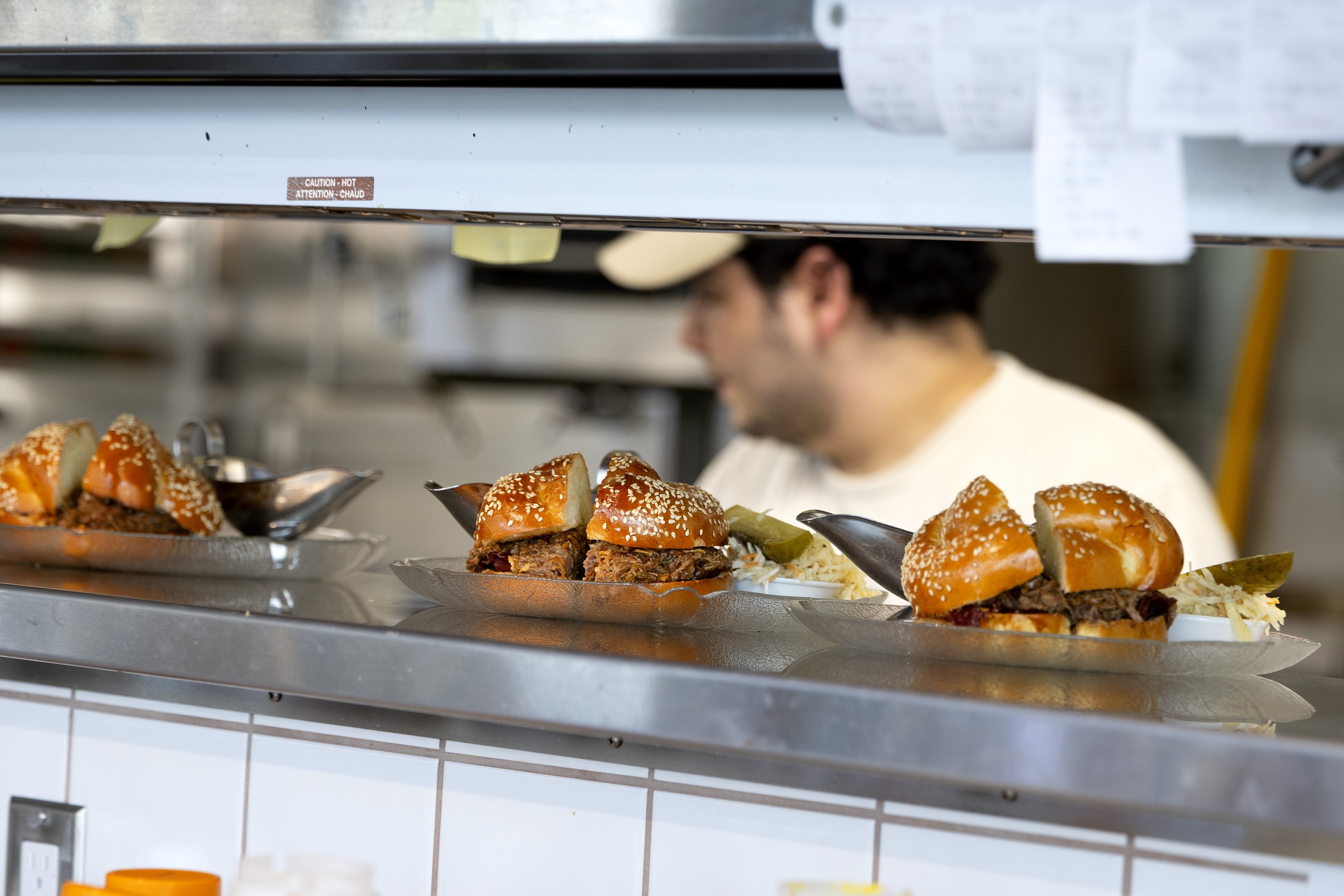 Yans Deli serves up Jewish staples with a twist. Allen McInnis / Montreal Gazette
The history of Jewish food in Montreal
It’s easy to forget that two of Montreal’s three most iconic foods — poutine, smoked meat and bagels — are Jewish. These beloved staples first arrived in Montreal alongside Ashkenazi Jewish immigrants from eastern Europe in the late 19th century.
Romanian Jewish immigrants introduced smoked meat to the city, initially only serving it to their own communities until other Montrealers discovered the fatty treat in the 1960s and 1970s, according to Romanow. Montreal bagels were introduced by Polish immigrants, who created the modern bagel by combining the Polish obwarzanek and the German pretzel, around that same time.
It wasn’t long before there were bagel shops and delis throughout the city, particularly along the Main and in the adjacent Plateau and Mile End neighbourhoods.
“Jewish food culture has had a huge influence on the food culture of Montreal,” Romanow said. “Not only in those two foods, but also many of Montreal’s iconic restaurants are Jewish restaurants, like Beautys, Wilensky’s and Moishes.”
For many decades, it was strictly these kinds of old-school spots serving up Jewish fare in Montreal. But that began to change in recent years, and there are now more options for those looking to indulge in Jewish delicacies.
 “ It was important to me to give people an elevated, different approach to food they’ve known and eaten forever,” says Yans Deli owner Benji Greenberg, seen on Friday, June 5, 2026. Allen McInnis / Montreal Gazette
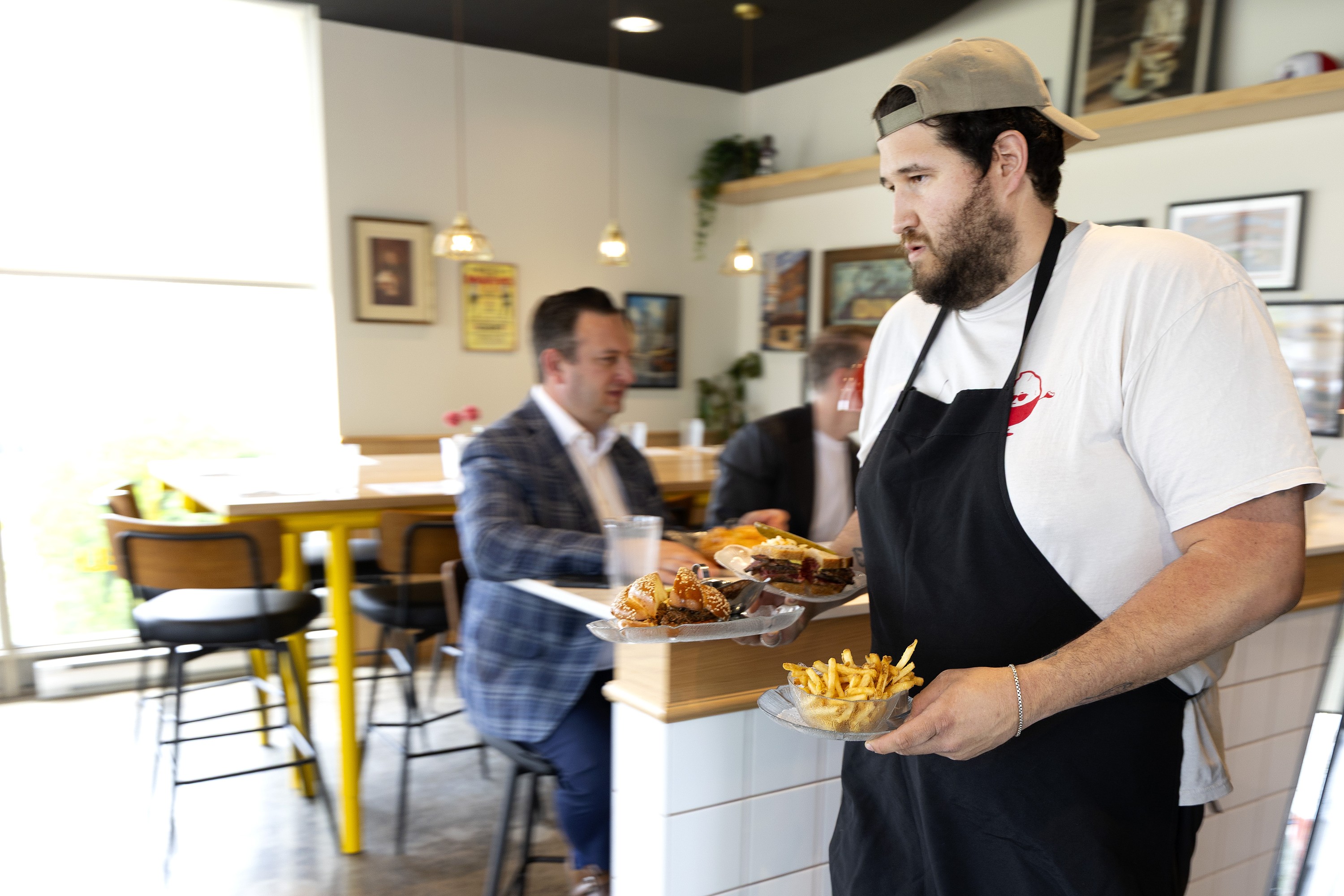
At Yans Deli, Greenberg is serving up staples with an elevated twist. Instead of classic Montreal smoked meat, it’s New York-style pastrami. You’ll also find homemade stuffed chicken, black and white cookies that are more like cake, karnatzel, massive glazed rugelach cookies, housemade celery soda and, of course, chicken soup.
“ It was important to me to give people an elevated, different approach to food they’ve known and eaten forever,” Greenberg said.
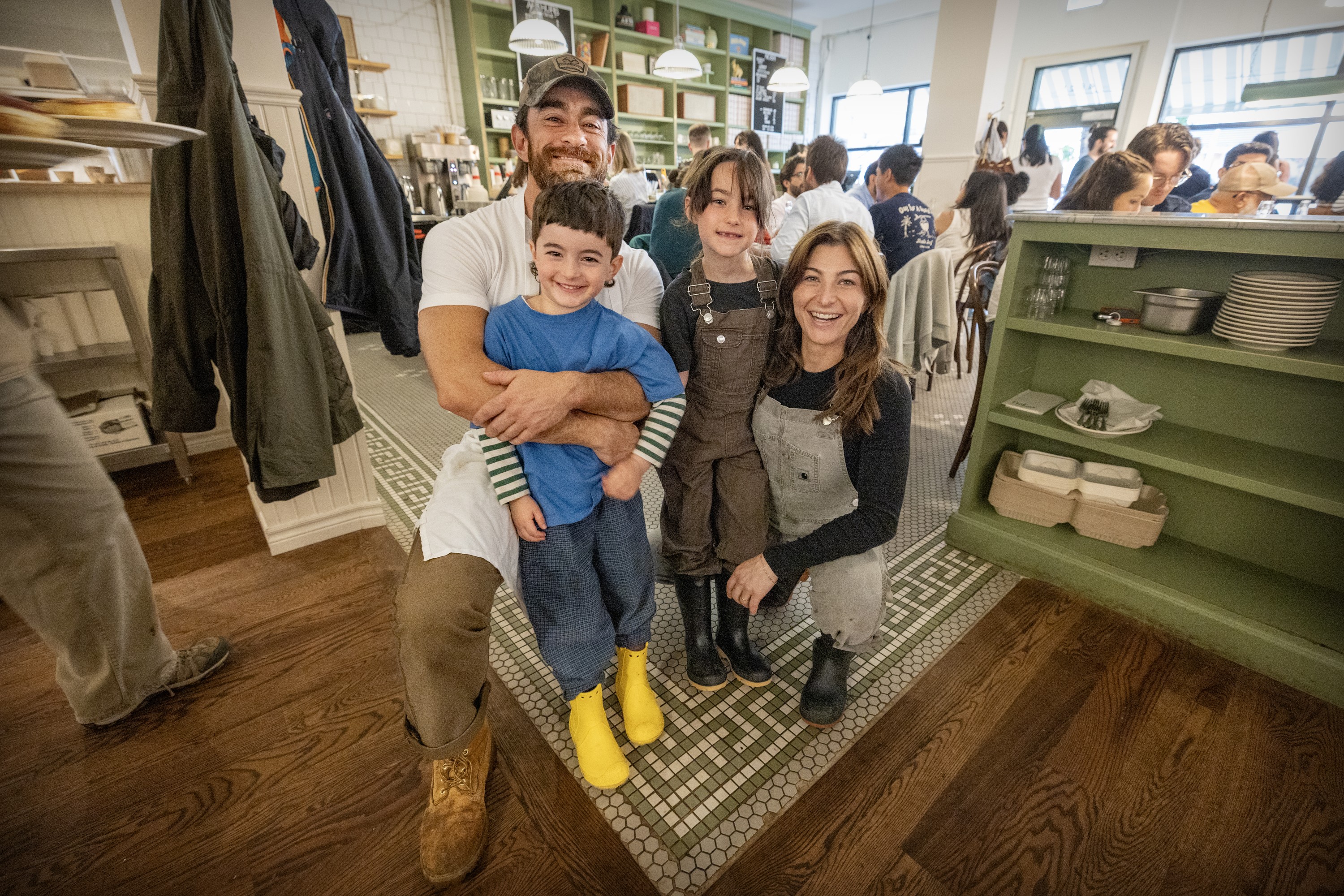 Arthurs Nosh Bar owners Alex Cohen and Raegan Steinberg with children Abel and Freya at their restaurant in St-Henri on Saturday, June 6, 2026. John Mahoney / Montreal Gazette
Jewish food for the 21st century
Ten years ago, Arthurs Nosh Bar was one of the first to serve up reimagined Jewish food for a new generation. The restaurant opened its doors on Notre-Dame St. W. in St-Henri in June 2016 and has emerged as one of the city’s most popular brunch restaurants, serving Jewish classics like latkes, grilled beef salami and challah rolls.
Raegan Steinberg, who co-owns the restaurant with her husband, Alex Cohen, said their goal was to create a menu inspired by their respective childhoods and roots, with Steinberg being Ashkenazi and Cohen being Sephardic.
“ At the time that we started 10 years ago, there hadn’t been a new Jewish restaurant, other than Jewish bakery Hof Kelsten, in decades,” she said. ”We thought it would be amazing to bring it into the next century and make this approachable food that, even if you weren’t Jewish, you could recognize and eat and enjoy.”
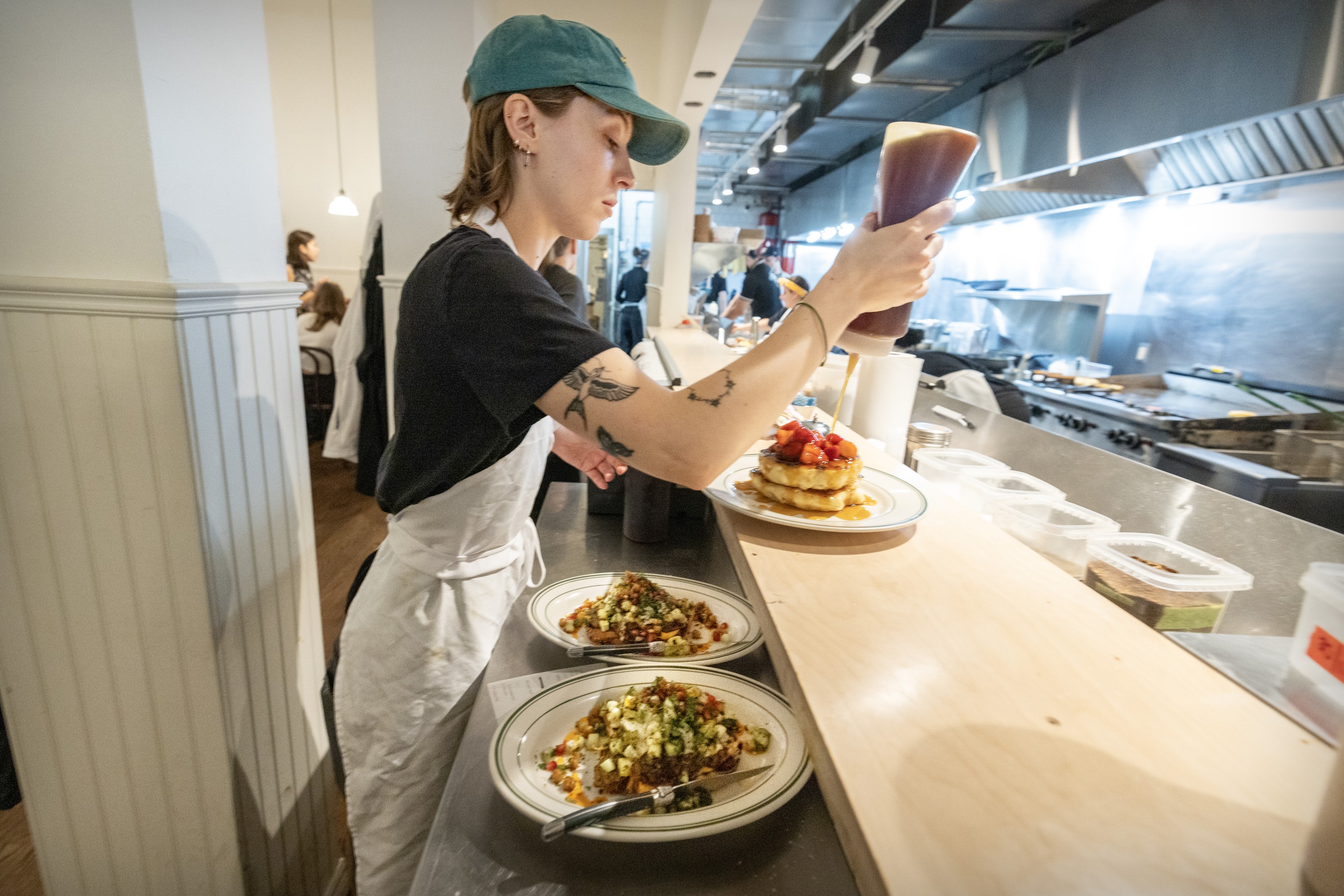 Maxyme Mercier pours syrup on pancakes at Arthurs Nosh Bar in St-Henri on Saturday, June 6, 2026. John Mahoney / Montreal Gazette
They clearly struck a chord. After a decade of success that included opening a second location in Place Ville Marie’s Le Cathcart food hall in 2022, Steinberg and Cohen recently expanded again, with Arthurs Dinette on Monkland Ave. and Arthur’s Snackette in Toronto.
Arthurs made headlines recently for reasons other than food. Earlier this month, it was contacted by the Office québécois de la langue française for having non-compliant signage on its window. The restaurant’s name came under scrutiny for falling short of the French elements needed to comply with Quebec’s signage regulations. This ignited a wave of support from fellow restaurant owners, who wrote the Yiddish word “nosh” on their own windows as a show of solidarity.
“What’s beautiful about the Jewish culture is that we love to share our food,” Steinberg said. “I think it’s important for every culture to be proud of where they came from and share what they have to offer.”
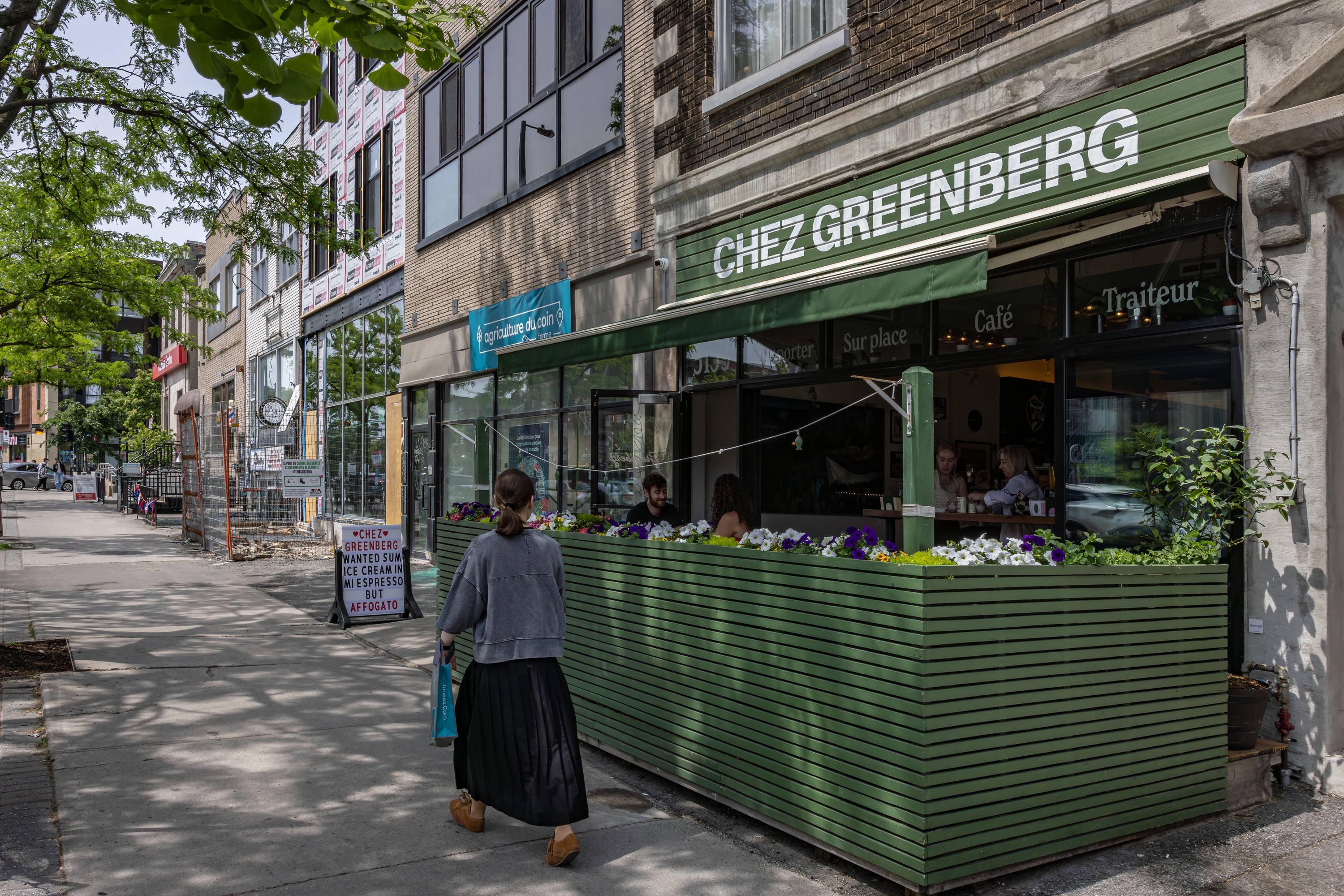 Chez Greenberg on Parc Ave. feels not only deeply Jewish, but distinctly Canadian and highly nostalgic. Dave Sidaway / Montreal Gazette
And then there’s Chez Greenberg on Parc Ave. in Mile End, which feels not only deeply Jewish, but distinctly Canadian and highly nostalgic. Along with memorabilia from owner Jake Greenberg’s family, the interior is adorned with mementoes like matchbook sets from iconic Montreal restaurants and original Montreal Forum seats, with music by The Tragically Hip often playing through the speakers.
Described as an “appetizing café inspired by Bubbe’s kitchen,” Greenberg said the restaurant, which opened in January 2025, is inspired by the food from his childhood as well as New York bodegas and culinary shops like Russ & Daughters.
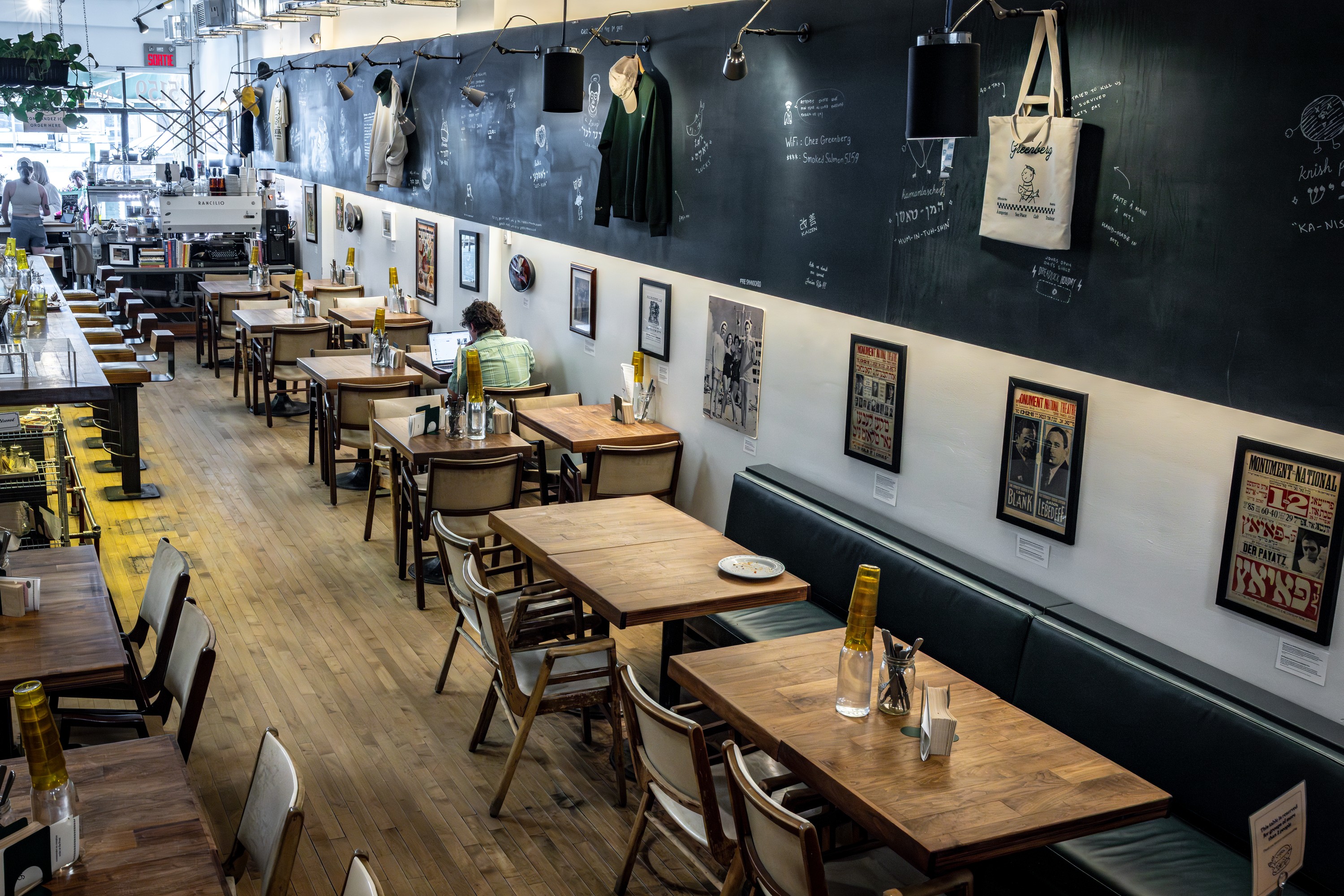 The interior of Chez Greenberg is adorned with mementoes. Dave Sidaway / Montreal Gazette
They specialize in bagels with smoked salmon (a secret recipe from Greenberg’s father), knishes and whitefish salad — the latter of which you won’t find much of in Montreal. Greenberg was intentional about wanting to create a place that honoured the city’s history while also offering something different.
“It’s an unbelievable opportunity to be able to bring back this type of environment, especially in a part of town where it once was so present,” he said. “We get a lot of customers who live in the area who are Jewish, who are so grateful to have a place to hang their hat, but we also cater to all walks of life and all types of different customers.”
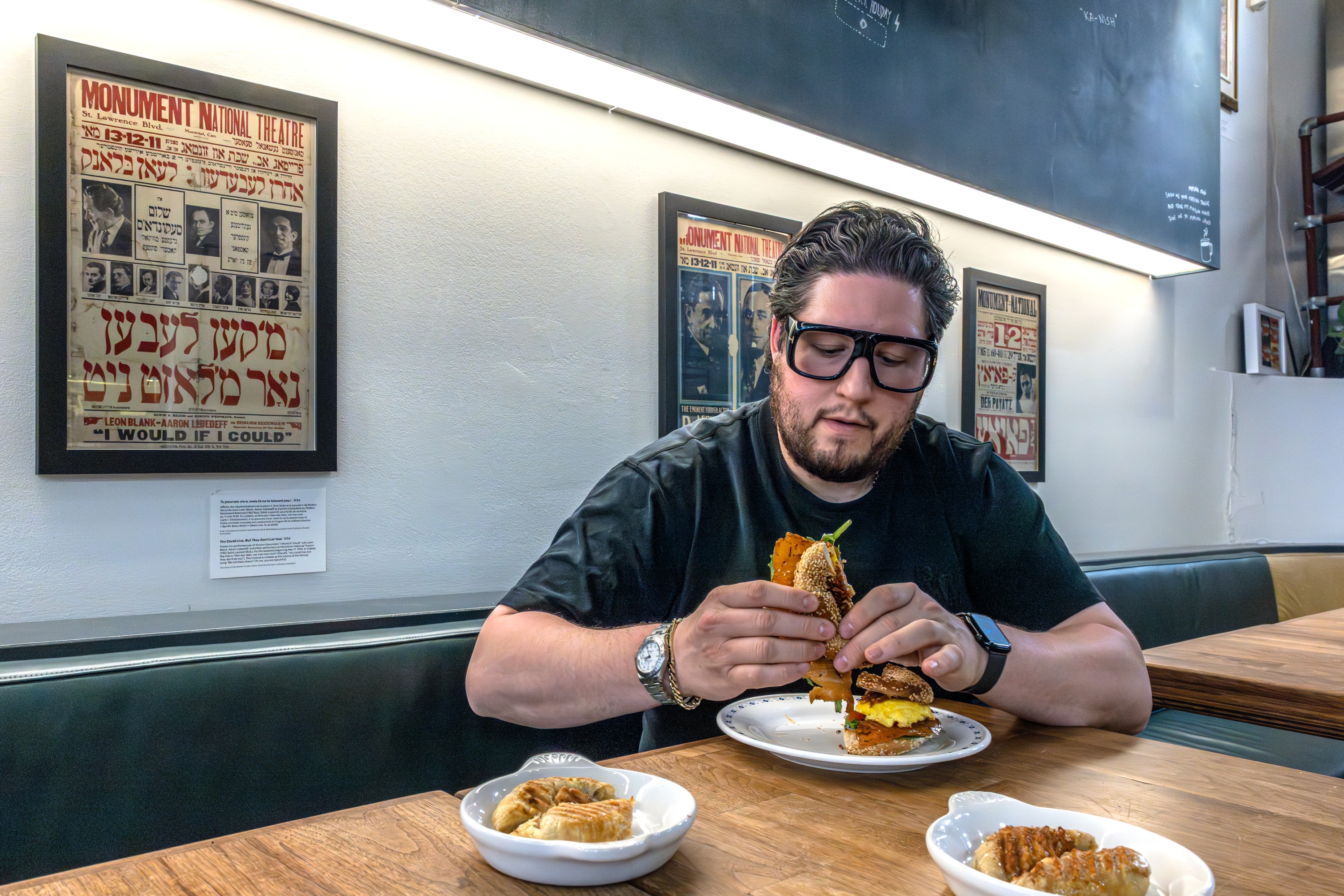 Chez Greenberg owner Jake Greenberg enjoys some of his restaurant’s food on Friday, June 5, 2026. Dave Sidaway / Montreal Gazette
While exciting, the openings and subsequent successes of these restaurants aren’t quite a coincidence, Romanow said.
In the mid-2000s, many young Jews in North America began reclaiming, reimagining and modernizing the Jewish food traditions they grew up with, often using fine-dining techniques. This became known as the New Jewish Food Movement, and it ultimately resulted in many new Jewish bakeries and restaurants.
These three businesses can be seen as products of that movement, Romanow said — and our city is all the better for it.
“Jewish food culture has always been evolving because we’ve lived all over the world, constantly coming into contact with new ingredients and new places, and this is just another iteration of that,” she said. “It’s a breath of fresh air for the Jewish food scene to have this younger generation opening up these new restaurants; they all pay respect to the tradition of Jewish food in Montreal, but also bring something new.”
Editor’s Picks