
When it comes to being a college athlete, it’s important to utilize healthy habits such as working out or warming up before practice. But the strength of being a great athlete doesn’t just lie within physical endurance — it can also be found in prioritizing healthy day-to-day habits.
“I always tell our athletes that everybody’s good at this level, so if you’re playing in college, if you’re playing in the power four at a Big Ten school, everybody’s good now. So, what are you gonna do to elevate? How are you gonna make yourself better? How are you gonna win a starting spot when everybody here was all-state?” said sports nutritionist Laren Link. “ Nutrition is one of those things.”
In Purdue Athletics, a team of trained nutritionists is there to help guide athletes with that specific cause in mind. Whether it’s helping plan well-balanced diets or meet specific weight goals, the team is there to help with the interest of the athlete in mind.
Unlike other school programs that force student athletes into specific nutrition plans, the sports nutritionists at Purdue take a different route.
For Link, she said that her team takes into account exactly what the athlete wants.
“They have to be on board, but we also want to make sure it makes sense with their sport. We’re not in the business of being just a number on the scale or being (a specific) percent body fat just because that’s what we think you should be. We want to make sure it’s for performance,” Link said.
There are many ways that the team tests athletes to see if nutrition accommodations would be beneficial. First, it begins at practice.
Sports nutritionist Elaine Wanstreet said that the best way to test an athlete’s vitals is by utilizing equipment such as loop or aura rings while they’re training. These tools allow professionals to determine where athletes may need more attention.
“We’ll monitor weights, just from a hydration standpoint. If we know if you’re losing multiple pounds in a day and not restoring that by the next day, that you’re becoming more and more dehydrated as the week goes, that’s definitely one of the markers that we utilize,” Wanstreet said.
Purdue’s sports nutritionists provide many alternatives to help athletes reach their nutrition goals. One way is through the Performance Athletic Dining court.
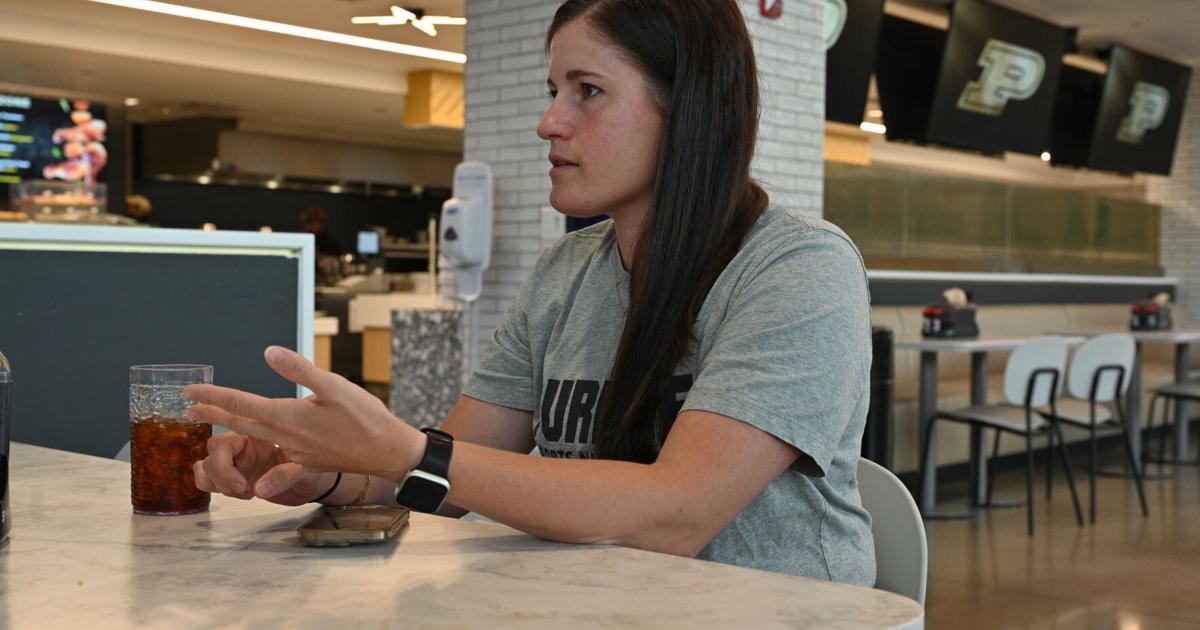
At the PAD, Link and her team collaborate with the culinary staff to make sure that each meal option fits every individual’s needs, whether that means more protein or carbohydrates. From there, a nutritionist on duty is able to help walk athletes through the process of making a well-balanced plate.
“We’re up (at the PAD) a lot doing late coaching. (Athletes) come through the line and we make sure to mention, ‘hey, make sure we grab some more of this’, or ‘have you thought about adding this?’ So, we spend a lot of time up here,” Link said.
The same process is carried out on the road as the nutritionists travel with their designated teams to coordinate catering and team meals.
Creating a nutrition plan isn’t the same for all athletes. Some athletes might be prone to nut allergies or can’t eat gluten. For these instances, Link said that the culinary staff already has it covered.
“Labeling is huge, and making sure that the staff is educated on how to not contaminate anything,” Link said. “It’s really just about training, education, labeling, all those things. It’s also true in our fueling station and on the road.”
For Wanstreet, she works directly with student-athletes’ eating disorders. When addressing student athletes who might think about food as “too much or not enough,” the nutritionists collaborate with sports psychologists, dietitians and an eating disorder treatment team to help the athlete as much as possible.
Wanstreet said that one of the main parts of providing assistance with eating disorders is attempting to avoid the diagnosis altogether, especially since anyone can have a disordered relationship with food without the medical label of an eating disorder.
“We have those athletes for four years, and we can change the trajectory of some of those disordered eating behaviors that maybe aren’t a full eating disorder and maybe we can turn it around to where, by the time they graduate, they have a really healthy relationship with food through knowledge and education, and prevent it from getting to the next step,” Wanstreet said.
Nutrition resources are preferred but aren’t directly mandatory for athletes to take advantage of. However, with the many great benefits that nutrition can provide to athletic performance, many faculty members of Purdue Athletics advocate for athletes to look into what the sports nutritionists have to offer.
From the perspective of her clientele, Wanstreet said that the biggest advocate for sports nutrition lies within the coaching staff.
“The coaches drive and lead (nutrition) meetings, they make the schedule, so from that standpoint I’m collaborating with them,” Wanstreet said. “I think that it’s a very well-rounded approach.”
Every Exponent article goes through checks for accuracy before publication. If you have a concern or questions about this article, please email editor@purdueexponent.org.