
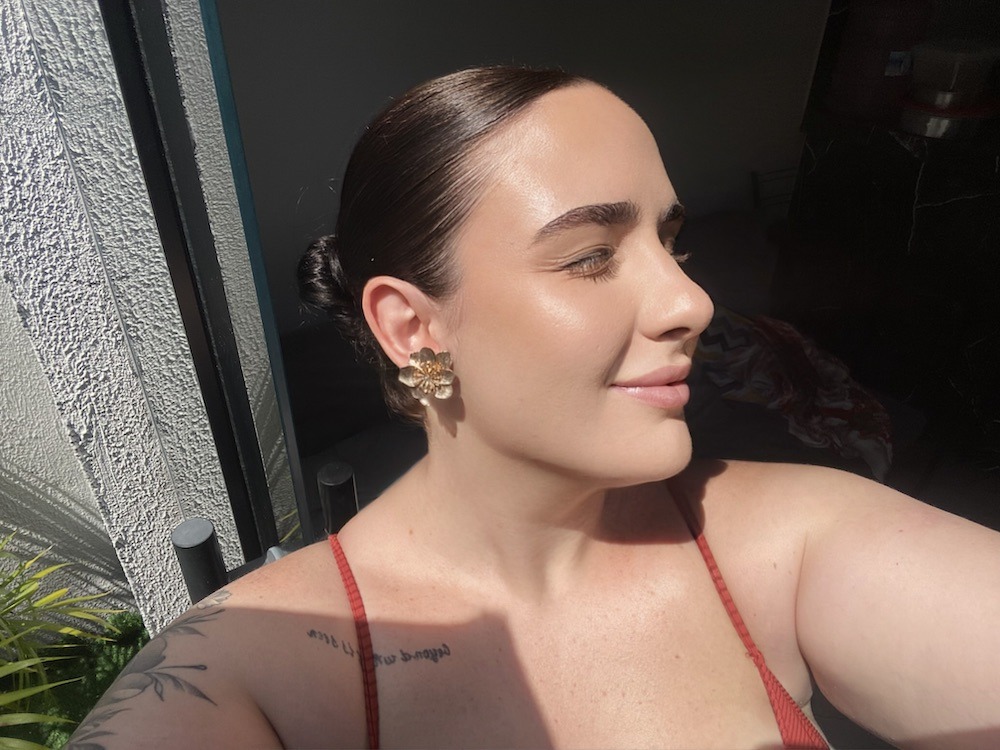
Lately, the wellness experts I follow or interview have been emphasizing more and more frequently just how important it is to expose yourself to natural light within 30 to 60 minutes of waking up, every day of the week. Nicola Elliott, founder of NEOM Organics, told me about this a long time ago:“Mornings set the tone for the entire day and shape the evening. It is important to take a walk in daylight for at least half an hour before 10 a.m. That is why I take my morning meetings over the phone while walking down the street instead of holding them in the office. This way, I spend at least half an hour in the sun first thing in the morning, and it helps me sleep better,” she said.
Dr. Mark Hyman, a wellness guru, also confirmed this on Instagram, claiming that exposure to natural light immediately after waking is one of the easiest and least expensive ways to look after your biological health. Although finding time for it as soon as you get up may seem complicated, experts say that on clear days, just 5 to 10 minutes of sunlight is enough, perhaps while having your morning coffee on the terrace, if you have one. On cloudy days, 10 to 20 minutes is recommended, while on completely overcast days, the recommendation is 20 to 30 minutes of exposure.
Of course, as Dr. Hyman points out, it is best to follow this morning routine without sunglasses. And yes, light coming through a window is not enough. You need to be directly exposed to natural light.
Regulates sleep and cortisol levels
Considering that we now spend 90 percent of our time indoors, compared with just 10 percent 15 years ago, it becomes clear how important it is to adopt habits like these. Even more so when we know that, for example, sleep expert Dr. Javier Albares confirms that natural light directly affects serotonin levels and, in turn, the regulation of sleep and mood.
In this regard, Dr. Mark Hyman adds that morning sunlight not only regulates the happiness hormone that is essential to our well-being, with low serotonin levels linked to an increased risk of depression, but also “ensures that cortisol peaks when we need energy and decreases when it is time to relax.” This simple habit, Hyman explains, “will train your body to feel calmer, more focused and mentally clearer.” In short, it is a natural way to regulate our internal clock so that day and night alternate harmoniously.
Other benefits of sunlight
Nutrition expert Beatriz Larrea, author of books such as Tu cuerpo en llamas (Your Body on Fire), also confirms that infrared light helps modulate inflammation, optimize mitochondria, which produce energy within cells, and prevent neurodegeneration. And sunlight is essentially “free infrared light.” Exposure to this light at dawn is highly recommended, preferably before 9 a.m., because infrared radiation is more intense at that time and acts as a natural red light therapy with numerous benefits, including stimulating collagen production. “Infrared and red light form the basis of solar radiation. They are present for more than 70 percent of the day, and vital functions such as melatonin production and the regulation of leptin, which is essential for appetite regulation, and cortisol depend on them. To have a healthy metabolism, age well, sleep soundly and have energy and good health, we must re-establish our relationship with the natural light environment,” the expert adds.
Beatriz Larrea also addresses the internal clock mentioned earlier. “Our entire body is governed by a central clock and a series of peripheral clocks. These clocks activate all the body’s biochemical functions, which are directed by messengers known as hormones. And hormones regulate absolutely everything in our bodies: weight, sleep, energy, hunger, sexuality, mental agility, muscle function… The central clock starts or stops everything in the body and receives signals from the environment to know what to do, and those signals are primarily light. Sunrise and sunset mark the beginning and end of all circadian rhythms: the sun rises and cortisol is released. The sun sets and the body receives the signal to secrete melatonin. The same applies to all hormones. They all follow a rhythm in our bodies that is guided by patterns of light and darkness in the environment.”
Daytime living: The healthiest trend
That is why Beatriz Larrea insists not only on making the most of light first thing in the morning, which opening the windows at dawn can help with, but also on finding other ways to re-establish a healthy relationship with the light that regulates our bodies. How? By taking daily walks outdoors, eating dinner before 8 p.m., eating and exercising during the day, exposing ourselves to sunlight to produce melatonin and sleep better, and minimizing the use of devices that emit blue light. “It is about creating brighter days and darker nights, using common sense. What regulates the main circadian system is the ‘tango’ between cortisol and melatonin. And that is regulated through proper exposure to the light environment,” Larrea says. Perhaps this is precisely why trying to live more during the day is becoming the world’s most beneficial trend. Generation Z is sending a clear message: late nights out are no longer fashionable.