
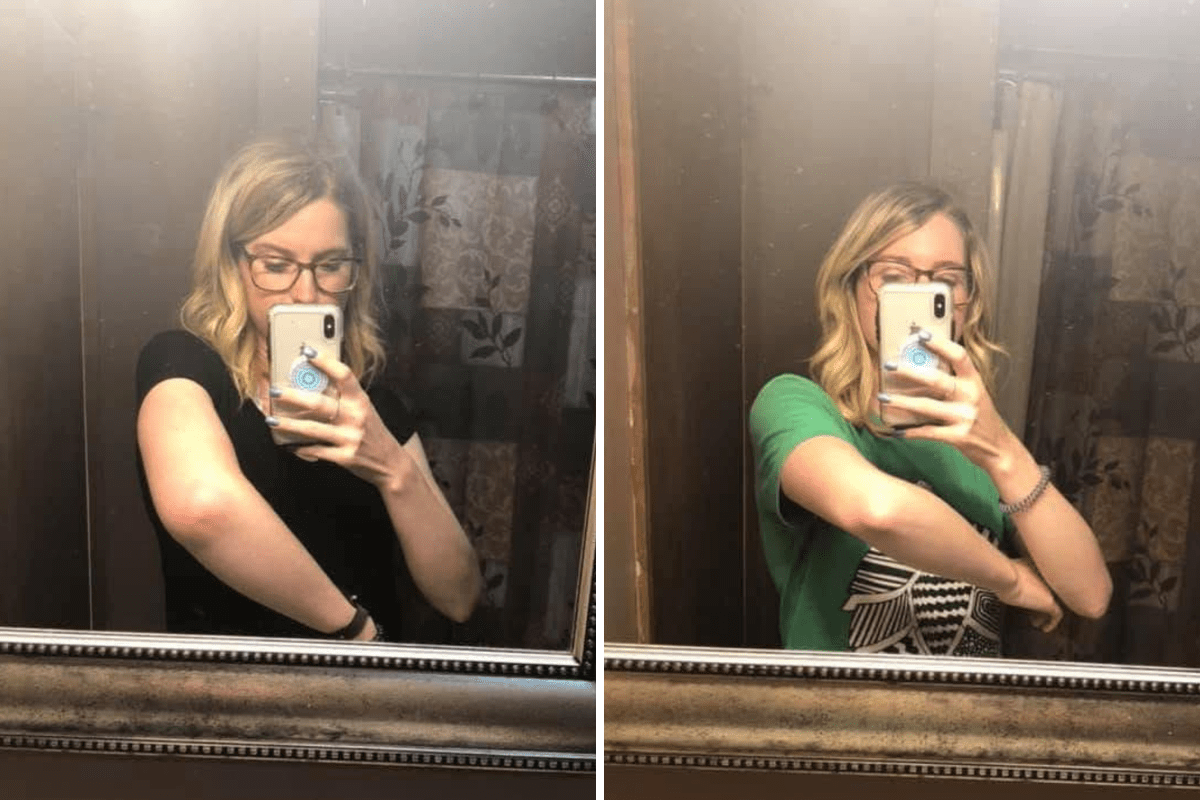
A woman who thought her muscles were tired from a workout was actually suffering a potentially fatal condition that affects the muscles and kidneys.
Devin Lark, 35 and from Pennsylvania, was 28 when she got an unusual pain in her arm, and assumed it was from a recent workout, having signed up to a gym for group fitness classes.
“It was not anything super intense, just a good workout,” she recalled to Newsweek. “The next day I woke up really sore, mostly in my arms, but thought it had just been a really good workout.”
Read More on Life
But as the day went on, her arms became more and more painful, and she spent the day—which was being spent with friends on a boat trip—”trying to massage and stretch my arms because they hurt so much to move, and were incredibly stiff.”
Lark still brushed it off, and spent the next few days going to work and preparing for a girls’ trip to New York City, assuming the pain would eventually go away.
But, the night before her trip, she caught a glimpse of her arm “and realized it was really swollen.”
Lark reached out to family members who work in the medical field, and they both advised her to “run to urgent care” to make sure everything was OK.
When she was seen to, doctors originally thought Lark could have a blood clot, which could be extremely dangerous—but when a scan came back clear, and one physician assistant picked up on Lark explaining that she had been working out, they opted for a different test.
This test revealed that Lark had rhabdomyolysis, a rare muscle injury that causes the muscles to break down—and which can be life-threatening.
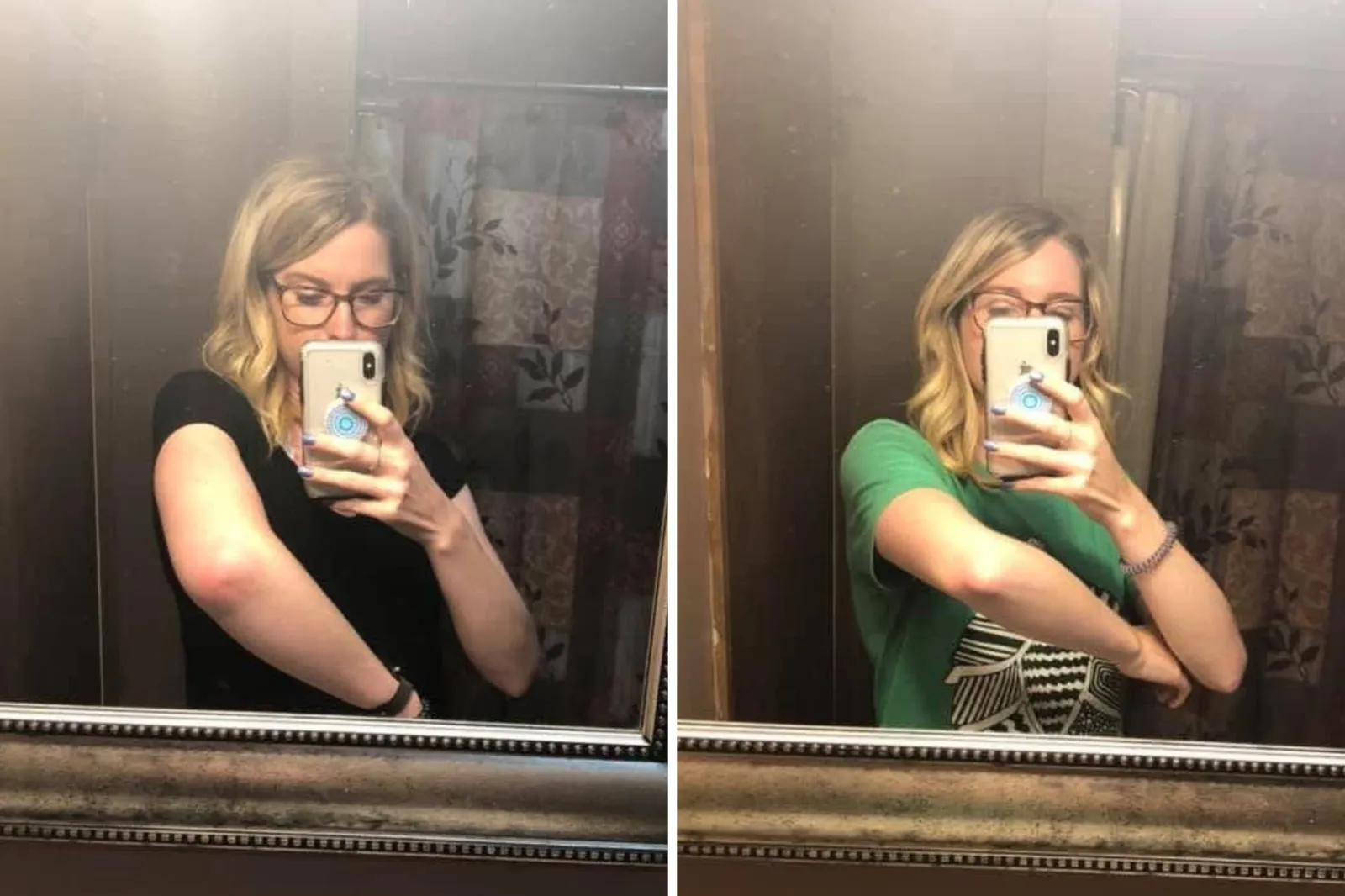
As the muscles break down, toxic components of the muscle fibers enter the body’s circulation system and kidneys, which can cause kidney damage, according to the Cleveland Clinic.
Symptoms include tender and sore muscles, muscle swelling and weakness, and changes to urine, which can be brown or red in color.
Lark’s rhabdomyolysis was diagnosed by taking a blood sample, which measured her creatine kinase (CK) levels. A healthy level for her sex, height and weight would have been between 30 and 223—but the protein is released by muscles as they break down, and Lark’s was at a shocking 49,364.
Things moved quickly. Lark was admitted to the hospital, and spent days on continuous IV fluids and with regularly scheduled blood work to check that her CK levels were going down. Once she was discharged, her own doctor ordered further bloodwork to ensure the CK levels continued to drop.
She recalled being “very tired and weak for quite a few weeks afterwards,” unable to even blow-dry her hair.
Thankfully, she has since made a full recovery—apart from “anxiety” when she gets sore after workouts.
Lark, who had previously heard of rhabdomyolysis and had even joked with her family that she could have it, told Newsweek: “I almost didn’t go to urgent care that night because of my planned trip, and was going to just suck up the discomfort, but as soon as I thought of rhabdo, I knew I needed to get checked to be safe.
“I knew it could lead to kidney failure if untreated, and I do think if I had waited longer for medical care it could have been a lot worse for me.”
She joked, however, that she is “still upset I missed that girls’ trip!”
Lark said the experience reminded her that she is lucky to have great support from friends and family, as people regularly checked in on her while she was in the hospital, and her boyfriend at the time—now her husband—stayed with her every night, sleeping in an armchair in her hospital room.
“I can happily say that same level of care and devotion came through when we just had our first child in 2024 as well, and it was nice being confident I had a partner who would show up for me in that way postpartum,” she said. “So that is a silver lining I took from this experience at least.”
Lark, who also shared her story to her Threads account @fake.lit.lark, urged anyone going through something similar to “always listen to your body when something doesn’t feel right.”
“The intense soreness, muscle fatigue, and stiffness that was getting worse and not better was telling me something was wrong,” she said.
She added: “I know in the U.S. especially, sometimes we downplay our symptoms and health because we don’t want the hospital bill, but if you have symptoms like these it’s so important to get medical care as soon as possible to protect your kidneys.”
Contact Newsweek editors on this story: Sirena Bergman and Emma Lee-Sang