
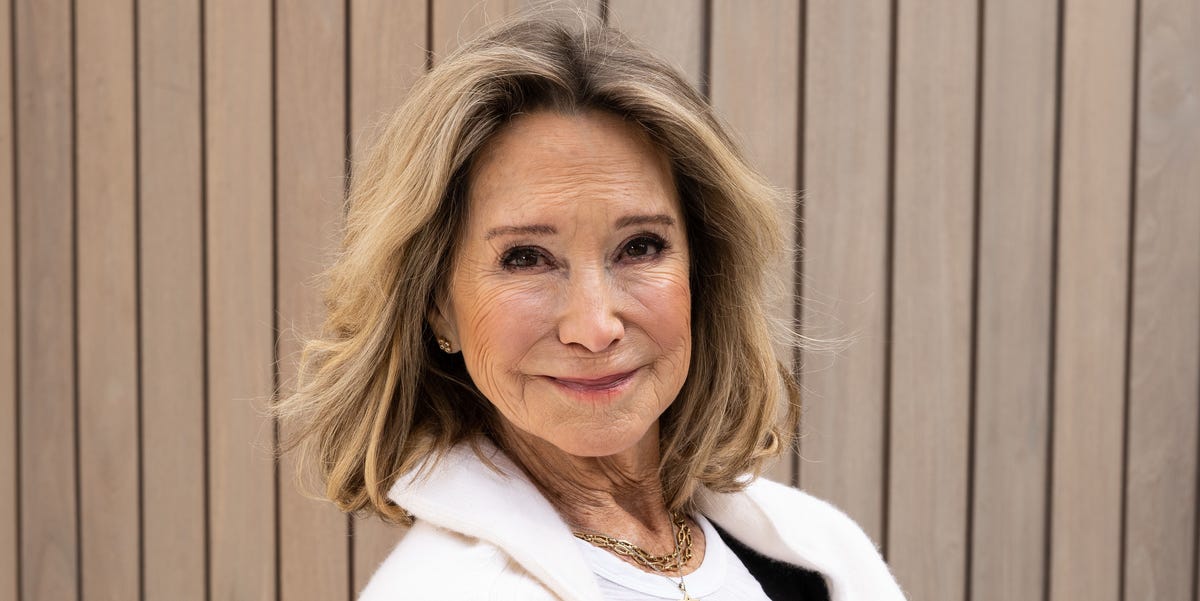
At 79, still in demand as an actor and a grandmother to 13, Felicity Kendal has an admirable workout routine – and she shows no signs of slowing down. Not only does she keep a pair of dumbbells backstage, her weekly routine also includes strength training, dog walking and hatha yoga.
But The Good Life star says her daily exercise habit isn’t about how she looks – it’s to keep her moving. She prefers being ‘outside, walking through the open air, or at the gym, which I try to do regularly. It’s nothing to do with looks,’ she told The Guardian. ‘It’s just if I don’t stay active, I’ll fossilise. You have to keep moving at my age or you run out of energy.’
As we get older, general stiffness can set in – and, as Felicity knows, exercise can help. ‘It may be tempting to rest, but exercise is crucial for maintaining flexibility, strength and healthy muscles,’ says Good Housekeeping’s Dr Sarah Jarvis. ‘Weight-bearing exercise (any aerobic exercise except swimming and cycling) is great for bone as well as muscle strength.’
As we age, particularly as we move into our late 70s and beyond, ‘the goal isn’t to train like an athlete. It’s to preserve independence and quality of life,’ says Dr Snehal Pinto Pereira, associate professor in population health and applied statistics at Institute of Sport, Exercise & Health. ‘The greatest health benefits come from combining regular aerobic activity, such as walking, with exercises that maintain muscle strength, including chair rises and resistance band exercises, as well as activities that improve balance, such as tai chi. Even small amounts of activity accumulated throughout the day can make a meaningful difference.’
If you’re new to exercise, personal trainer and fitness expert Sarah Campus recommends five key exercises to do every day as you age. ‘If we don’t move our bodies enough, especially as we age, we’ll start to feel stiff, be more prone to injury, or worse, we could have a fall. This is why we need to work on our balance, posture and strength in the knees, hips and shoulders.’
Squats
Stand with your feet hip-width apart (you can have a chair behind you if you’re a beginner) and inhale as you lower your glutes to the floor, bending at the knees, until you get to 90 degrees. Stand up and repeat. To make it more challenging, hold small weights.
Deadlifts
Stand with hips shoulder-width apart, hold your weights (or tin cans) in your hands, keep your back straight and keep your knees slightly bent. Push your hips back and keep your back straight as you go down, sliding your weights down your legs. Then come up through the hips to a standing position, holding the weights as you do it.
Press-ups
Place your hands against the wall at about shoulder height, then lower your chest, inhaling as you lower your chest towards the wall and exhaling as you push your hands away. To make this more challenging, progress to a ‘box’ press-up, starting on all fours and lowering your chest to the ground; or a classic floor press-up.
Shoulder rolls
Stand with feet hip-width apart, hands down by your sides. Roll your shoulders up and down your back, making sure you squeeze into the shoulder blades. Repeat 12 times, then do the same exercise, but this time rolling your shoulders forward. You can also try this holding small hand weights.
Standing calf raises
In bare feet, hold on to a wall, chair or sofa and simply raise your heels and calves for five seconds. Bring your heels back down and repeat. To make it more challenging, stand with your toes and the balls of your feet on a slightly raised edge (a stair step or a book would do) and use a weight.
Perform all exercises for 12 reps, and once strength builds, repeat the circuit. If you have any health concerns, check with your GP before starting a new exercise.