
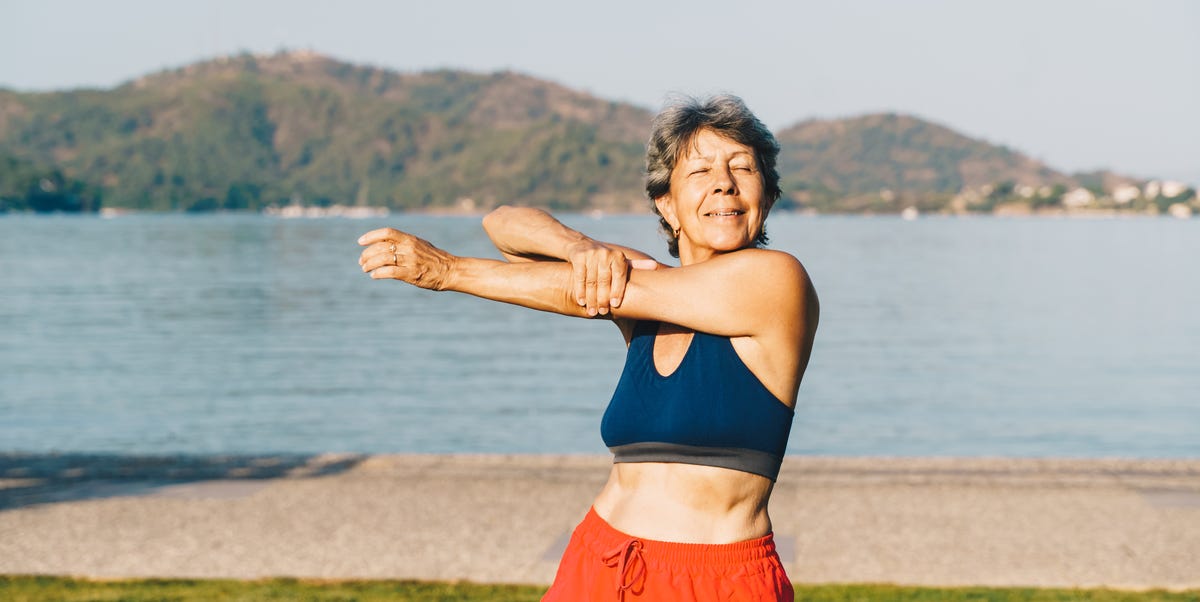
While social media can be a great source of fitness inspo, when a certain workout is trending, we can sometimes fall into the trap of putting it on a pedestal rather than considering whether it’s right for us as individuals.
In reality, says George Tselentakis, medical director and consultant orthopaedic surgeon at Reborne Longevity, ‘exercise is a tool, and we use that tool to achieve different things – so an exercise prescription should depend on what we are trying to achieve.’
And as we move into our 40s and 50s, focusing on building and maintaining bone strength is particularly important.
‘Around the menopause, falling oestrogen levels are associated with an acceleration in bone loss. At approximately the same time, we also start to lose muscle mass and strength unless we actively do something to preserve them,’ says Dr Tselentakis. ‘This is why the 40s and 50s are an extremely important time to become more – not less – focused on exercise.’
He continues: ‘It’s much easier to maintain capacity than to regain it after you have lost it, and that’s particularly relevant to bone – the best time to think about osteoporosis is before you develop osteoporosis.’
What people get wrong about exercise and healthy ageing
‘Exercise is probably the most powerful medicine we have for healthy ageing – but, like any medicine, it needs to be prescribed for the right purpose and at the right dose,’ notes Dr Tselentakis.
‘We sometimes talk about “exercise” as though all exercise produces the same benefit – it doesn’t. Cycling, swimming, running, resistance training, walking and Pilates are all exercise, but they place very different demands on the body.
‘If I want to improve cardiovascular fitness, I will prescribe exercise differently from if I want to increase muscle strength. If my objective is to improve bone density, I need to create a different mechanical stimulus again. There is inevitably some overlap, but the important thing is to understand what you’re trying to achieve.’
The best types of exercise for strong bones
‘Bone is living tissue and, just like muscle, it responds to stress,’ says Dr Tselentakis. ‘If you put a mechanical demand on bone, the body responds by trying to maintain its strength and structure. If you don’t put that demand on it, there’s progressively less stimulus for it to maintain that capacity.’
That’s why, to maintain bone density with age, he recommends prioritising ‘weight-bearing exercise, resistance training and, where appropriate, impact exercise’.
‘Weight-bearing exercise includes brisk walking, hiking, climbing stairs, running and dancing.’‘Resistance training might include squats, lunges, step-ups, deadlifts or hip-hinge exercises, calf raises and upper-body exercises such as presses and rows.’‘Impact exercise – jumping, hopping, skipping and changes of direction – provides a particularly strong stimulus to bone, although it has to be appropriate for the individual.’
While activities like swimming and cycling are great, adds Dr Tselentakis, they aren’t particularly effective for ‘maintaining bone density because the skeleton is not being exposed to significant weight-bearing loading.’
What is the optimal amount of exercise for healthy ageing?
‘For general health, the usual recommendation is around 150-300 minutes of moderate cardiovascular activity each week, together with at least two sessions of muscle-strengthening exercise,’ notes Dr Tselentakis. ‘But for healthy ageing, I would go further and think about the different components separately.’
Ideal weekly exercise routine for stronger bones and healthy ageing
For an otherwise healthy midlife woman, Dr Tselentakis’s ideal weekly exercise routine would look like the following.
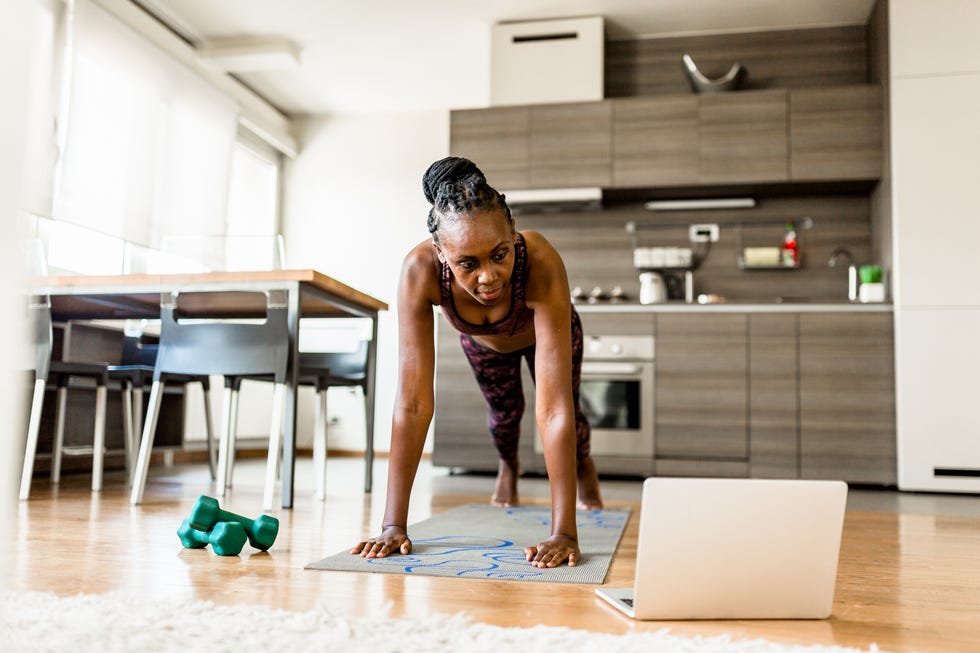
Monday – Full-body strength
50-60 minutes.
 NoSystem images//Getty Images
Regular strength training – which can be done at home – is key
For example:
‘The emphasis should be on progressive resistance; the exercises should become progressively more challenging.’
Tuesday – Cardio and weight-bearing exercises
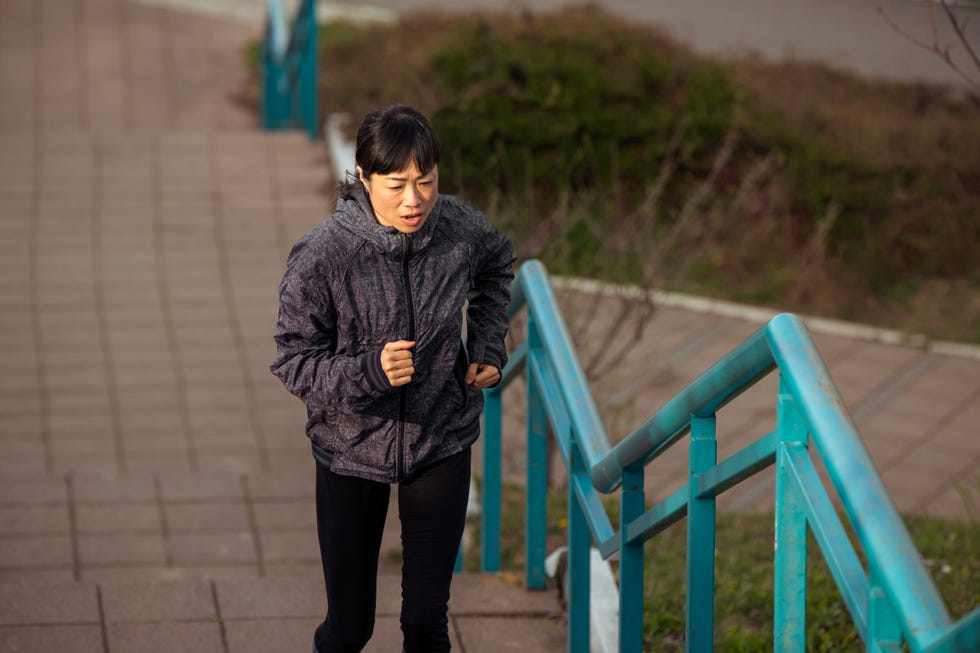
40-50 minutes of brisk walking, preferably including hills or some stairs.
 PixelsEffect//Getty Images
Add an incline: boost your weight-bearing walk with some stairs
‘For somebody who is fit and has healthy joints, I might add a small amount of impact work – for example, short sets of skipping, hopping or jumping.’
Wednesday – Full-body strength
45-60-minutes.
For example:
‘Again, the aim is progressive loading and maintaining whole-body strength.’
Thursday – Active recovery
30-45 minutes of relatively easy walking, followed by 15-20 minutes of stretching or Pilates.
Friday – Strength and power
45-60 minutes.
‘I would use the major movement patterns again – squat, hinge, push, pull and single-leg work – but introduce some controlled power work where appropriate.
‘For someone who is fit and has healthy bones and joints, this might include jumping or hopping.
‘Power becomes increasingly important with age because it contributes to our ability to recover when we trip or lose our balance.’
Saturday – Longer cardio activity Thomas M Barwick INC//Getty Images
Racket sports are a great source of cardio and muscular resistance exercise
60-90 minutes of something enjoyable.
‘A long walk, hike, bike, tennis, dancing or another activity that maintains cardiovascular fitness and, ideally, involves weight-bearing – the activity doesn’t have to feel like “exercise”.’
Sunday – Recovery and gentle movement
‘An easy walk, some mobility work or simply normal daily activity. Or rest if the body needs it.’
Ultimately, though, it’s about finding what you enjoy and can maintain over time.
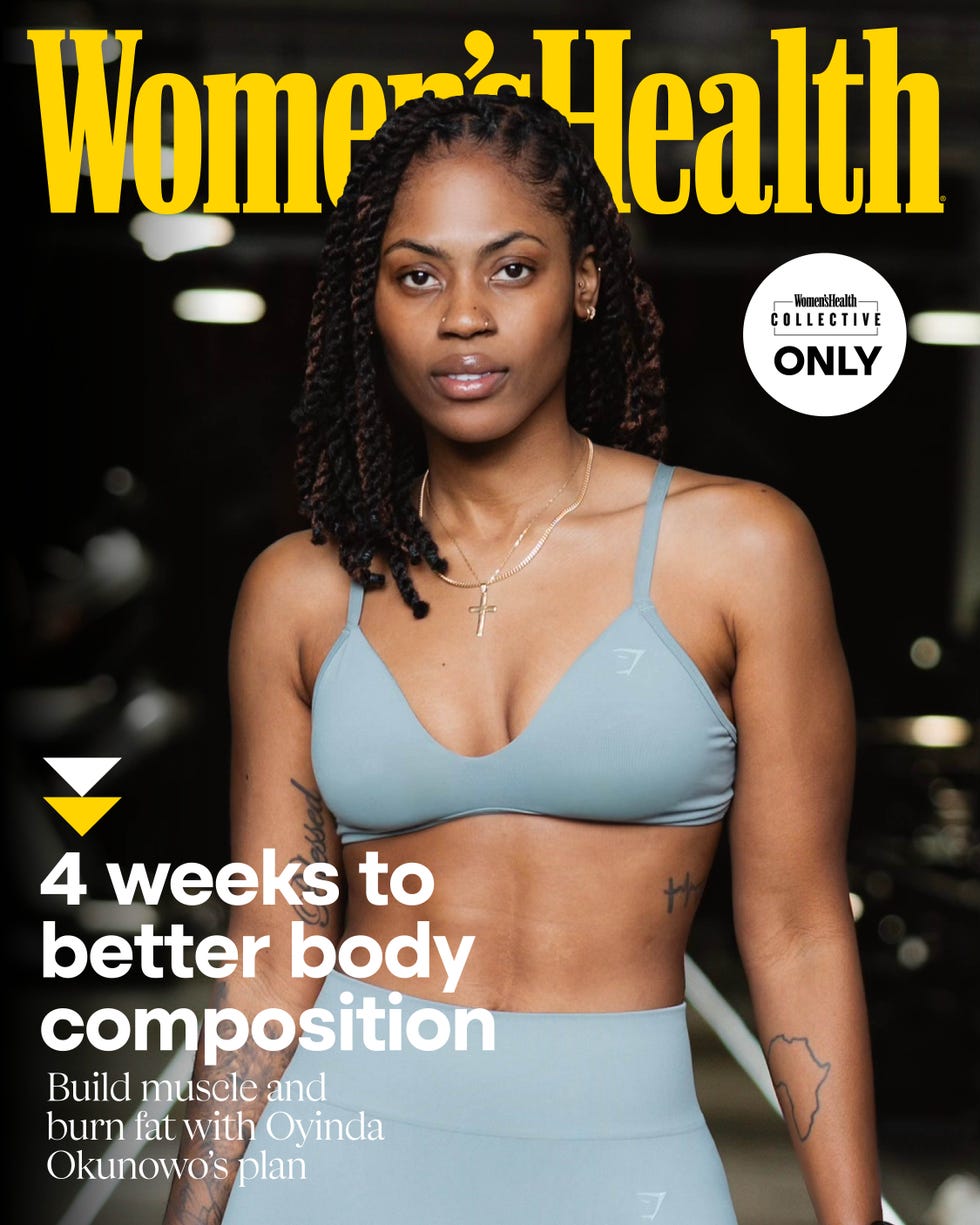
One of our most frequently asked questions here at Women’s Health? How to build muscle and burn fat at the same time. So, we asked superstar trainer Oyinda Okunowo exactly how to do it. In this 4-week plan – created exclusively for Women’s Health COLLECTIVE members – you’ll get the workouts and nutrition guidance needed to help you on your way to better body composition. Tap the link below to unlock 14 days of free access to Oyinda’s plan and start training today.

Hannah Bradfield is a Senior Health and Fitness Writer for Women’s Health UK. An NCTJ-accredited journalist, Hannah graduated from Loughborough University with a BA in English and Sport Science and an MA in Media and Cultural Analysis. She has been covering sports, health and fitness for the last five years and has created content for outlets including BBC Sport, BBC Sounds, Runner’s World and Stylist. She especially enjoys interviewing those working within the community to improve access to sport, exercise and wellness. Hannah is a 2024 John Schofield Trust Fellow and was also named a 2022 Rising Star in Journalism by The Printing Charity. A keen runner, Hannah was firmly a sprinter growing up (also dabbling in long jump) but has since transitioned to longer-distance running. While 10K is her favoured race distance, she loves running or volunteering at parkrun every Saturday, followed, of course, by pastries. She’s always looking for fun new runs and races to do and brunch spots to try.