

At 58, Davina McCall still has the energy of a toddler the night before Christmas. These days, though, her approach to fitness has mellowed slightly. ‘I tried to do as much cardio and HIIT as possible when I was younger, but now it’s all about weights,’ she told the Evening Standard. She hasn’t abandoned cardio altogether: ‘I try to do half an hour of running, which I can do anywhere, and then I’ll do 20 minutes of strength training.’
She may be on to something, because while the latest science doesn’t suggest women should throw out their trainers and replace every cardio session with weights in midlife, a growing body of research does suggest that resistance training deserves a much more prominent place in our routines as we age.
Why step down the HIIT and step up to the weights?
Davina says highly competitive, fast-paced workouts encouraged her to chase repetitions, rather than concentrate on technique. ‘I don’t do any HIIT or anything where you’re trying to do as many reps as possible because I get so competitive with myself that I don’t think about form enough,’ she explained.
But the latest research also makes a strong case for women lifting weights. A major 2026 systematic review and meta-analysis looked at 126 studies involving 4,019 women, around two-thirds of whom were postmenopausal.
Researchers found that resistance training produced substantial improvements in muscular strength in both pre- and postmenopausal women. It was also associated with increased functional lean mass and reduced fat mass. Importantly, the strength gains did not appear to be significantly smaller after menopause. Instead, women continued to make substantial strength gains.
It can benefit bones, too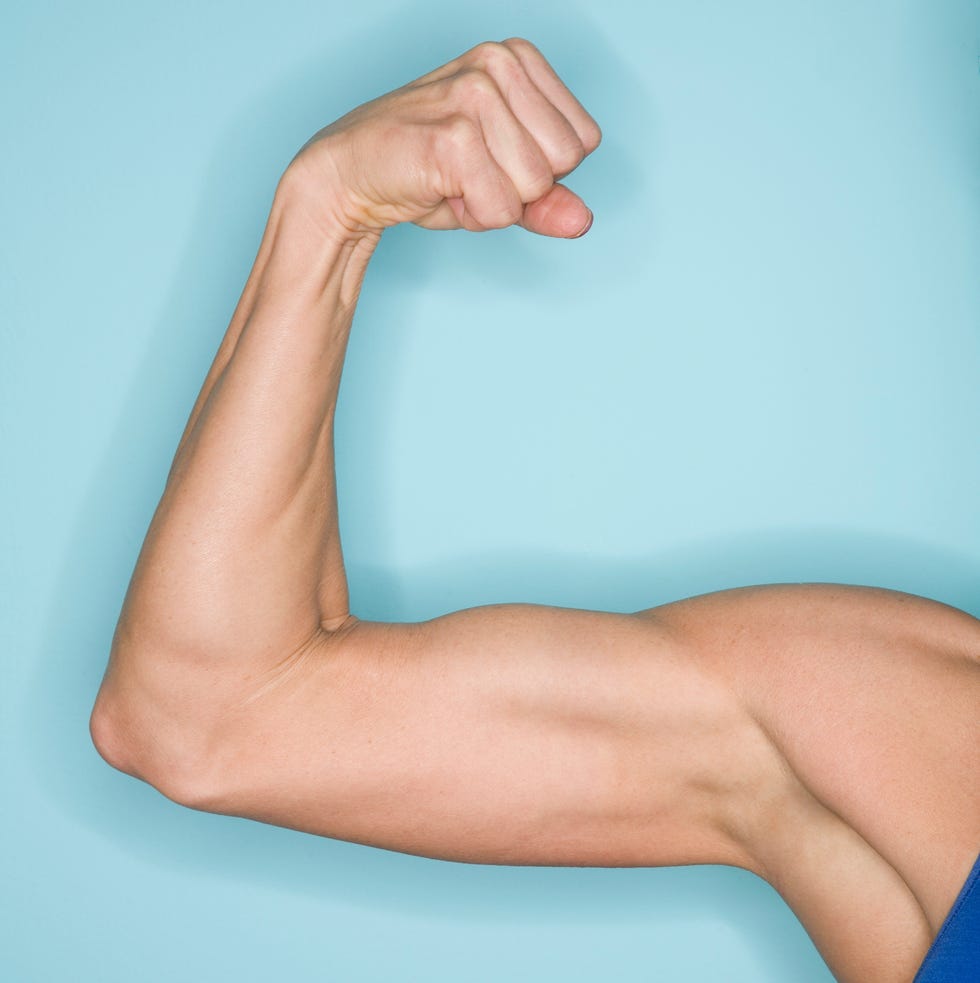
Jupiterimages//Getty Images
A small trial recently dug further into these benefits. In the 2026 STOP-EM trial, women aged 45 to 60 completed a supervised programme of heavy strength and impact training twice a week for nine months.
Compared with the control group, those who trained increased their strength, gained around 0.9kg more lean mass, improved their leg power and recorded an increase in lumbar-spine bone mineral density.
But weights aren’t only about muscles and bones
There is emerging evidence of cardiovascular benefits, too.
A July 2026 systematic review examining 60 studies in postmenopausal women found resistance training was associated with reductions in resting heart rate and blood pressure, with the largest pooled effects seen for systolic and mean blood pressure.
So, should women over 50 swap HIIT for weights?
Not necessarily. Current UK physical activity guidance recommends a mixture of aerobic and strengthening exercise, rather than choosing one or the other.
Adults should aim to do muscle-strengthening activity involving the major muscle groups on at least two days a week, alongside around 150 minutes of moderate aerobic activity or 75 minutes of vigorous activity each week. So if you want to drop HIIT, you’ll need to replace it with another aerobic activity, such as Davina’s running.
Still, increasing research suggests that making room for strength is one of the most useful fitness changes women can make in midlife and beyond.
How can you supercharge your resistance training?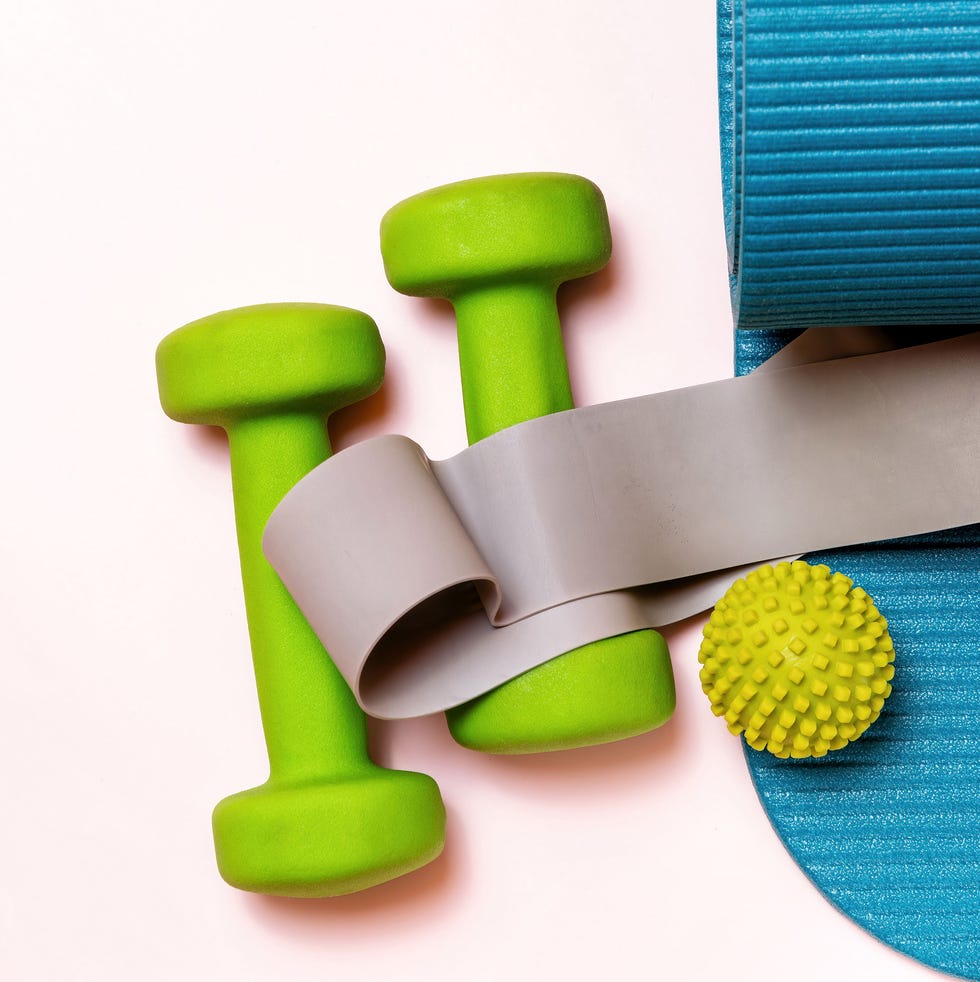
serebryannikov//Getty Images
There’s one more nugget to mine from Davina’s new fitness fix. ‘I often wear a weighted vest for squats, lunges and jump lunges, and take weighted gloves everywhere to improve my grip strength,’ she says.
The GH verdict is still out on weighted gloves, but weighted vests are now a common sight in gyms. They increase your lower-body resistance and help build muscle strength while evenly distributing weight across your torso, keeping your hands free and promoting an upright posture.
New to wearing weights? Fitness specialist Kate Rowe-Ham suggests getting used to wearing a weighted vest around the house before using it during a workout. Also, consider wearing wrist and ankle weights on your daily walk first.
How to start weight training from scratch
If you’re new to strength training, the NHS recommends starting gradually. Muscle-strengthening exercises should work the major muscle groups and a typical approach is 8 to 12 repetitions per exercise for at least two sets, building up over time.
A simple unweighted sit-to-stand from a sturdy chair can also be an accessible way to begin strengthening the legs before progressing to loaded squats.
Anyone with osteoporosis, significant joint pain, balance problems, a recent injury or another medical condition affecting exercise should seek appropriate professional advice before adding substantial external weight.