
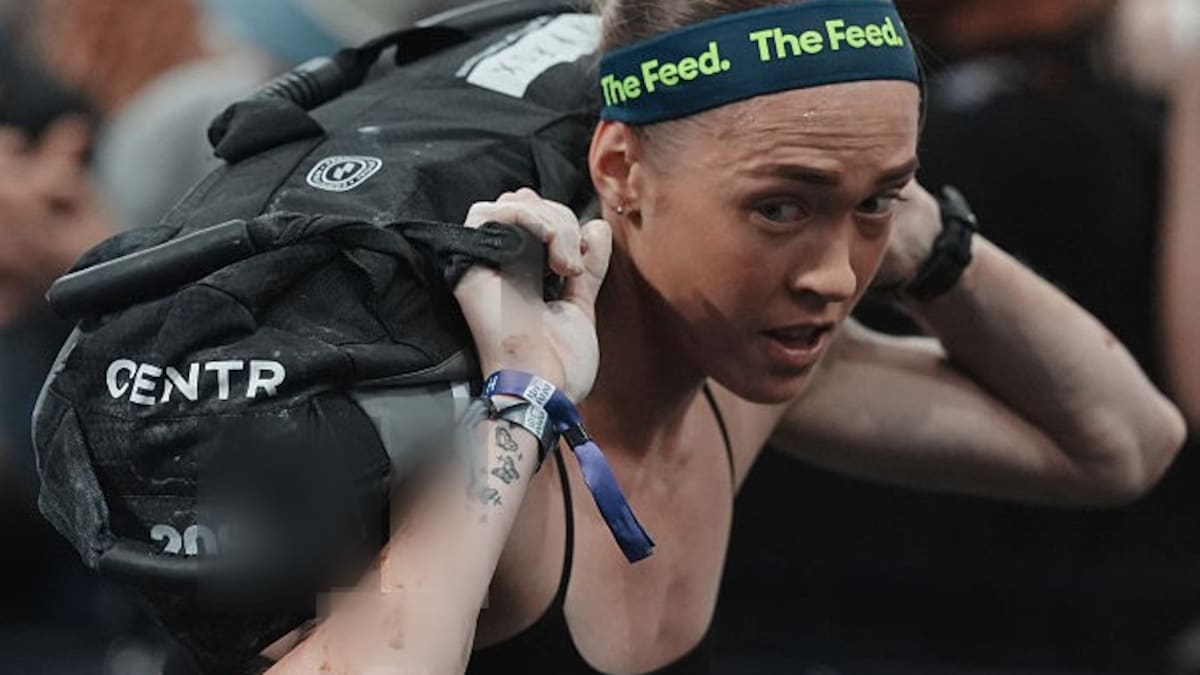
In a since-deleted Instagram Story, Wietrzyk shared a selfie of herself in hospital with the message: “Go hard or go home … a win’s a win”.
When you see how the competition draws in everyday gym-goers like Clarke, you can begin to understand the hype. Hyrox has grown in popularity since its 2017 launch in Germany, with many gym affiliates across New Zealand. More than 30 are in Auckland.
Racers compete in their age group solo or with a partner, alternating eight times between a 1km run and a workout often seen at a common gym, including rowing machines, burpees and sled pulls.
“There are people from all walks of life doing it,” says national CrossFit champ Michelle Hayes, who has also competed in Hyrox events. “Makes it quite inviting.”
But the Wietrzyk incident raised concerns about the pressures on athletes and why some push themselves to the limits, sometimes at their expense.
Clarke says one can get caught up in competing with others during a Hyrox event. “I won’t lie, you look at each other, and I’m like, ‘Okay, I’m going to beat you, or I’m going to use you as my target.’
“That can be detrimental to you because you might gas out too soon, or it actually might motivate you to keep going and go harder and stronger.
“You’re absolutely exhausted, your muscles are fatigued, you’ve got lactic acid built up, everything just wants to give up, your brain is going to stop, you push on … through the whole entire race, you’re battling not only soreness, fatigue and everything, but it’s also mentally challenging.”
Former New Zealand Olympian Paul Bowman says attention needs to be drawn to coaching systems that may pressure athletes like Wietrzyk too much. But he also understands the elite mindset.
Paul Bowman competing in a Hyrox event.
“If you’re constantly in the world of pushing yourself to chase a time, to try and be the name in the sport, you’ve got a lot riding on it,” he says.
He references the Goldman Dilemma, a study in the 1980s by American physician Robert Goldman conducted after he asked elite athletes if they would take a magic drug that would guarantee victory, knowing it would kill them in five years. About half the respondents said they would accept the deal.
“That kind of shows you the level of obsession that people have when it comes to the sport that they love … which I think is a great thing, but it also needs to be done in a healthier way.” .
He believes Hyrox doesn’t have to be intense.
“It’s a you versus you race”.
NZ Olympian Paul Bowman is now a Hyrox competitor and owner of Hyrox-affiliated gym Regymen NZ.
Hayes, 27, says Wietrzyk shows a “whole different level” of focus and drive.
During competition, she says she tries to mentally separate herself from what her body is feeling.
“You go to a dark place. Your heart rate is through the roof for about an hour if you’re racing at that level – it’s next level.”
Hayes, who started competing professionally six years ago, believes the Wietrzyk incident speaks to a broader grind culture of not quitting, even when we perhaps should.
“I think it also highlights the pressure that athletes at that level can put on themselves, or have put on them by others, to carry on and push through, even to the detriment of themselves [and] people around them.”
While Wietrzyk’s experience of bowel incontinence may have shocked onlookers, it’s not uncommon for the body to let go during high-octane physical exertion. Perhaps the best-known example comes from the 2005 London Marathon when British long-distance runner Paula Radcliffe pulled aside to defecate on the side of the road, captured by cameras, before going on to win the race. In 1986, American cyclist Greg LeMond experienced a similar situation during the Tour de France.
As an elite athlete herself, Hayes admits it could easily happen to her, though she points out she would have “stopped [competing] straight away” if it did.
Before a half-marathon, Clarke says she stops eating fibre a week before and, like many runners, wears “protective gear” during a race in case incontinence is aggravated. Protective pads and special underwear for physical activity are common products athletes can buy if they’re concerned about incontinence.
“You’re so fatigued, your body just releases itself,” she explains.
Bowman, who owns Hyrox-affiliated gym Regymen NZ, has also seen competition stress manifest physically in others.
“We’ve seen an individual in our group break out in hives before a race [from] being so wound up and anxious.
“I think all sports [face intense pressures]. Maybe the issue is a lot of people haven’t experienced when they’re young that level of pressure.
“It’s easy coming from an athletic background where I’ve done well, but for people that this is the first time they’ve done something … they see a lot on social media and that fuels a lot … they start building themselves up, they start putting pressure that they don’t need.”
He says part of the hype is that Hyrox is still a young sport, which means records are often being broken.
“Everyone’s got a moment that they can go try and be the champ”.
Is the grind worth it?
“The satisfaction of completing [a Hyrox event] is so overwhelming,” Clarke says.
Wietrzyk, who holds the Hyrox Women’s Solo Pro world record, has since apologised after widespread backlash.
“I am learning from this experience and will carry those lessons with me, including remembering that there is more to life than racing and knowing when it is right to step away,” Wietrzyk, 24, wrote in a statement.
The incident also prompted an apology from Hyrox co-founder Moritz Fürste, announcing changes to health and safety protocols and full refunds for affected athletes.
Bowman says racers should be “realistic about what they can do” before deciding to compete at a Hyrox event.
Clarke stresses that competitors should commit to training and having fun.
“If you don’t enjoy it, it’s going to be a horrible experience and you’ll probably never do it again.”
Varsha Anjali is a journalist in the lifestyle team at the Herald. She is based in Auckland.