
Lung health rarely gets attention until breathing becomes difficult, yet it’s something you can look after every day, partly through what you eat. Food can’t undo damage from smoking or treat a lung disease, but a diet built around antioxidant-rich, anti-inflammatory foods gives your airways some extra protection against the daily wear of pollution, allergens, and normal oxygen use. These seven foods are easy to find, affordable, and simple to work into meals you already make.
Why Diet Matters for Your Lungs
Your lungs take in around 11,000 liters of air a day, and with it a steady stream of irritants. That exposure creates oxidative stress and low-level inflammation in lung tissue. Foods high in antioxidants like vitamin C, vitamin E, and carotenoids, along with omega-3 fats, may help your body manage both. Studies also link diets rich in fruits, vegetables, and whole foods with better lung function over time, though the effects build slowly and work best alongside other healthy habits.
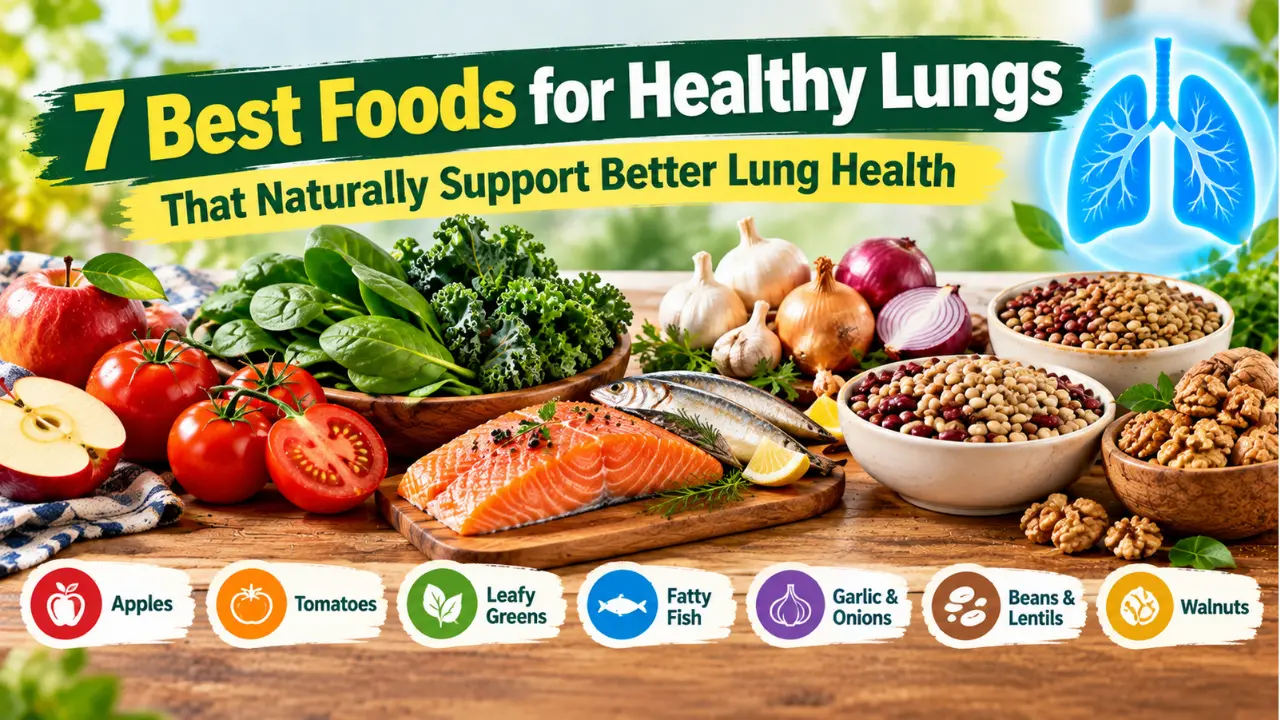
 The 7 FoodsApples: regular apple eaters show better lung function in several large studiesTomatoes: rich in lycopene and other carotenoids, which act as antioxidantsLeafy greens: spinach and kale supply vitamin C, beta-carotene, and folateFatty fish: salmon, sardines, and mackerel provide anti-inflammatory omega-3 fatsGarlic and onions: contain sulfur compounds and flavonoids with anti-inflammatory activityBeans and lentils: supply fiber, magnesium, and plant proteinWalnuts: a source of omega-3 fats and vitamin EApples and Tomatoes: The Everyday Fruit Team
Apples are one of the most consistent fruit findings in respiratory research. Their skin contains flavonoids such as quercetin, and people who eat them regularly tend to show slower decline in lung function in observational studies. Tomatoes contribute lycopene, a carotenoid that has been studied in relation to airway inflammation, and cooked tomato products like sauce and paste actually make lycopene easier for the body to absorb. Both are cheap, available year-round, and easy to snack on or cook with.
Greens, Fish, and Walnuts
Leafy greens are a nutrient-dense staple, and one handful adds a lot of antioxidants with very few calories. Oily fish and walnuts cover the omega-3 side. Omega-3 fats help the body regulate inflammation, and higher intakes have been associated with better respiratory outcomes in some studies. If you don’t eat fish, walnuts, flaxseed, and chia seeds are plant-based ways to get a form of omega-3, though the body converts it less efficiently.
 Garlic, Onions, and Legumes
Garlic and onions are more than flavor bases. They contain sulfur compounds and quercetin that show anti-inflammatory activity in lab and population studies. Beans and lentils round out the list with magnesium, which plays a role in relaxing airway muscles, and with fiber that supports gut health, an area increasingly linked to immune function. They’re also inexpensive, filling, and easy to stretch across several meals.
 A Simple Day of Lung-Friendly EatingBreakfast: oatmeal topped with walnuts and sliced appleLunch: lentil soup with a side of spinach saladSnack: an apple or a handful of walnutsDinner: baked salmon with roasted tomatoes and garlicQuick Reference TableFoodKey NutrientHow It May HelpApplesFlavonoids, vitamin CLinked to better lung functionTomatoesLycopeneAntioxidant support for airwaysLeafy greensVitamin C, beta-caroteneProtects lung tissue from oxidative stressFatty fishOmega-3 fatty acidsSupports lower inflammationGarlic and onionsSulfur compounds, quercetinAnti-inflammatory activityBeans and lentilsMagnesium, fiberSupports airway muscle function and gut healthWalnutsOmega-3, vitamin EAntioxidant and anti-inflammatory support
Food Is Only Part of the Picture
Diet supports lung health, but it isn’t the biggest lever. Not smoking, avoiding secondhand smoke, limiting exposure to air pollution, staying active, and getting recommended vaccinations do far more. If you have asthma, COPD, or persistent breathing symptoms, see a doctor, and use food as a complement to your treatment rather than a replacement.
FAQs
Which single food is best for the lungs?
There isn’t one. Research points to overall dietary patterns rich in fruits, vegetables, fish, nuts, and legumes rather than any single food.

Can food help repair lung damage?
Food can support lung health and help manage inflammation, but it can’t reverse established damage. For lung conditions, medical care comes first.
Do I need supplements for lung health?
Most people can get what they need from a varied diet. Ask your doctor before taking supplements, especially high-dose ones.
Are there foods that may harm the lungs?
Highly processed foods and diets high in added sugar and salt are linked with more inflammation. Eating them in moderation makes sense.