
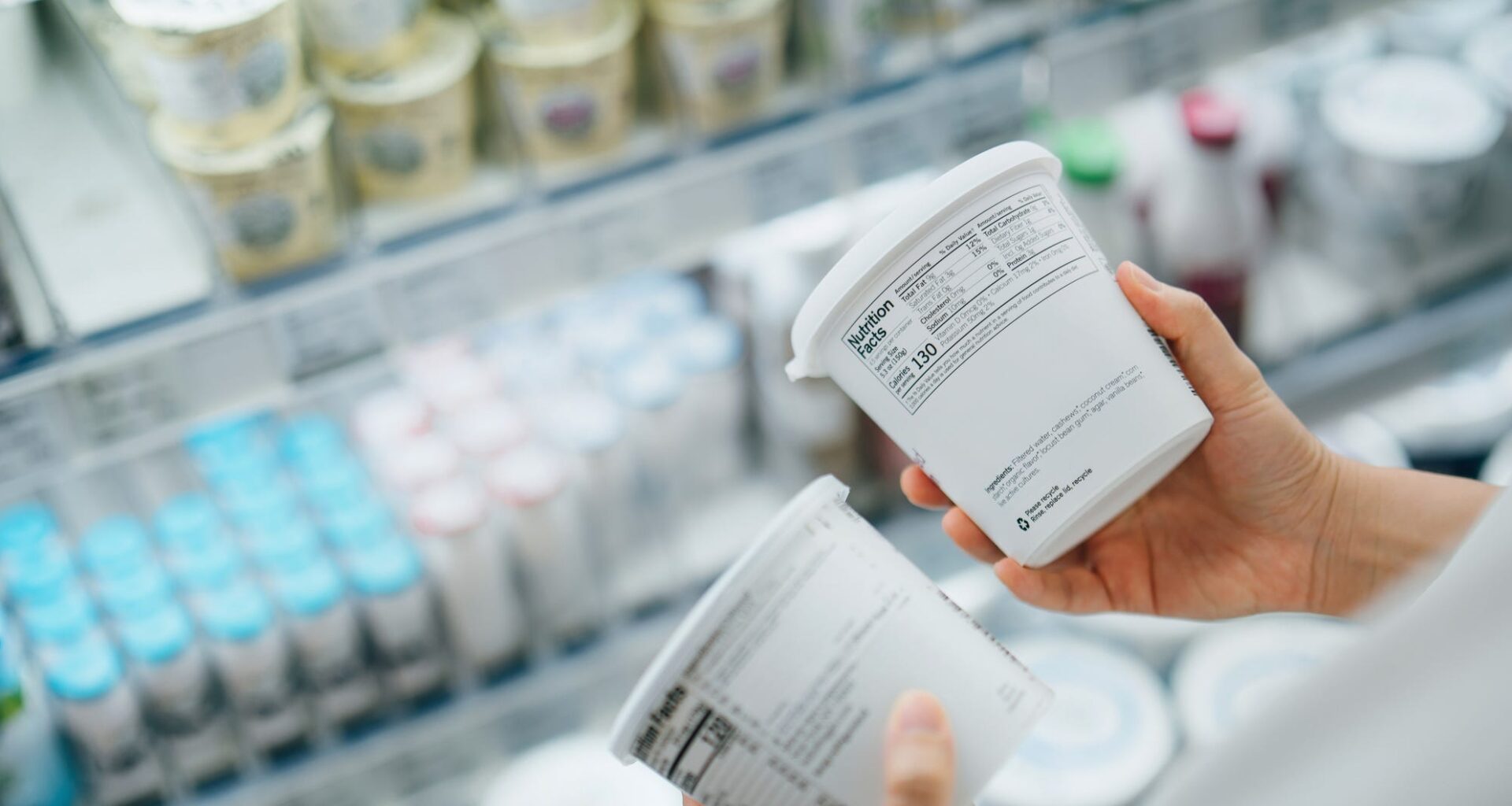
A new buzzword is making its way onto food packaging—and no, it’s not “gut-healthy” or “high-protein.” You may have spotted “GLP-1-friendly” on everything from snacks and cereals to frozen dinners. The term refers to the class of prescription medications meant to help regulate blood sugar and reduce appetite, called GLP-1s.
But what does “GLP-1-friendly” actually mean on food packaging, and is it legit…or just marketing?
To learn more, we tapped Coco Pierrel, a certified integrative nutritionist and founder of Eat Shed Glow, and Sun Jones, Doctor of Nursing Practice at the College of Nursing at the University of Phoenix.
What Does ‘GLP-1-Friendly’ Mean?
The answer to this is a little complex. According to Pierrel, the label means “whatever the brand decides it means.” Neither the FDA nor the USDA has defined the term—unlike similar food packaging phrases like “high in protein” and “good source of fiber.”
“There is no minimum protein, no minimum fiber, and no cap on added sugar or sodium behind it,” she tells Delish. “In practice, it signals a smaller portion with more protein than the brand’s regular version, and ‘more than our regular version’ is a comparison, not a standard. It also says nothing about whether the food will sit well in a stomach that the medication has already slowed down.”
The only rule or regulation is the one that applies to every label: It can’t be false or misleading. As Pierrel puts it, “that’s a low bar.”
So, How Much Should Shoppers Trust The Claim?
Pierrel calls the GLP-1-friendly label “mostly marketing,” but admits some products in the category do prioritize what matters—aka protein first, vegetables, healthy fat, and real fiber.
“Brands are relabeling that idea and selling it back at a premium,” she explains. “The only new piece is portion, since a smaller meal makes sense when you’re eating a lot less. The rest is the marketing halo: a front-of-package claim that says who the food is for, never what’s in it.”
However, because there is no regulation, you can’t trust the label alone. Just because a frozen meal has GLP-1-friendly branding doesn’t mean it automatically follows that standard.
Pierrel’s advice? Flip over the packaging and actually read the nutritional label. Two products with the same badge could ultimately have completely different macros.
What Should Shoppers On GLP-1s Look For In The Grocery Store?
Jones emphasizes the importance of protein and says that it’s critical during active weight loss to help preserve lean muscle.
“Patients should generally aim for an average of 80–120 grams of protein per day, depending on body size, activity level, and individual health needs,” she says, labeling fish, eggs, Greek yogurt, cottage cheese, lean poultry, beans, and nuts as good sources. “Eating protein‑rich foods first during meals can help ensure adequate intake despite reduced appetite.”
Pierrel suggests prioritizing 30 grams of protein at every meal, fiber from veggies and whole foods rather than added powders, healthy fat from olive oil or avocado, and, for packaged foods, under five grams of added sugar.
“Those are my coaching targets, not an official standard. Since the medication slows how fast your stomach empties, lighter meals go down easier than fried or heavy ones,” she says. “Grilled salmon with roasted vegetables checks every box and will never get a badge.”
Can A Product Technically Be ‘GLP-1-Friendly’ But Still Not A Nutritious Choice?
All the time. Allow Pierrel to paint the picture: “A frozen meal with 15 grams of protein, 3 grams of fiber, and half a day’s sodium can wear the badge without breaking a rule, because there are no rules. So can a ‘support’ shake with 20 grams of protein and 15 grams of added sugar. I call that a Sugar Bomb in a lab coat.”
What Are ‘GLP-1-Friendly’ Foods You’d Actually Recommend—And Which Ones Would You Skip?
Jones says to avoid highly processed foods at all costs, as they can worsen gastrointestinal side effects like bloating, fullness, constipation, and nausea, while Pierrel says fried food, cream sauces, and large, high-fat meals are common triggers.
“Keep cottage cheese. A cup and a half gets you about 30 grams of protein; it’s easy to eat, and it’s one of the best things in the fridge when appetite is gone, and muscle still needs feeding,” she says. “Plain Greek yogurt does the same job. Skip the bar that’s mostly marketing: a ‘GLP-1’ protein bar with 10 grams of protein, a long sweetener list, and sugar alcohols. The words GLP-1 on the wrapper don’t add a single gram of protein.”
Hydration is also essential. People on weight-loss medication should drink two or three liters of water per day, maybe with added electrolytes, to prevent dehydration.
The Bottom Line
Ultimately, the food label means nothing. Sure, you can use it as a guideline for which items to pick up—as long as you’re reading the nutritional information on the back before tossing it in your cart.
“Shop for the food, not the badge,” Pierrel says. “Start with protein, then read the fiber and added sugar. Those three lines tell you far more than ‘GLP-1-friendly’ ever will. The medication can change your appetite. You still have to do the nutrition, and that’s the part that lasts.”
You Might Also Like