

“If peas get their marketing right, they will be the next cottage cheese.”
That’s the bold declaration of one TikToker, heralding the dawn of another budget-friendly grocery staple having a moment in the limelight. Yes, if there’s a bag of peas buried in your freezer, you might be sleeping on a major foodie trend.
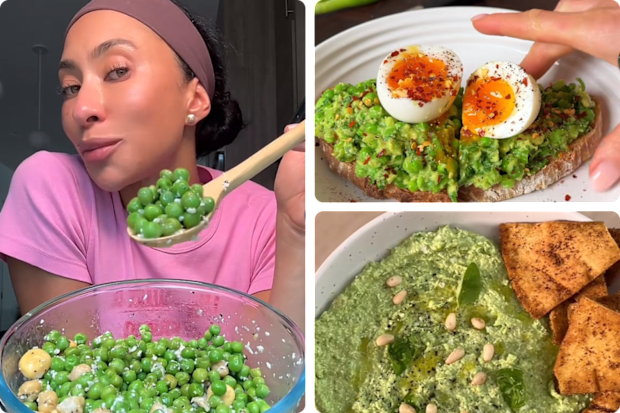
Peas are the latest affordable grocery staple to be ushered into the social media spotlight – and with good reason. TikTok/@pilatesbodyraven, @emthenutritionist, @kitkeenan
Health- and food-focused content creators are having a field day with peas at the moment, celebrating them as a budget-friendly protein and fibre source. Love Island alum Raven Ross even has a dedicated TikTok series called “#peapropaganda”.
While some creators are simply adorning the podded veggie with salt, pepper and grated Parmesan, or shaking them up as ‘jar salads’ with some supermarket hot chicken, others are turning them into toast spreads and even bases for wraps.
Accredited practising dietitian Danielle Shine believes peas are worthy of the attention, hailing them “a great example of an everyday staple that can contribute to a nutritious diet”.
“They’re affordable, convenient and easy to incorporate into everyday meals. They’re also available year-round as frozen or tinned options [and] require very little preparation,” she tells nine.com.au.
While you can’t always take health content at face value on social media, Shine confirms peas are “a particularly nutritious choice among vegetables”.
Here’s what else you need to know.
‘Plenty of nutrition in a small serving’
Shine describes peas as “a high-performing member of the vegetable team”.
Their vitamin and mineral content includes folate, vitamin C, potassium, magnesium and beta-carotene, which the body can convert into vitamin A. Then, yes, there’s the protein and fibre.
Per 100g, cooked green peas provide approximately 6g of fibre and 5g of protein.
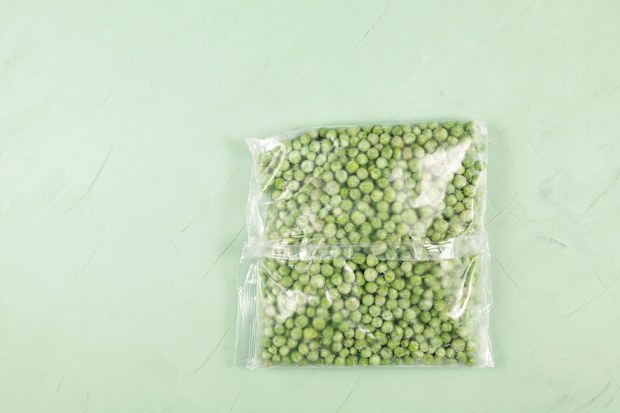
Accredited practising nutritionist Danielle Shine describes peas as “a high-performing member of the vegetable team”. iStock
This is a solid contribution to our suggested daily fibre intake: around 25g a day for women, and 30g for men, per The National Health and Medical Research Council.
“Higher intakes of dietary fibre are associated with a lower risk of bowel cancer, cardiovascular disease and type 2 diabetes,” Shine says.
“Fibre can help us feel fuller for longer, which may support appetite regulation and weight management. It also adds bulk to stools, helping keep our bowels regular.”
Shine says the soluble, insoluble and fermentable fibre found in peas is especially beneficial in supporting our digestive health. Fermentable fibre, for instance, provides nourishment for beneficial gut bacteria.
Meanwhile, the plant-based protein found in peas provides amino acids, which help our bodies build and repair tissues, make enzymes and hormones, and support immune function.
“Peas contain all nine essential amino acids, which our bodies can’t make and must obtain from food,” Shine adds.
“Ultimately, [they] contribute to our overall health as part of a varied diet, rather than having one specific health benefit.”
Is it possible to overdo it?
Good news, ‘peaheads’: Shine says for most people, there isn’t a specific limit on how many can be consumed as part of a varied diet.
However, if you are sensitive to FODMAPs – fermentable carbohydrates that can trigger digestive symptoms in some people – be aware they are classified a high-FODMAP food.
“Tolerance varies between individuals, and portion size can influence whether symptoms occur,” Shine notes. If you experience symptoms, she says an accredited practising dietitian can help you identify an amount you can tolerate.
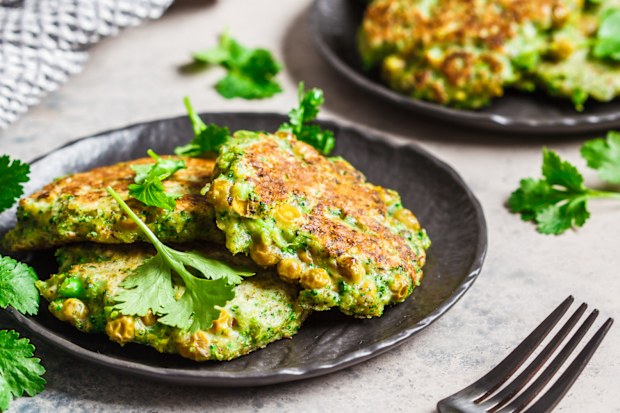
“They’re affordable, convenient and easy to incorporate into everyday meals.” iStock
Shine also has a word of caution for those trying to eat more fibre (“fibremaxxing”, if you will) where it’s previously been less present in their diet.
“Eating a large amount of fibre in one sitting may cause bloating, wind or abdominal discomfort, particularly if you’re not used to eating a lot of fibre,” she says.
“When increasing your fibre intake, it’s a good idea to do so gradually and drink enough fluid.”
The fermentable carbohydrates in peas can also cause digestive discomfort in some people, Shine says, especially when eaten in large quantities.
“Ultimately, there’s no need to eat large quantities of any one food for health purposes. Including a variety of vegetables, legumes, and other plant foods can help us consume a broad range of nutrients that support our health,” she adds.
The showdown: Fresh, frozen and tinned
Shine says while there can be some nutritional differences between fresh, frozen and tinned peas – “depending on the nutrient and how the peas are processed and stored” – none is automatically the ‘best’ health-wise.
“All three options can contribute to a health-supportive diet, so choose whichever best suits your budget, preferences and lifestyle,” she adds.
Shine says fresh peas are great when they’re in season, while frozen peas are usually frozen soon after picking, meaning their nutrients are largely preserved.
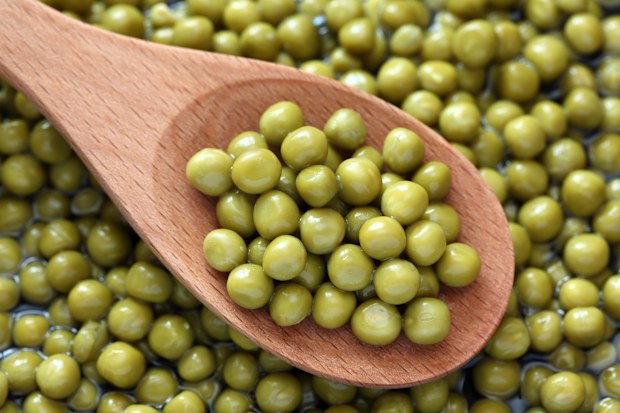
Tinned peas get a bad rap, but they have their nutritional benefits too. iStock
“Research comparing fresh and frozen produce has found that vitamin levels are generally comparable, although differences depend on the food and nutrient,” Shine says.
Tinned peas get a bad rap for being mushy (not to mention lacking that lovely bright green hue), but Shine says they shouldn’t be overlooked.
“The canning process can reduce some heat-sensitive vitamins, like vitamin C, but they still provide valuable nutrients, including fibre and plant-based protein. Any differences in vitamin content are unlikely to make a meaningful difference to overall nutrition when peas are eaten as part of a varied diet,” she added.
However, Shine notes that as some tinned peas contain added salt, “It’s worth checking the label if you’ve been advised to limit your sodium intake for health reasons.”
When peas meet ‘girl dinner’
On TikTok, ‘peaheads’ are finding ways to add the veggie into their day, even embracing them a breakfasttime and eating them as snacks. Peas have also joined the ‘girl dinner’ movement, with many creators hailing a bowl of peas simply dressed with salt, pepper, Parmesan and pesto as the ultimate easy meal.
This mightn’t align with the stereotypical image of a ‘balanced meal’, but Shine says it isn’t necessarily a cause for alarm.
“Not every meal needs to provide everything our bodies need. We can meet our nutritional needs across the day by eating a variety of foods. There’s no single formula for what a balanced meal needs to look like,” she said.
In other words: go ahead and enjoy that bowl of fancied-up peas.
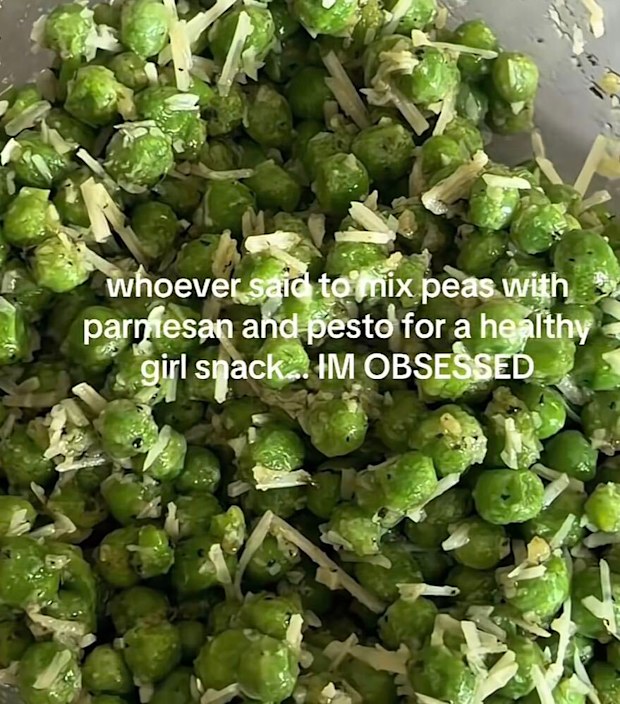
Fibre, protein, versatility: what’s not to love about peas? TikTok/@aestheticsbyjz
“What matters most is enjoying a variety of foods across the day and week to help ensure we get all the nutrients our bodies need in adequate amounts.”
Finally, if you’re looking for some pea-spiration, Shine has some serving suggestions.
“Peas are great cooked and mashed with a little olive oil, lemon juice, pepper and fresh herbs, then spread on toast,” she says, adding she also adds them to pasta, stir-fries, curries, risottos, stews, spaghetti bolognese and soups.
“You can also blend them into pesto or guacamole to increase the fibre and protein content. They work really well in salads too, especially with feta, fresh or dried mint and lemon juice.”