
Published November 1, 2026 04:00AM
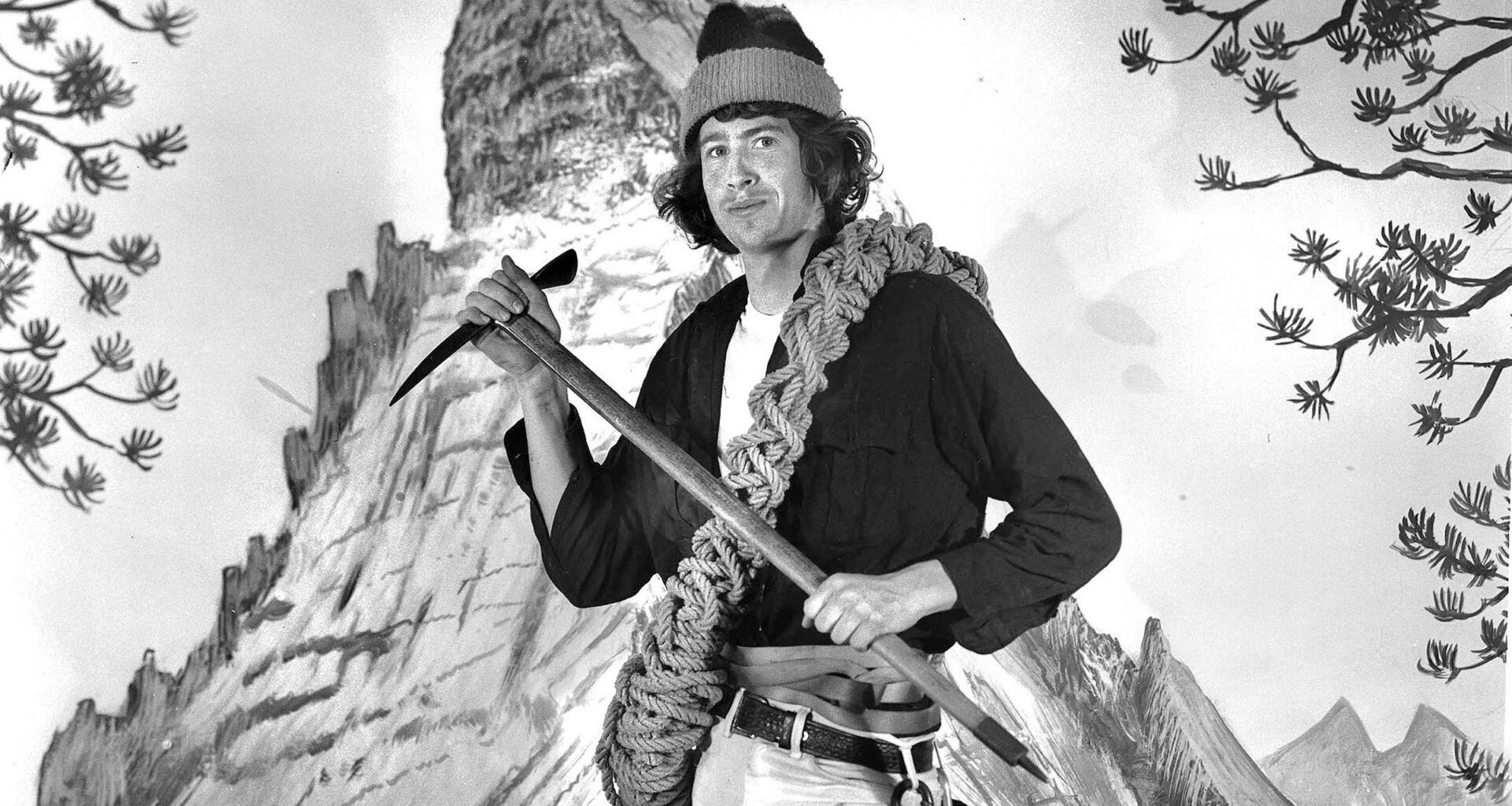
Dean Fidelman arrived in the Yosemite Valley in 1971 as a teenager. Yosemite has been his home ever since—except for a blip in the ‘80s, when he set aside his passion for climbing to become a fashion photographer in New York City and Los Angeles. But a phone call saved him from what was, for him, soulless commercial work.
It was Lynn Hill who called, asking Fidelman to start making climbing photos again. She invited him to come shoot her on some climbs in Europe, where he also first met Chris Sharma. From there, he doubled down on his life’s mission to show “the art of rock climbing,” in his words.
Fidelman spent the first half of his career shooting in black and white on film cameras, including a Pentax 6×7. He processed his own film and developed his own photos—sometimes by night in the historic Yosemite darkroom of Ansel Adams. Eventually, he caught up with the times when filmmaker Renan Ozturk gave him a Sony a7R II mirrorless camera and he made the switch to digital—and full color. “In my viewfinder, I set the preview to black and white, but the capture contains full color,” Fidelman told Climbing.
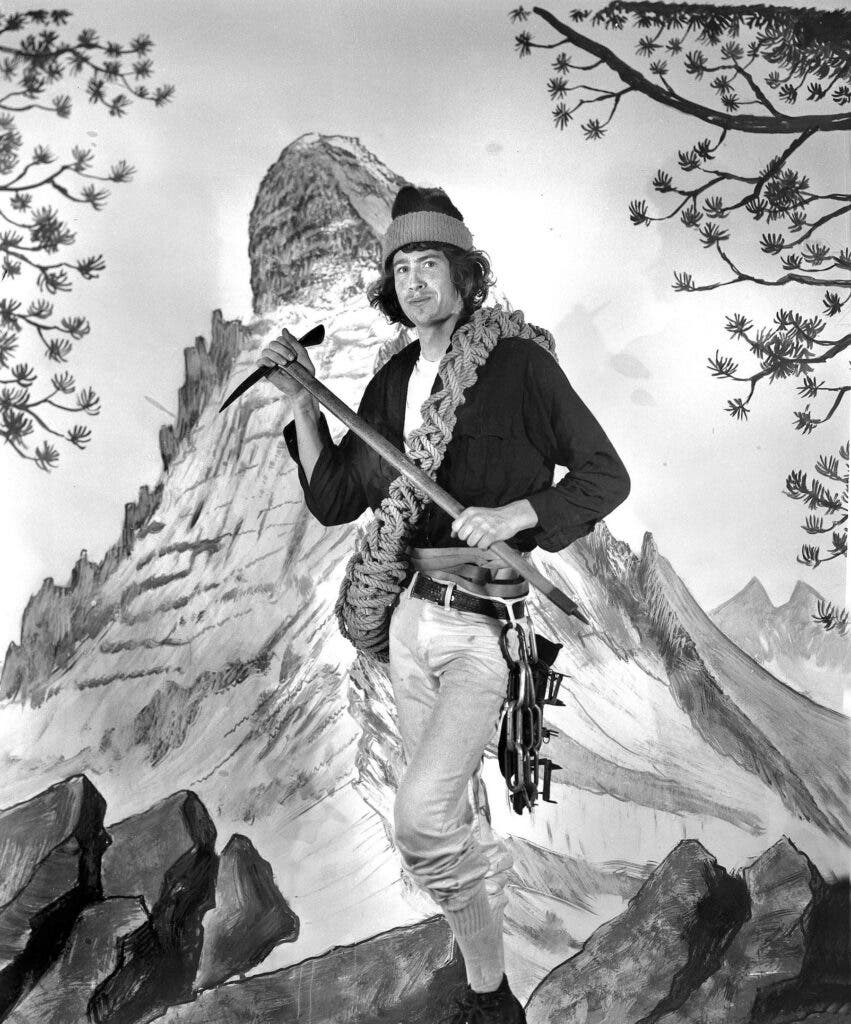 Dean Fidelman in 1971, the year he arrived in Yosemite. “I had discovered both climbing and photography the previous year. This was my attempt to make a studio portrait of those passions. I painted the backdrop and lit up the set in my high-school photography class. My teacher/mentor Warren Shelton made the photograph.” (Photo: Warren Shelton)
Now, 55 years after arriving in Yosemite, Fidelman still calls the area home and continues to shoot climbers around Camp 4. Perhaps best known for his work capturing the Yosemite Stonemasters and Stone Monkeys, Fidelman has also sat down for interviews in a couple documentaries released this year, including The Dark Wizard about Dean Potter, and a film about the weed plane that crashed in Yosemite, enriching many of his friends.
Fidelman is also known for his Stone Nudes, nude portraits of climbers bouldering or free soloing. He started the series in 1999 and now estimates it runs 300 images deep. At least a few times a year, he still receives requests from climbers to shoot a Stone Nude—a phrase which he has tattooed on his hands.
We caught up with Fidelman to discover the changes and throughlines he’s observed across six decades of Yosemite photography, the challenges of revisiting his relationship with Dean Potter for The Dark Wizard, and the next iteration of the Stone Nudes project. For this retrospective interview, we also asked Fidelman to select one photo for each decade of his work, which you’ll find below.
An interview with Dean Fidelman
This interview has been edited for clarity and concision.
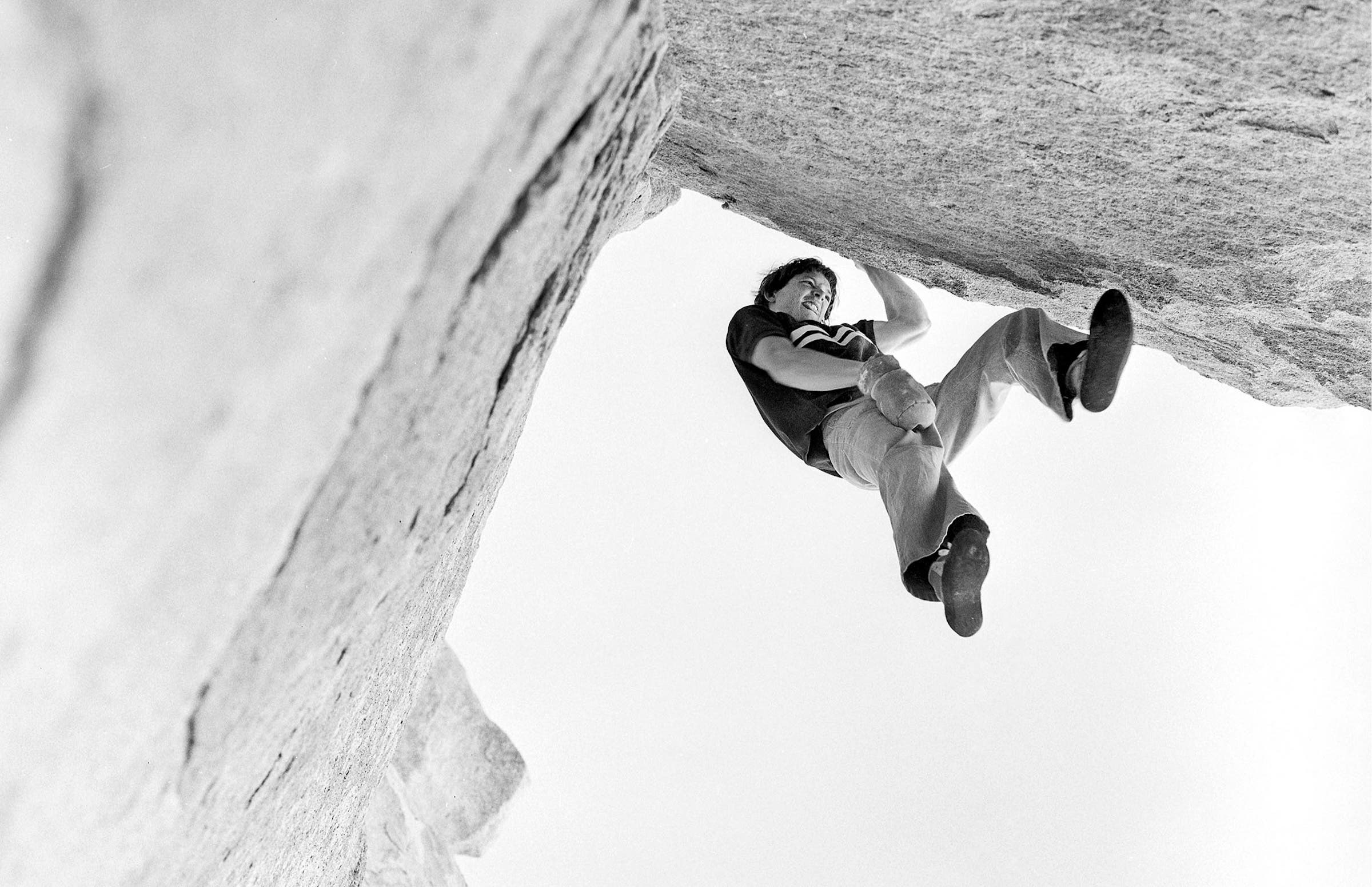 Joshua Tree, 1978. “John ‘Yabo’ Yablonski free soloing Spider Line (5.11d). Yabo was such a unique person. To have experienced his friendship and have had the opportunity to create art with him is something I will cherish forever.” (Photo: Dean Fidelman)
Maya Silver: You’re in your sixth decade as a photographer in Yosemite. Have you noticed anything different about the way Stonemasters, Stone Monkeys, and today’s Valley climbers pose for portraits?
Dean Fidelman: As the decades have progressed, the way that I think about making a photograph has changed. But the people haven’t changed as much. With the Stonemasters, I was just making photographs of my friends doing cool things in the desert. I wasn’t really thinking about anything besides trying to make the best photograph I could—and finding out what a good photograph was.
With the Stone Monkeys, from the late ’90s until 2010 or 2015, I was simply living in Yosemite in the meadow, sleeping down by the river. So I fit in financially with this group of people really well. When I asked someone to make a photograph with me, there was no hesitation.
Recently, I’ve done some photographs for Summit Journal of people on YOSAR [Yosemite Search and Rescue] and at Camp 4. The first thing someone would say when I asked if I could make their photograph was, “I’d be honored.”
That kind of put me on the back foot in a weird way. If I ask to make a photograph of you, it’s because I respect you, or there’s something about you that I really enjoy being around or seeing. So it’s more like you’re honoring me, because you’re going to be vulnerable in front of my camera for a moment. Once we get over that, it’s just like working with the people I’ve always worked with.
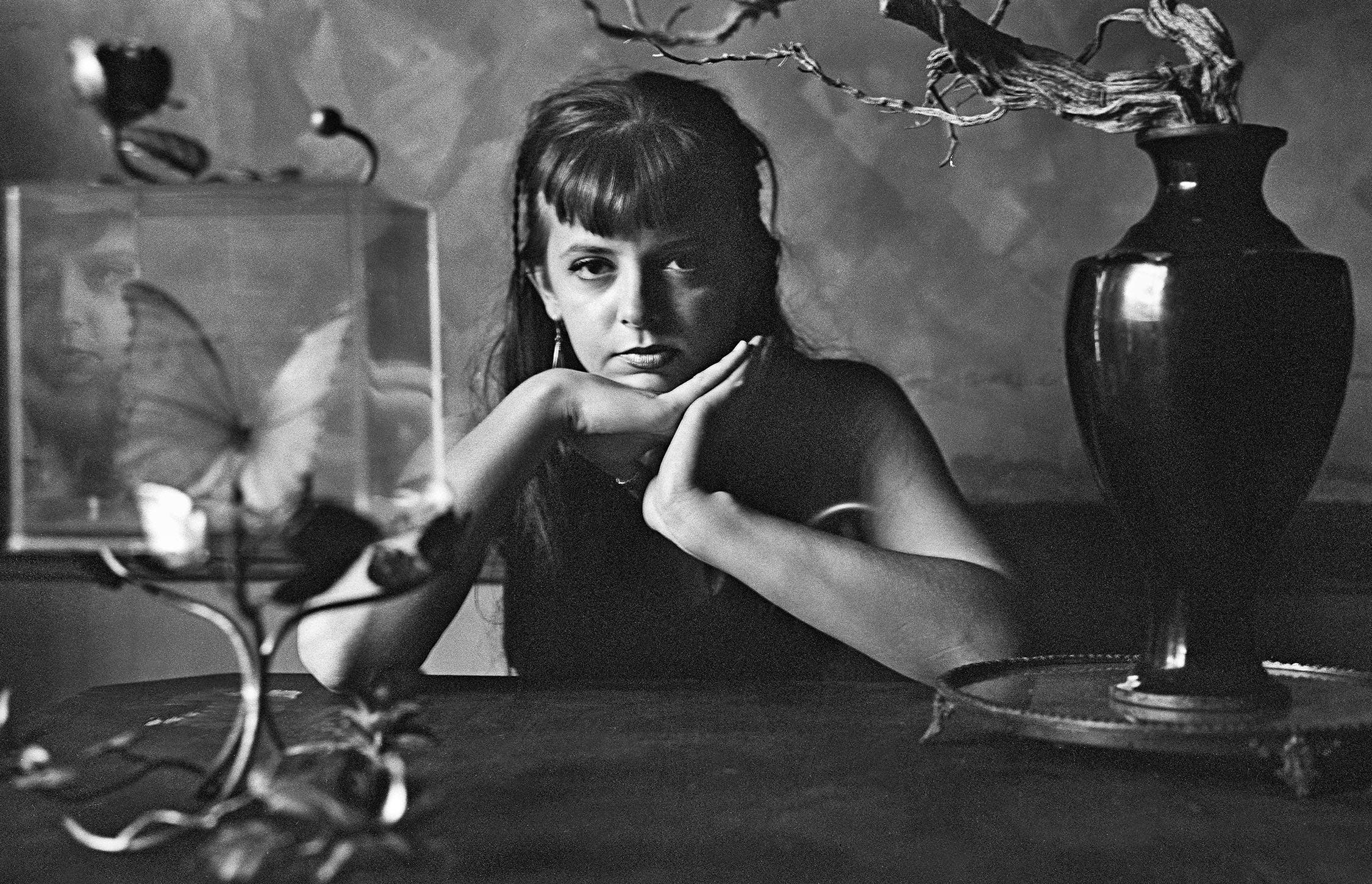 Los Angeles, CA, 1988. Portraits have always brought me great pleasure to create. This image is of my friend Raugust, an artist living in Los Angeles during my time there in the ‘80s (Photo: Dean Fidelman)
Silver: If Lynn Hill hadn’t called you up when you were working as a fashion photographer in New York and suggested you start making climbing photos again, do you think your path would have been different?
Fidelman: When Lynn reconnected with me, it was pretty much immediate—”there it is.” You think of your path in a linear way that leads to being the best at something, but that’s not how it works. I was doing my photography much more personally than commercially. When Lynn connected with that, I thought, “Oh yeah, the personal aspect of photography, I can do that.” She definitely sponsored me and opened that world back up.
Silver: Who else helped you transition back into climbing photography?
Fidelman: Charles Cole at Five Ten and John Bachar at Boreal both used me for ads. But Charles especially would say, “Here’s $500, here’s $1,000. Here’s my camera. Just give me some photos, but make what you’ve always made—no pressure.”
When I got back into Yosemite, one of the first people I met was Dean Potter. He was super open to me. I met him through Bachar because they were giving him shoes at the time and wanted to make some photographs. We had an immediate kinship, and that brought me deeper in with the Stone Monkeys. Then you had Cedar Wright, who was just starting off at that moment in time, and everyone else just came out of that.
With the people who survived—and the people who didn’t—I realized I was making this visual record of friends, trying to express them in the moment. That’s what I’ve hopefully continued to do.
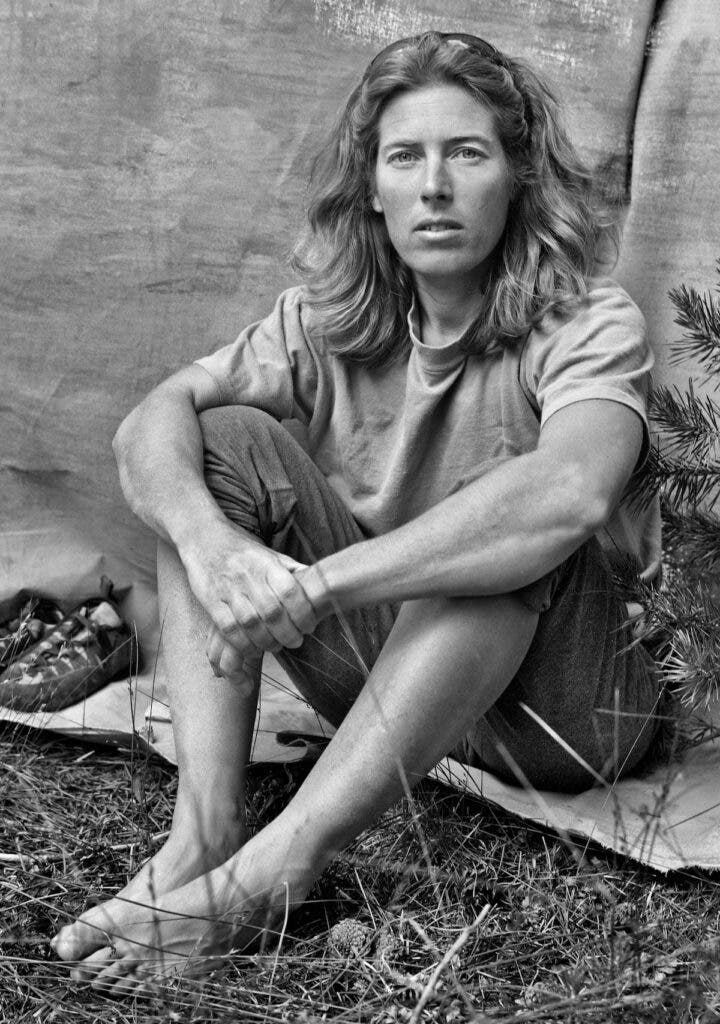 Yosemite, CA, 1994. “My friendship with Lynn began in the 1970s and has continued through the decades. Her generosity and guidance have played a huge role in my life as a climbing artist.” (Photo: Dean Fidelman)
Silver: One thing we talk about a lot at Climbing is about how and whether we should cover free soloing. You’ve been soloing since you were a teenager and have photographed free soloing for decades. How do you feel about the ethics of storytelling around free soloing? Have your opinions changed at all since the ’70s, particularly with social media?
Fidelman: Honestly, my opinion hasn’t changed since the ’70s. It wasn’t like I just happened by when Bachar or Yabo [John Yablonski] or somebody was doing a solo. Sometimes Bachar would say, “Hey, I’ve got this thing figured out now and I’m going to do it. I want you to make the photographs.” Three or four of us would jump in his van, go down to wherever the solo was, and make these photographs.
Even back then, climbing magazines did not want to publish [free soloing photos]. I didn’t take it personally. The first publication that published my work was the National Enquirer. It was a picture of Bachar soloing with a headline like “Man Climbs Rock” or “Daredevil Climbs Rock.”
So I experienced both ends of the spectrum early on. I realized that what you’re making isn’t going to be universally accepted. But you’re doing it for the people who are doing these solos and the people who appreciate it. I wasn’t making all this stuff happen; it was happening in front of me and has continued across generations.
Silver: What was it like revisiting some of your experiences with Dean Potter for The Dark Wizard?
Fidelman: When film crews called 10 years after Dean Potter died to make a film, I was really kind of conflicted, but I approached it as professionally as I could. They showed me a rough cut of all four episodes. After I watched, I went into this horrible depression that I just got out of in the last couple months.
Silver: How do you feel about it now that it’s come out? And what did you think about the use of his journals in the series?
Fidelman: It made him very real again. Suddenly, I still think he’s alive. He’s existing. I can feel his presence, trying to come up really close to me and intimidate me—his voice and everything. Obviously, it’s storytelling, but it’s made me really question a lot of what happened and a lot of who I was. I think hopefully I’ve gotten that straightened out.
Silver: In photographing Dean or others who you sense are feeling anxious or vulnerable, you’ve talked about “holding your energy close.” You mentioned this specifically in a recent interview with former climber and pro cyclist Rebecca Rusch. How do you go about holding your energy close? What does that mean in practice as a photographer?
Fidelman: It means having a high respect for unspoken boundaries—how you carry yourself in that moment, what your objective is, and what you can ask of the person in front of you. With Stone Nudes especially, they are naked and vulnerable. There’s all kinds of trust going on there. You respect unspoken boundaries by observing someone to see how open they are to direction. But I’ve also found women have been mansplained with men trying to tell them how to climb.
And then with your friends, you’re on an intimate level because they know you, but suddenly there’s a camera up. They’ve seen your work and they’re honored. So you need to try to get rid of that awkwardness by bringing your energy back and refocusing.
Silver: We’re coming up on three decades since the first Stone Nudes. Any chance you’ll do an anniversary calendar in 2029? And are you still working on the Valley Muse project?
Fidelman: I’m still working on the Valley Muse book. I made some new Stone Nudes this March that I really like, so I’m looking at calendars or possibly a book, gathering for another five or six years, traveling to favorite spots and places I’ve always wanted to go to.
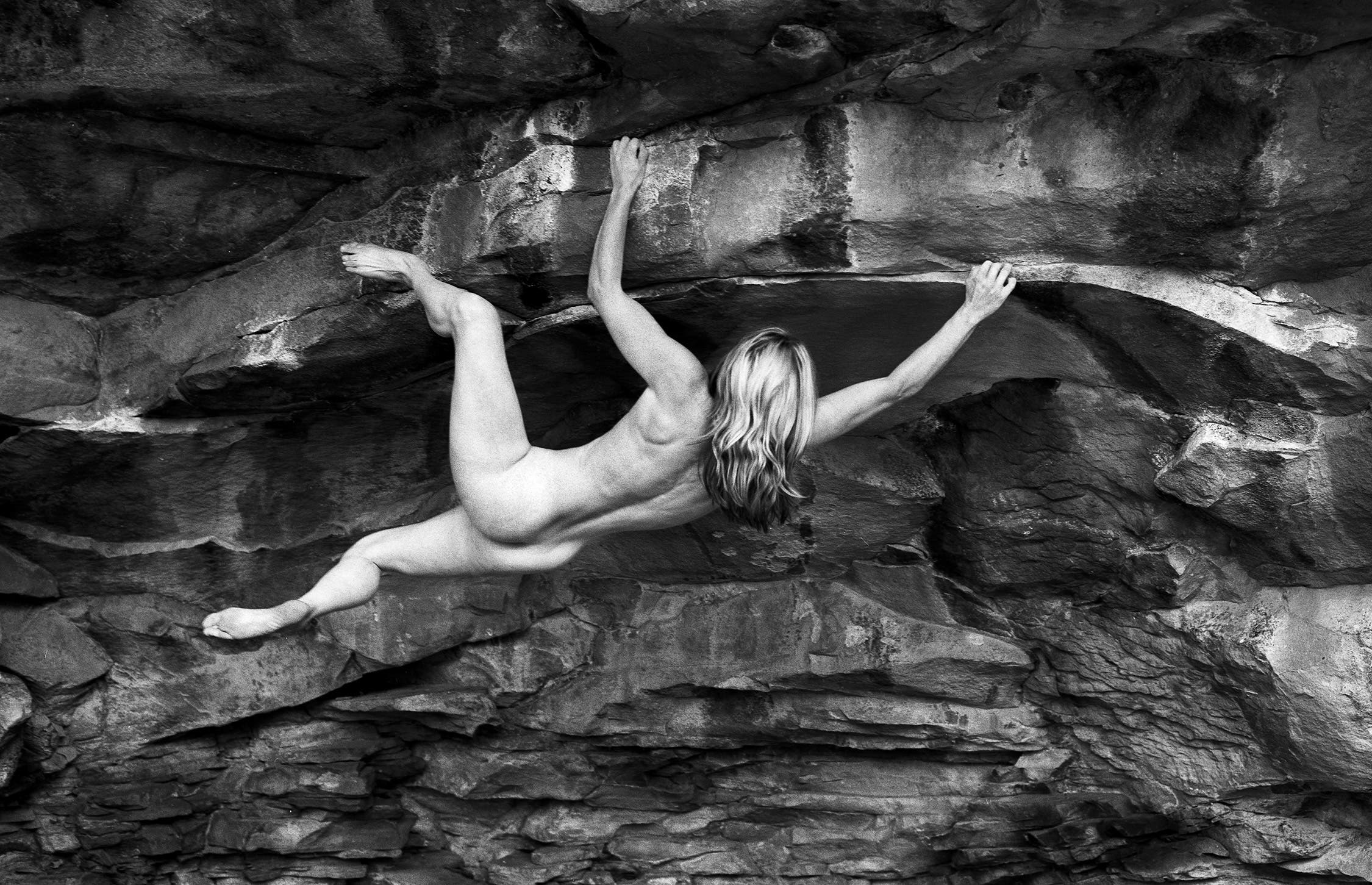 Pueblo, CO, 2003. “I had always wanted to make a photograph of The Ripper (B1+). Sandstone is a beautiful canvas for incredible movement. It was a journey just finding out the location, but the reward was everything.” (Editor’s note: This problem is graded B1+ on John Gill’s obsolete grading scale, which seems to convert to V0.) (Photo: Dean Fidelman)
Silver: Where do you want to shoot most right now?
Fidelman: There are a couple of photographs I want to make in Patagonia. It’s just a boulder in the middle of nowhere—and there was so much nowhere. There’s also a cool volcanic place in Venezuela. But next, I’m heading to Spain to work on deep-water soloing nudes in Mallorca.
Silver: When was the last time you developed in a darkroom?
Fidelman: Probably 2018, right when I stopped with the Stone Nudes calendar and Renan [Ozturk] gave me that camera. That’s probably the last time I went into a darkroom, unless the darkroom had a scanner in it and I was scanning my negatives. With a lot of my original black and white photography, I would process the film myself. I used to find these traditional photo labs up and down the coast.
After the last lab closed, I used Ansel Adams’s darkroom in Yosemite. They would let me use the darkroom from 10 at night until midnight. What was left of it was just a long sink and a heavy dark curtain. I’d be rattling cans at midnight and I look over and there’s a portrait of Ansel looking at me like, “What are you doing in my darkroom?”
Silver: What are some unexpected or funny stories from shooting Stone Nudes over the years?
Fidelman: Once I was shooting in the middle of the Merced River by the 120/140 junction. A friend was on top of the boulder posing while I was waist-deep in the river. Suddenly, a big tour bus pulled over and a bus-load of tourists piled out, pushing each other trying to take photos with their phones.
One time I was making photographs in Eldorado Canyon on that boulder right in the middle of the river with my friend Anora, a hippie. I went back to Yosemite and processed the film in Ansel Adams’s darkroom. I’m hanging out at the lodge and this person comes up to me—obviously a climber, but very clean-cut. He goes, “Excuse me, are you Dean Fidelman?” And I go, “Yeah.”
He sticks his hand out, with this big smile on his face and goes, “I want to shake your hand. You were in Eldorado Canyon about a month ago and you were making some photos. We were on the Bastille and oh my God, she is so beautiful. That was the most amazing day. My partner went home and bought a calendar even though he knew she wasn’t going to be in that one. But is she going to be in the next one?”
Then I made a Stone Nude of my friend Brian Ludovici, who’s a wonderful human and a super cool boulderer. He asked if I would make a photograph of him on Midnight Lightning (V8) with his clothes on. So I show up there and he’s just got this pair of short shorts on, right? This is his favorite boulder problem. He loves it. He worships it. And he goes up it and down it. I say, “Hey, man. You think you could do it nude?” Maybe four or five of his friends are there, all egging him on. He gets to where he’s pressing out the mantle, but he couldn’t do it. He put his shorts back on.
Then there’s this guy running full blast toward me from 100 yards away. He looks really closely at Brian. Then he stops and goes, “Dude, this was the most amazing day of my life. I looked from over there by the kiosk and there was a beautiful nude woman doing Midnight Lightning, so I started running to get a closer look. But it’s a dude.”
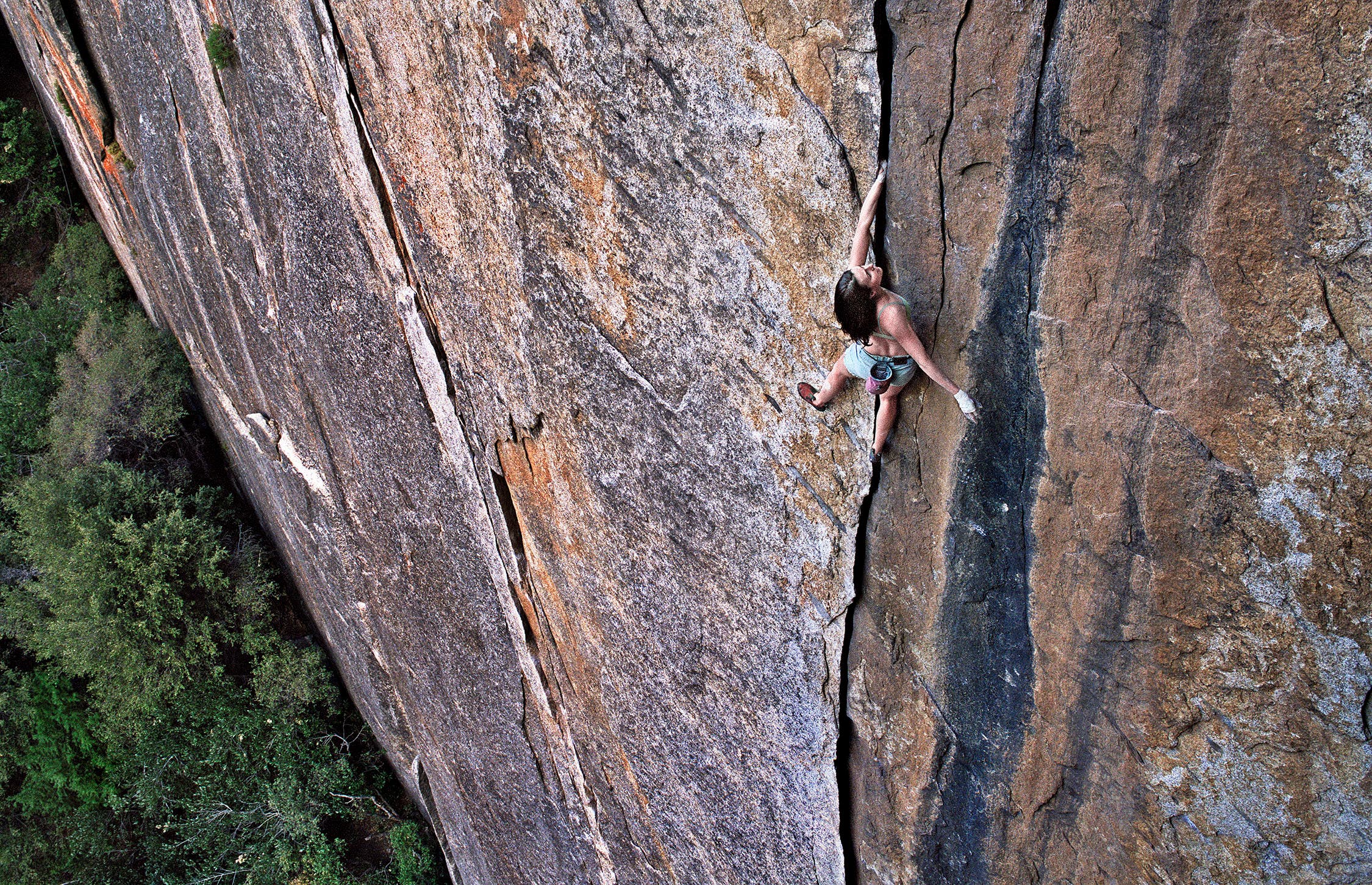 Yosemite, CA, 2004. “The superb Steph Davis free soloing Outer Limits (5.10c). Steph is an amazing climber of the Stone Monkey generation, who dances in the vertical.” (Photo: Dean Fidelman)
Silver: Have any of your Stone Nudes subjects taken a fall during a shoot?
Fidelman: One fall. My friend Joey was like, “Let’s make a photograph.” I first met her when she was 16. She goes, “I want to make a photograph.” I go, “No, no.” Same with [Chris] Sharma. I go, “No, you have to wait until you’re 18.”
A couple years later, she’s in Joshua Tree and wants to climb the White Rastafarian (V2). First, I tell her she has to do it with her clothes and shoes on, so I can see that she can do it. She does it perfectly. But she can’t do it barefoot. So, she took her clothes off and we had a bunch of pads down, hidden by the bushes. Three of her friends were spotting.
She gets up to the crux and starts to bring her hand up and she blows. Her friends didn’t even touch her. She hit the pads, but sprained her ankle fairly badly. I felt really horrible, but I did put it in [a calendar]. I always make certain that [climbers] can do it at least with their clothes on first. Now I always tell the spotters, “If you’ve got to get in the photo, don’t even worry about it. Put your hands on them, even though they’re naked!” Unless somebody wants to solo something, but it’s not going to be outside the limits—ever.
Silver: What book projects are you currently working on?
Fidelman: I’m working on two books. One is a history of the Nose with John Long, Hans Florine, Ed Hartouni, and Sarah Conley. The other is a book on the Stone Monkeys with James Lucas. We’re getting the manuscripts and photo selections organized, with plans to publish over the next couple of years.
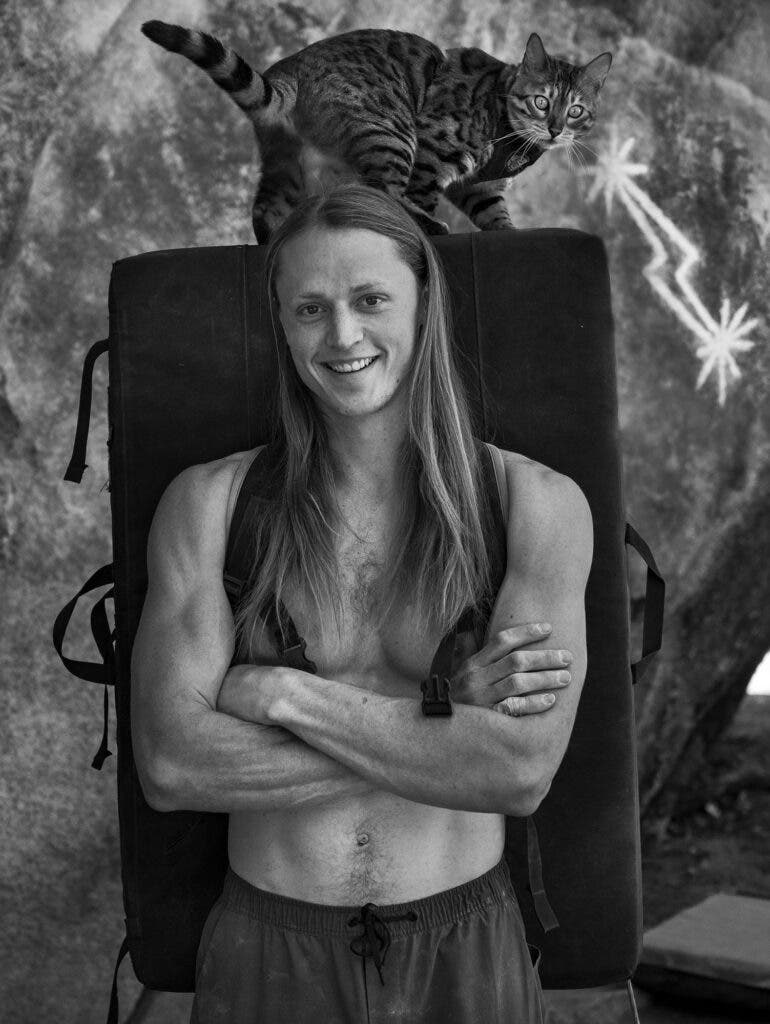 Yosemite, CA, 2025. “I made this portrait of my friend Brian Ludovich and his companion Miss Kitty beside Midnight Lightning (V8). I continue to gather photographs that document Camp 4 and the denizens that call it home.” (Photo: Dean Fidelman)
Silver: You’ve mentored many photographers in Yosemite. Do you see any young photographers taking the torch to document the Valley’s climbing culture?
Fidelman: I’ve been working on archiving all the stuff from the ‘60s and Glen [Denny] was a huge influence on me, as well as Tom Frost and and a few others.
I understood two things very early on. One is if you’ve tied into a rope with people who have climbed with people like John Salathé and Royal Robbins, you’ve tied into a rope with all those other people, too. I tied into a rope with [Jim] Bridwell and lots of people that probably go back all the way to Salathé.
When John Long and I made the Stonemaster book, it was a fulfillment of my dream to make a book, but also of the understanding that if we allow those stories to die, we have no magic. All our beliefs are based on those stories and those legends.
I’m hoping maybe someone shows up, and I don’t care who they are. If I can see that passion and they’re really looking to provide that rope that we can all tie into, then my work would move forward.