
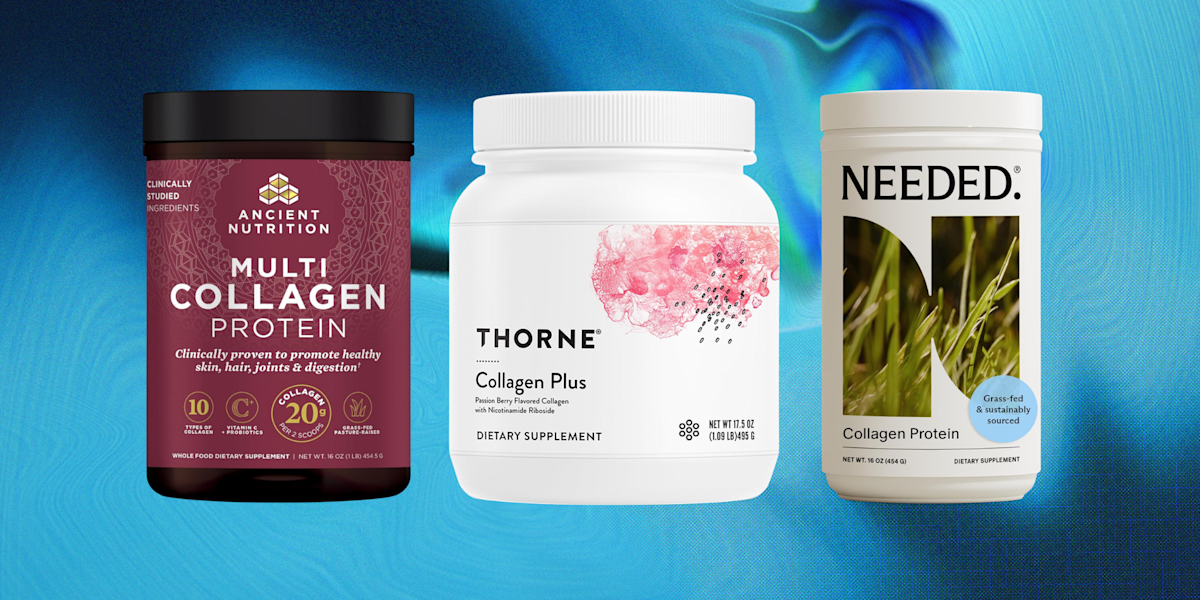
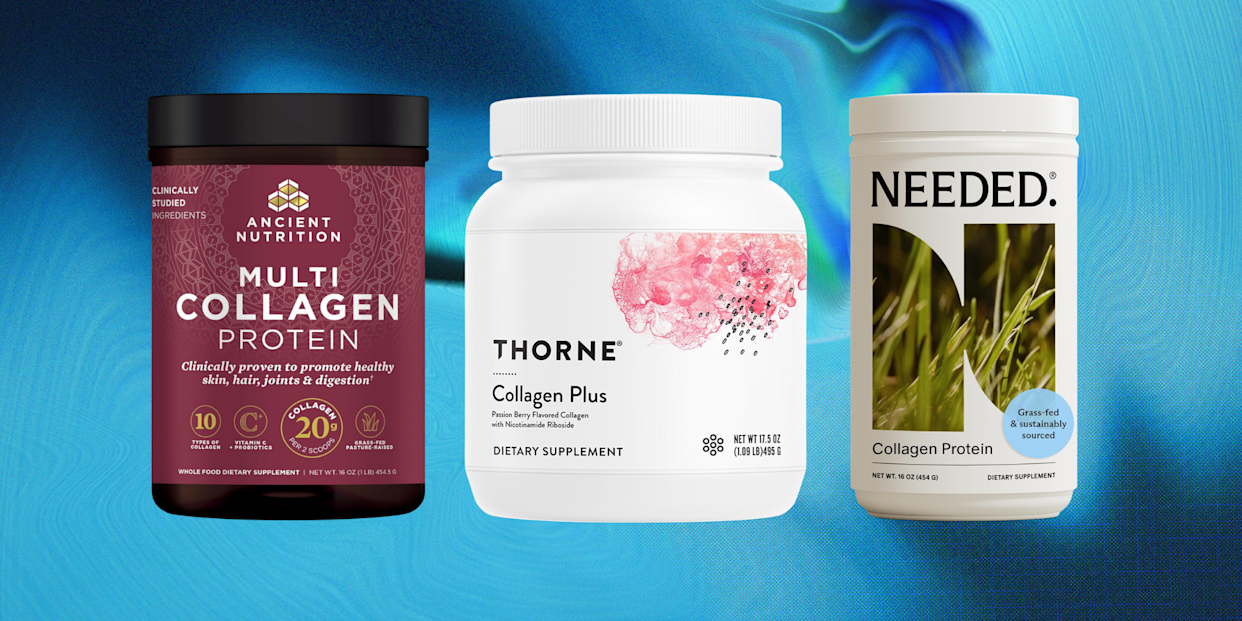
9 Dietitian-Approved Collagen SupplementsProduct Image Shots
“Hearst Magazines and AOL may earn commission or revenue on some items through these links.”
Maybe you’ve seen influencers adding collagen to smoothies or noticed more collagen supplements on store shelves. It’s trending for a reason: Collagen is the body’s most abundant protein and is a potential player in maintaining radiant skin, strong nails, and healthy hair. Often marketed as a beauty booster, it’s gained major attention—but does it live up to the hype? To find out, the Good Housekeeping Institute Nutrition & Fitness Lab‘s registered dietitians reviewed the research and evaluated over 30 collagen supplements to identify the best options.
Our top picks:
“Collagen is the most abundant protein in the body and it’s found particularly in the skin, bones, tendons and connective tissues. It provides structure and strength to these tissues,” explained Dawn Jackson Blatner, RDN, and author of The Flexitarian Diet. You’ll naturally find collagen in animal flesh, specifically meat and fish that contain connective tissues, but many foods provide the materials that our bodies need to produce collagen.
“Collagen supplements provide the body with additional collagen peptides, which are broken down into amino acids during digestion. These amino acids can then be utilized by the body to support collagen production in our various tissues,” Blanter explains.
Collagen is often praised for its potential to enhance skin elasticity, hydration, and glow, making it a beauty routine staple. Many users report benefits like smoother skin and stronger nails, though more large-scale studies are needed to confirm these benefits.
You can learn more about how the Good Housekeeping Institute Nutrition Lab evaluates supplements, including tips for finding the best collagen supplement for you, at the end of this guide. If you’re interested in other supplements that provide protein, check out our top-tested protein powders.
Our registered dietitians in the Good Housekeeping Institute Nutrition Lab review and evaluate every single supplement we recommend in accordance with our dietary supplement methodology. We then have a registered dietitian on our Medical Review Board review each article for scientific accuracy. A supplement should do just that: supplement the diet, not replace high-quality, nutritious food and important healthy lifestyle practices. Check with your healthcare provider before starting any dietary supplement regimen.
How we evaluate the best collagen supplements
Our registered dietitians in the Good Housekeeping Institute Nutrition Lab reviewed more than 30 collagen supplements, evaluating ingredient lists, collagen type and source, serving size, added ingredients, and overall quality, including third-party testing certifications.
Since the U.S. Food and Drug Administration (FDA) does not approve dietary supplements for safety and effectiveness before going to market, it’s incredibly important to thoroughly research each supplement you add to your regimen and speak with your doctor before purchasing.
We prioritized recommendations that have been tested for purity, potency, and safety by a credible third-party organization, as well as products with strict internal quality control standards. We reviewed marketing claims, ingredient lists, and product quality.

Hearst Owned
We focused on highly-rated collagen supplements from reputable companies with strict quality control standards. When evaluating the products, we considered factors like collagen type, source, serving size, additional ingredients, and form. In addition, we conducted hands-on testing of select collagen powders, mixing them into hot and cold liquids and incorporating them into foods like baked goods to assess solubility, taste, and texture.
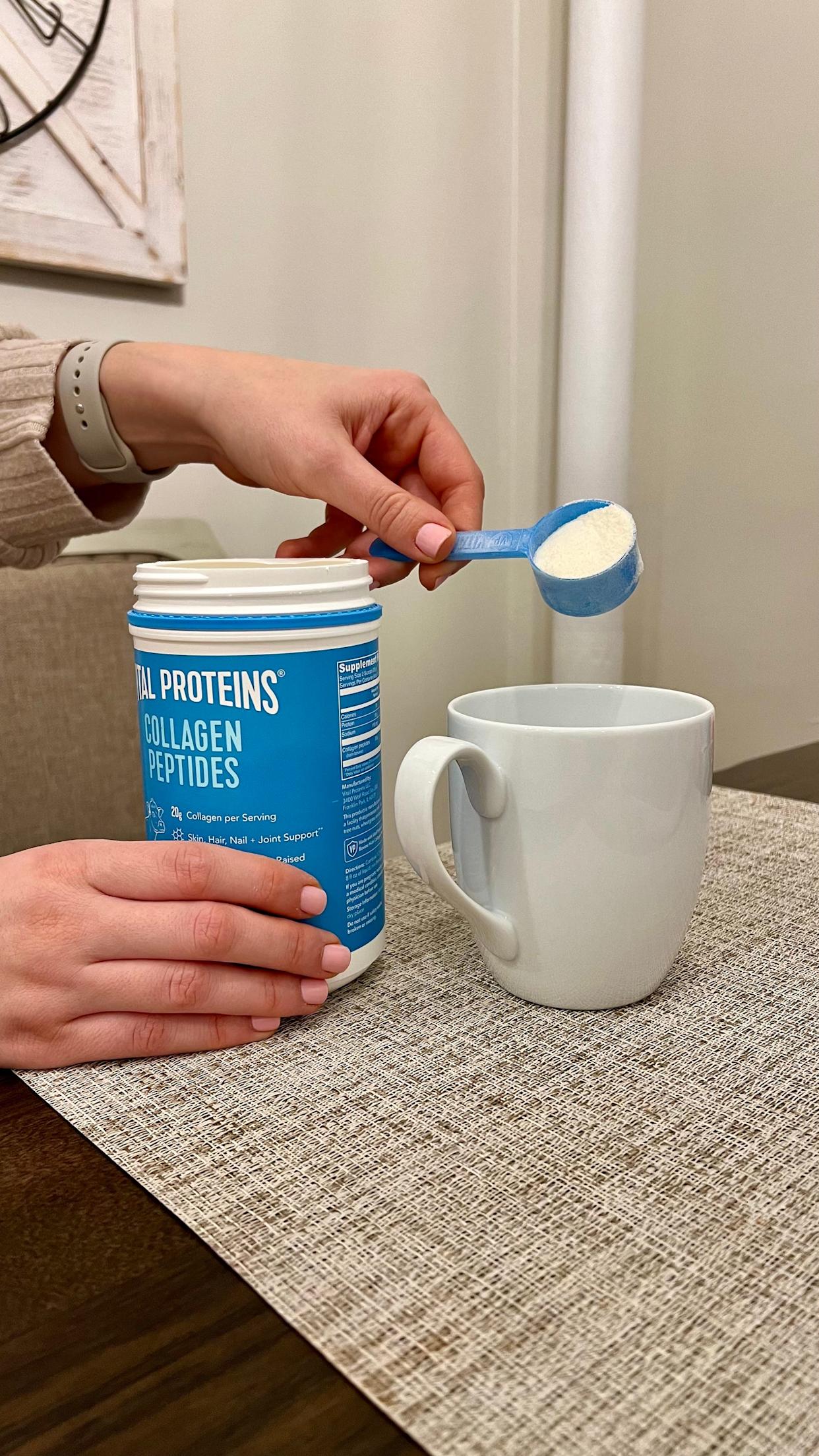
Good Housekeeping / Stefani Sassos
What to look for when shopping for collagen supplements
In general, we found that most powdered collagen dissolves more easily in liquids than standard protein powders. But there are a few considerations to keep in mind when choosing the option that best suits your needs.
✔️ Form: Most collagen comes in powdered form that can be easily incorporated into food and liquids, but some brands offer capsules, gummies, or even liquid options. Blatner adds to look for ones in an easily digestible form, labeled hydrolyzed collagen or collagen peptides. “These forms have a small particle size, so it may be easier for the body to digest and absorb,” Blatner said.
✔️ Source: Most collagen comes from bovine sources. But if you don’t eat meat or meat-derived products, then you may consider a collagen derived from marine sources. There are also plant-based collagen products on the market, but those don’t actually contain collagen.
✔️ Type: “Technically, there are nearly 30 different types of collagen,” Blatner said. “The most common are type I, II, and III.” Each type serves a different purpose, which we detail later.
✔️ Price: Keep the price in mind and consider price per serving as well as serving size. You may also want to check the amount of collagen per serving, since it can vary greatly by brand.
✔️ Quality: Check the ingredients to ensure there are no artificial additives in the supplement itself. Look for brands like those in this article that are third-party tested for purity, potency, and safety by credible institutions, such as USP or NSF, to ensure quality standards and that what is on the product label is, in fact, what you’ll be consuming. Blatner also said to prioritize brands that provide full ingredient transparency and don’t use “proprietary blends.” Sustainable sourcing is also important.
Hearst Owned
What is collagen?
“Collagen is a fibrous protein that acts as a major component of the extracellular matrix, which provides structure to cells and tissues in your body,” explained Jaime Schehr, ND, RD, CDN, a nationally recognized expert in integrative medicine and nutrition. “The body naturally produces collagen, but its production can decline with age. Factors such as UV exposure, smoking, and a poor diet can also affect collagen synthesis.”
Dr. Schehr also notes that collagen plays a crucial role in maintaining skin elasticity and hydration, contributes to the strength and structure of the skin, and even provides the structural framework for cartilage, which supports joint flexibility and cushioning. “Collagen supplements are often derived from animal sources like bovine or marine collagen. I would recommend third-party testing, organic, or grass-fed when possible,” Dr. Schehr said.
Hearst Owned
What are the different types of collagen?
Collagen supplements can be sourced from animal connective tissues, often derived from bones and skin of animals like cows, pigs, chickens, and fish, according to Blatner. She explained the most common types, I, II, and III, below:
Type I is the most prevalent, accounting for about 90% of the collagen in our bodies. It is often taken to support skin, tendons, ligaments, bones, and teeth.
Type II is often taken to support joint and cartilage health.
Type III works alongside type I and is particularly abundant in muscles and blood vessels. Many collagen products on the market blend collagen types for holistic benefits.
You may notice several vegan or plant-based collagen supplements on the market, but Blatner said that plant-based collagen does not actually contain any collagen. “These supplements contain amino acids, vitamin C, and other nutrients needed to support the body in making collagen.”
Hearst Owned
What are the benefits of taking collagen?
“Collagen is not just hype,” Blatner said, citing research that suggests the potential benefits of collagen may include the following:
Skin: Hydration, elasticity, decreased appearance of wrinkles
Joints: Decreased pain/discomfort, increased mobility/joint function
Bones: Increased bone mineralization/strengthening
Other potential benefits include hair and nail growth/strength, wound healing, dental/gum health, and digestive support, including GERD and bloating, according to Blatner.
Hearst Owned
Are there any downsides of taking collagen?
“Collagen peptides are not a complete protein, and therefore they cannot be considered or counted towards your protein goals/intake,” Dr. Schehr said.
Blatner added that there are no reported drug interactions or contraindications with collagen, which is good news. “Some collagen comes from marine sources, so people with seafood allergies should avoid that. Collagen comes from animal sources, so it’s not suitable for vegans or vegetarians. As with any supplement, talk to your healthcare provider before taking anything new,” Blatner said.
Hearst Owned
Is it okay to take collagen every day?
Both Schehr and Blatner said yes. “A common dose range is around 2.5 to 15 grams per day,” Blatner adds. “Research suggests that you can see benefits at that dose range. Skin benefits may take about four weeks to notice, but likely will take closer to 12 weeks to get the full effect.” But since collagen is not a complete protein and does not contain all essential amino acids, Blatner said to consider it a skin/joint booster supplement rather than a complete muscle-building protein source.
Hearst Owned
Are there any populations who should avoid taking collagen?
“Collagen is likely a safe supplement for most healthy people, and there are no reported drug interactions,” Blatner said, but noted that research in children and pregnant/breastfeeding individuals is minimal. “People who have a history of kidney stones may want to discuss collagen with their doctor first since preliminary research suggests collagen may slightly increase oxalate levels, which may contribute to kidney stone formation for certain high-risk people.” Additionally, Blatner said that vegans and vegetarians should avoid collagen since it is animal-based, and those allergic to seafood should avoid marine-sourced collagen.
Hearst Owned
Why trust Good Housekeeping?
Stefani Sassos, M.S., R.D.N., C.D.N., NASM-CPT, is the director of the Good Housekeeping Institute Nutrition & Fitness Lab, where she leads testing and evaluation of nutrition products, supplements, and fitness equipment. A registered dietitian and personal trainer, she oversees large-scale product reviews, including protein bars and supplements, and reports on the latest research in nutrition and wellness.
Lauren Manaker, MS, R.D.N., L.D., CLEC., CPT, is an award-winning registered dietitian, author, and freelance writer with more than 20 years of experience specializing in women’s health, fertility, and nutrition. She has a strong background in translating complex nutrition science into practical, evidence-based guidance for readers. A trusted media expert, she regularly contributes to national publications.
Dawn Jackson Blatner is a Registered Dietitian Nutritionist and Certified Specialist in Sports Dietetics. She was the winning health coach on a reality TV show, head dietitian for a pro-baseball team for 10 years, and has authored two books, The Flexitarian Diet and Superfood Swap. She is an expert in Positive Nutrition Therapy, helping clients achieve optimal health. Follow her on social @djblatner.
Jaime Schehr, N.D., R.D,. C.D.N., is a licensed Naturopathic physician and a Registered Dietitian practicing since 2006. Dr. Schehr is the owner of Schehr Nutrition and a co-founder of xFitLab, a medical fitness consulting company. Dr. Schehr is the assistant director of academic integrative family medicine at the Institute for Family Health of Mt. Sinai. She is a prominent speaker in Integrative Medicine and Nutrition and is often sought to lecture in both the corporate and academic spaces.
Hearst Owned
You Might Also Like