
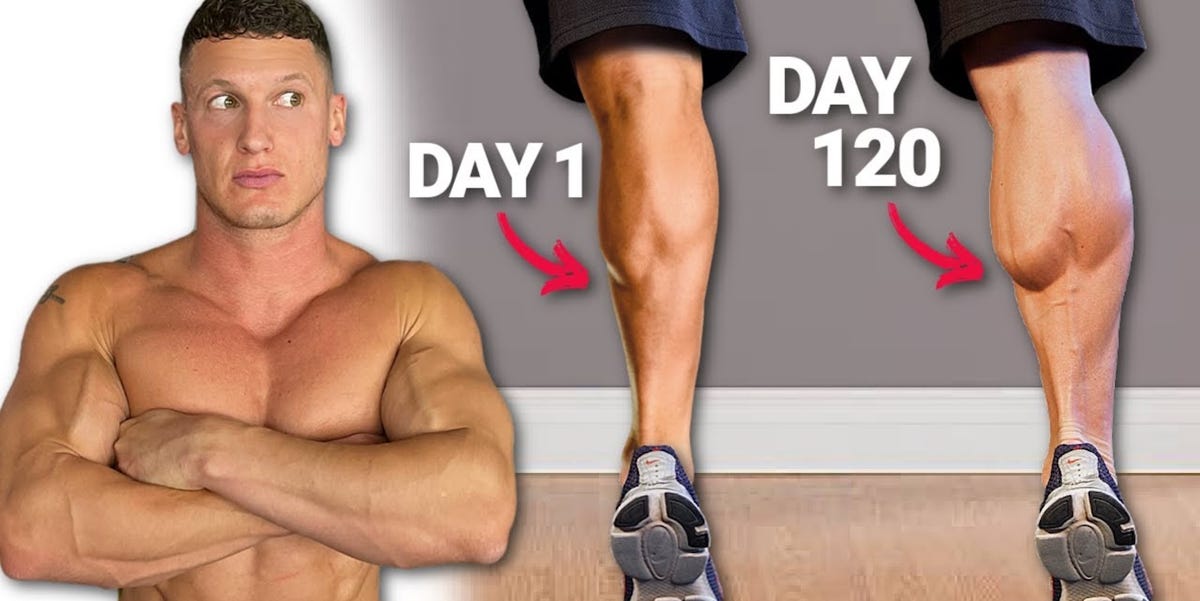
Calves are notoriously difficult to grow. For some lifters, it doesn’t matter how many calf raises they add into their leg day workouts – there’s just no reward for their effort. Many blame genetics, while a high density of slow-twitch muscle fibres can limit someone’s ability to stimulate growth.
But what happens if you increase your total volume and train calves every day? Matt Morsia from the MattDoesFitness YouTube channel did exactly that, spending 120 consecutive days building up his gastrocnemius.
Morsia’s mission started when he ruptured his Achilles tendon. He required extensive rehab to regain strength, spending a lot of time doing specific banded work just to keep the tendon active during the initial stages of recovery. But as he kept weight off his injured leg, his calf drastically atrophied. So, when he was able to step back into trainers six weeks into his recovery, Morsia made a conscious decision to rebuild the muscle – which involved four months of focused training.
‘My mission was clear: I wanted to build the biggest, strongest calves the world had ever seen, and ensure that the injury never happened again,’ he says. Morsia added both seated and standing calf raises into his daily routine, with isometric holds also featuring as he gradually built back to full fitness.
The Impact of Training Calves for 120 Days
He started off without using weights, before gradually adding resistance to progressively overload the muscle while protecting the ruptured tendon as much as possible. The YouTuber used a leg extension machine for his seated calf raises, and soon progressed to single-leg calf raises to provide an even greater challenge.
Morsia didn’t train for pure hypertrophy, though. Instead, his goal of returning to full fitness meant building calves strong enough to cope with physical demands, and ensuring a similar injury wouldn’t impact him in the future.
The result? Four months after surgery on his Achilles tendon, Morsia could complete a calf raise with his heel 14cm off the floor on both sides. Without such dedicated training, it’s unlikely he would have reached the same height.
‘Bear in mind I haven’t been training specifically to build mass. It’s more like rehab-style stuff – the first almost two months of that process were very much banded, light work, so that was more about damage limitation, trying to hang on to the muscle I had rather than build new tissue. It’s only really the last six weeks where I’ve been able to train calves to an extent that I can actually build them up.’
In that timeframe, Morsia still managed to grow significant muscle in his calves, helping to recover much of what he had lost due to inactivity. A side-by-side view of his calf before and after the 120 days highlights the clear progress he made. And while daily training might not be necessary, Morsia’s video proves that increasing regularity could have a significant impact on developing lagging muscle groups.
Related StoryThe Exercises That Built Morsia’s CalvesIsometric Hold Complex
‘The first one is going to be a series of isometric holds. Basically, that means getting into full plantar flexion, holding it there for five seconds, and then rotating. As well as rotating left to right, we’re going to change foot positions, which targets different portions of the calf. The reason for doing the isometric hold is to build stability.’
Seated Calf Raise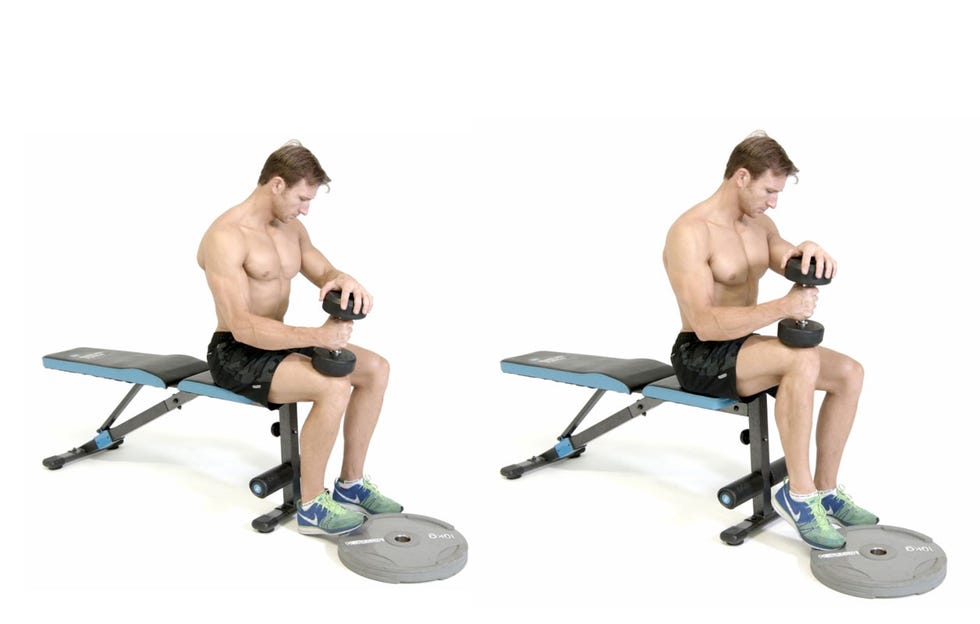
‘The reason for doing a seated calf raise is that there’s much more focus on your soleus, which is the muscle underneath your gastrocnemius. It’s one of, if not the, biggest torque producers in the body, so it’s really important. My physio is very hot on working on that because when it comes to sprinting and jumping, it plays a big role.’
Deficit Standing Calf Raise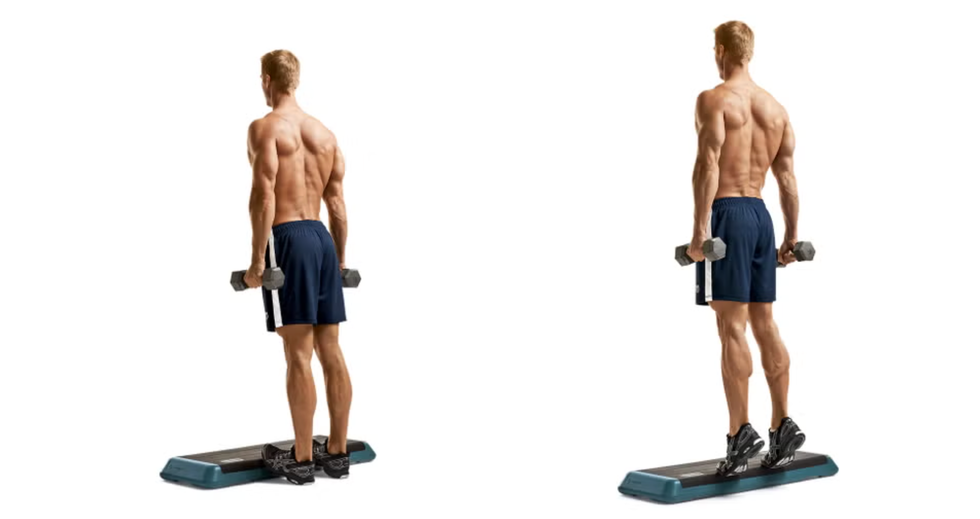
‘For the standing weighted calf raise, I’m adding a plate under my toes. It extends the range slightly and increases the length of the eccentric contraction on the way down, which is very important for strength and joint stability.’
Related Stories