
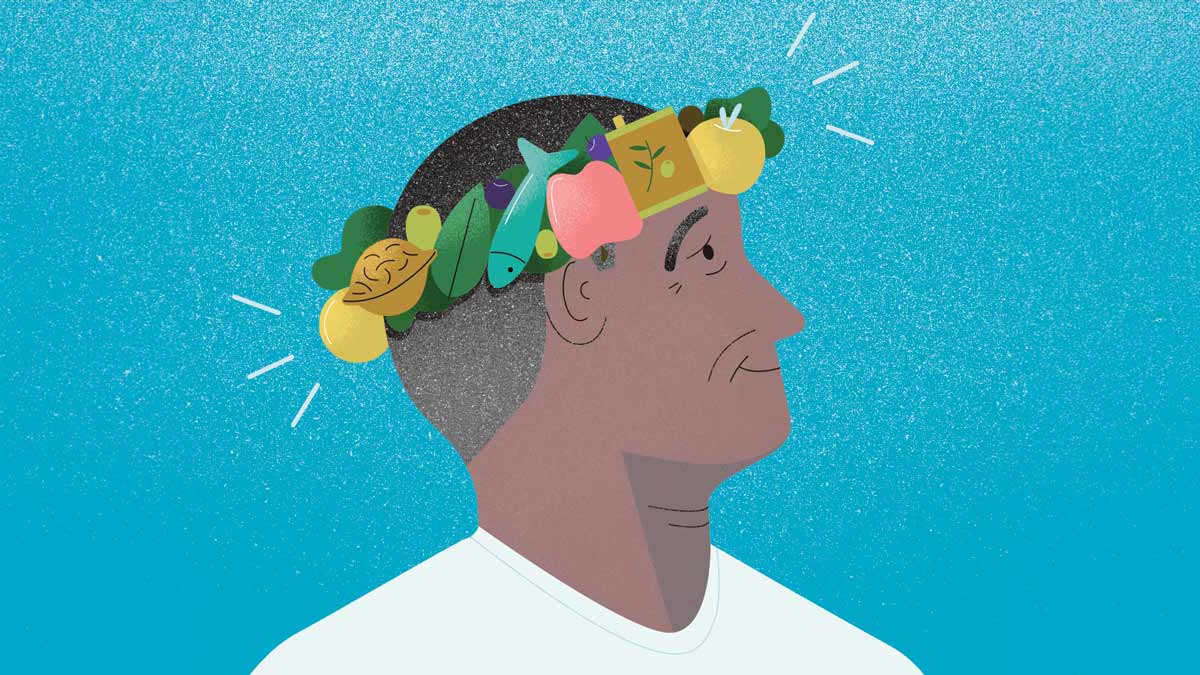
No single superfood or nutrient is guaranteed to enhance brain function, but you’ll want to include certain foods in your diet frequently. They include:
• Fatty fish. Older adults who eat fish at least six times a month do better on cognitive tests than those who consume it less than twice a month, according to a 2024 study published in the American Journal of Clinical Nutrition. “Most fish, especially fatty fish like salmon or sardines, is rich in omega-3 fatty acids,” Small says. “These help keep brain cell membranes soft and flexible, which boosts blood flow to your brain and reduces your risk of stroke, which is another cause of cognitive decline in older adults.” The American Heart Association recommends eating two 3-ounce servings of fish a week. Canned fish counts, too.
• Berries. Blueberries, strawberries, and raspberries are learning and memory powerhouses, according to Small. “Their blue, purple, and red skins contain plant compounds called anthocyanins, which support brain health by reducing inflammation,” he says. The MIND diet recommends eating at least 2 cups of berries a week, but if you can, have a half-cup or more daily. Frozen berries are fine. “Research suggests that freezing them actually increases their anthocyanin content,” he says.
• Leafy greens. In a 2023 study in the journal Neurology, older adults who ate at least seven servings of greens a week had less beta-amyloid buildup in their brains—a marker for Alzheimer’s—than those who had less than two servings. “They are rich in nutrients, such as lutein, folate, vitamin E, and beta-carotene, that are associated with cognitive health,” says Puja Agarwal, PhD, an assistant professor of internal medicine at the Rush Alzheimer’s Disease Center in Chicago. The easiest way to include leafy greens in your diet is to have a salad with at least a cup of greens, such as kale, arugula, or spinach, Agarwal says. But don’t stop there: Throw in a mix of other colorful veggies, too, like red or yellow peppers, tomatoes, carrots, and purple cabbage. Different colors supply different antioxidants and nutrients.
• Beans. People who replaced a daily serving of processed red meat with nuts or legumes like beans had about a 20 percent lower risk of dementia and the rate of cognitive aging, according to a 2025 study published in Neurology. Beans are particularly rich in soluble fiber, which we think may be protective against brain inflammation,” Agarwal says. She’s currently studying whether a diet high in soluble fiber—found in foods like beans, oats, peas, apples, brussels sprouts, and avocados—helps to reduce dementia risk over time. “The theory is that it causes good changes in your gut microbiome, which in turn help to ramp down inflammation in your brain,” she says. Aim for 2 to 3 cups of beans a week. Rinse canned beans before you eat them to reduce sodium.
• Coffee or tea. People who drank two to three 8-ounce cups of coffee or 1 to 2 cups of tea per day were about 20 percent less likely to develop dementia than those who had none, according to a 43-year study involving more than 130,000 people that was published in 2026 in JAMA. Decaf coffee didn’t have the same effect. But if caffeine makes you jittery, you can skip those drinks.