
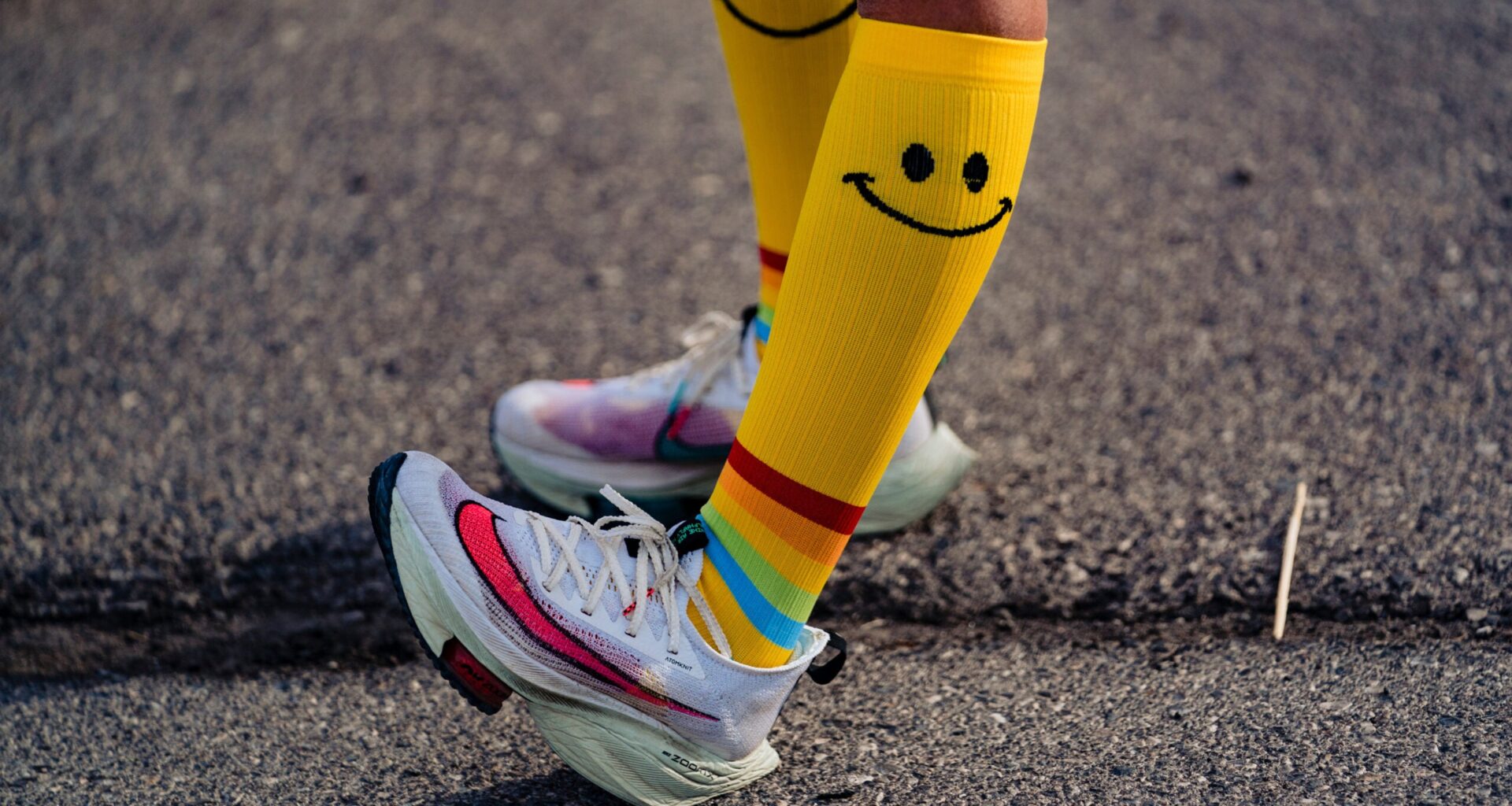
A physical therapist breaks down the research on compression socks to shed light on when runners should wear them (and when they’re overhyped).
Listen to this articleListen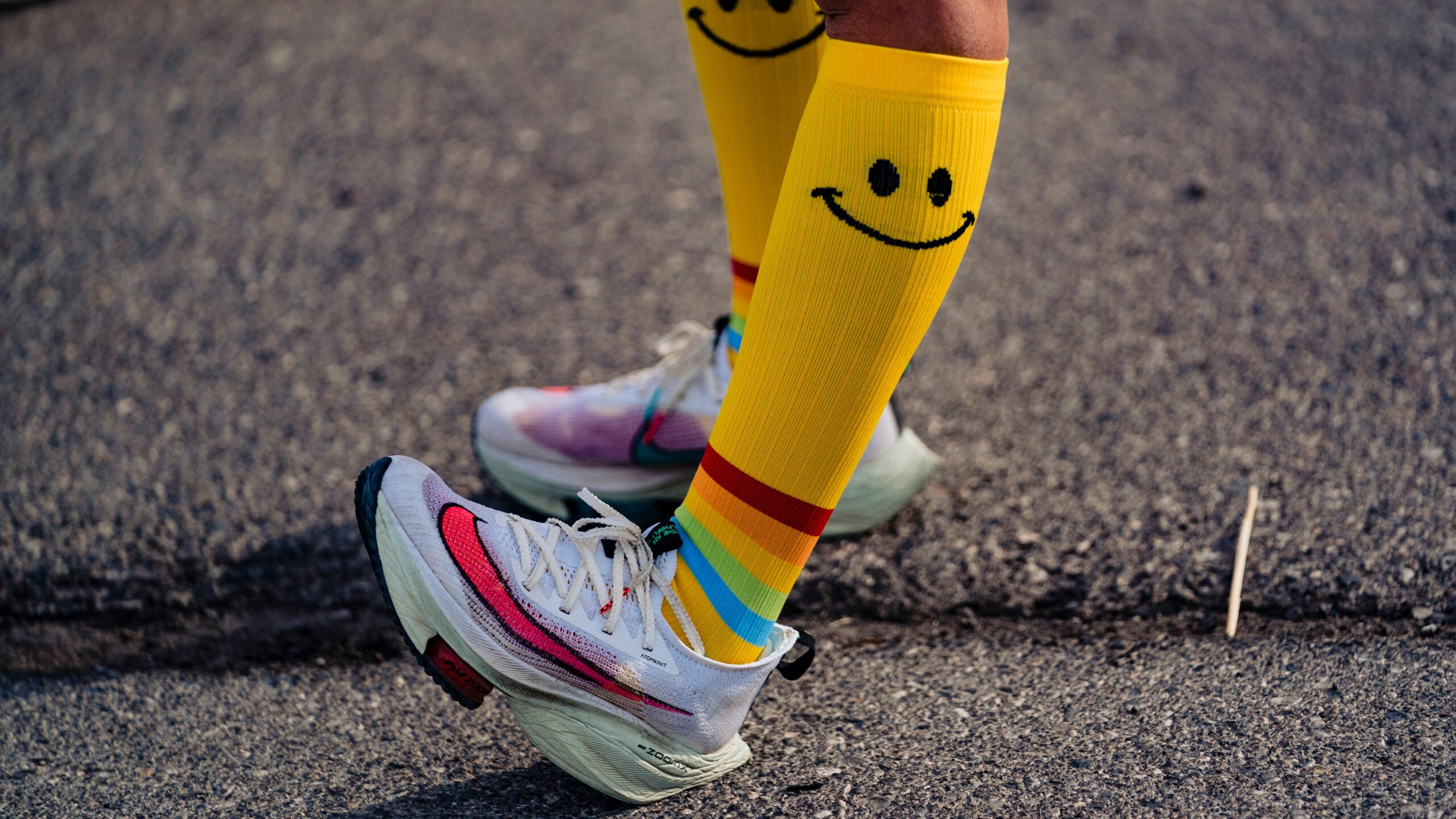
Are compression socks good for running? We asked a physical therapist who specializes in treating runners. Here’s what she has to say. (Photo: Getty Images)
Published June 9, 2026 09:00AM
When my patients ask if they should wear compression socks, I typically tell them, “If compression socks feel good to you, then wear them.”
There are many claims out there about the benefits of wearing compression socks—some of them are true, while others are lacking scientific evidence.
Compression socks are popular in the running community because they feel good. However, many of the studies around performance and compression socks are inconclusive.
Sometimes companies will market compression socks as improving performance, injury prevention, decreasing overall muscle vibration, improving muscle activation, or even building a better stride. Many of these claims are based on assumptions and correlations rather than solid proof.
While no one study should be used to prove a point, looking at reviews and meta-analysis papers can be helpful because they look at trends across multiple studies.
I want to break down the latest research, what we know is true, where the evidence is lacking, and acknowledge that even if the science is not there yet, compression socks might still be helpful because even perceived improvement is beneficial in training and recovery.
Compression Socks Might Help Performance
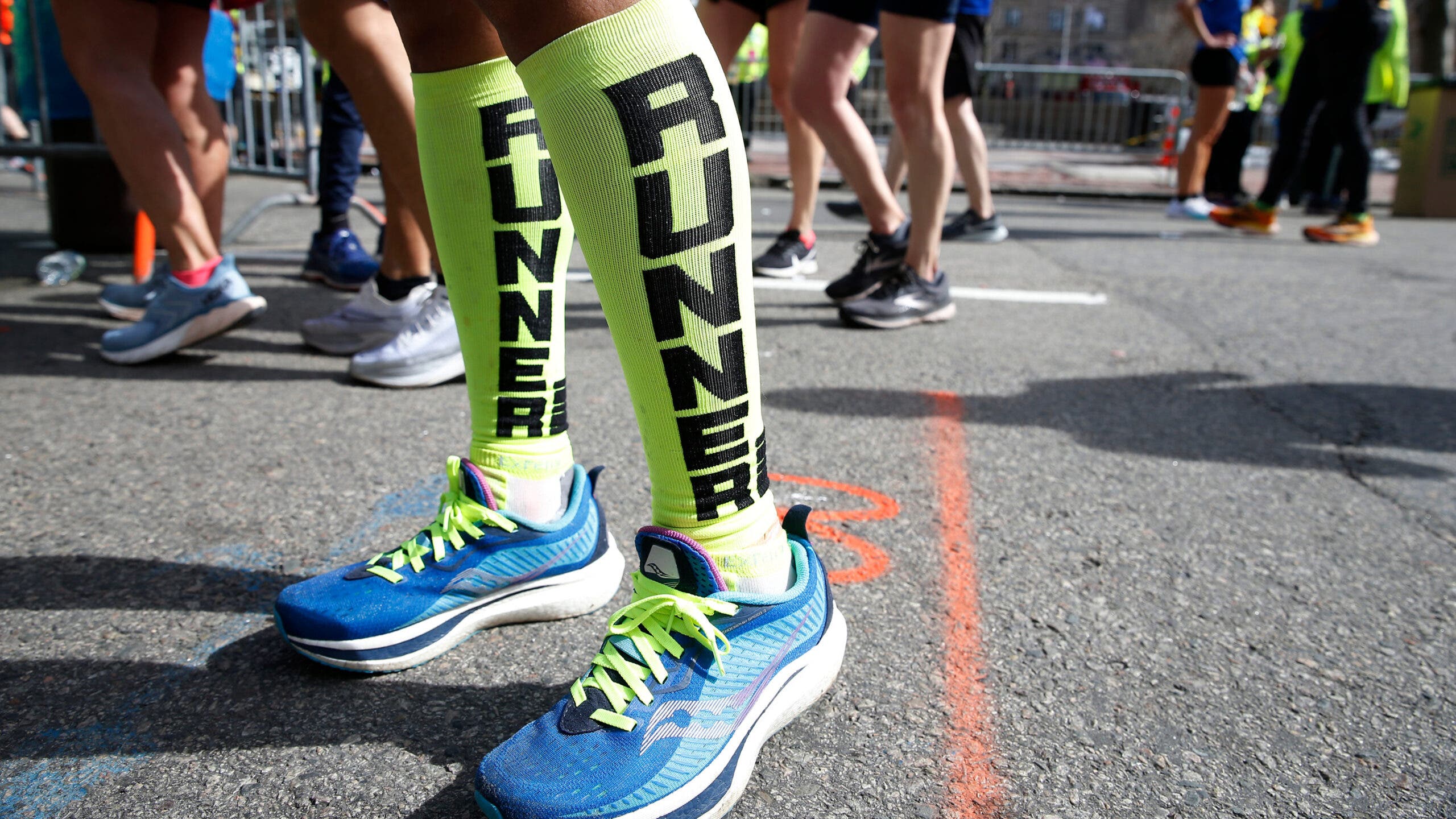 Despite lofty claims from manufacturers, research shoes that compression socks do not improve overall performance metrics such as race time and time to exhaustion. (Photo: Getty Images)
A 2025 systematic review and meta-analysis explored the question, “Do compression socks enhance running performance?” What they discovered was that despite the widespread use of compression socks in the running community, the gear does not improve overall performance metrics such as race time and time to exhaustion. However, there was some evidence that compression socks may decrease muscle vibration.
Every time your foot hits the ground during running, your body must absorb the ground reaction force (GRF). This force can be anywhere from 2.5 to 6 times your body weight. While you are absorbing this GRF, multiple soft tissue vibrations are generated throughout your body.
Medical grade compression socks (20-50 mmHg) have been shown to decrease these vibrations and decrease neuromuscular fatigue in the knee extensor muscles, such as the quadriceps, while running downhill.
Compression socks may help performance secondary to these decreased soft tissue vibrations, improved proprioceptive input, and running economy. However, there is much stronger evidence to support that plyometric training and strength training are better at improving running speed, decreasing injury risk, and improving overall running performance than throwing on a pair of compression socks.
Improving running stride and form is another common compression sock claim. A 2026 research paper looked at compression socks and gait mechanics. This study found there were no changes in step length, cadence, or flight time between runners who wore compression socks and those who did not.
So, despite claims that compression socks help with form, we are not quite seeing the research to support these claims yet, and I am definitely not seeing a difference when performing gait analysis in my clinic.
Compression Socks Are Great For Swelling
I often tell my runners to wear compression socks if they have an ankle sprain, have swelling in their foot/ankle from tendinopathy, or when they are traveling after a race.
Compression socks were initially created to help improve venous flow in patients post-surgery or with vascular issues.
Most compression socks on the market are also built to improve venous return, aka circulation. Because of the graduated compression built within the sock, there is more compression at the foot and ankle, and it decreases as the sock approaches the knee, improving venous return and moving the blood away from the feet and toward the heart, decreasing swelling in your feet and legs.
So if you are traveling, compression socks are a great idea.
Compression Socks Are an Easy Way to Help Recovery
A perceived improvement in muscle soreness and overall recovery when wearing compression socks is cited in many studies. This is where sport psychology is helpful. Perceived improvement can be the difference between a good race and a bad race. When you believe you are feeling better, you are more likely to achieve the goal in front of you.
In a 2026 research paper looking at recovery and the role of compression socks, researchers found that if you wear compression socks post-race, there is evidence to suggest a decrease in delayed onset muscle soreness (DOMS). This, paired with the improved venous flow, may make it easier to run longer distances or back-to-back days with fresher legs. However, how much you benefit will depend on how long you wear the socks, when you put them on, and the grade of compression you choose.
Physical therapy and running medicine is a dance between science and art. While my practice is evidence-informed, there are many things that I suggest and see clinically that the evidence may not have caught up to yet.
So my advice—strength train, do your plyometrics, sleep, and fuel your body. There is no shortcut to improving performance and decreasing your injury risk. If you are meeting your basic needs and taking care of your body, feel free to wear compression socks; they may make you feel better after your next long run.