
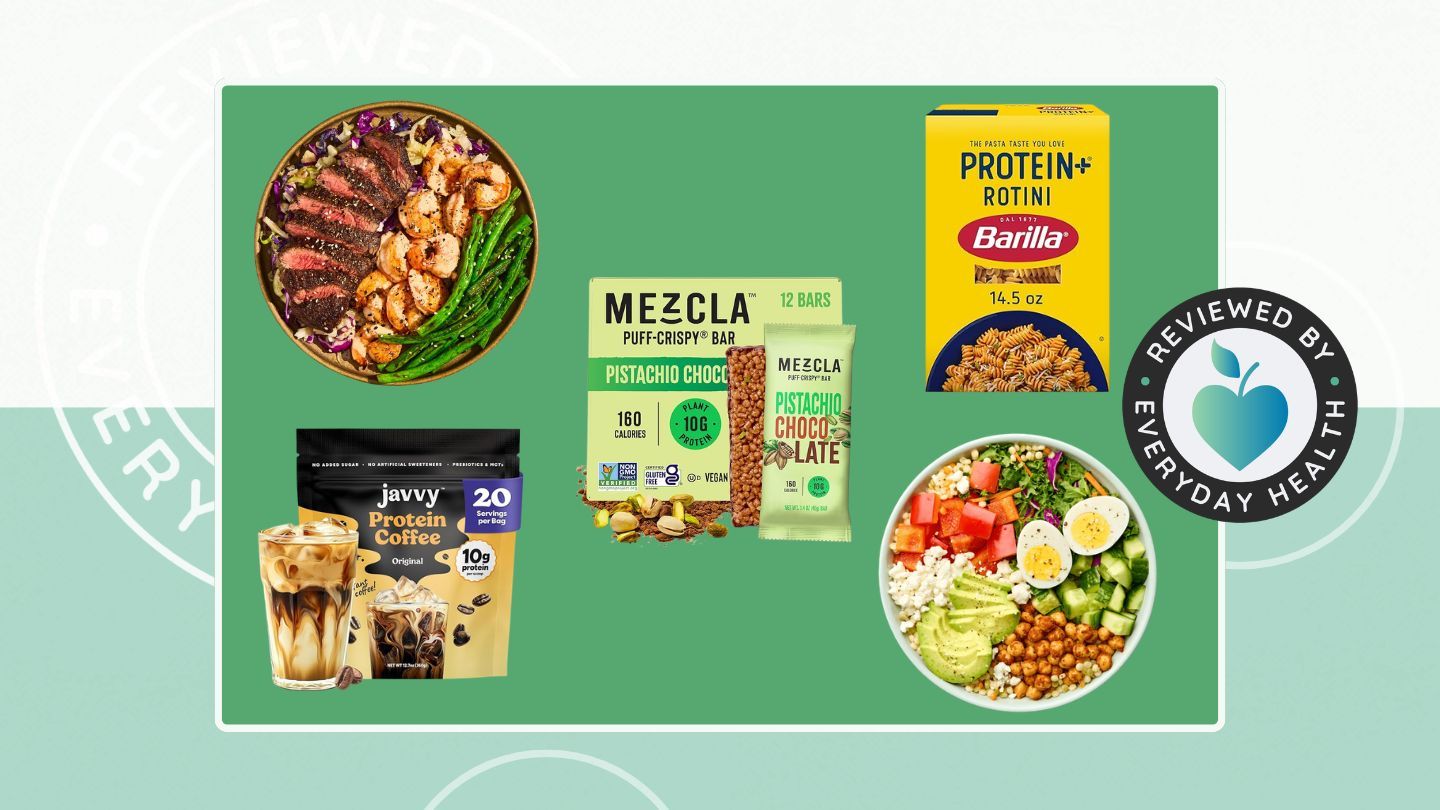
Protein has felt like the star of the show for decades, and while I could go on and on about my love for carbs and fat, I do think protein’s star status is somewhat well-earned (though it’s important to remember that every nutrient is a team player). Protein’s role in the body is incredibly broad and goes far beyond the needs of muscles. According to Caroline Young, RD, RYT, owner of Whole Self Nutrition, “Protein is necessary for almost every bodily process. Protein helps build and repair cell tissues throughout the body, supports immunity, makes up vital hormones and enzymes, and helps maintain blood sugar levels.”
Given how many different bodily processes that protein is part of, it makes sense that it needs to be a substantial dietary component, and not just any protein will do. Protein is made up of amino acids, some of which we can make ourselves (non-essential) and some that we need to eat (essential), and not every protein source has everything all in one place. Animal proteins contain all essential amino acids in one protein, while some plant-based options lack one or more of them. In addition to understanding what kinds of protein matter, we also think it’s helpful to know how much protein to shoot for.
While lots of numbers get thrown around as far as how much protein you should eat, it’s often a lower number than most people realize. It can vary with factors such as age, pregnancy or breastfeeding, surgical recovery or wound healing, and, of course, activity level, but the current Dietary Guidelines for Americans have set the range at about 1.2 to 1.6 grams (g) per kilogram (kg) of body weight per day.
[1]
This comes out to anywhere from 80 to 110 g of protein per day for a 150-pound person. Another way of thinking about this is to have 10-35% of your daily energy needs come from protein, or, to simplify it further, about a third of your plate.If this feels like a hard quantity to hit, it might be a relief to know that there is significant debate among experts over whether these new recommendations are really necessary for a generally healthy population, or if this is just about protein marketing.
[2]
What we do think is important, though, is that distribution of protein throughout the day is helpful for utilizing it, even if you’re aiming for a lower target. Consuming your protein throughout the day leads to better utilization, especially for muscle building, compared to eating it mostly in one meal.
[3]
Young says, “Keep it simple—try and include an adequate, designated protein source at each meal and your body will take care of the rest.”
If you’re daunted at the task of consuming this much protein at every meal, day in and day out, first take a breath and remember that you don’t need a perfect diet — and then have a look at our list of favorite products to help make it easier. We’ve rounded up staples for your fridge and pantry, protein supplements, and general favorites that our experts lean on for themselves. Each product on this list has been tested by our team of experts, ensuring it’s tasty, functional, and a great option for meeting your protein needs.