
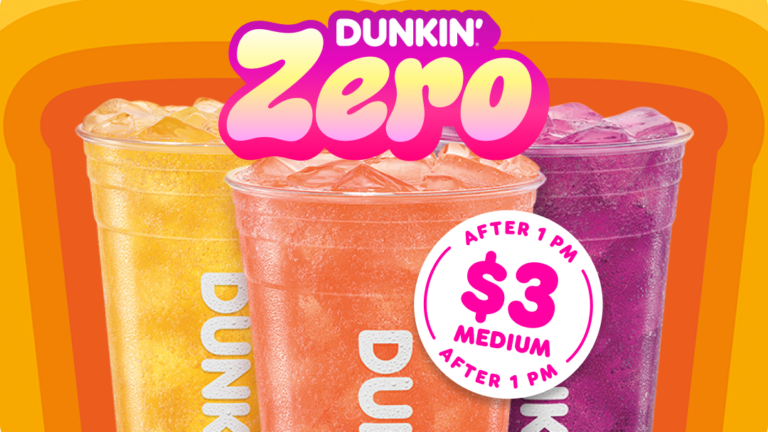
The woman claims she was tricked into thinking the drinks were sugar-free, when in fact they contain allulose, a natural sugar alternative with zero calories.
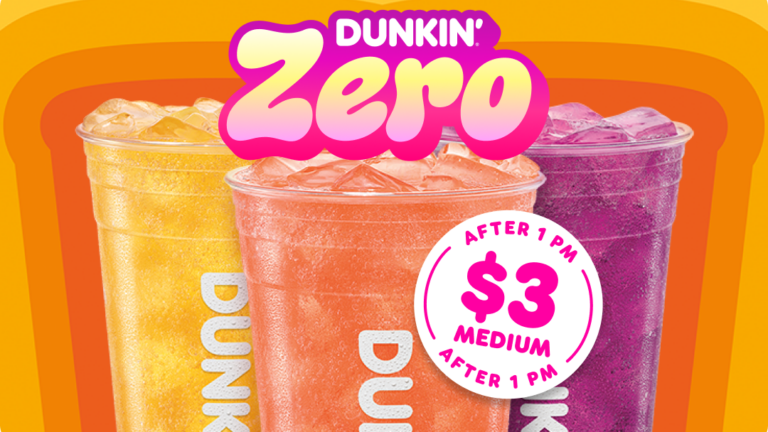
Three medium Dunkin’ zero energy drinks Handout
An Illinois woman is bringing a proposed class-action lawsuit against Dunkin’ for selling zero-sugar energy drinks that, she claims, actually contain sugar in the form of allulose.
Phyllis Wells filed the lawsuit against Dunkin’ on Sept. 30 in the U.S. District Court in Massachusetts, on behalf of herself and similarly situated consumers who purchased Dunkin’ Zero beverages marketed as containing “zero sugar.”
Wells noted that the company sweetens the drinks with allulose. According to the Cleveland Clinic, allulose is a Food and Drug Administration-approved sugar substitute that is a naturally occurring sugar found at low levels in figs, raisins, wheat, maple syrup, and molasses.
It is also a sugar substitute and can be used in recipes for people who want to cut back on sugar, including those with diabetes and those following specialized diets, because it doesn’t affect blood-sugar levels like sugar.
It is often used because it is low in calories, retains about 70% of sugar’s sweetness, and behaves like sugar in food.
The Cleveland Clinic says more research is needed to study allulose health risks.
Because it is, at the molecular level, a sugar, the FDA legally requires it to be listed under “Total Carbohydrates” on food labels.
But, because it passes through your system without being metabolized for energy, the FDA has exempted allulose from being counted under “Total Sugars” or “Added Sugars.”
Dunkin’ lists the total carbohydrates in the drinks as ranging from 6 to 12 grams, and lists them as having 0 sugar and 0 added sugars. Following water, allulose is the second ingredient listed for these drinks.
The lawsuit says that Dunkin’ Zero energy drinks have been sold at approximately 10,000 locations across the U.S. to hundreds of thousands of consumers since their introduction on March 4.
Wells says she purchased the Dunkin’ Zero beverages about two to three times per week at a drive-through in Chicago before she learned about the use of allulose.
In the lawsuit, Wells claims that she tries to limit her sugar intake and therefore only purchases drinks that are marketed as sugar-free or zero sugar. Wells relied on Dunkin’s promotional and signage advertising that the products were zero-sugar.
Wells argues that she would not have purchased the products if she knew they contained sugar.
The lawsuit also claims that consumer demand for sugar-free products is well documented, with a 2022 nationwide survey finding that 73% of Americans ages 18 to 80 reported trying to limit or avoid sugar.
Food and beverage companies are aware of this demand and often command higher prices for zero-sugar products, the lawsuit claims.
Wells argued that Dunkin’ deceived her into thinking the drinks were sugar-free, alleging that its marketing efforts were fraudulent. She is seeking damages and a trial by jury.
Dunkin’ did not immediately respond to a request for comment.
The lawsuit also comes months after Dunkin’ was placed in the national spotlight after Health Secretary Robert F. Kennedy Jr. blasted the company for selling sugary drinks.

Beth Treffeisen is a general assignment reporter for Boston.com, focusing on local news, crime, and business in the New England region.
Sign up for the Today newsletter
Get everything you need to know to start your day, delivered right to your inbox every morning.