

Want to bookmark your favourite articles and stories to read or reference later? Start your Independent Membership today.
Already a member?
Log in
Bacon has always required a certain amount of nutritional denial. It’s salty, fatty, processed meat and, according to the World Health Organisation, something better treated as an occasional pleasure than a cornerstone of breakfast.
Yet a new breed of rasher is offering what sounds remarkably like absolution: bacon without nitrites.
People are buying it in serious quantities. Spending on nitrite-free bacon reached £34.8m in the year to 6 September, up 11.4 per cent, according to Worldpanel by Numerator figures. Volumes were up too, by 8 per cent to 2.2m kg. Waitrose says sales across its “Made Without Nitrites” range have risen by more than a third. Denhay also launched a nitrite-free back bacon in 570 Tesco stores last month.
So the message has clearly got through. Nitrites sound bad. No nitrites sounds better. The science, however, is less obliging.
Nitrites are used in bacon for a reason. Sodium nitrite and potassium nitrite – E250 and E249 – are part of the curing process, helping to stop the growth of dangerous bacteria including Clostridium botulinum, which causes botulism, a life-threatening condition that can lead to muscle paralysis, breathing difficulties and death. They also help give bacon its pink colour and the flavour we know and love.
The problem is what can happen afterwards. Nitrates can be converted into nitrites in the body, and nitrites can help form N-nitroso compounds, including nitrosamines. Many nitrosamines are carcinogenic.
Processed meat already has a rather uncomfortable reputation when it comes to cancer. The WHO’s International Agency for Research on Cancer (IARC) classifies it as Group 1, “carcinogenic to humans”, based on evidence that eating processed meat causes colorectal cancer.
This is usually the point at which someone mentions that cigarettes and asbestos are also in Group 1. That’s true, but not especially helpful. The classification tells us how strong the evidence is that something can cause cancer, not that all things in the group carry anything like the same level of risk.
The numbers are more useful. Looking across 10 studies, IARC estimated that eating 50g of processed meat every day was associated with an 18 per cent increase in colorectal cancer risk. Cancer Research UK estimates that 13 per cent of bowel cancer cases in the UK are caused by eating processed meat.
Which makes the appeal of nitrite-free bacon easy enough to understand. If processed meat is a risk, and nitrites can help form carcinogenic compounds, take the nitrites out and surely you have improved the bacon.
Not necessarily.
For a start, nitrates and nitrites are not peculiar to cured meat. The Food Standards Agency (FSA) says as much as 95 per cent of those in our diet occur naturally in vegetables including spinach, lettuce, celery and beetroot. Only around 5 per cent comes from their use as additives, mostly in processed meat.
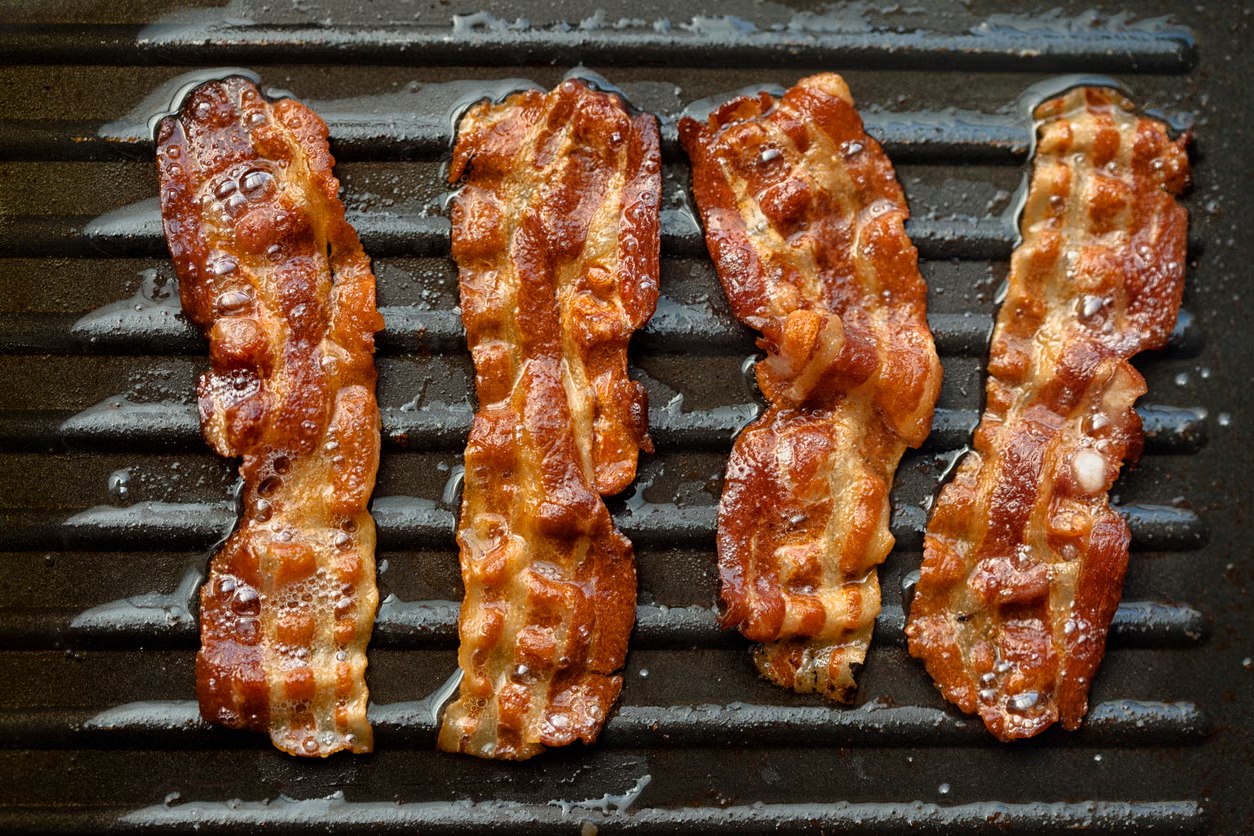 Higher cooking temperatures can increase the formation of nitrosamines in bacon (Getty/iStock)
This is not a warning against salad. Vegetables also contain vitamin C, polyphenols and fibre, among other things, and the chemistry is different from that taking place in cured meat. The more awkward problem is that scientists have not proved that nitrite itself is the reason processed meat is linked to cancer.
The FSA reviewed research published between 2016 and 2024 to look at exactly this question. Its conclusion was not the one the cleanest-looking bacon packet might lead you to expect.
“There’s no evidence to suggest that processed meat made without the use of nitrates is a safer alternative,” Dr James Cooper, the FSA’s deputy director of food policy, said when the review was published last year.
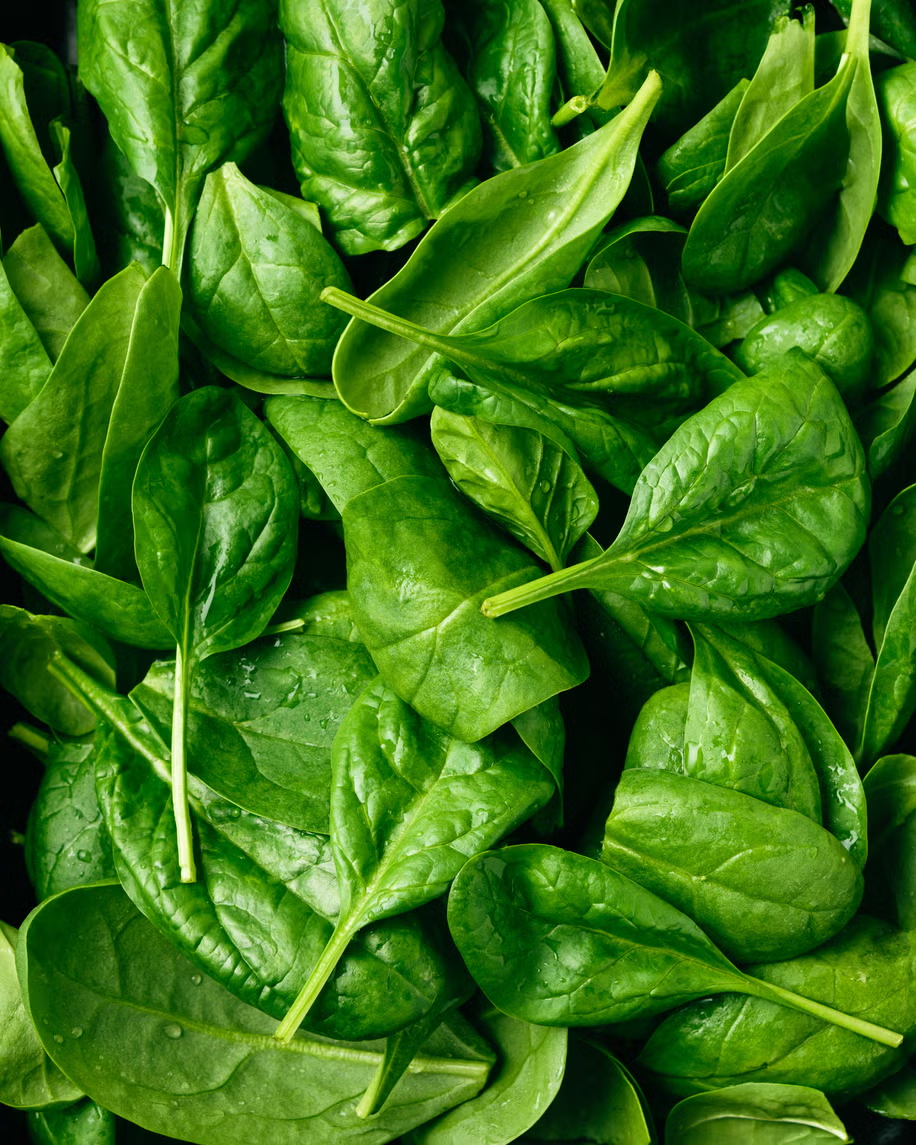 Spinach is naturally high in nitrates, but that does not make it comparable to processed meat (Getty/iStock)
That doesn’t mean there’s nothing to worry about. The review found the evidence linking nitrate and nitrite additives themselves to cancer was inconclusive. It also found that higher cooking temperatures, longer cooking times and curing with nitrite salts were associated with higher levels of nitrosamines and other N-nitroso compounds. In studies looking specifically at bacon, frying it hotter produced more nitrosamines.
But there is still a gap between showing that nitrites are involved in the formation of compounds we have reason to worry about and showing that taking them out of bacon makes the person eating it less likely to get cancer.
Nor are the alternatives necessarily a problem solved. The FSA review found no animal or human in-vivo studies testing the alternatives it looked at, and said their potential risks had not been comprehensively assessed. Its “most fundamental uncertainty” was whether those alternatives were really better.
And nitrite-free bacon is still processed meat. The WHO definition covers meat altered by salting, curing, fermentation, smoking or other processes used for preservation or flavour. Removing E250 does not turn a nitrate-free rasher into a health food.
However that doesn’t mean nitrite-free bacon is a con. It removes an additive involved in a process scientists are quite reasonably interested in, and some shoppers may simply prefer a shorter ingredients list. What we do not yet have is evidence that swapping one kind of bacon for the other lowers cancer risk.
There is, inevitably, a more boring solution.
The NHS recommends that people eating more than 90g of red and processed meat a day bring their average down to 70g or less. Its example of a cooked breakfast with two standard sausages and two thin rashers of bacon comes to about 130g.
So the label is worth reading. But if the aim is to make bacon less bad for you, the bigger question may be not which packet you buy, but how often you put it in the pan.