
It’s free, it’s relatively easy and it can help you get back into your fitness stride, writes Dianne Bourne
05:29, 08 Feb 2026
Winter walking – we tested out the “Japanese walking” technique where you walk three minutes fast and three minutes slow to see what fitness gains she could make(Image: MEN)
After another Christmas of over-indulgence, I rolled into January desperate to get back into some kind of fitness regime. But having failed to set foot inside my trainers, let alone a gym, for most of 2025, it felt like an uphill slog.
Back in the dark days of Covid lockdown in 2020, one of the sole positives for me was managing to get into the best shape of my life by simply using that one hour we were allowed outside each day (remember that?) to start running. I did it from a standing start, by doing intervals of running and walking, and within a year I found myself running 10k runs with ease.
Unfortunately, when we were all let loose into society again, fitness took a back seat as I made up for lost time with eating out and drinking instead.
Try MEN Premium NOW for just £1
Fast forward to January 2026 and even walking up the stairs has been leaving me seriously out of breath – so the thought of starting any kind of fitness regime left me filled with dread. That’s when I remembered reading about “Japanese walking” as a method to swiftly improve your fitness.
It’s an easy concept to follow and totally free, so I thought what better time to give it a try than a cold, miserable and skint January?
If you’ve not heard of it before, the concept of Japanese walking is interval walking. You aim to walk for 30 minutes, and within that time you alternate between 3 minutes of slow walking, with 3 minutes of fast walking.
For optimal results, you’re encouraged to do the 30 minute walk four to five times a week.
The great thing about it is the concept of “slow” and “fast” is entirely led by your own fitness levels. So it’s totally up to you what pace you’re comfortable with and what you consider to be “fast”.
The aim for the “fast” minutes is to be walking at a pace brisk enough for you to struggle to hold a conversation. Meanwhile on the “slow” minutes you should slow yourself right down to get your breath back for the next set.
There’s no step goal, you just need to aim for the three minutes fast, three minutes slow sets across 30 minutes. That means you also don’t need any special equipment like a fitness tracker if you don’t want it – you can time the intervals on your watch or on your phone instead so all you need is comfortable shoes to set off and give it a whirl.
However, for the purposes of this experiment, I did use my fitness tracker to keep an eye on how it was boosting my health. It gave me an accurate picture of the effects on my resting heart rate, with a lower resting heart rate indicating better heart health.
The tracker also measured how much ground I was covering with each walk – which was another simple way to see how my fitness improved across the month.
It’s known as Japanese walking as the method was first researched by experts at Shinshu University in Japan. They found that it was a great way for participants to improve their cardiovascular health, boosting endurance in a low-impact way.
And, intriguingly, it’s said to be an overall more effective way to improve fitness than by setting a daily steps target like the 10,000 steps that so many people now strive for.
Last year I did do the 10,000 steps a day challenge, and while I did see improvements in my fitness, I found it quite hard to find the time each day to always get up to that steps tally as it was taking me an hour or more to walk that amount of steps.
So if this method, with a commitment of four days a week and only 30 minutes, could work just as well, then that was a winner to me. I’m a 48-year-old mum of two children so fitting any kind of fitness into the schedule can sometimes feel like a juggle, but here’s how I got on across January.
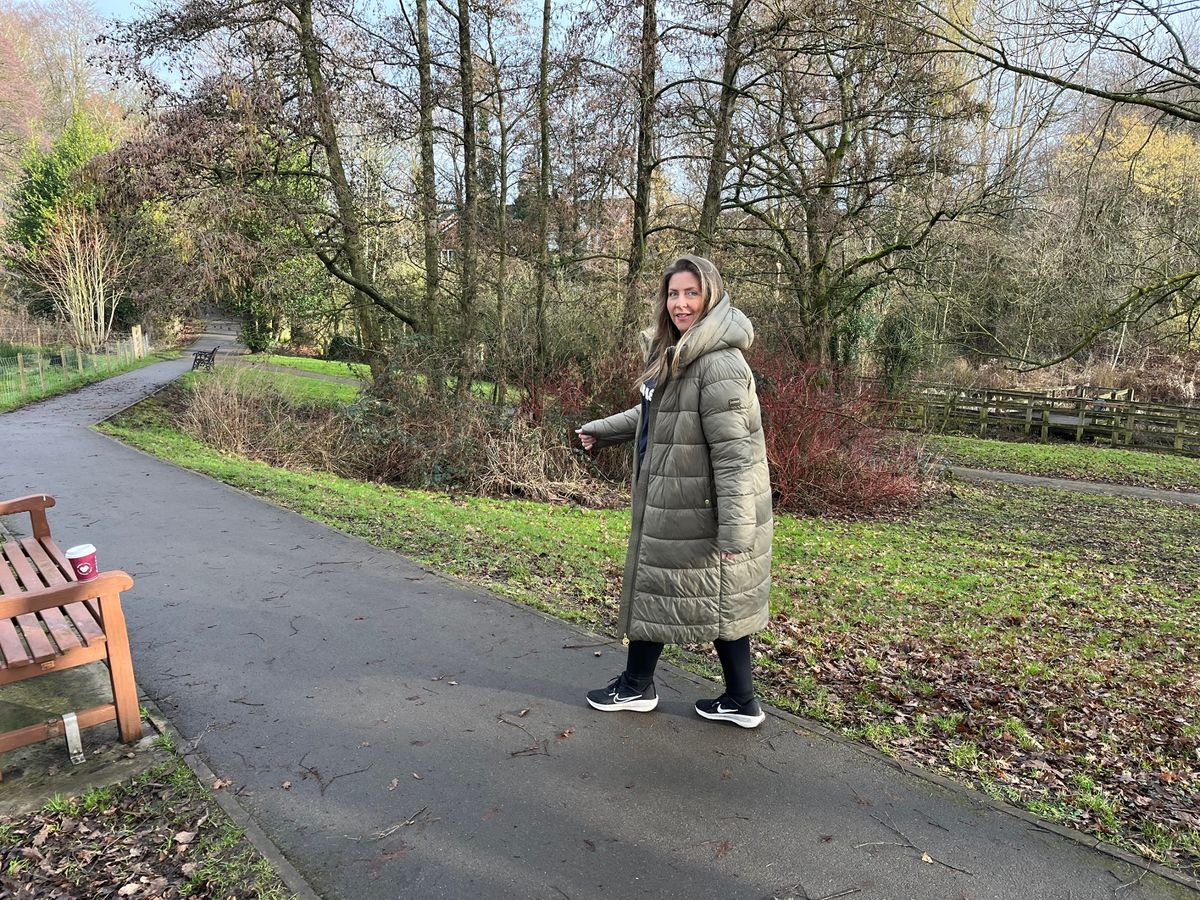
Dianne spent January upping her fitness with Japanese walking(Image: MEN)
Week one
I’ve had my fill of Christmas over-indulgence, and on New Year’s Eve I start my plan for Japanese wakling for the month. Heading out I admit at first I found the fast walking was getting me really out of breath, but the three minutes slow walkng recovery helped to get me through.
Knowing it was only three minutes of fast walking at a time made it so much easier to complete the full 30 minutes, rather than thinking I was having to do brisk walking for an extended period.
I started out by simply walking around local housing estates, and finding new routes and streets that I’d not been round for years, so I got to have a nosy about my local area too.
In that first week I was averaging around 3,000 steps for each walk, and average pace according to my tracker was a pretty slow 17 minutes per km.
This starter week I was still eating up all the last of the Christmas chocolates and cheese though. So with all the walking in the world I knew it would not be good news on the scales, and yep, I lost nothing.
Resting heart rate: 75 bpm
Average speed: 17’07 per km
Week two
Oh great, and then the snow came. This is the one downside of choosing walking for fitness – the Great British weather.
Trying to keep on track, I did attempt to venture out on the first really snowy day that we had – but the snow was just too deep to get any kind of “fast walk” going. But I did still make the effort to trudge around for half an hour which I feel worked my muscles anyway just trying to stay upright.
Thankfully, the snow all melted again within two days, so I was able to head back out to pound the streets with the interval walking. And I could start to feel a real difference already.
This swiftly showed on the Fitness tracker, as my resting heart rate reduced by the end of week two, and it showed that I was burning more calories too. I seemed to have really picked up pace since the first week – the tracker showing I was now at an average of 13 minutes per km.
This week I also started to tackle my diet as well in a bid to shed some pounds as well as get back into fitness. I’ve been following the new-look Slimming World diet (of which I’ll be writing more about in a future feature), and getting back into the swing of that saw me hit a big weight loss of 6lbs this week, which really gave me a boost to continue with the fitness side of things too.
Resting heart rate: 70 bpm
Average speed: 13′ 39 per km
Week three
I’d really hit my stride this week, and no matter what the weather, I was pulling on my big padded coat and hitting my local park and walkways to enjoy feeling more energised. I started to really look forward to the three minutes fast, and the feeling of the blood pumping round my body.
Keen to fit walks in when I could, I roped friends in to giving it a try too, in between coffee house stops which made it more fun and social too. It felt like this was now a routine that just fitted in to my daily lifestyle – and I think that’s ultimately the best kind of exercise.
It made me keen to venture out to other local parks and wildlife areas to give myself a change of scenery and enjoy the fresh air.
The tracker showed I was steadily improving my speed too – again without feeling I was doing anything different as I was simply going as fast as I could on those three minute intervals.
Resting heart rate: 65 bpm
Average speed: 13′ 04 per km
Week four
By this week I was feeling well into the routine of the walking, and started to combine the 30 minute sessions with the school drop off in the morning. Completing the session early left me feeling energised for the day of work ahead.
By the end of this week I was able to look back through my fitness tracker to see the overall fitness gains from week one through to week four.
The big change was my resting heart rate, down by more than ten points from the start of January when it was 75bpm, to 62 bpm by the end of January. I did genuinely feel so much fitter – walking up stairs no longer got me ridiculously out of breath.
On the start date, I covered 3,000 steps in the 30 minutes, but by the end I was nearer 4,000 steps in the same time. And the average speed was showing that across that 30 minute I was clearly overall walking much faster – covering a km in an average of 12 minutes on the final week as opposed to 17 minutes at the very start.
If you’re looking at the average speed thinking “that’s ridiculously slow” remember this is averaging both the fast walks and the slow intervals across the full 30 minutes.
What I also found interesting was that on the four days each week I was doing the 30 minute session, on almost all of those days I ended up hitting 10,000 steps or more without even trying. I could also see a steady progression of my overall walks getting faster, even though each time I was doing essentially the same thing – walking as fast as I could for three minutes, and then slow for three minutes.
Resting heart rate: 62 bpm
Average speed: 12’48 per km
The verdict
Reporter Dianne was pleased with the results after a month of Japanese walking
For me, heading into 2026 and at the start of my fitness journey, I found the Japanese walking method the near perfect way to ease back into exercise. By the end of the month I could see very real and clear gains in my cardio fitness, with my resting heart rate down by ten points, and feeling stronger and faster with every walk I did.
The faster sections on each walk were getting so fast that I could start to feel ready to break into a jog, which will be the next step of my fitness journey to start reintroducing slow jogs. The stats, in terms of the increase in my walk speed and the reduction in my resting heart rate, were incredible over just a month.
As you can see from my results on week one, clearly walking alone was not enough to lose weight though. And as many a wise trainer will tell you, you cannot outrun (or outwalk) a bad diet.
But once I had started to tackle my diet by week two, I found the regular walking was helping me to stay on track with my weight loss goals as well, with 10lbs in total lost across the month. To be clear, the walking helped to improve my fitness, while eating a healthy nutritious diet helped me to lose the weight – I’m now averaging a healthy 2lb weight loss a week which I’ve been continuing into February.
As a get-fit technique though, Japanese walking is such a simple structure to follow, and as it’s based on your own capabilities there’s no feeling of having to hit a specific target.
It’s low impact on your joints and low cost – well, it’s pretty much free unless you feel the need to invest in a fitness tracker. And as it’s only 30 minutes four times a week it felt a lot easier to fit into my daily life than trying to hit a 10,000 steps goal.
It’s something I would heartily recommend giving a try if, like me, you’re wanting to ease yourself back into a gentle fitness routine.