
This is Everyday Science with Clare Wilson, a subscriber-only newsletter from The i Paper. If you’d like to get this direct to your inbox every week, you can sign up here.
Hello, and welcome back to Everyday Science.
It’s hard to escape the current dietary craze for protein. You can buy protein-laced yogurts, chocolate bars – or even concentrated protein powder for adding to your food.
But while we hear a lot on the amount of protein needed, there is less talk about what kinds of protein we should be eating. And a focus on protein quality is potentially at odds with the other chief diet trend of the moment – for plant-based foods.
That’s because proteins from animal sources have traditionally been seen as high quality, while proteins from plants are said to be low quality.
New FeatureIn ShortQuick Stories. Same trusted journalism.
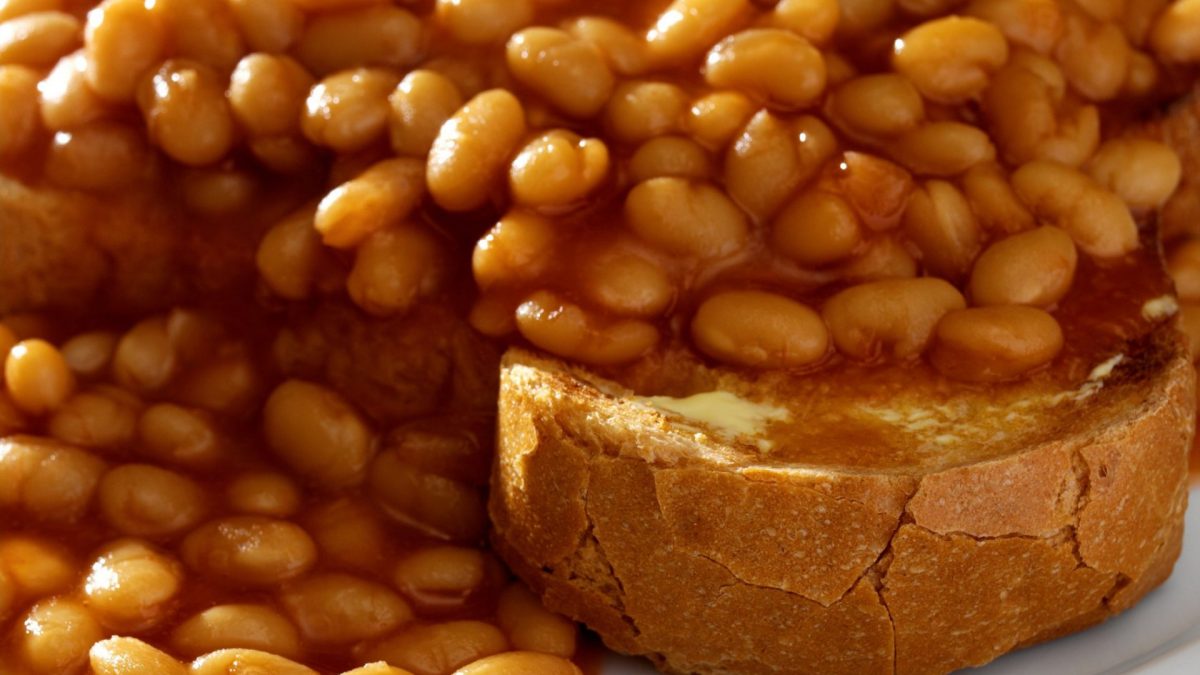
I learned in GCSE biology that because of this, vegetarians needed to carefully combine different plant proteins to make their meals as nutritious as meat-based ones. Beans on toast was said to be an ideal vegetarian meal.
Today, though, the idea of combining different plant proteins is becoming more up for debate. So, what do and don’t we know about protein quality? And how can people who are eating more plant-based foods make sure they are meeting their protein needs?
What happens if you don’t get enough protein?
For background, we need a brief biology primer. Protein plays a crucial role in the function of our bodies, important in muscles, enzymes and countless other tissues. That’s why making sure we get enough protein has become such a concern among people wanting to optimise their diet and their health.
Protein molecules are long strings of building blocks called amino acids.
While there are 21 different amino acids, nine of them cannot be manufactured in the body and so must be present in our diet. Without enough, our muscles would wither, and hair and nails would weaken. Children who are protein deficient end up shorter in height.
This is the reason why plant proteins are often said to be low quality – they don’t usually have all nine of the essential amino acids. They are sometimes described as incomplete proteins, to contrast with the complete proteins from meat or dairy.
Combining different plant proteins is key
This is why whey protein powder, made from milk, is described as high quality. The description isn’t marketing spiel, it stems from biochemistry.
These differences between animal and plant proteins don’t mean a vegetarian diet as a whole is lower quality, though. The solution was always said to be to combine different plants within meals, so that between them they provide all nine amino acids.
That’s where the idea came from that beans on toast was the ideal vegetarian meal. The amino acids that are lacking in beans are present in wheat, so this is said to be a complementary pairing.
What’s more, there are a few exceptions to the generalisation that plant proteins are incomplete, including soy beans, Quorn, quinoa, and hemp seeds. Soy protein and Quorn are used in many meat replacement foods, like veggie burgers and vegetable-protein-based “mince”.
Nevertheless, people who are cutting out or cutting down on meat and dairy, and who don’t eat much of the plant foods in the list of exceptions, should in theory keep a check on which kinds of proteins are in their diet.
But do they have to be all in one meal? You could have your toast in the morning and your beans at lunch, according to some experts.
“There is no need to complement plant protein food sources at each meal – balance is achieved over the course of a day’s essential amino acid intakes,” say guidelines from a working group on environmentally sustainable diets from the British Dietetic Association.
The time frame could be even longer, according to Dr Shireen Kassam, a haematologist at King’s College London.
“As long as you’re eating all of them over two or three days it’s absolutely fine,” said Dr Kassam, who is also the founder of a non-profit organisation called Plant-Based Health Professionals UK.
 Eating out as a vegan is getting easier (Photo: Nick David/Getty)
In other words, if your protein on one day came mainly from beans, you could wait until the next day to pair that with protein from wheat (or rice or nuts, which would also be complementary to beans), or even the following day.
For this reason, Kassam said we should no longer even use terms like” “low quality” or “incomplete” when referring to plant-based proteins. “It’s outdated.”
Disagreement among dietitians
But this does not seem to be the majority view among UK dietitians. A small survey of 335 registered dietitians in 2024, carried out by Kassam’s team, found three quarters said plant-based proteins are incomplete and should be “carefully paired with other plant-based protein foods for optimum protein requirements”. Although, the survey question did not mention any timescales.
“I’ve not seen any evidence to suggest that you can spread it out over two to three days,” said Dr Emily Arentson-Lantz, a nutrition researcher at the University of Texas Medical Branch, who was not involved with the survey. “Perhaps it’s not as meal-based as we had imagined but it’s still best practice to consume those complementary proteins at each meal.”
NHS guidelines for vegetarians and vegans makes no mention of the quality of plant proteins or how different plants should be paired up.
How much protein is really needed?
Kassam said that because most people in the UK are eating more protein than they need, vegetarians and vegans don’t need to worry about pairing up complementary proteins to get enough of all the essential amino acids, as long as they eat a varied mixture of different plants. “Even plant-based eaters are on the whole meeting their protein requirements easily,” she said.
It is true that UK dietary surveys suggest most people are eating more than the amount of protein thought necessary. The NHS says we need to eat 0.75g of protein per kilogramme of body weight per day, on average. That translates to about 45g a day for a typical women and 55g for a man.
To put that into context, half a chicken breast contains about 29g of protein. Beans on toast would have about 16g.
On the other hand, there is debate about whether 0.75g/kg is really enough. That was originally calculated as being the minimum amount of protein needed to stay healthy – but it could be less than the amount for needed for optimum health and maintaining muscle mass, especially as people get older.
The British Association of Sport and Exercise Sciences said in 2022 that the real amount needed for optimum health is 1g/kg to 1.2g/kg for people over 60 or possibly younger than that, and 1.6g/kg for athletes.
US dietary guidelines have recently doubled the amount of protein recommended for everyone – to between 1.2g/kg and 1.6g/kg.
For those on more plant-based diets who are concerned, one solution could be to focus on those plant foods that have all nine amino acids, such as soya beans, and soy-based foods like tofu, tempeh and soy milk.
Or there’s always beans on toast. Perhaps the concept of “complete proteins” has still got some life in it yet.
I’ve also written
Most of us have heard of the dangers of antibiotic-resistant bacteria. But doctors are growing increasingly concerned about a new infectious threat: drug-resistant fungal diseases.
Until now, these superbugs have been mainly confined to hospital patients with weak immune systems. But drug resistance has recently arisen in a common fungal skin infection called ringworm or “jock itch” that can affect anyone. Read more here.
I’ve been reading
I like to give Booker Prize winners a try, and was glad I did with last year’s winner, Flesh, by David Szalay. It is about a lusty and sometimes violent Hungarian immigrant to the UK, who is blown by the winds of fortune from seedy Soho nightclubs to mixing with millionaires and politicians.
The dialogue is terse and the characters not always completely plausible to my mind, yet I devoured this novel because I had to find out what happens to our hero next. It has been called an exploration of modern masculinity but I preferred to see it as an enjoyable page-turner.