
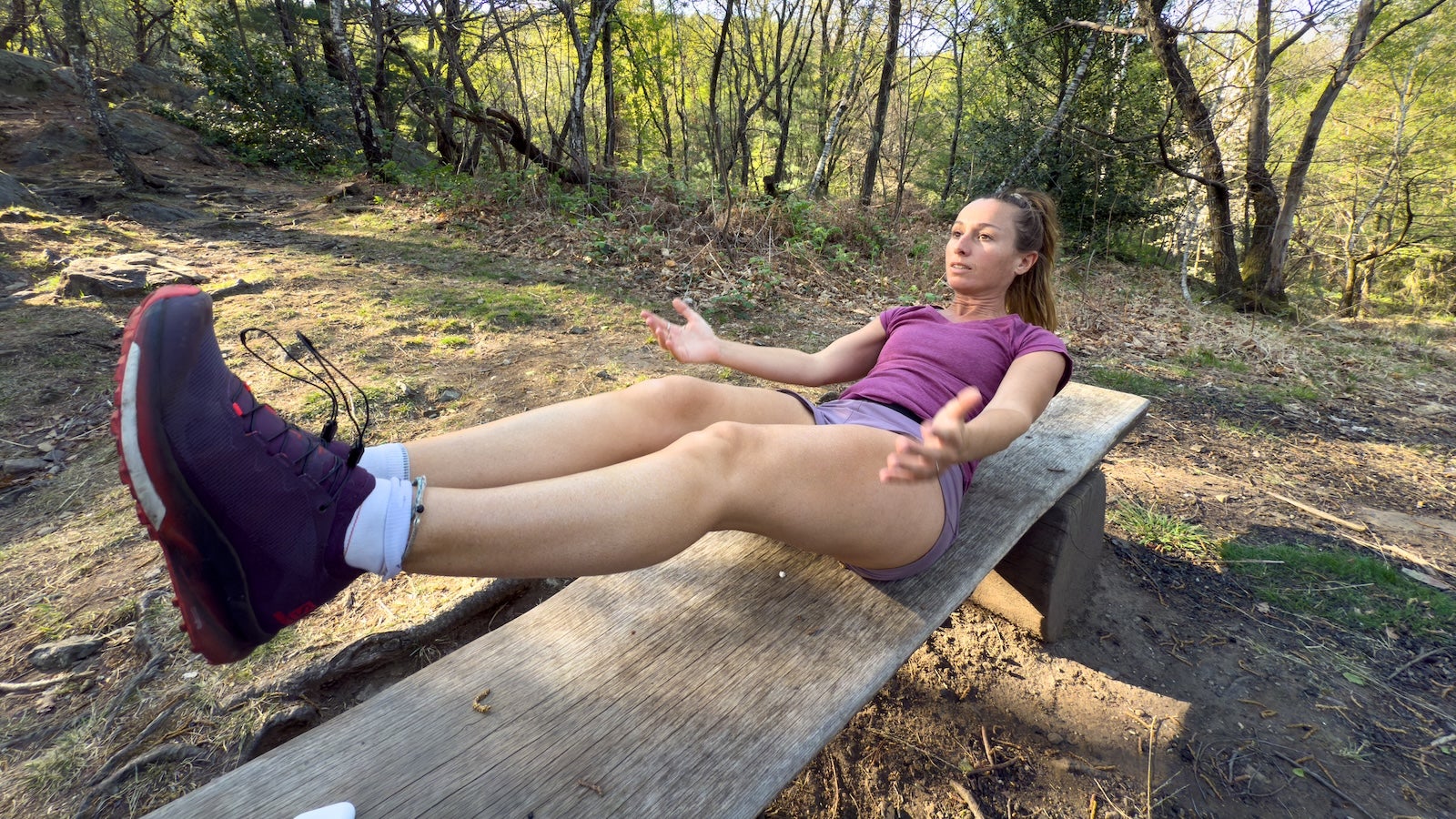
Would you rather work your core standing up or lying down? Either way, we’ve got you covered with two different core-strengthening workouts.
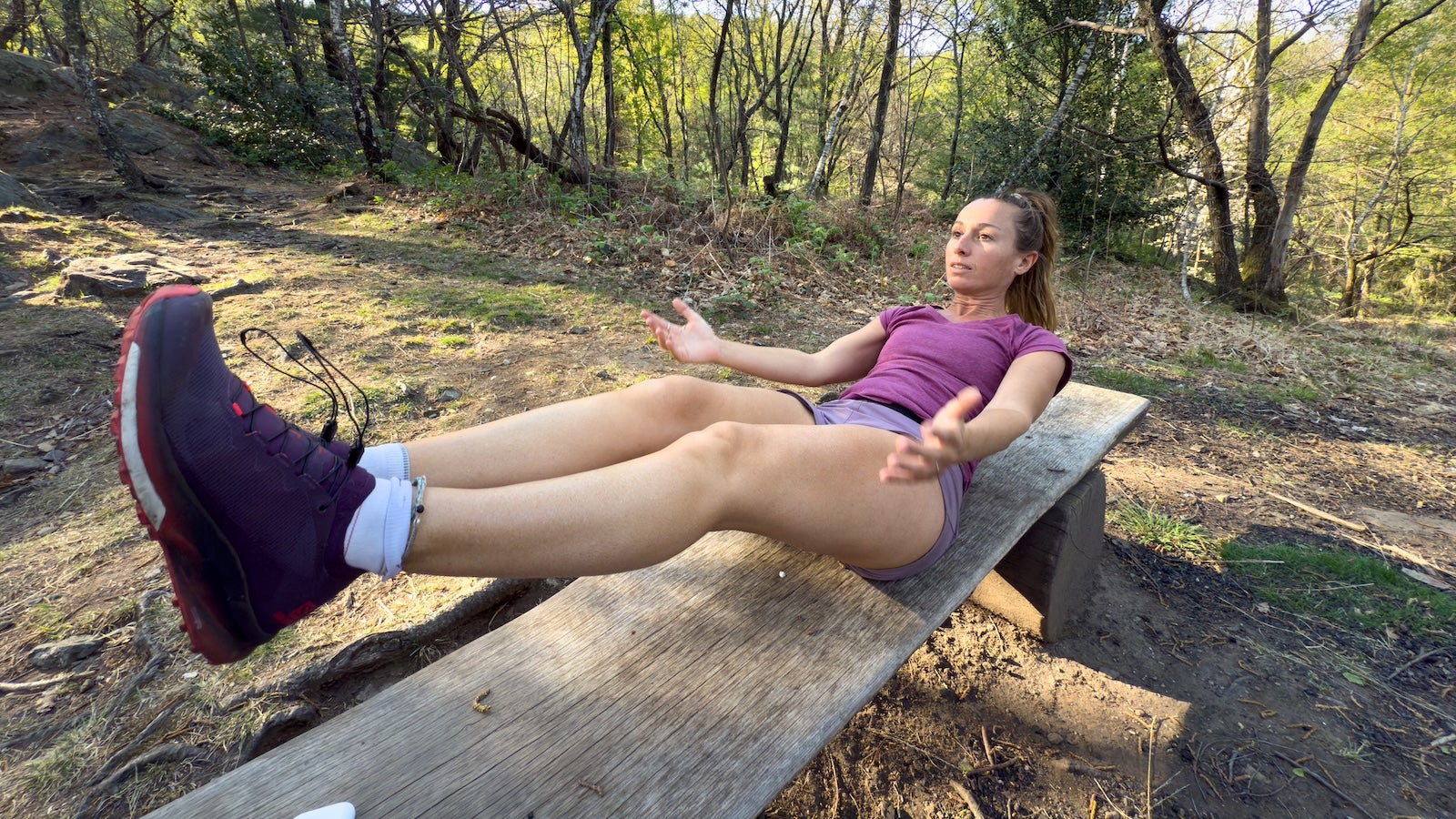
(Photo: Mystockimages via Getty Images)
Published March 30, 2026 09:17AM
If you’re like me, you have one of two reactions to a core workout:
Fine, I’ll do it—as long as I don’t have to get down on the ground.
Or
Fine, I’ll do it—as long as I can just lie down on the ground.
Yes, they’re completely opposite sentiments. And no, there’s no clear reason why I feel one way versus the other. I just know that some days, lying on my back makes torching my rectus abdominis tolerable. And other days, I’d rather bail altogether than roll around on an exercise mat (or a patch of grass).
But as a backpacker, you really can’t afford to skip core-strengthening exercises. “Backpacking is an unstable sport because we’re on unstable ground,” says Jessie Duppler, P.T., D.P.T., creator of the Chain Reaction Strength Revolution program. “Any time we need better stability, we need the core to be able to stabilize the trunk.” If your core muscles aren’t strong enough to provide that stability, the spine has to pick up the slack. Compensations can cause back pain and other issues along the kinetic chain, especially in the hips and knees.
So my solution is to have two go-to core workouts: one I can do standing and one I can do supine (no flipping over to plank, either!). Besides accommodating my workout whims, this two-pronged approach has actual core-strengthening benefits.
“Standing up is more functional, because that’s how we live life. We can load the movements and move in patterns that are more specific to backpacking,” Duppler says. “Lying down, you can get a little more isolated with the core. It can feel like the core is working a little harder because the legs aren’t supporting you.” She also notes that backpackers should have a mix of both standing up and lying down core exercises.
So, do you want to stay on your feet or connect with the earth? Either way, the two workouts below have you covered. To do the standing core workout, you will need a long resistance band and at least one kettlebell or dumbbell. (If you’re outside, you can use your pack or a heavy rock.) For the floor workout, you may want to use an exercise mat.
For each workout, do three sets of each movement. You can either complete all three sets before moving on to the next exercise, or perform them as a circuit, one set at a time, and do three rounds.
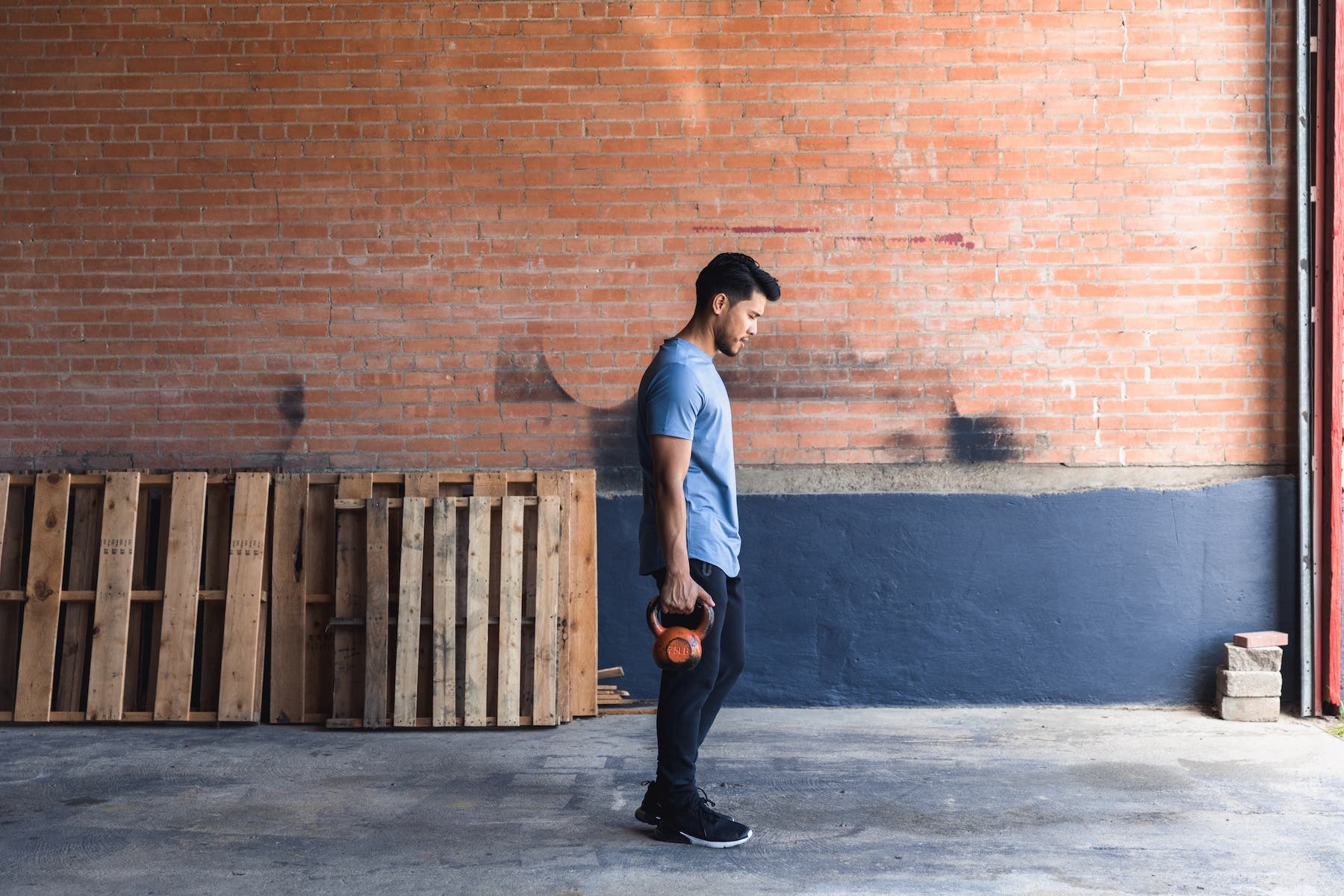
Suitcase carry exercise with a kettlebell. (Photo: SDI Productions via Getty Images)
Stand-Up Core Workout
Suitcase Carry
Stand with your feet hip-width apart and your arms down at your sides. Hold a dumbbell or kettlebell in one hand.
Engage your core and stack your shoulders over your hips; don’t lean away from the weight or collapse toward it.
Slowly walk forward 10 to 20 paces, then turn around and walk back.
Switch hands and repeat.
Windmill
Stand with your feet a little wider than hip-width apart. Point the toes of your left foot forward and the toes of your right foot at a 90-degree angle.
Hold a dumbbell or kettlebell in your left hand and press the weight directly overhead. Let your right arm hang down at your side. Look up at the weight.
Keeping your left wrist stacked over your left shoulder and your eyes on the weight, engage your core and press your left hip out to the side. Slide your right arm down the inside of your right leg as you hinge at the hips to lower your torso. Bend your knees slightly if necessary.
Once your fingertips reach your right ankle, reverse the movement to return to standing.
Repeat for 8 to 10 reps, then switch sides.
Paloff Press
Loop one end of a long resistance band around a pole at about chest height.
Holding the other end of the resistance band with both hands in front of your chest, stand with your right side facing the pole. Make sure there’s enough tension on the band to keep it taught.
Slowly push your hands forward to fully extend your arms in front of you. Engage your core to resist the rotational pull of the band.
Draw your hands back to your chest.
Repeat for 8 to 10 reps, then change position so that your left side is facing the pole.
Reverse Woodchop
Stand with your feet a little wider than hip-width apart. Holding the ends of a dumbbell or the handle of a kettlebell with both hands, rotate your torso to the right, pivoting on the ball of your left foot, and swing the weight above your right shoulder.
Keeping your arms straight (a slight bend in the elbows is fine) and core engaged, swing the weight diagonally down and across your body to below your left hip in a “chopping” motion. Pivot on the ball of your right foot to rotate your torso and bend the knees slightly.
Reverse the motion: shift your torso to face forward again, swinging the weight back up your right shoulder, straightening your legs.
Repeat for 8 to 10 reps, then switch sides.
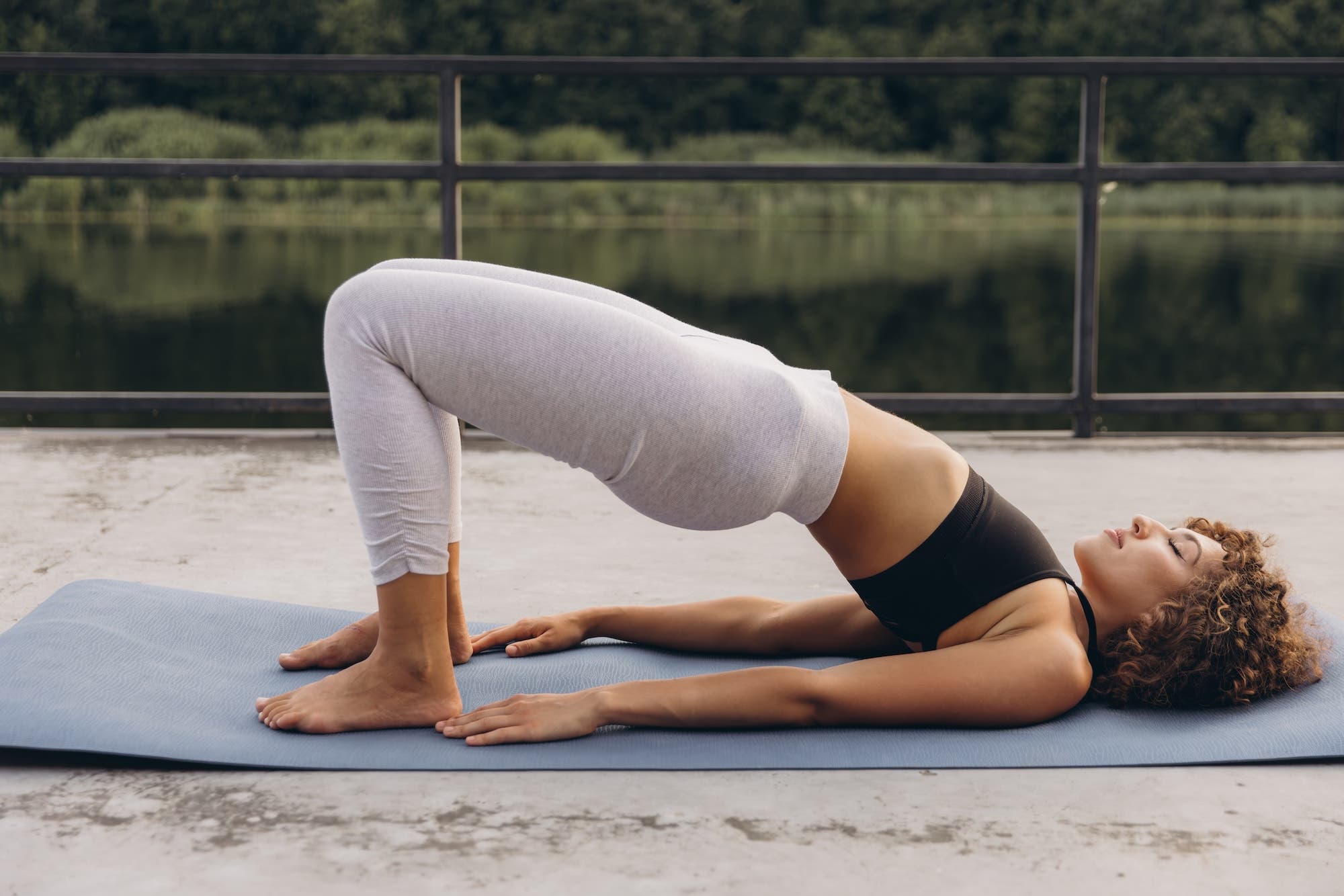
The setup of a glute bridge march. (Photo: anatoliycherkas via Getty Images)
Floor Core Workout
Dead Bug
Lie flat on your back with your arms extended above your shoulders and your knees above your hips, calves parallel to the ground. This is the starting position.
Engage your core as you simultaneously lower your right arm behind your head and straighten your left leg to lower it within an inch or two of the ground.
Draw your arm and leg back up to return to the starting position.
Repeat with the left arm and right leg.
Continue to alternate, lowering opposing arms and legs.
Repeat for 8 to 10 reps on each side.
Hollow Hold
Lie flat on your back with your legs straight, toes pointed, and arms extended overhead, biceps by your ears.
Engage your core and keep your neck neutral as you lift your legs and arms a few inches off the floor.
Hold for 30 to 60 seconds, then lower your arms and legs to the floor.
Glute Bridge March
Lie flat on your back with your knees bent, arms at your sides, and the soles of your feet on the ground. Engage your core and lift your hips into a glute bridge. This is your starting position.
Keeping your hips lifted and core engaged, lift your right foot and draw your right knee toward your chest. Lower your right foot to return to the starting position.
Repeat with the left leg, drawing the left knee toward the chest, then lowering the foot.
Continue to alternate in a marching motion. Do 8 to 10 reps on each side.
Scissor Kick
Lie on your back with your legs extended and your arms at your sides. Place your palms on the ground for support.
Engage your core and lift both legs about 6 inches off the floor.
Open your legs a few inches apart, then draw them toward each other, crossing the right leg over the left.
Quickly draw apart and switch the positioning of your legs, crossing the left over the right.
Continue to switch the legs in a scissor-like motion for 30 to 60 seconds.