
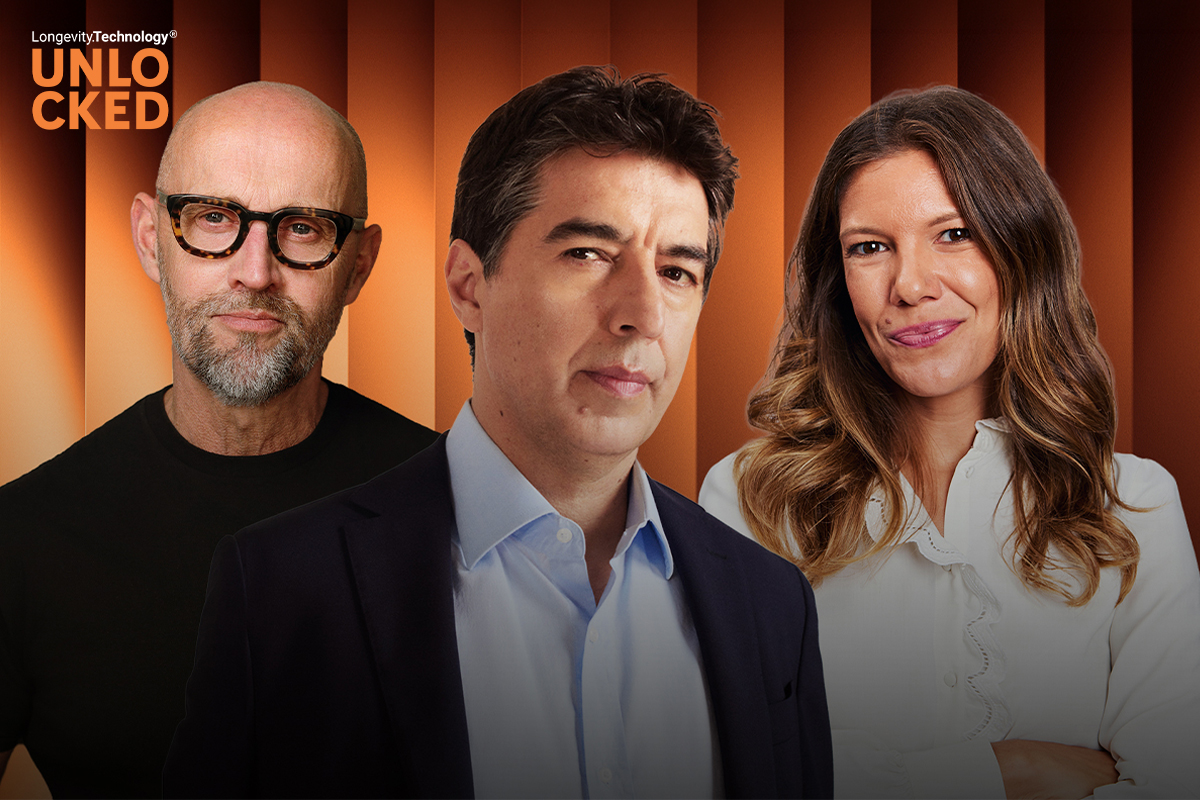
Could temporary nutrient scarcity help regenerate the body? Dr Valter Longo breaks down the science behind the fasting-mimicking diet.
Can a carefully designed five-day diet trigger the body to repair itself in ways modern medicine still struggles to replicate?
This question is the focus of the latest episode of Longevity.Technology UNLOCKED, where longevity researcher Dr Valter Longo makes an argument that still sounds radical even after decades of study: fasting, when done precisely, may function less like a wellness trend and more like regenerative medicine.
For years, fasting has occupied an uneasy space between science and self-help. On social media, it is often flattened into productivity hacks, weight-loss shortcuts or vague promises of “detox.” Longo’s work pushes back against that oversimplification. In his telling, the body is not a machine that simply shuts down when food disappears; it is a deeply adaptive system shaped by millions of years of survival biology. Sometimes, he argues, healing begins when the body is briefly forced into scarcity.
“Twenty-four hours, you’re barely depleted glycogen,” Longo says during the episode. “So your body has got fuel to run normally.” According to him, the real biological shift takes longer. “At the end of day five,” he says, “that’s when you see the autophagy peak.”
Autophagy, often described as the body’s cellular cleanup process, has become one of the most talked-about concepts in longevity science. However, Longo sees it like a citywide repair operation. Old or damaged cellular components are dismantled, recycled and cleared away so the system can rebuild itself more efficiently afterward.
What matters, though, is not just the fasting period itself. It is what happens when eating resumes. “The big part comes after…when everything starts to be rebuilt,” Longo explains.
He points to experiments involving damaged kidneys in rats, where researchers observed tissue structures reorganizing themselves during refeeding. Using spatial transcriptomics, a technology that maps where cells sit and how they behave, his team watched damaged tissue gradually return to its original organization.
“It knows exactly how to put it back,” he says. “Every cell type in every right place.”
There is something both scientific and philosophical in the way Longo talks about regeneration. Much of modern healthcare still operates like emergency maintenance: suppress symptoms, manage decline, stabilize damage. His work suggests the body may possess latent repair programs that medicine is only beginning to understand. That idea becomes especially provocative in metabolic disease.
Longo discusses multiple clinical trials examining the fasting-mimicking diet (FMD) in people with prediabetes and type 2 diabetes. Across studies, he says, researchers repeatedly observed reduced insulin resistance and lower dependency on medication.
“You see about 60 to 70 percent of patients within one year, they reduce or eliminate the drugs,” he says.
At a moment when GLP-1 drugs like Ozempic dominate conversations around obesity and metabolic health, Longo offers a noticeably different framework. While he acknowledges the effectiveness of these drugs for weight loss, he raises concerns about muscle loss, rebound weight gain and long-term sustainability.
“The end result is three percent less fat and two percent less lean body mass. Terrible, terrible deal,” he says bluntly.
Longo’s criticism is not simply anti-pharmaceutical. It reflects a tension emerging across longevity science: are we trying to override biology, or work with it? Longo clearly believes the latter matters more.
One of the episode’s more interesting moments arrives when the conversation shifts toward effort itself. In an era obsessed with optimization, convenience and “hacks,” Longo warns against viewing every biological challenge as something to eliminate.
“We’re starting to go towards the idea that if it’s an effort, it is bad for you,” he says. “But in fact, that effort makes us human.”
It is a striking statement because it steers fasting away from punishment or restriction. Instead, Longo positions it as a controlled biological stressor – closer to exercise than starvation. Just as muscles adapt after resistance training, cells may adapt after temporary nutrient scarcity.
That evolutionary perspective appears throughout the conversation. Longo repeatedly references hibernating animals, seasonal food scarcity and ancient dietary rhythms to explain why the body responds so dramatically to fasting states. The fasting-mimicking diet itself was designed around those principles: low calorie, low protein, low sugar, high fat, plant-based nutrition intended to push the body into repair mode without triggering full starvation.
Importantly, Longo also cautions against treating all fasting as inherently healthy.
“I would say that most fasting is bad for you,” he says, criticizing extreme or poorly structured fasting protocols that circulate online. His argument is not that eating less automatically extends life, but that timing, composition, duration and recovery all shape how the body interprets nutritional stress.
Complexity may explain why the conversation around longevity increasingly feels less like biohacking and more like systems biology. The future of preventive medicine may not come from a single miracle drug or wearable device, but from understanding how the body switches between states of growth, repair, storage and regeneration. In Longo’s view, fasting is one of the oldest ways to activate those transitions.
Tune in to Longevity.Technology UNLOCKED each Monday for in-depth conversations with the researchers, founders and scientists pushing longevity science forward. Our weekly roundup of the biggest aging-tech headlines arrives every Friday on Apple Podcasts, Spotify and YouTube.