

When was the last time you moved with complete freedom, using almost every muscle in your body? When you’re focused on building strength in the gym, it’s easy to find yourself moving in the same way day in, day out in an almost ‘robotic’ way.
But while targeting specific muscles with moves like squats and deadlifts (and progressively increasing the weight you’re lifting over time) is still the gold standard for getting stronger, there’s something to be said for adding some ‘weirder’ movements to your routine to boost mobility, especially as you get older and your body stiffens up.
That’s something mobility and strength coach Tom Morrison wants more people to take on board. In his latest reel, he highlights all the ‘crazy ways’ our bodies can move, and why limiting yourself to traditional strength training moves can exacerbate stiffness and pain.
‘It’s important to look for specific weaknesses and differences side to side, but also don’t forget to add variance too,’ he wrote in the caption. ‘Don’t forget you’re an amazing piece of kit that can move in all kinds of wonderful ways – never limit yourself.’
In the video, he demonstrates how to incorporate more of this ‘weird’ movement into your routine using just a resistance band. From cross-body chops to rotated pulls, he says the key is to ‘do whatever you can think of’ to ensure no muscle is left out.
The video triggered some debate in the comment section, with a few coaches arguing that there’s no need for this kind of movement if you’re doing regular strength training which targets multiple large muscle groups and doing regular mobility practices.
But Morrison was keen to highlight that these movements aren’t meant to replace traditional strength training – they’re simply meant to complement it.
Why ‘Weird’ Movements Are Good for You
It’s an approach Men’s Health fitness director and personal trainer Andrew Tracey says can be beneficial – especially when it comes to adding in a form of rotation.
‘Most movements in the gym take place in what’s known as the sagittal plane – simply moving up and down, or back and forth – so including some sort of rotation for all of your joints is vital for a three-dimensional programme,’ he says.
‘As Morrison points out here, that doesn’t have to mean overhauling your entire programme, just spending some time before, after, or in between your regular programming exploring some different ways of moving. Despite protests from strength coaches that this type of movement is a waste of time, it’s not an “either/or” but more of a “yes, and…”.’
He continues: ‘Anyone who has ever picked up an injury, or even just stiffness, from weight training will relate to the ‘moving like a robot’ comment, and this type of exploratory movement where you simply find what’s stiff and play around with more flowing, ununiform movements, working in to and loosening up what’s stiff and unresponsive can be incredible for getting you back into more natural feeling movement.’
Tracey says it’s an approach he’s benefitted from personally in the past – and something he prescribes to clients and friends who are looking for help with mobility.
‘Anecdotally, I’ve suffered from lower back disc injuries for many years, and when they are aggravated/ reoccur, spending some time on the floor simply rolling around, freestyling and working into and through the painful ‘sticking points’ has been of great relief,’ he says. ‘This is also something I’ve prescribed to clients and friends who have reported similar relief.’
FitBeast Resistance Bands Set, 5 Levels (Spectrum 5-170 LBS)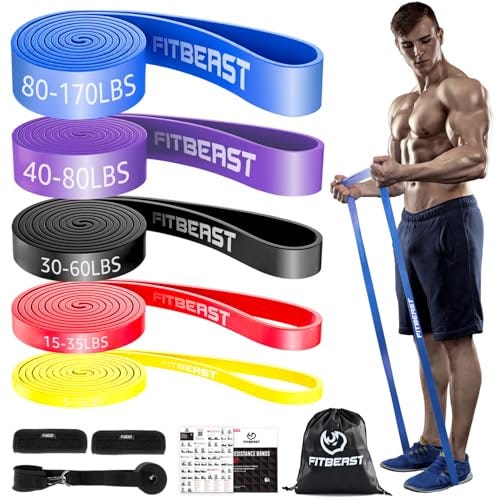 FitBeast Resistance Bands Set, 5 Levels (Spectrum 5-170 LBS)
Now 14% Off
The Bottom Line
He concludes: ‘Don’t sleep on the importance and efficacy of exploring ‘weird’ looking movement patterns. They can be a great diagnostic tool and an excellent complement to more ‘regular’ strength training.’
At the end of the day, if you keep the load light and make sure, you’re warmed up beforehand, setting aside a few minutes for this kind of movement (for example, at the end of your normal workout) is ideal for keeping your body strong and supple. After all, as the saying goes: ‘If you don’t use it, you lose it’.
If there’s one thing Kori Sampson knows, it’s how to optimise your body composition for performance. To tap into his knowledge as an elite athlete and coach, we asked him to create a 4-week plan to help you move faster, recover quicker and keep pushing when the fatigue sets in – all while improving your muscle-to-fat ratio.
Ready to build muscle, burn fat and come out the other side looking, feeling and performing better? Click here to get 14 days of free access to the plan via the Men’s Health app.


Lauren Geall is deputy site editor for Women’s Health UK and Men’s Health UK. She graduated from Exeter University with a BA in English Literature before studying an MA in Magazine Journalism at City, University London. She’s been writing about health, fitness and wellbeing for over five years, with a total of seven years in digital journalism. Prior to her current role, she worked at Stylist as the acting health and fitness editor. As well as being a keen runner, Lauren is passionate about women’s sport and can often be found cheering on Arsenal Women at the Emirates or keeping tabs on the Red Roses’ latest win.