
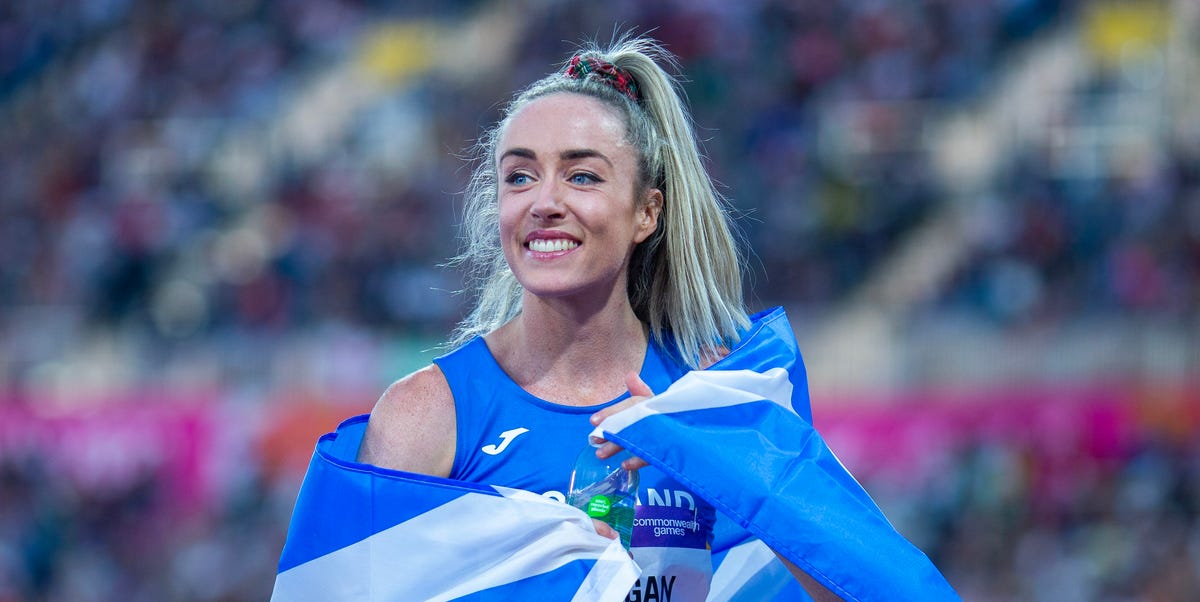
Eilish McColgan had hoped to defend her Women’s 10,000m title at this year’s Commonwealth Games in Glasgow. But after a toe injury sustained at the London Marathon forced her to stop running for six to eight weeks, the Scottish distance runner has now withdrawn from the competition.
Her win at the 2022 Games in Birmingham saw her claim the first major title of her career, taking gold in a Games record time of 30:48.60.
In the years since, McColgan has shifted her focus towards longer road distances. In 2023 she became the first British woman to win the Berlin Half Marathon, before making her long-awaited London Marathon debut in 2025.
She’s also had to adapt her usual pre-race training routine, after a toe injury she picked up at this year’s London Marathon forced her to stop running for 6-8 weeks.
‘The build-up to this race has been very different,’ she tells Women’s Health. ‘I’ve not been able to do my normal running at all – everything has had to be on the cross trainer – and a lot of the focus has been on rehabbing and getting stronger in the gym.’
Why McColgan incorporates low-impact training
It’s the kind of setback that could put another athlete off their game, but McColgan is no stranger to incorporating low-impact training into her routine.
In 2011, at the very start of her career, she was forced to undergo foot surgery which led to her having five screws and a metal plate placed in her left foot. It was a big hurdle to overcome: one doctor even told her she wouldn’t ever run again after the surgery.
Of course, that’s not been the case – in large part due to McColgan’s determination to find a training approach that works for her and her body, no matter what that looks like.
‘Since 2011 I’ve incorporated quite a lot of cross training and low-impact training into my routine, even when I’m fully fit and healthy,’ she explains.
‘It’s very easy to compare yourself to other athletes, and some are doing double runs pretty much every day and covering up to 130 miles a week – crazy, crazy mileage. But I think very early on in my career I realised I’m not going to be someone who is able to do that. I knew I’d have to train a little bit differently and be a bit more smart with how I operate.’
That doesn’t mean running isn’t still a big part of McColgan’s training routine – in fact, during a normal training block she runs six days a week, alongside evening cross training sessions and time spent in the gym focusing on her core and leg strength.
How she uses running as a form of stress relief
For McColgan, running isn’t just something that helps her compete at her best – it’s one of the most valuable tools she uses to look after her mental health.
‘For me, running has always been a form of stress relief,’ she says. ‘From a very young age I’ve enjoyed being outdoors in the fresh air – it’s where all my worries seem to disappear. I think it’s no surprise that during times in my life when I’ve dealt with high amounts of stress, my running has taken off, and I’ve had a breakthrough in performance.’
This experience isn’t uncommon. New research from the health insurance provider Bupa – the Official Global Healthcare Partner to the Glasgow Commonwealth Games – found that 66% of people think sports and exercise are the most effective way to maintain good mental health, while 71% think sport can help people overcome mental health challenges.
Why these Games are so important
The research also found that 27% of people cite money as the biggest barrier when it comes to increasing opportunities to play sport – something McColgan is actively working to improve with her non-profit organisation, Giving Back To Track.
The organisation, which she set up following the last Commonwealth Games, aims to inspire kids in Scotland to stay active and provide monetary support for hopeful young athletes.
Already, the scheme has supported plenty of young athletes on their journeys, and some of the recipients will compete alongside McColgan at this year’s games.
It’s a sign of the legacy McColgan has built both on and off the track; a ‘proper full-circle moment’, as she described it in a recent Instagram post, especially as she was hoping to compete at the Commonwealth Games for what she said will be the ‘last’ time.
‘I think this will be an important championship for a lot of younger athletes coming through,’ she says. ‘We get to represent Scotland, which only gets to happen at these games, once every four years. The Commonwealth Games will always have a really special place in my heart.’
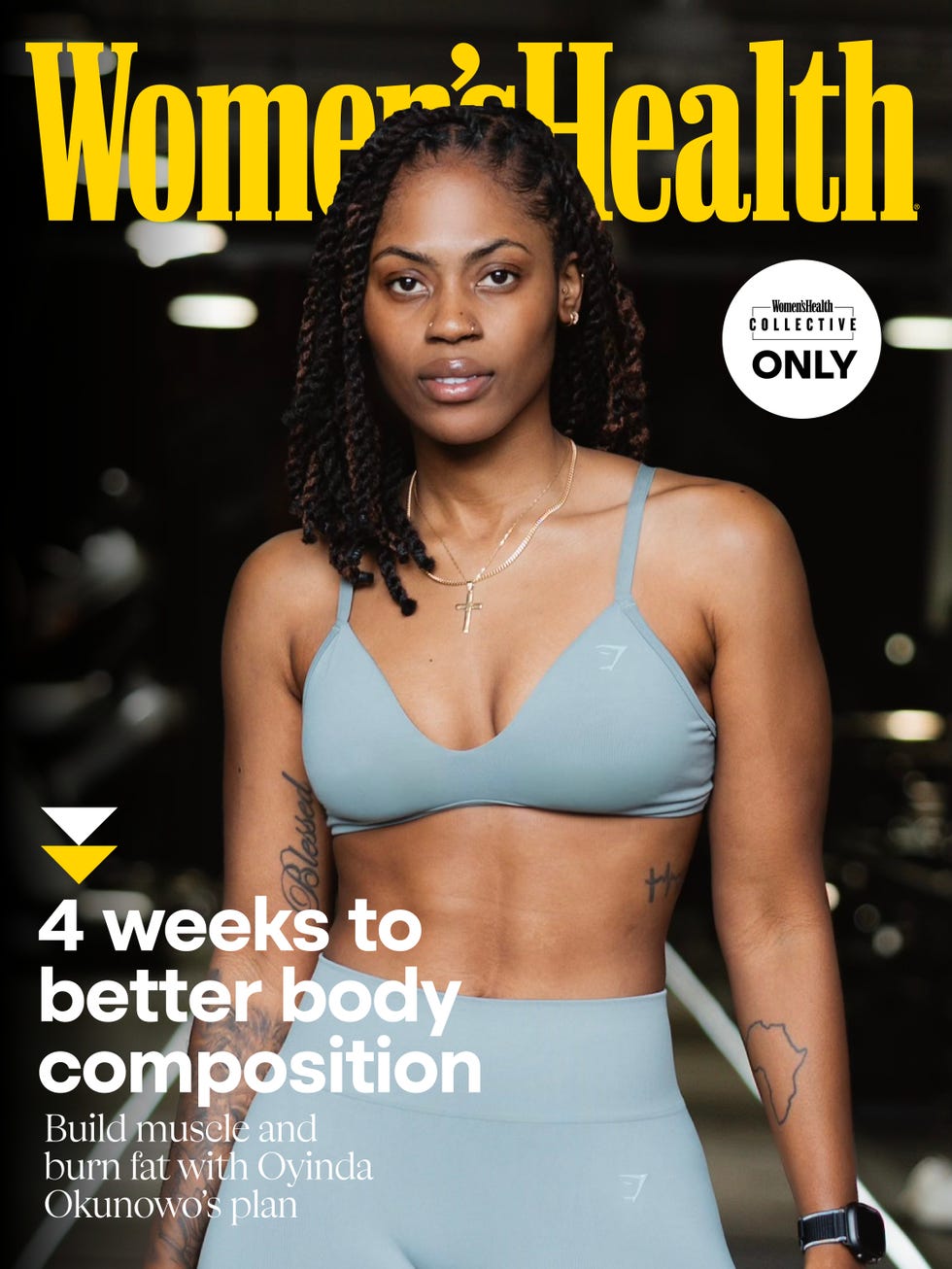
One of our most frequently asked questions here at Women’s Health? How to build muscle and burn fat at the same time. So, we asked superstar trainer Oyinda Okunowo exactly how to do it. In this 4-week plan – created exclusively for Women’s Health COLLECTIVE members – you’ll get the workouts and nutrition guidance needed to help you on your way to better body composition. Tap the link below to unlock 14 days of free access to Oyinda’s plan and start training today.
Lauren Geall is deputy site editor for Women’s Health UK and Men’s Health UK. She graduated from Exeter University with a BA in English Literature before studying an MA in Magazine Journalism at City, University London. She’s been writing about health, fitness and wellbeing for over five years, with a total of seven years in digital journalism. Prior to her current role, she worked at Stylist as the acting health and fitness editor. As well as being a keen runner, Lauren is passionate about women’s sport and can often be found cheering on Arsenal Women at the Emirates or keeping tabs on the Red Roses’ latest win.